

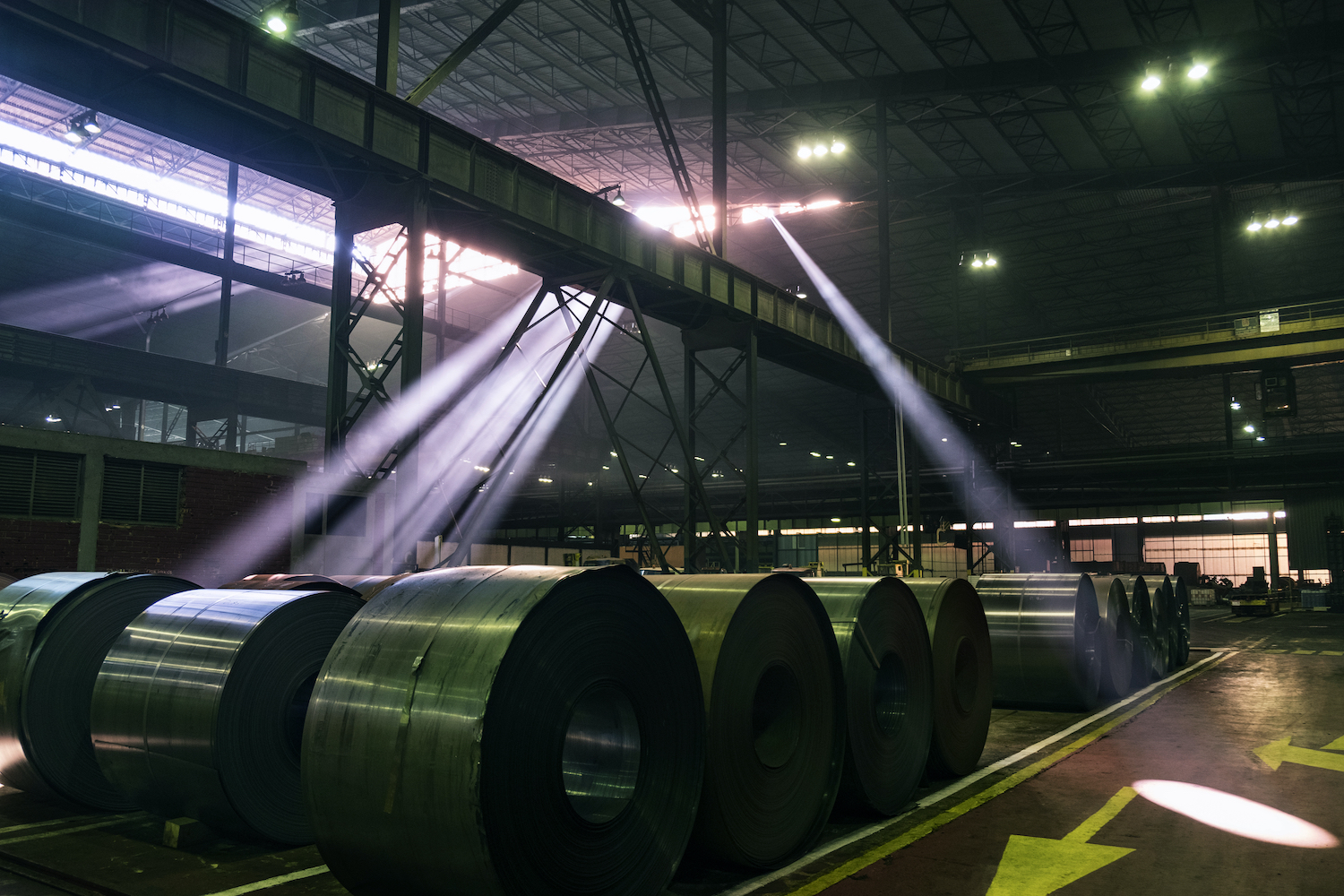
EU market debates safeguard revision mechanics, awaits confirmation
The EU’s proposed safeguard duty revision could encourage mills to go for a synchronised price hike. This comes after weeks of hot rolled coil moving down close to the €600/tonne ($650) mark and repeated mill hike attempts proving to be unsustainable, Kallanish notes.
The revision means the “other countries of origin”, which previously had a collective quarterly HRC quota of around 1 million tonnes, will now face an additional restriction per individual country. Individual countries may not sell more than 15% of the total, meaning 150,000t. Some of the more active exporters “easily sold twice that,” a German observer says.
The measure was proposed by the European Commission’s EG Trade at the end of May, and will have to be approved by each EU member state this coming week. In addition, it needs to be approved by the WTO, which many see as a given. But there is uncertainty over whether the rule will take effect as of 1 July or 1 October. “That may remain unclear until the end of June,” a Dutch manager says. “Mills are well-advised to try for hikes now for orders throughout June, because it might turn out that the market gets another break until October,” he adds.
The German observer does not think that the different dates will matter. “Even if it takes until October, people are now already deterred from ordering from Taiwan, Japan or Vietnam because the ships won’t come before October, with the risk of a 25% duty,” he notes.
He expects the market leader mill to make the first move, with most integrated mills following. This might not include the one group that re-rolls Russian slab, which has been heard undercutting market prices to retain orders.
Some German buyers expressed doubt that a big hike can be asserted. “The new rules will not change the import business all that much, and you cannot just create the demand to make increases sustainable,” one says.
Christian Koehl Germany


Tata sells Corby land to invest in tubemaking
Tata Steel will invest £12 million ($13m) into its Corby tube-making works using proceeds from the sale of a 99-acre site within the west side of the works, which has become redundant, Kallanish notes.
The end use of the plot will be a fully-serviced campus-style logistics hub.
Tata Corby works manager Gary Blackman says: “We are already well progressed with a £30 million investment programme in Corby – one of the largest in the site’s history. The sale of the old West Works land will now fund the regeneration and development of one of our warehouses on the East Works into a world-class complex of offices, stores and engineering workshops, and upgrade one of our tubes finishing lines.”
The new building will be clad with over 18,000m2 of Tata Steel’s own Trisomet insulated wall and roof panels, which will enable faster installation and gives optimum performance for water drainage and strength, the firm says.
Warmflame Developments, which facilitated the plot sale, says it has managed a phased enabling of the site whilst transitioning some of Tata Steel’s existing operations from the West Works to its retained land in the east.
In 2022, Tata Steel announced it was replacing one of the two cold-formed sections mills at its Corby site. Last year, it said it plans to install two new induction furnaces to reduce carbon dioxide emissions from one of its tube mills by at least 2,000 tonnes/year.
Adam Smith Poland
Tata, government conduct ‘detailed’ negotiations over IJmuiden decarbonisation
Tata Steel says it is taking part in “a detailed framework of diligence, analysis, discussions and negotiations” with the Dutch government over potential decarbonisation funding. However, it is too early to confirm any details of a potential deal with authorities.
The steelmaker was responding to reports that the government is prepared to cough up billions of euros to decarbonise the IJmuiden operations.
In March, the Dutch Parliament formally gave a mandate to the government to negotiate the terms of potential support towards a proposal for Tata Steel Nederland’s decarbonisation.
The “detailed framework” will run over several months before potentially culminating in an agreed set of terms, Tata says. These terms will then require approval from the Parliament as well as Tata Steel’s board. “It may be premature to draw any final conclusions at this time and hence the Company is not in a position to comment any further,” the steelmaker adds in a stock exchange filing seen by Kallanish.
Unlike its less profitable UK plant, at its Ijmuiden plant in the Netherlands, Tata plans, thanks to gas availability in that country, to build a gas-based DRI-EAF operation, later migrating to hydrogen when it becomes available. Ijmuiden already has a pellet plant which facilitates the DRI route.
Last week, Tata awarded contracts to Danieli and Tenova for the basic engineering of a direct reduction plant, an EAF and other facilities at IJmuiden (see Kallanish passim).
Tata Steel’s Netherlands operations reduced shipments 3% on-year in the March quarter to 1.43 million tonnes. However, this was up 10% on-quarter as blast furnace no.6 ramped up following its reline completed in early February. Liquid steel output was also down 3% on-year but surged 24% versus the December quarter to 1.48mt.
Adam Smith Poland
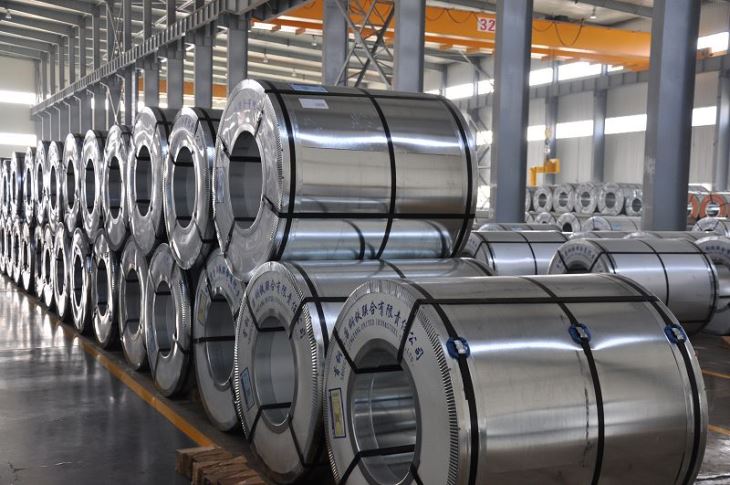
Market questions pre-summer EU coil price hike possibility
European market sources have expressed differing views on the future trajectory of coil prices following the EU’s safeguard measure extension and residual quota revision proposal.
Some Dutch and German sources say the integrated mill groups have left the market, and will come back this coming week with potentially increased offer prices. “There is a bit of a stir among buyers because of that,” a Dutch manager tells Kallanish.
Meanwhile, one mill source is actually more prudent, saying his company is still making offers, and is reluctant to make hike announcements too soon. “We will have to wait for the [EU member] vote [on the safeguard extension] this week before we make a decision,” he says. He also expressed some doubt if a big hike would make sense before the summer break.
Come September, however, his company will prepare for a “major increase”, which many buyers expect to come sooner or later. Although a big trigger for demand is not in sight, he says the reduction of interest rates in Europe would help to revive the construction industry, for example.
The increase is yet to be given a solid figure, but the Dutch manager says he has heard of “at least” €50/tonne ($54). Over the past three months, prices have moved only slightly back and forth, between €610 and €640 ex-works for hot rolled coil. The lowest figure of €605/t was heard from the Netherlands, while most German sources cited €620-640.
Despite reports of particularly weak prices for cold rolled coil, Dutch and German sources say the price premium over HRC has been in the normal €80/t range, with galv fetching €100-120/t on top of HRC.
One German distributor’s manager says she has observed the premium for galv becoming narrower downstream, when the product is cut and slit. According to her, this is a sign that service centres are trying to snatch business by selling at intake prices.
One German trader is even more explicit about this behaviour at distributor level, and that it covers all strip products. “It’s mainly the distributors that need to step on the brake to turn the trend, really. Sales prices here sometimes were lower than the intake price [for HRC] of €630/620,” he notes. Without giving names, he says he observed this among big distribution players.
Christian Koehl Germany

Assofermet: EU safeguard revision means significant HRC shortage
The EU’s residual safeguard quota revision will trigger an annual shortage of 1.63 million tonnes of steel in the bloc, warns Italian steel trade association Assofermet.
The European Commission announced in May its intention to extend safeguards by a further two years to 30 June 2026. It will also introduce a 15% cap per origin over the “other country” tariff-rate quota (TRQ) for hot rolled coil, to ensure market stability and avoid crowding out traditional suppliers.
The future shortage would have “catastrophic repercussions” on several steel-consuming sectors, including automotive, construction, mechanical engineering and the entire manufacturing industry, which will see companies lose competitiveness, Assofermet warns. In 2023, Vietnam, Japan, Taiwan and Egypt, the origins in the “other country” TRQ, sold 3.9mt of HRC to Europe. The annual flow from the four countries to Europe would decrease to 2.26mt, “effectively wiping out 1.63 million tonnes of steel”, Assofermet says.
“These are steel grades that are not available in sufficient quantities in the European Union. For this reason, imports are necessary in order to guarantee the sector the supply it needs … Maintaining the safeguard for another 24 months implies an overlap with the Carbon Border Adjustment Mechanism (CBAM), which will generate de facto double taxation,” comments Assofermet president Acciai Paolo Sangoi.
The association notes that the safeguard revision is based on the comparison with figures gathered over the three-year period of 2015-2016-2017. Such a comparison is no longer up to date, as several countries that were listed as EU suppliers are now under embargoes or sanctions, or are shipping material to other geographical areas. The consequences of the amendment could be uncontrolled increases in raw material costs due to duties, long waits for customs clearance at the beginning of the each quarter, financial strains for all importers and port terminal congestion.
According to EUROMETAL data elaborated by Assofermet, in 2023 Vietnam exported to Europe 1,113,000t of HRC. The association’s projection for Vietnam’s annual shipments following the amendment is 567,399t, with an annual shortage of 545,601t. Last year, Japan exported to the EU 1,058,000t, but it will be allowed to export half of this next year, about 567,399t, with an annual shortage of 490,601t.
In 2023, Taiwan supplied 1,016,000t. After the safeguard renewal, it will be allowed to sell no more that 567,399t, representing a future annual shortage of 448,601t. Last year, Egypt sold 720,000t to Europe, which will decrease in 2024 to 567,399t, with an annual shortage of 152,601t, Assofermet concludes.
Natalia Capra France

Steel as a material of choice in seismic prone areas
Promoting steel as a material of choice in seismic prone areas: meeting with the Ministry of Environment, Urbanisation & Climate change, Türkiye
Structural damage is the primary cause of injury and loss of life during earthquakes. Architects, engineers, and developers must ensure buildings are constructed with appropriate materials and design standards. Horizontal movements during earthquakes are particularly dangerous, as tall buildings are more resistant to vertical loads than horizontal ones.
Building structures to withstand seismic forces requires using materials with the right properties, and steel is the most widely used material for earthquake-resistant buildings. Ductile buildings, which can dissipate seismic energy, are safer. Steel is the most common material for ductile parts that can undergo plastic deformations without structural failure during an earthquake. Additionally, steel’s flexibility and low weight are advantages in seismic areas, as stiffer and heavier structures attract larger forces during earthquakes.
On 30 April 2024, constructsteel convened in Istanbul to promote the benefits of steel solutions for disaster prevention and restoration, focusing on steel’s role in seismic areas. This meeting built upon discussions from the constructsteel annual conference in Seoul on 26 September 2023.
The event gathered Turkish government officials from the Ministry of Environment, Urbanisation, and Climate Change, including Deputy Minister Hasan Suver and General Director Banu Aslan, along with members of The Turkish Structural Steel Association (TUCSA) and Turkish Steel Producers Association (TÇÜD). Discussions highlighted steel’s significant role in rebuilding efforts following Türkiye’s recent earthquake, featuring presentations on post-disaster construction and preventive measures using steel solutions.
Deputy Minister Hasan Suver welcomed constructsteel members and attendees, acknowledged the lives lost in the 6 February 2023 earthquake, and detailed the state’s rebuilding efforts, including constructing steel structures. TUCSA President Mr. Gür’eş presented on earthquake perspectives and needs in Türkiye, leading to further discussions on post-disaster construction using steel solutions and preventive measures for future disasters. Participants engaged in technical and practical exchanges to address Türkiye’s earthquake-related needs and potential actions by constructsteel.
Banu Aslan summarized the earthquake losses, noting the construction of approximately 230,000 buildings, including 23,300 light steel village houses and around 400 mid-rise steel buildings (Source: TUCSA), highlighting the ongoing and increased use of steel structures. Constructsteel members expressed readiness to support Türkiye through knowledge exchange and bilateral meetings.
The meeting concluded with mutual satisfaction and plans for continued discussions to assist Türkiye in implementing steel solutions. Constructsteel announced the addition of its first members from the Republic of Türkiye: Çolakoğlu Metalurji A.Ş., marking a significant step in advancing steel’s role in the construction sector.
Steel remains the material of choice in seismic-prone areas.


EUROMETAL brought together Nordic Distributors in Oslo
The EUROMETAL Meeting Nordics, held on June 3-4, 2024, brought together key players in the steel and metals industry for an insightful and educational event.
Organized by Stål- og Metallgrossistenes Forening in collaboration with EUROMETAL, the conference provided a platform for distributors and producers to discuss the latest trends and innovations shaping the future of steel and metals in the Nordic region.
The meeting covered a broad range of crucial topics, including:
• Outlook on Steel Prices and Trade Flows: Matthew Watkins from CRU opened the session with a detailed analysis of the current trends and future projections in international steel prices and trade dynamics.
• Metal Solutions for the Renewable Energy Market: Audun M. Martinsen from Rystad Energy highlighted the pivotal role of steel, particularly tubulars and flats, in the renewable energy sector, emphasizing their application in wind turbines and solar panels.
• Nordic Economic Trends: Nils Kristian Knudsen from Handelsbanken provided an overview of the economic performance of Nordic countries, offering insights into their growth prospects and market conditions.
• Towards Fossil-Free Steel: Matts Nilsson from SSAB discussed the HYBRIT project and Halvard Meisfjord from Celsa Armeringsstål on fossil-free reinforcement in Mo i Rana.
• Renewable Energy Solutions: Jan Fredrik Stadaas from Equinor fornybar explored the advancements in renewable energy technologies for both onshore and offshore markets.
The event also featured presentations by Geir Olafsen from Siglar Carbon on the cost and carbon reduction in shipping and Anders Jansson from CorPower Ocean on wave energy.
The event concluded with a panel discussion moderated by Gjermund Løyning from NHO, featuring industry leaders such as Matts Nilsson (SSAB/HYBRIT), Sarah Milne (H2 Green Steel), Halvard Meisfjord (Celsa Armeringsstål), Jaap Jan Aardenburg (Tata Steel Europe), and Fernando Pessanha (Hydnum Steel).
This event was attended by 75 steel experts.
Here you can consult some press articles emerging from this event:
- Key takeaways from EUROMETAL’s Nordics Steel Meeting: Green steel is a game-changer
- Nordic steelmakers gear up for low-carbon projects, seek clarity on green steel definition
- Norway’s steel demand expected to strengthen in H2 2024 as economic fundamentals improve
EUROMETAL Nordics: Decarbonisation of EU steel industry at full speed, market struggles to keep up - Traders voice concerns at proposed EU extension to steel import safeguards
- Celsa Nordic to commission new electrolyzer and reheating furnace in H2 2026
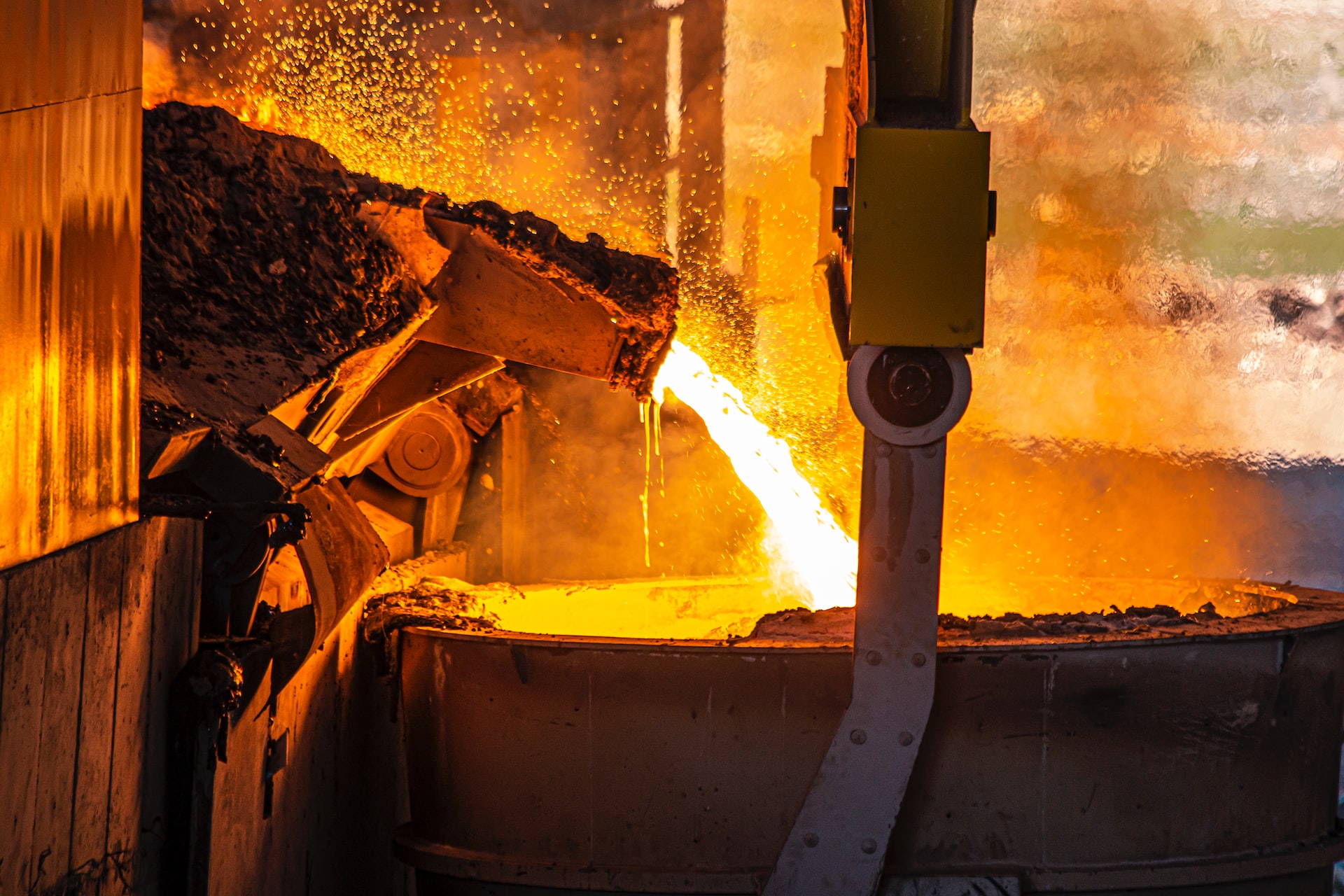
Bureaucracy drives German fabricators away
Production at Germany’s steel fabricators last year dropped by 3.3% compared with 2022, Kallanish hears from their association, WSM. Order intake fell by 2.7%.
The decline in production accelerated throughout the year, with the fourth quarter down 5.9% on-year and down 5.4% on-quarter. However, WSM also points to some alleviation seen in December, which saw output drop only 2.5% on December 2022. It says that some primary processors, such as re-rollers, managed to catch up somewhat, and, notably, the defence industry was a good performer.
With some cautious optimism, the association therefore believes the bottom was reached at the end of the year.
Still, industrial activity in German has far from resurfaced this year so far, and WSM finds that many of the causes are home-made. In contrast to the production drop in Germany, France showed a slight increase, and Turkish output rose by as much as 10%, it notes.
The association recently commissioned a poll among its members, in which 44% of companies reported declining business activity in 2024 so far. WSM says that other countries offer better conditions in many respects, making German companies inclined to invest abroad. In terms of power prices, for example, costs in Germany are one third above those in France, and double those of the USA.
Another recurring issue is the “bureaucratic monster” of paperwork, inconvenient procedures from authorities, slow approvals for construction, and unrealistic regulations, WSM notes. This is a complaint heard increasingly from German industries (see Kallanish passim).
Christian Koehl Germany

Low availability props up Italian scrap prices: Assofermet
Italian scrap prices should decline by no further than €10/tonne ($10.8) on average this month, as local merchants are unwilling to accept any further drops given the low scrap availability afflicting the market.
“Sentiment in these first days of June remains bearish due to poor sales of finished products. However, the continued low availability of scrap will help prevent major declines,” Italian steel trade association Assofermet says in its market note sent to Kallanish.
Several vessels of scrap imported by pools of mills are expected to reach Italy this month. A source says about eight ships of 40,000-tonne each are due to dock at Italian ports. The countries of origin are Venezuela, the UK and the US.
The first half of May saw price increases, while the second half registered price declines, the association notes. In the first half, prices rose €20-25/t, depending on category, mostly due to low availability. Industrial demolition was the grade that increased by the most, reducing the gap with E8 new arisings, which now stands at around €20/t. Demand remains strong for high scrap grades, the note continues.
Meanwhile, pig iron prices remain stable on-month, with some upward traction. At an international level, prices have remained mostly stable over the past month. “There is currently no official information regarding the cancellation of the [pig iron] export duty from Russia … although many executives are convinced that such a possibility is extremely real,” Assofermet concludes.
Sources confirm that Russian pig iron producers allowed to sell in Europe are currently not quoting.
Natalia Capra France
EU coil market prepares for contract talks
The mid-year negotiations for long-term supply contracts between northwestern European coil mills and big consumers will start soon, and in some cases already have.
“There will be a long line of meetings next week for the initial talks for contracts for the second half of the year,” a buyer at a cold-roller tells Kallanish.
Other sources previously indicated that buyers would prefer to push back the talks as long as possible, assuming the sustained lull in demand will see steel prices soften further. “But they may be proven wrong after last week’s extension of safeguard measures by the EU,” which may strengthen the position of mills and possibly encourage higher price offers, one observer says.
A Dutch manager concurs that “it will be of strategic importance to mills that steel prices remain at least stable, preferably with a slight upward trend.” According to the cold-roller’s buyer, the first signals from mills have varied for a premium of between €20 and €50 ($22-54) over deals in the previous half-year. This is hard to translate to a market price per tonne figure, given the many variables that go with it.
Apart from the obvious range of prices achieved in different mill-consumer deals, time is a big factor. Just before the previous talks began, towards the end of 2023, coil prices had just taken a run-up towards a surge that would last well into January. The low point of the spot market for hot rolled coil back then was at around where it is now, at €620/tonne, before rising to €750/t in mid-January.
Annual or half-year contracts normally see €100 added on top of the spot price, so in most cases would have risen above €800/t during the last round, the longer talks dragged on.
That surge momentum is nowhere to be seen now, and even if mills can lift spot prices in June, the increase will hardly be as massive as in December. They may therefore be lucky if they can repeat the prices of the last round. According to the buyer, “the offers from mills reflect their need to cover costs, but not the demand on the market.”
Christian Koehl Germany