


UK HRC remains stable as prices reach bottom
Domestic prices for hot-rolled coil in the UK remained stable in the week ended June 13 as market sources largely agreed that prices have reached the bottom.
“Demand is still average and there has been no movement in prices,” a service center source said. ”The market is very testing, and prices are close to bottom.”
Some sources also said that European mills were looking for orders because there has not been a lot of market activity recently. Production capacities are still available for July and August, and mills are looking for orders to fill their production lines.
“Mills are fairly desperate for orders,” the source said. “European mills are looking for orders because capacities are available for July-August.”
Sources also said some ex-stock material was being traded around due to Atlantic Steel going into administration. Atlantic Steel Processing, a flat steel service center and stockholder, went into administration on May 14, according to official government data.
“There’s quite a bit of ex-stock going around in the UK,” a trader source said, “because of the fallout of Atlantic Steel.”
For new EU-origin material, offers and tradable values were reported at GBP600-610/mt DDP West Midlands.
For ex-stock material, offers and tradable values were reported at GBP570-580/mt DDP West Midlands.
Platts assessed UK HRC stable on the week at GBP600/mt basis DDP West Midlands June 13.
For the “other countries” UK HRC category, mainly including material from Asia, the total quota — which is 22,589 mt — has been exhausted, according to official UK government data.


HRC prices flat in Europe; slow demand scuppers mill attempts to raise offers
Fastmarkets calculated its daily steel hot-rolled coil index domestic, exw Northern Europe at €636.00 ($685.80) per tonne on Thursday, up by €0.79 per tonne from €635.21 per tonne on Wednesday.
The index was up by €2.25 per tonne week on week, but down by €4.00 per tonne month on month.
An integrated mill in the Benelux region was heard offering July-August delivery HRC at €650-660 per tonne ex-works.
In Germany, offers were heard at €640-650 per tonne delivered, which nets back to €630-640 per tonne ex-works for July-August delivery.
Buyers estimated achievable prices at €620-640 per tonne ex-works.
Domestic HRC prices in the region have been broadly flat for about a month now, with some minor fluctuations.
“For more than a month, the market situation has remained unchanged. Demand is low, [there is] no major restocking and mills are looking for orders,” a steel service center source in Germany told Fastmarkets.
Other market participants said European producers had short order books and lead times of about five weeks – or even shorter in some cases.
Some producers in the region attempted to increase their offer prices following the news about proposed changes to EU import safeguards two weeks ago, but demand was not strong enough to support the price rebound. Besides, the recent downtrend in global iron ore prices was also unsupportive of the uptrend.
“There is no demand, they ask to the air,” a trading source in Europe said.
Sources told Fastmarkets earlier this week they expect a major European steelmaker to come back to the market with higher prices by the end of this week, but there has been no official announcement as yet.
Fastmarkets calculated its daily steel hot-rolled coil index domestic, exw Italy Europe at €631.67 per tonne on Thursday, down by €0.21 per tonne from €631.88 per tonne on Wednesday.
The index was up by €1.15 per tonne week on week, but down by €3.33 per tonne month on month.
One local steelmaker was reportedly still offering HRC to the domestic market at €650 per tonne delivered (€640 per tonne ex-works).
And the tradable price were estimated by one market participant at €620 per tonne CPT (€610 per tonne ex-works) – although this was not widely confirmed by other sources.
Most buyers, meanwhile, put the workable level at €630 per tonne ex-works on Thursday.
“With current levels of demand [for flat steel], the best option is for mills [to] rollover prices for leftover July- and August-delivery [HRC],” a buyer source said.
Import offers were broadly flat, with minimal buying interest in overseas coil – mainly due to the long lead times, similar prices to those in the domestic market and concerns over import quotas, Fastmarkets understands.
On Thursday, offers of Turkish HRC were heard at €610-630 per tonne CFR, including the EU anti-dumping duty.
Offer from South Korea were reported at €600-610 per tonne CFR on Thursday, but Indian mills refrained from making any offers to Europe, sources said.
Prices mostly stable in Southern European long steel market
The market accepted higher target prices in May, amid improved demand and high feedstock costs. And while demand continued to improve in early June, it has been subdued so far this week, sources said.
Fastmarkets price assessment for steel reinforcing bar (rebar) domestic, exw Italy was €660-675 ($712-728) per tonne on Wednesday, stable week-on-week.
“Mills have maintained the higher prices established at the end of May, but the market has been quiet [this week] as everyone has restocked,” a producer source said.
And a trader told Fastmarkets: “Demand was good last week, but this week, the market seems to have gone to sleep again.”
Despite the reduction in demand, high feedstock costs mean the steel mills cannot lower their offer prices, sources said.
“With the increase in scrap and energy costs in May, all producers are very aware that the price increases [achieved in May] must be defended at all costs,” the producer source said.
International scrap prices have remained largely unchanged so far this week, with Fastmarkets’ calculation of its daily index for steel scrap HMS 1&2 (80:20 mix) North Europe origin, cfr Turkey, edging up to $377.40 per tonne on Wednesday, up by just 55 cents from $376.85 per tonne a week earlier.
Fastmarkets’ price assessment for steel reinforcing bar (rebar), domestic, delivered, Spain was €645-670 per tonne on Wednesday, unchanged week on week.
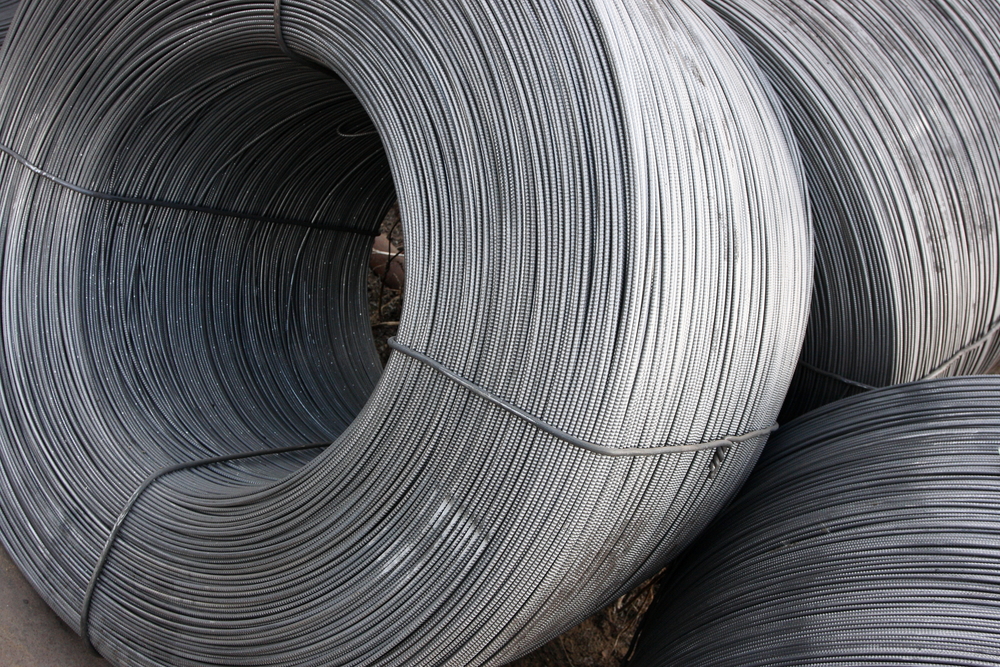
Wire rod
Fastmarkets’ price assessment for steel wire rod (mesh quality), domestic, delivered Southern Europe, was €625-640 per tonne on Wednesday widening up by €5 per tonne from €625-640 per tonne.
Market conditions remained mostly steady in the Southern European wire rod market in the week to June 12.
“Prices are largely unchanged,” a producer source said. “The flow of buying is relatively subdued now.”
Import offers from Egypt were reported at €570-580 per tonne CFR, Fastmarkets understands.


Liberty opts to sell troubled Ostrava steelworks
Liberty Steel has withdrawn its restructuring plan for the Ostrava steelworks, it announced in the beginning of May. According to Liberty, this will give the company protection against creditors and provide the necessary time for selling the assets and further restructuring measures to stem losses.
Liberty added that the current financial losses of the Ostrava operations amount to around €1 million ($1.08) per day.
“Liberty is confident that this process is in the best interests of Ostrava’s creditors, employees and customers,” the steelmaker said.
Liberty said that it would retain the few assets that cover their own costs and support employees in applying for the state’s Wage Guarantee Scheme.
Liberty Ostrava has been facing financial difficulties for months, which escalated in December 2023 due to a dispute over unpaid bills with its power supplier Tameh Czech.
Liberty said that it started implementing a restructuring plan on May 3, but added that Tameh Czech had refused to provide further energy supplies to the Ostrava operations.
But the main reasons that hampered the plan, according to Liberty, were the deteriorating steel market conditions in Europe and the “indefinite delay” from Czech authorities in the allocation of emission allowances.
“While we were able to navigate the Covid pandemic, the outbreak of war in the Ukraine has seen demand for Ostrava’s products fall significantly. Imports have climbed to over 27% of the European market, impacting Czech domestic producers, which face far higher regulatory and decarbonization costs than their competition,” Liberty said.
The company added that independent market reports revealed a nearly 20% deterioration in market spreads and HRC prices compared to February estimates.
Moreover, the delay in allocating emission allowances has created “a significant and immediate financial hole of €43 million in the restructuring plan”, Liberty said.
Wider market
Liberty Ostrava is able to produce hot-rolled coil, cold-rolled coil, steel sections and wire rod.
In October of last year, the company idled its blast furnace (BF) No3 at the Ostrava steelworks, which was Liberty’s last operating BF in Europe, due to weak steel market fundamentals.
The company planned to reignite the furnace in January, but they were halted due to financial problems, industry sources said.
BF No2 at the Ostrava steelworks has been idled since July 2022 due to poor market conditions.
Liberty also idled a BF in Galati, Romania, in the end of May, Fastmarkets reported.
Attempts by European steelmakers to increase flat steel prices in late April and early May were largely unsuccessful due to sluggish real demand.
Since the beginning of May, prices for HRC in Central Europe have been broadly stable.
Fastmarkets’ weekly price assessment for steel hot-rolled coil domestic, exw Central Europe was €630-640 ($682-693) per tonne on Wednesday, unchanged since May 1.
Decarbonization plans
Liberty invested around €143 million in capital expenditures after it acquired the Ostrava steelworks in July 2019, including €29 million for the installation of two new electric arc furnaces (EAF), the company said.
The steelmaker did not provide further details about the future of its decarbonization plans for Liberty Ostrava’s assets.
In July 2022, Liberty announced it had ordered two hybrid EAFs for Ostrava from the equipment supplier Danieli.
The new EAFs were expected to be operational by 2025 and use 100% scrap as primary raw material by 2027. Switching to EAF-based production would allow Liberty to cut carbon dioxide emissions by more than 80% by 2027.
“We remain confident in the long-term viability of Ostrava under plans to transition to more sustainable forms of production based on electric arc furnace technology, whether under Liberty’s ownership, through a new investor, or under new ownership,” Liberty said.

Stemcor, Tokyo Steel launch ‘green’ steel brand
Tokyo Steel has launched a green steel brand – “enso” – in partnership with Stemcor to maintain and develop its business in Europe before the full implementation of the EU’s Carbon Border Adjustment Mechanism (CBAM), Kallanish understands.
Initially, this brand includes hot rolled coil and hot rolled plate, of which the embodied carbon emissions are approximately one third and one fifth respectively compared to “similar products from the market leading EU blast furnace producer”, the steelmaker says.
This competitor could refer to ArcelorMittal, which is constructing a new hybrid EAF in Spain to reduce CO2 emissions in Europe.
Tokyo Steel has been supplying low carbon emission HRC and HRP to European customers. This new brand shows the steelmaker’s ambition to “attain even lower levels of embodied carbon emissions” and to secure its market share as demand for lower-emission products is growing.
The steelmaker reduced the embodied carbon emissions through electric arc furnace production using scrap. In the next step, it plans an ultra-low-carbon-emission product made from 100% renewable energy, which is expected to be available later this year.
“Whilst we have had a stable export business supplying European customers who recognise the important advantages our production route brings; we decided it was important to launch the ‘enso’ brand to highlight our commitment to the circular economy and attaining even lower levels of embodied carbon emissions,” says Hisanori-Sakai, executive officer GM of international sales department at Tokyo Steel.
“Tokyo Steel will continue to work towards achieving the lowest possible levels of embodied carbon emissions with the application of proprietary technological advances and enhanced levels of renewable energy in the production process,” he adds.
A Stemcor spokesperson notes: “As society continues to build the infrastructure to achieve a greener future, steel remains the world’s most important engineering and construction material. As a result, we have been seeing a steady increase in demand from a number of European sectors for lower embodied carbon emissions steel products. Additionally, as we head closer to full implementation of the EU Carbon Border Adjustment Mechanism … companies are proactively looking to secure supply chains of these cleaner basic materials and Tokyo Steel’s ‘enso’ product range is therefore highly attractive.”


Demand woes, oversupply challenge EU distributors
Low demand, overcapacity, high production costs, competition from Asia, and the need for end-users to accept paying a premium for green steel were the main topics discussed by supply chain session panellists at the Kallanish Europe Steel Markets 2024 conference in Milan this week.
Tata Steel Layde managing director and EUROMETAL president Fernando Espada said he does not see any drivers for demand in Europe in the next six months, while the European Commission’s recent residual safeguard quota amendment is “unfair” (see separate story).
There is sufficient stock in the pipeline across Europe. “It’s not 2021 when there was no supply and auto [car production] lines stopped,” he noted. European production is meanwhile expensive due to factors like the European Emissions Trading System (ETS) scheme, which is reducing competitiveness and hampering exports outside the EU, Espada pointed out.
Italian steel market developments are mirroring the broader European challenges, according to Cesare Vigano, managing director of ArcelorMittal CLN. Real consumption remains low, and structural overcapacity is exacerbating the situation. He emphasised the problems in the service centre distribution sector, where low demand and overcapacity are causing significant difficulties.
Although there was a pricing recovery in the first quarter, this was due only to restocking, and this price hike has been wiped out again in Q2. Mills have attempted hikes on multiple occasions in recent weeks but are unable to defend them, Vigano observed.
Italian service centres’ margins are “suffering enormously”, he continued. “We saw in 2024 some slowdown that was very similar to 2009 and 2020. We are right at the same level – this is dramatic.”
Stock levels are not so high in absolute terms, but compared to activity, they are still high. The level at end-April was 6.7 months between stock in warehouse and orders being placed, while the normal rate is 5.4-5.5 months, Vigano noted.
Werner Wijne, category manager steel at Netherlands construction company Royal Bam Group, and Patrik Németh, marketing strategist at Hyundai Steel Slovakia, addressed the aspect of demand for green steel in the construction and automotive sectors.
While Bam wants to decarbonise and source green steel for construction projects, it needs its customers to get on board and accept the additional premium required. “The customers are not ready to pay for it [green steel] at the moment,” he said. “Without the customer, we cannot fulfil our [decarbonisation] journey.”
Automotive companies are however beginning to engage with green steel, as it is a matter of prestige for automakers to use green steel in car production, Németh said.
Elina Virchenko UAE

EU safeguard revision to be ‘game changer’
One of the main factors to impact the European steel market in the coming months will be the EU’s latest safeguard quota revision, said panelists at the Kallanish Europe Steel Markets 2024 conference in Milan on Thursday. They also agreed there will be no strong regional demand driver in the remainder of the year.
The new residual hot rolled coil quota cap will likely push back some of the established importer countries. “Taiwan, Korea, Japan will be out of the game,” said Tommaso Sandrini, of S. Polo Lamiere SPA. In the medium-term, the volume from those countries will be half of what it used to be, with the upper cap now at 140,000 tonnes/quarter, he added.
Gunwook Dean Park of SeAH Coated Metal Europe foretold of a massive impact on buyers from those countries: “This is a game changer,” he said. Park was also outraged about the lack of an official statement from the EU, given that “we are only two weeks away from it [1 July, when the cap is expected to take effect].”
Julian Verden of Stemcor explained this is a “classic tactic of the EU. They will hold back their decision until the very last day, not to give anybody a run-up, and that makes importers miserable.”
While some established countries of origin are losing out, others will gain. “We are receiving orders from Indonesia and Malaysia now,” said Sandrini on the redirection of trade flows. He predicted that the limitations on tonnages will not trigger noteworthy price increases, as they would in “normal” times, as overall demand is just too weak now.
Verden compared the EU’s tactics with the children’s game Whack-a-Mole, where little animals keep popping up from different holes from the ground, in that import origins keep getting blocked and then new ones will surface. “Customers want materials delivered on a regular basis. The new rules make buying much more disruptive,” he concluded.
Christian Koehl Germany

Safeguard cap should have been announced earlier: Fernando Espada
The European Commission implementing a 15% cap on the “other country” tariff-rate quotas for hot rolled coil and wire rod at short notice is “unfair”, according to Fernando Espada.
The abrupt implementation has caused uncertainty and challenges. “The rules have been changed, knowing that the safeguards scheme was ending at the end of June. I think it’s very unfair for the market that the European Commission appeared with this creativity two weeks ago, which was communicated in a letter to the World Trade Organization,” Espada said at this week’s Kallanish Europe Steel Markets 2024 conference in Milan. The proposal should have been made known to the market in January, he added.
“Nobody knows if they will have to pay €70/tonne [as a result of the cap]. By the way … get your cash ready because those things are paid instantly, and there is a lot of uncertainty from now on,” he continued.
Espada said he does not see any reasons for demand in Europe to recover significantly in the next six months. “We really need the European Central Bank to do a good movement in order for [steel demand] to recover, especially in construction, because construction will be important for the rest of the activity in Europe,” he noted.
The European Central Bank’s modest interest rate cut is insufficient to spur steel demand, particularly in the construction sector, while demand from automotive is being hampered by electric vehicle uncertainty and competition from China. The bank’s recent interest rate cut was only 0.25 percentage points, a smaller cut than some expected.
But the recovery also depends on the particular country situation. Germany is in a very weak position, facing the consequences of having been heavily dependent on Russian gas to drive its industrial competitiveness. “Now, they are paying the bill,” Espada noted. France is also affected, and the situation in Italy is not the best. Only Spain and Portugal are performing better in terms of demand, he concluded.
Elina Virchenko UAE

SSCs: New safeguards are not good for us
Domestic prices for European hot-rolled coil continued to be largely stable June 12 as demand and market activity remained limited.
“Market activity is very low,” a service center source said. “Demand is very low for all products. We’re receiving low [inquiries] from customers.”
Sources also agreed that the proposed changes to existing safeguard measures in Europe are unhelpful for the market.
“New safeguards are not good for us,” the same service center source said. “It creates a lot of problems.”
On May 30, the European Commission said it was considering a 15% cap for a single country over the Tariff Rate Quota volume for HRC initially available in each quarter. European authorities are scheduled to announce definitive measures by June 30.
As HRC imports from Japan, Taiwan, Vietnam and Egypt will likely be reduced as a result, Europe-based buyers will have to substitute the material with either European coil or alternative non-EU suppliers without country-specific quotas.
Some mills have used these changes to push higher offers. Sources said that, although buyers are avoiding booking at higher prices, they will eventually have to accept them since inventory levels in the market are low.
“Stock level is low, so at some point people will have to order from the European mills,” another service center source said. “Mills are trying to cut production, so it is possible to see [an] increase in prices.”
Platts assessed domestic prices for HRC in Northwest Europe at Eur625/mt ex-works Ruhr, down Eur5 on the day.
Deals were reported at Eur620-630/mt EXW Ruhr. Offers were reported at Eur620-630/mt EXW Ruhr. Tradable values were heard at Eur620-640/mt EXW Northwest Europe.
Platts assessed domestic prices for HRC in South Europe at Eur625/mt EXW Italy June 12, down Eur10 on the day.
Offers were reported at Eur640-650/mt EXW Italy. Tradable values were heard at Eur600-620/mt EXW Italy.
Strong rebound seen as unlikely for European HRC prices due to slow demand
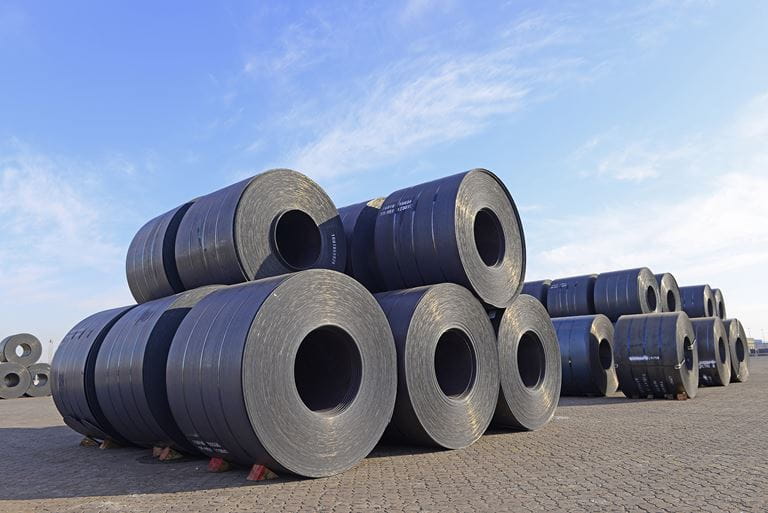
Fastmarkets calculated its daily steel hot-rolled coil index domestic, exw Northern Europe at €635.21 ($682.69) per tonne on Wednesday, inching down by €0.21 per tonne from €635.42 per tonne the previous day.
The index was up by €2.46 per tonne week on week but down by €4.79 per tonne month on month.
The trading standstill continued in the region, with mainly small volumes traded and buyers largely preferring to stay on the sidelines to monitor the situation.
Overall, European steelmakers had short order books, with July- and August-production tonnages yet to be sold.
Offers in Germany continued to be reported at €640-650 per tonne delivered (€630-640 per tonne ex-works) for August-delivery HRC. Some suppliers could reportedly still offer end-July delivery.
Italy-origin coil was offered to Germany at €650 per tonne delivered, with bids reported at a maximum of €630-640 per tonne delivered. Lead times for Italian coil were around five weeks.
Despite some mills’ attempts to increase prices by €10-20 per tonne, most buyers agreed that a rollover of prices was the most likely scenario due to a lack of real demand.
Earlier this month, the European Commission notified the World Trade Organization that EU import safeguards would be extended for two years and a 15% cap on residual quotas for HRC imposed, which should limit supply of Asian material, which was being offered at competitive prices.
Sources believe this news was the major driver behind European mills’ recent bullish mood.
“The safeguards announcement alone is not enough to drive a [domestic] HRC-price rebound. Real demand is stable at low levels and raw material prices are declining, so the situation for an [HRC] price rise is not the most favorable,” one trader in Germany told Fastmarkets.
A supplier in the Benelux region increased offers by €20 per tonne to €650-660 per tonne ex-works earlier this week, with lead times reportedly in August.
A major European steelmaker remained out of the market on Wednesday and sources said they expect them to come back later this week with higher offers.
Fastmarkets calculated its corresponding daily steel hot-rolled coil index domestic, exw Italy at €631.88 per tonne on Wednesday, up by €0.63 per tonne from €631.25 per tonne the previous day.
The index was up by €1.25 per tonne week on week but down by €5.20 per tonne month on month.
The Italian market was also quiet, with suppliers reportedly accepting rollover prices for August-delivery coil.
An integrated mill in the country was heard offering July/August-delivery HRC at €650 per tonne delivered, which nets back to €635-640 per tonne ex-works.
Buyer estimates of achievable prices were mainly reported at €620-630 per tonne ex-works on Wednesday.
In the secondary market, 3-6mm HR sheet was still heard traded within the range of €710-730 per tonne CPT, remaining fairly stable over the past seven days.
The market for overseas coil remained quiet, with most suppliers holding back while they wait for the official confirmation of the new safeguards.
In the past week, offers of Turkish HRC for end-July shipment were reported at €610-630 per tonne CFR, including the anti-dumping duty.
From Saudi Arabia, two sources reported an offer around $635 per tonne CFR to Antwerp.
Published by: Julia Bolotova