

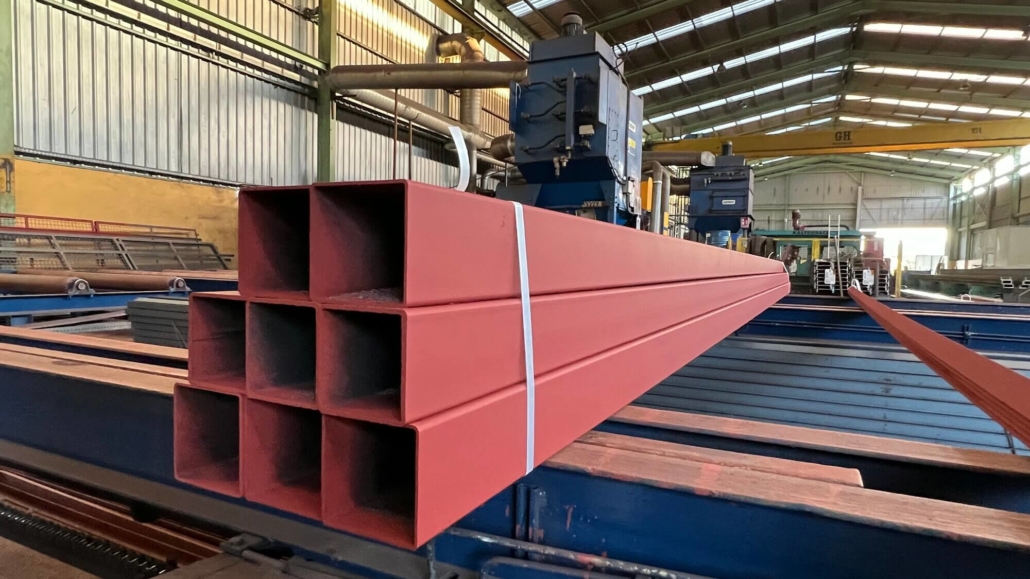
Revista InfoAcero Marzo 2024
En el siguiente enlace pueden acceder a la edición de Marzo de nuestra revista INFOACERO.
Destacamos a continuación algunos de sus contenidos:
- Opinión – D. Manuel García- Junta Directiva UAHE
- Evolución del Índice de Precios de Productos Siderúrgicos – UAHE
- Sector Metal: Actividad Productiva y Comercio Exterior – Confemetal
- Siderurgia: Previsión de los sectores consumidores de la UE 27 – Informe Eurofer – 1er trimestre 2024
- Información Asociativa: Nuevo servicio UAHE-Gestión de Riesgos // Próximos Cursos UAHE
- Steel Net Forum Iberia 2024: 11 y 12 de Abril en Santiago- ¡ÚLTIMA LLAMADA!


European HRC prices continue to decline amid lack of demand
But trading remained limited and no major deals were heard, sources said, who estimated that workable prices were closer to €660-680 per tonne ex-works.
Fastmarkets calculated its daily steel hot-rolled coil index domestic, exw Northern Europe at €667.50 per tonne ($722.60) on Tuesday, down by €7.50 per tonne from €675.00 per tonne on March 25.
The index was also down by €16.46 per tonne week on week and by €51.25 per tonne month on month.
“Demand is not just slow; everything is dead now [with HRC trading],” a steel service center source in Germany told Fastmarkets.
Other factors still having an impact on European HRC prices include lower prices for iron ore and coking coal, along with strong competition from imports.
But imports from some key suppliers in Asia and India are expected to become less competitive in the second quarter, sources told Fastmarkets, because suppliers in those countries are expected to exceed their European import quotas for HRC and would, therefore, be subject to safeguard duties.
In Southern Europe, Fastmarkets’ corresponding daily steel hot-rolled coil index domestic, exw Italy was calculated at €651.67 per tonne on Tuesday, down by €10.83 per tonne from €662.50 on Monday.
The index was down by €17.08 per tonne week on week and by €63.83 per tonne month on month.
The sole Italian supplier kept its official offers of HRC for May delivery at €680-690 per tonne delivered, which nets back to about €670-680 per tonne ex-works.
Even so, no major deals were heard in the market.
Sources estimated tradeable prices at €640-660 per tonne ex-works.
“Confidence in the [Italian HRC] market is still very low,” a buyer source told Fastmarkets, adding that the downtrend in imported HRC prices was not so clear any more.
Offers of Asian material were heard to Italy at €600-610 per tonne CFR.
Offers of HRC to Italy from India specifically were a bit lower at €580-585 per tonne, the buyer source said, adding that India would probably exceed its HRC import quota and would then face safeguard duties.
The source added that India was trying to compensate for that by offering lower prices.


Cliffs/USS merger would have cleared antitrust: Lourenço Gonçalves
Cleveland-Cliffs’ top executive says his company’s bid for US Steel would have complied with US antitrust laws, Kallanish learns.
In an interview on Bloomberg Television, Cliffs chairman, president and ceo Lourenço Gonçalves says he had been in communication with the federal government to ensure that a Cliffs acquisition of its domestic competitor would have been lawful.
“I talked to the US government prior to making the offer to make sure I had a path to clear antitrust and US Steel decided not to listen and go with Nippon Steel,” Lourenço Gonçalves says.
US Steel rejected Cleveland-Cliffs $7.3 billion buyout proposal last summer (see Kallanish 14 August). The United Steelworkers union supported Cliffs’ purchase of US Steel and, by contract, has a de facto role in determining whether such a deal can go forward. The union assigned Cleveland-Cliffs a right to bid.
US Steel accepted Nippon Steel’s offer to purchase the company for $14.9 billion (see Kallanish 18 December).
A service centre operator who frequently stocks flat steel products produced by the two US steelmakers expressed his relief that US Steel had declined Cleveland-Cliffs’ proposal.
“We can’t have Cliffs responsible for that much of the market. It’s too much control for them,” says the steel flats purchaser.
The Cliffs CEO contends that Nippon Steel will not be able to follow through on its proposed transaction.
“The Titanic has already hit the iceberg,” Gonçalves says in the interview, adding: “We’ll be on the other side when the deal unravels.”
Kristen DiLandro USA


Southeast Europe steel output remains stable in February
Southeast Europe (SEE) crude steel production was almost flat in February, according to the latest worldsteel data monitored by Kallanish. Regional output amounted to 236,467 tonnes, compared to 235,766t in February 2023.
In the first two months of the year, regional production increased to 468,254t, compared to 426,049t in January-February 2023.
Serbia was again the largest steel producer among the seven countries of SEE, which also include Bulgaria, Croatia, Slovenia, Bosnia, North Macedonia and Moldova.
However, worldsteel did not provide data for February steel production in Bosnia or Moldova.
Serbia’s production of crude steel totalled 206,600t in January-February, down by 0.7%.
However, second-largest producer in the region Slovenia saw production in the first two months of the year at 107,060t, up by 5.6%.
Third-largest steel producer Bulgaria saw its crude steel output up by 3.8% to 75,000t.
North Macedonia produced 48,945t, up 51.2% on-year. Croatia steel output was flat on-year at 30,649t.
SEE crude steel production fell in 2023 to 5.68 million tonnes, down by 38.6% year-on-year.
Special steelmaker Slovenian Steel Group (SIJ) saw revenue drop 23.1% on-year in 2023 to €1 billion ($1.09 billion) due to high energy prices and extraordinary events (see Kallanish passim). In October, the firm restarted production of stainless steel at its SIJ Acroni unit following an accident at the hot rolling mill.
HBIS Group Serbia Iron & Steel said earlier it will continue to operate with only one blast furnace due to weak demand globally, especially in the European steel market. Its production last year was slightly over 1.1mt of slab, after blast furnace No.1 was idled in mid-2023.
ArcelorMittal’s Bosnia-based Zenica long steelworks resumed production in January after it temporarily paused output last November at its rolling mills due to weak market conditions (see Kallanish passim). It reported a net loss of BAM 159 million ($88.2m) last year compared with a net profit of BAM 41m in 2022. According to the steelmaker, shipments were at their lowest level for the last 14 years, due to a drop in demand and increase in the cost of electricity.
Svetoslav Abrossimov Bulgaria

German steel production stabilises at low level
Crude steel output at German mills increased year-on-year for the second consecutive month in February.
In its latest monthly production report, steel federation WV Stahl assumed a tone more positive than seen for a long time, with 2023 the weakest production year since the financial crisis in 2009. In its February report, it speaks of “gentle signals of stabilisation”, with crude steel production 4.4% higher than in February 2023, totalling 3.1 million tonnes.
January saw a similar y-o-y increase. However, WV Stahl chief economist Martin Theuringer warned then that “we cannot call this a change of trend”. He noted that high power costs are tempering the electric arc furnace route, especially, which in January still saw production 12% below output in January 2021.
In the first two months, crude steel output came to 6.2mt, an increase by 4.6% y-o-y. The increase occurred at EAF mills as well as oxygen-route mills. Rolled products output rose by 7.6% to 5.6mt, Kallanish reads.
Christian Koehl Germany
DRI usage will continue to grow: IIMA adviser
Expansion in direct reduced iron (DRI) consumption is likely while the world’s steelmakers strive to decarbonise production and to secure future feedstock, Kallanish learns from an article by consultant Robert Mazurak.
Mazurak, an adviser to the International Iron Metallics Assocaition, says the use of DRI and hot briquetted iron (HBI) in steelmaking is gaining broader acceptance. Global DRI production has risen since 2016 by nearly 8 million tonnes per year.
“The accelerated growth rate in DRI production may well continue, such that likely we will be seeing another 60mt of incremental DRI output by the end of 2030 to reach an annual level of 185-190mt, rising to 13% of the combined BFI plus DRI ironmaking total,” Mazurak states in his article, published on the Midrex website.
The president of Mazurak Resource Consulting is cautiously optimistic that ore-based metallics (OBM) growth rates will be sustained, with accelerated production and use of all forms of DRI. This comes with new iron ore briquetting hubs, including one announced by Vale, that will likely rise to serve multiple off-takers in targeted regions to feed both existing and new DRI plants.
Straight melting of scrap in an electric arc furnace (EAF), combined with “green” power sources such as hydrogen, results in much lower emissions and carbon footprint compared with traditional steelmaking. Melting scrap and DRI in an EAF is the next best alternative.
To that end, hydrogen-enriched gas-based reduction of iron ore in DRI plants, plus arc furnace melting of DRI and scrap, currently offers the primary pathway for lowest carbon emission steelmaking.
“I’ve been chastened in my belief that breakthrough smelting reduction technologies would have gained more traction by now as competition to the DRI-EAF steelmaking route. It now seems clear that the ‘tried and true,’ proven DRI technologies will be the ones to proliferate over the next several decades,” states Mazurak, adding: “Advancements in direct smelting technologies could slowly develop and ultimately impact DRI plant capacity growth rates.”
Over the last 20 years, cold DRI (CDRI) production went from 39mt to 102.1mt, while hot DRI (HDRI) soared nearly eight-fold, from 1.8mt to 13.0mt in 2022.
“The rapid rise in HDRI use in the EAF is from the recognition that it provides the benefits of quicker melting and an energy savings from the retained, latent heat. However, global hot briquetted iron production has increased only marginally, from 8.6mt in 2003 to 11.4mt in 2022, despite being the most desirable DRI form for seaborne trade,” notes Mazurak.
Other recognised applications gaining acceptance include HBI use in blast furnaces for productivity enhancement and in basic oxygen furnaces as trim coolant.
John Isaacson USA
Steel workers voice concern over ‘irresponsible’ green transition
Rising global steel overcapacity due to “irresponsible” practices by some multinationals and “misguided action” by governments failing to invest in the green transition is damaging the steel workforce in favour of short-term profit maximisation. So says the Trade Union Advisory Committee (TUAC) to the OECD.
At the OECD Steel Committee meeting in Paris on 25-26 March, TUAC says it raised issues with some steel companies refusing to sit at the table with union representatives.
Multinational companies are “exploiting competition between states over decarbonisation aid,” TUAC says in a note seen by Kallanish. “There is a growing concern that workers will bear the cost of essential investments for carbon emission reduction, through mass dismissals rather than upskilling and re-training, even in steel companies that are not under financial pressure.”
“TUAC partners argue that the current changes in the steel industry do not equal a just transition, instead fearing an unjust transition where only financial goals are pursued over environmental and social priorities. TUAC, IndustriALL Global Union and industriAll Europe urgently call for a re-evaluation of priorities within the steel industry, advocating for a balanced approach with workers at the table,” TUAC says.
“We call on governments to make financial support to steel companies conditional on new investments in green technology, retention of workers and respect of social dialogue,” it concludes.
Adam Smith, Poland
Most LME base metals prices start week higher
Three-month futures prices at 9:15am on Monday, compared with Friday’s 5pm close:
• Copper: $8,933 per tonne, up by 0.75%
• Aluminium: $2,320 per tonne, up by 0.48%
• Nickel: $17,325 per tonne, up by 0.48%
• Zinc: $2,504.50 per tonne, up by 0.83%
• Lead: $2,051.50 per tonne, up by 0.74%
• Tin: $27,725 per tonne, down by 0.01%
Copper rose by 0.75% in morning trading but remains below its intra-month high of $9,164.50 per tonne set on Monday March 18.
The red metal is being affected by demand struggles and supply issues.
“Copper ended [the week to Friday March 22] lower as optimism over demand in China faded,” ANZ commodity strategist Daniel Hynes said.
“Ongoing supply risks boosted sentiment earlier in the week,” Hynes added.
Copper supply has been hit by multiple challenges facing mine production. Weak copper concentrate production has caused Fastmarkets’ copper concentrates index to collapse in recent months, currently down 93% since November 2023.
Fastmarkets’ weekly copper concentrates TC index, cif Asia Pacific was calculated at $5.90 per tonne on Friday, down by $3.50 per tonne from $9.40 per tonne one week prior, and down from $79.40 at the start of November.
Zinc gained 0.8% on Monday morning, with Fastmarkets analyst James Moore suggesting this could be due to positive seasonality.
“The galvanized steel market is on a seasonal uptick, which should provide a supportive background for zinc prices,” Moore said.
Zinc is also down from recent highs. On March 15, zinc hit an intra-month high of $2,591 per tonne, but prices have since come off amid China’s construction challenges among other factors pressuring the metal.
“Other zinc-related factors, such as headwinds in China’s construction sectors and reports that Glencore is in the process of restarting production at its Nordenham smelter in Germany, are also creating mixed sentiment,” Moore said.
Published by: Albert Mackenzie

HRC prices in Northern Europe decrease further amid prevailing bearish sentiment among buyers
Meanwhile, HRC prices in Italy were unchanged day on day.
Fastmarkets calculated its daily steel hot-rolled coil index domestic, exw Northern Europe at €675.00 per tonne ($729.46) on Monday, down by €5.38 per tonne from €680.38 per tonne on Friday.
The index was also down by €14.00 per tonne week on week and by €47.13 per tonne month on month.
Integrated mills in Northern Europe continued to offer HRC at €700 per tonne ex-works, but they were ready to grant discounts of €10-20 per tonne on firm bids, sources said.
Trading in the region remained limited, and no major deals were heard in the market.
Fastmarkets’ sources estimated workable prices in the range of €660-680 per tonne ex-works.
Falling prices of iron ore and coking coal, as well as weak demand for HRC, contributed to the downtrend in hot band prices, sources told Fastmarkets.
In addition, Asian suppliers were still heard offering more competitive prices.
“Many buyers are waiting for the period after the Easter holiday, when there will be more clarity on import volumes for the second quarter,” a buyer source told Fastmarkets.
The buyer source said domestic HRC prices had not reached “rock bottom” yet and could drop below €650 per tonne.
No one wanted to sign contracts amid falling prices, the buyer source added, implying that customers would continue to refrain from buying.
“No one is really ready to buy at the moment,” a second buyer source said.
Due to slow demand, only limited restocking could be expected in April, a third buyer source said, adding that some mills were considering output cuts but had not decided on it yet.
In Southern Europe, Fastmarkets’ daily steel hot-rolled coil index domestic, exw Italy was calculated at €662.50 per tonne on Monday, unchanged from Friday.
The index was down by €7.50 per tonne week on week and by €52.50 per tonne month on month.
HRC offers in Italy for May delivery were heard at €680-690 per tonne delivered, which nets back to around €670-680 per tonne ex-works.
Market participants estimated tradable prices in the range of €665-675 per tonne ex-works.
Deals for small volumes were heard at €655 per tonne ex-works.
“Import offers of HRC from Asia are still available on the market at €560-580 per tonne CFR to Italy, and tradable [prices] could drop by €5-10 per tonne,” the first buyer source told Fastmarkets.
HRC offers from Turkey were heard at €600-620 per tonne CFR, including the anti-dumping duty.
Published by: Darina Kahramanova
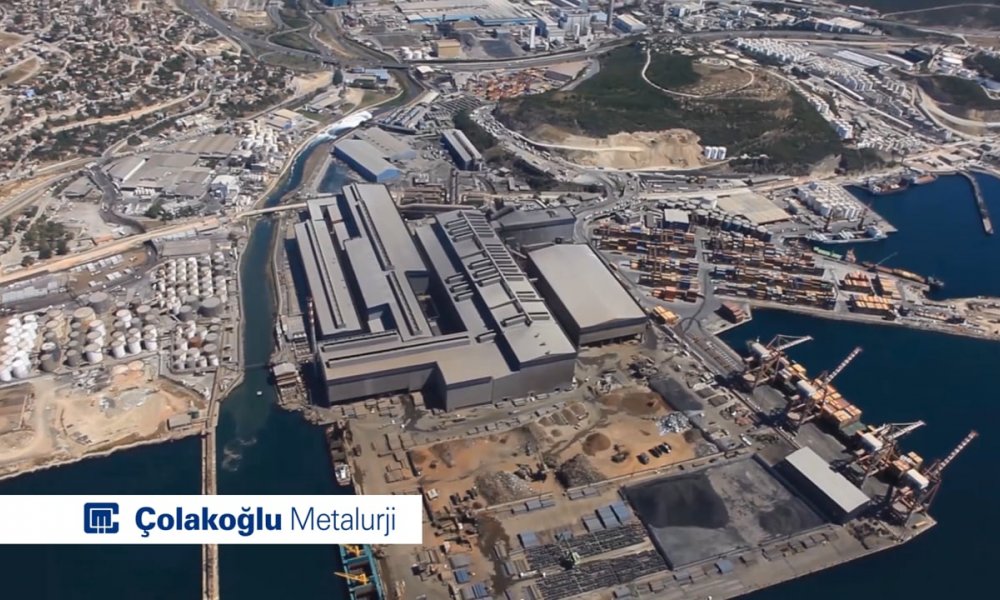
Çolakoğlu pursues zero emissions through renewable energy investments
Turkish steelmaker Çolakoğlu Metalürji is prioritising the transition to “green” energy sources and increasing its renewable energy generation capacity, according to Turkish local media.
“We will forward our Climate Action Plan, which includes our carbon reduction targets and roadmap, to our stakeholders as soon as possible,” Kazım Selim Özkan, human resources, corporate communication, and sustainability director, is quoted as saying by the Dunya newspaper.
Çolakoğlu also intends to improve processes aimed at reducing the carbon footprint of raw material inputs, digitalisation, and the integration of artificial intelligence to enhance production efficiency. Additionally, the company has implemented various projects to minimise by-products and waste formation, it says.
SMS recently said it has completed the upgrade of the compact hot strip mill originally supplied to Çolakoğlu Metalurji in 2011 for its site in Kocaeli (see Kallanish passim).
Elina Virchenko UAE