

UK launches CBAM consultation
UK authorities have launched a consultation on the proposal to introduce from January 2027 a carbon border adjustment mechanism (CBAM) on imports into the UK of certain carbon intensive goods, including steel.
The closing date for comments is 13 June.
The UK announced the 2027 implementation timetable in December (see Kallanish passim). UK Steel said then that the failure to align with the EU’s CBAM timetable leaves the UK steel industry vulnerable.
All chapter 72 iron and steel products are proposed to be included under CBAM, excluding ferroalloys and scrap. Of the total value of £20.48 billion ($25.9 billion) of CBAM sector imports into the UK in 2023, iron and steel accounted for 58%, with 62.9% coming from countries linked to the EU ETS, according to UK HM Revenue & Customs data.
Adam Smith Poland

SSAB upgrades CR mill in Finland
SSAB has tasked Primetals with the next stage of upgrading stand No.1 at SSAB’s four-stand tandem cold rolling mill in Hämeenlinna, Finland.
One year ago, Primetals implemented mill stand drives for the stand No.1, During phases 1 and 2, it upgraded the drive system, including transformers, drive, and motor. In phases 3 and 4, the transformers, drives, and motors of the remaining mill stands will be modernised in a similar way to phases 1 and 2, Kallanish learns from the technology supplier.
In phase 5, an obsolete motor will be refurbished, allowing it to be used as a replacement for the other already modernised motors. The objective of the extensive upgrade is to secure the supply of spare parts for the mill stand drives well into the future. Moreover, the availability of the tandem cold rolling mill will be increased, Primetals explains.
The four-stand tandem cold rolling mill produces coil ranging from 660-1,575mm wide and 0.35-3.1mm thick. The mill, among other things, makes ultra high-strength steel products, mainly for the automotive industry, which provide greater impact protection in cars while reducing weight.
As SSAB is transforming its mills in Luleå and Raahe into mini-mills with electric arc furnaces, Hämeenlinna will be further developed in line with the new production processes, SSAB says in its latest annual report.
Christian Koehl Germany
German alliance builds electric DRI smelter test facility
Thyssenkrupp Steel has commissioned Grenzebach Maschinenbau with the engineering, construction, and commissioning of a direct reduced iron electric smelter test facility at its Duisburg site, Kallanish hears from the steelmaker.
The smelter is part of the research on the carbon-neutral transformation strategy at the site, which also involves the German Iron and Steel Institute (VDEh)’s subunit, Institute for Applied Research (BFI). The project aims to show how sponge iron from direct reduction plants can be liquefied in an innovative smelter to produce electric hot metal, tk Steel explains. The contract is worth around €7.5 million ($8.1m), of which the North Rhine-Westphalia state economy ministry will fund 65% and tk Steel 35%.
BFI will test different feedstocks, such as direct reduced iron, alternative carbonaceous products and recycled materials, for hot metal production. The first trial campaigns are scheduled to start at the beginning of 2026. The demonstration-scale smelter with a capacity of 100 kg/hour of DRI is adapted to the DRI test facility.
Last week, thyssenkrupp and BFI chose TS Elino to supply the DRI test facility (see Kallanish passim). The two units will collaborate to focus research on hydrogen-based direct reduction technology.
“Hydrogen-based direct reduction in combination with melters is an innovative approach that thyssenkrupp Steel is implementing on a large industrial scale for the first time,” comments chief technology officer Arnd Köfler. “The experimental melter and the direct reduction test facility … will enable us to use different charge materials flexibly, and to find answers to the fundamental technological questions surrounding the transformation of steelmaking.”
Christian Koehl Germany
Stahl Gerlafingen ponders closure of production line
In a statement sent to Kallanish upon request, the company bemoans a de-facto export ban by the EU since mid-2023 and also criticises the EU for financial support measures it grants to EU mills. “Our exports of merchant bar, which in the past generated good revenue and margins, have been effectively banned by the EU, regardless of the free trade agreement between Switzerland and the EU,” the statement reads.
It also cites high costs for power in Switzerland, highlighting the particularly high grid fees, which have contributed to pushing the company into the red. Stahl Gerlafingen’s main product is actually rebar, which comprises more than two thirds of its annual output of up to 700,000 tonnes, but this product is not mentioned in the statement.
The management, headed by Alain Creteur, is now pondering the closure of one rolling line, and is talking to local policy-makers to jointly find a solution. “From a commercial point of view, a closure of one line is unavoidable, but it would also mean the loss of many jobs,” he says.
Policy-makers on the regional and national level are currently in discussion to find a solution, so the company has postponed its closure decision, in agreement with the Beltrame family. It notes that the melt shop and other main facilities would not be affected by such a decision.
Last weekend, local newspapers cited Swiss economy minister Guy Parmelin as saying that the government is in “intense” talks over Stahl Gerlafingen. However, he also noted that he does not consider the steel industry in Switzerland to be “systemically relevant”, contrary to Stahl Gerlafingen’s claim.
Christian Koehl Germany

ArcelorMittal expands Magnelis production in Spain
ArcelorMittal says it will expand coated steel production after concluding the upgrade of galvanizing line No.1 at its Avilés plant in Spain, Kallanish learns from the company.
The project included enabling the line for production of “Magnelis”, the firm’s product with an anti-corrosion metallic coating. The plant has been producing this at galvanizing line No.2 since 2017.
“We began large-scale production at line No.1, after several months of work to adapt the facility and an important series of tests to validate the product,” the company says. “The investment places the Avilés plant as one of the Group’s main Magnelis manufacturing units.”
The new corrosion resistance steel products, whose characteristic is a composition coating with a higher content of aluminium and magnesium, come in 2-3.5mm thicknesses, something that was not feasible at line No.2.
ArcelorMittal plans to double the volume of Magnelis produced in Asturias. Since its inauguration in 2017, the No.2 line’s cumulative output has exceeded 500,000 tonnes.
ArcelorMittal thus expects to meet most demand for Magnelis in the Iberian market. This specific product is mainly supplied to the solar energy sector for the construction of photovoltaic park infrastructure. Magnelis offers a substantially lower environmental impact than that of alternative materials, ArcelorMittal claims.
Todor Kirkov Bulgaria

Southern European apparent longs demand to resurface: mills
Apparent demand for long products is seen recovering slightly in the second quarter in southern European countries such as Portugal, Italy, Spain and Greece, while real demand should remain depressed, mill sources believe.
Apparent demand for wire rod, merchant bar, rebar and sections is seen resurfacing a few weeks after Easter, given international scrap prices have stopped dropping. Sources who spoke to Kallanish believe scrap values will stabilise in the coming weeks, supported by low availability and strong EU and international demand.
The European longs market is being impacted by lower consumption from the construction sector. However, southern EU countries are performing better than northern Europe, with better shipments in Q1 2024 compared to Q3 and Q4 2023. Rebar sales are particularly weak in France and Germany where the construction sector has suffered a strong setback. Sales are also better in eastern European countries such as Poland, as well as the UK.
Rebar prices in northern and eastern Europe are at €610-630/tonne ($662-684) delivered, depending on tonnage, sources suggest. All markets are seen remaining quiet this month, with customers shunning sales until after Easter.
In Q1, merchant bar and sections have suffered low apparent and real demand, but some orders are now resurfacing. Most buyers in Europe restocked in November and December last year and have been destocking ever since.
Merchant bar is the worst-performing product for sales at present, sources point out. Prices in northern Europe have fallen from over €700/t delivered to an average of €650/t delivered. The merchant bar stagnation is seen continuing in Q2, albeit with brief spells of slightly better demand.
Apparent demand for sections should resurface after a long period of destocking, bringing some price stability, but woes over consumption continue. Wire rod may also see renewed demand in April, with fewer imports expected amid depleting stocks. Its prices are at some €630-650/t delivered in Europe.
Rebar prices are forecast to see some stability in southern Europe in the coming quarter, but the German and French markets will continue to suffer.
Natalia Capra France

Italian mills cut rebar prices again
Italian longs producers cut prices this week, amid the weak construction season and tepid global market recovery.
Argus‘ weekly Italian rebar assessments declined by €15/t to €575/t ex-works, while the drawing-quality wire rod index softened by €10/t, to €650/t delivered.
Italian producers dropped rebar prices to €580/t ex-works, including extras for sizes, with levels of €560-570/t ex-works available for larger orders, probably in attempts to spur buying interest ahead of the Easter holiday. Demand remains low as customers still doubt prices have reached the bottom, market participants said.
Indications for Italian drawing quality wire rod stood in a wide range of €640-670/t delivered locally and to nearby markets depending on tonnages, but producers were yet to start offering April material. In Spain offers were €10/t below these levels last week, but given high pressure from imports it was possible to obtain lower prices for sizable tonnages in Italy and Spain. Workable levels for high-carbon wire rod remained at €750-780/t delivered in Italy late last week.
Offers to nearby markets were scarce as some mills closed their March order books and were about to start their April campaign next week. But indications for rebar were pegged at €585-590/t ex-works, although given lower local prices discounts were deemed available. Despite a slow recovery seen in the construction sector across Europe, Italian mills were mainly focused on the central region while they faced high competition with Turkish suppliers in the southern countries.
Although inflation rates fell below 3pc, it was unclear if interest rates might decrease, but any cut would only be slight, a German market participant said. Construction activity is not expected to improve substantially, with fabricators maintaining cut and rebar prices in the range of €650-690/t delivered in Germany. Rebar prices from Germany mills were indicated at €640-650/t delivered for smaller tonnages and at least €630-640/t delivered lower for larger lots, with €620/t delivered available in some cases. Some German buyers were still receiving tonnages booked late last year for the first quarter as they had to postpone these deliveries after slower than expected construction demand.
In Poland rebar prices fell to €650/t delivered and below locally, with €630/t delivered available to nearby markets last week.
Offers of Bulgarian rebar lowered to 1,215-1,230 lev/t (€621-629/t) delivered last week under pressure from cheaper imports.
Some European buyers have resumed purchases of rebar and wire rod from overseas suppliers in recent weeks, suggesting prices may be close to reaching a floor. Sales were reported mainly from Turkey to Balkan markets at $580-595/t for small lots of rebar, with latest bookings heard to Serbia and Albania last week. “In Serbia no-one wants to buy a kilogram, as they are scared of further price drops,” a buyer said. Drawing quality wire rod was also heard booked from Turkey mainly to Spain at €590/t cfr or slightly below for late March-early April shipment in the past two weeks, with this quarter’s quota filled and it is estimated that Turkish allocation for the next quota period will be exhausted promptly in the first few days of next month.
Egyptian mills were offering rebar at $580-590/t fob and were said to be focusing on other markets, such as the Americas. There was talk that GCC rebar might have been imported to Europe recently, probably because of a prolonged downturn in Asia and other markets, but no details have emerged.
Argus Media

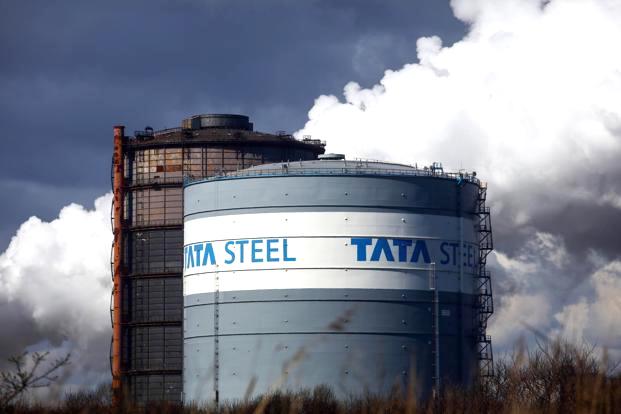
Tata Steel UK to close coke ovens on March 20, shut down one BF in summer
“The performance of the coke ovens has been deteriorating over many months, despite herculean efforts by the teams there. The condition of the ovens has now worsened to a level that makes continued operation untenable,” chief executive officer Rajesh Nair said on March 18.
“We will now begin the process of safely closing and purging the coke ovens, and ceasing operations at the adjoining By-Products plant,” he added.
In January this year, the company announced plans to shut down the hot-end at Port Talbot before the end of 2024.
One of two operating blast-furnaces (BFs) at Port Talbot will be shut down in summer this year, according to a press release.
Port Talbot is equipped with two BFs with combined capacity for 5 million tonnes per year, and two basic-oxygen furnaces (BOFs) with capacity for 4.8 million tpy. The site at Port Talbot produces hot-rolled and cold-rolled coil, as well as tubes.
Tata Steel plans to replace the existing BF-BOF production route at Port Talbot with more eco-friendly electric-arc furnace (EAF) operations, with new EAFs expected to come online in 2027.
Tata Steel intends to keep its hot-strip mills operating, and the company’s downstream and steel processing centers will also keep working.
Market sources suggested that the company would use both imported slab and slab produced by its own asset in the Netherlands to feed its hot-strip mill.
Unions may consider strike over BF closure
Trade unions described the decision to close the coke ovens as a “massive blow” but admitted that they had expected the decision because of the condition of the equipment.
At the same time, the trade unions expressed their disappointment over Tata’s decision to proceed with this summer’s proposed closure of BF4, and warned of possible industrial action.
“Regretfully, the coke ovens were always going to close during the transition period,” Alun Davies, National Officer for Steel at steelworkers’ trade union Community, said on March 18. “Once national consultations conclude, we will ballot for industrial action, should Tata confirm its intention to close BF No4.”

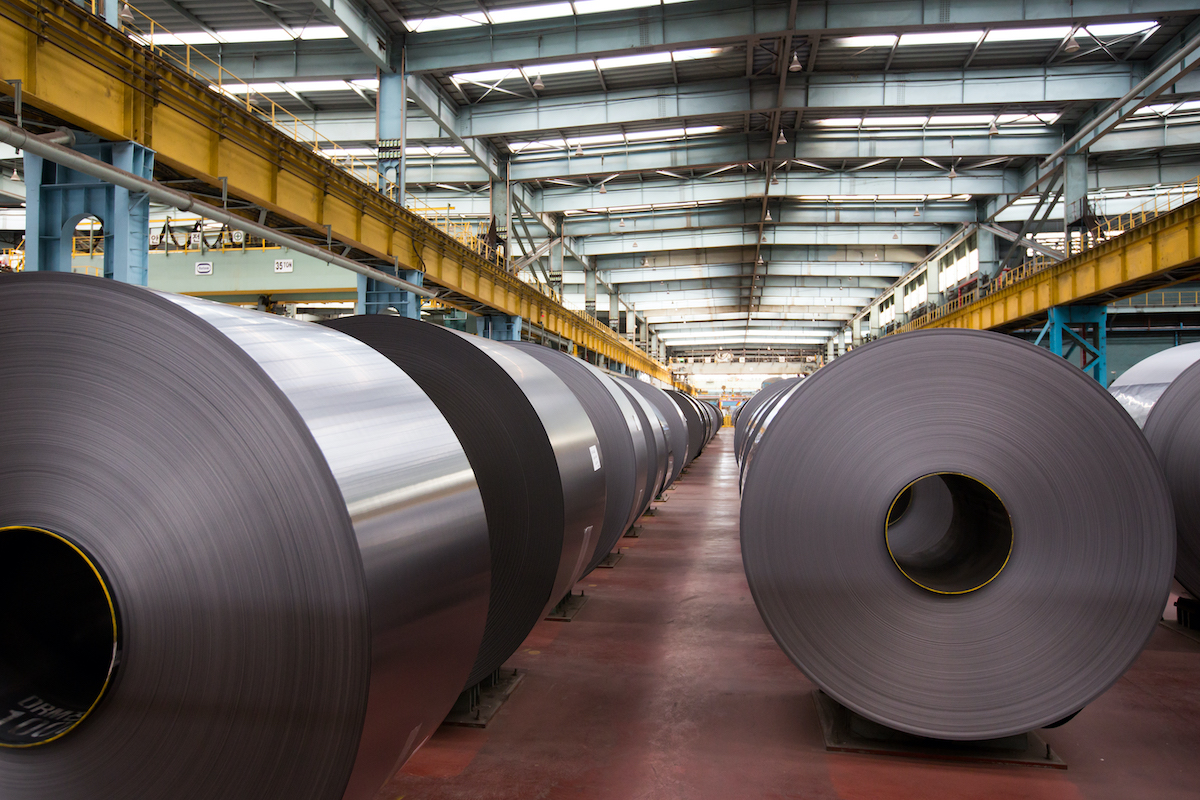
Muted demand, cheaper raw materials weigh on European HRC prices
But, on a firm bid, producers were reportedly ready to accept lower prices, namely €680-690 per tonne ex-works.
Buyers’ estimates of achievable prices were heard at €660-690 per tonne ex-works.
A booking of HRC from Central Europe to Germany was reported at €690 per tonne delivered, with freight estimated around €50 per tonne.
Nevertheless, overall trading remained extremely slow in the region, with sources mainly reporting hand-to-mouth booking for limited tonnages.
“There is no trading. Everyone is on a wait-and-see mode because mills have shown resistance on lowering prices despite falling raw materials costs,” a steel-service center source in the Benelux area said.
“Mills will need to cut production to find a [supply-demand] balance, but there are no [official announcements] yet. [European steelmakers] will need time,” the source added.
Declining prices for iron ore and coking coal have been putting additional pressure on finished steel prices, sources said.
The downtrend in raw materials “is one of the key reasons why steel prices are under pressure,” a buyer source in Germany said. “Mills still have room to decrease [HRC] prices, and there is a perception that rock bottom is yet to be touched, so buyers keep a low profile.”
As a result, Fastmarkets calculated its daily steel hot-rolled coil index domestic, exw Northern Europe at €683.96 ($744.44) per tonne on Tuesday, down by €5.04 per tonne day on day from €689.00 per tonne.
The index was down by €15.12 per tonne week on week and by €41.04 per tonne month on month.
Short-term expectations were quite pessimistic, buyer sources said, adding that they expect HRC prices to keep sliding down.
“Demand is showing no signs of improving and bookings are very slow [from sectors such as] automotive, construction, mechanical engineering — everything is very quiet,” a mill source said.
“There is some demand [for steel] from the renewable energy sector, but it’s not enough to compensate for the lack of demand from other industries,” the mill source added.
In Southern Europe, Fastmarkets’ corresponding daily steel hot-rolled coil index domestic, exw Italy was calculated at €668.75 per tonne on Tuesday, down by €1.25 per tonne day on day from €670.00 per tonne.
The index was down by €6.25 per tonne week on week and by €54.58 per tonne month on month.
HRC offers from an integrated supplier in Italy for April-May delivery were heard at €680-690 per tonne delivered, which nets back to about €670-680 per tonne ex-works.
But buyers’ ideas of workable prices were lower, with bids reported at €660-670 per tonne delivered (equivalent to €650-660 per tonne ex-works).
Sources reportedly limited activity in the market, with buyers preferring to book only small tonnages of HRC and expecting prices to drop further.
Import HRC offers from Indonesia, Japan and India to Italy were reported at €600 per tonne CFR.
Offers from Vietnam were heard at €580 per tonne CFR, while two sources pointed out that prices in the range of €560-570 per tonne were “achievable” for Vietnamese material.
Late-May shipment was heard available from most overseas suppliers.

Strikes could stretch EU stainless coil lead times
European prices for stainless cold rolled coil are increasing in transactions on-month. Italian values are lower than the rest of EU countries due to continued uncertainty in the market and low activity downstream, sources tell Kallanish.
Sheet prices however are increasing on-month in all of Europe and also in Italy, where stocks are said to be medium-low. At present Outokumpu and Acerinox are idling their plants due to strikes. Since less coils will be available on the market, mills are expected to delay orders. Longer lead-times are seen supporting steelmakers’ price increases for May delivery.
The strike happening in Finland is aimed against the Finnish government and is not related to Outokumpu’s labour relations. The majority of Outokumpu’s stainless steel and ferrochrome operations as well as Tornio port in Finland will be shut down for two weeks between 11-25 March. The strike is also expected to indirectly impact Outokumpu’s operations in other countries through internal material flows. Meanwhile, Acerinox employees have been on an indefinite strike since 5 February over the new collective agreement. The industrial action involves almost 1,800 people. The strike is understood to be continuing during the negotiation process. The company is losing almost 1,200 tonnes/day of production since its workers at Cadiz declared the indefinite strike. Financial losses are estimated to have exceeded €3.5 million ($3.80m) over the last four weeks (see Kallanish passim).
Mills in Europe are now asking €2,580-2,600/tonne ($2,809-2,831) delivered for stainless cold rolled coils for end-May delivery. Italian contracts are ticking up to €2,400-2,450/t on average, while European CRC is pegged at €2,500-2,550/t delivered, sources suggest. Stainless HRC prices in Italy remain weak due to imports from Asian countries. Domestic values stand at €2,300/t delivered, on average. European sheet prices are also increasing by some €100/t on-month. In Italy sheets are pegged at €2,700/t ex-works, sources suggest.
Natalia Capra France