


European HRC market remains bullish despite limited real demand
Sentiment in the European hot-rolled coil market remained upbeat on Nov. 10 even though real demand is not recovering and amid concerns related with an increase in domestic production.
Lead times from European mills have increased by a couple of weeks, sources said. However, they claim that this only indicates that automotive companies postponed some deliveries for the first quarter next year and distributors have restocked minimal volumes, while real demand has remained low.
Platts assessed domestic prices for hot-rolled coil in Northwest Europe stable on day at Eur650/mt ex-works Ruhr on Nov. 10.
Deals were heard in the range of Eur650-655/mt ex-works Ruhr, with the majority of transactions reported at Eur650/mt ex-works Ruhr.
Offers and near-term tradable values were heard at Eur680-700/mt ex-works Ruhr.
European steelmakers are expected to keep spot trade limited accepting only higher prices in order to have better position in long-term contracts negotiations. Majority of steelmakers have been aiming for stable prices in contracts for full 2024.
“Mills would rather trade less on spot, but have prices higher to have an argument in contract discussions,” a mill source said.
At least three blast furnaces in Northwest Europe and one in Central Europe are expected to restart production in the coming few months. And market participants have been concerned that the increased availability combined with unchanged real demand would result in price drop.
Platts assessed domestic prices for hot-rolled coil in South Europe down by Eur10/mt on day to Eur640/mt ex-works Italy on Nov. 10.
The assessment was based on tradable values heard at Eur640/mt ex-works Italy and deals reported at Eur650/mt delivered Italy.
Platts is part of S&P Global Commodity Insights.
Author: Maria Tanatar


Italian rerollers increase heavy plate offers
Italian rerollers have increased heavy plate offers in the week to Nov. 10 due to higher costs.
In the European coil market, prices have been bullish supporting the mood change in the plate segment.
Italian mills have been offering heavy plate at Eur750-760/mt ex-works Italy and few deals have been settled at Eur710-740/mt ex-works Italy for the first quarter delivery material.
Platts assessed domestic prices for heavy plate in South Europe up by Eur50/mt on week at Eur725/mt ex-works Italy on Nov. 10.
Although volumes traded at the higher prices have been limited as bigger buyers had settled deals earlier, the rerollers remained firm in their offers and they expect to see further price recovery.
“We drew the line, and we will not sell below certain price,” an Italy-based reroller said. “The next round of slab deals will be settled at higher prices and we have no choice.”
Platts assessed prices for imported slab in South Europe up by $20/mt on week to $600/mt CIF Italy on Nov. 10.
Offers for slab from Asia have been heard at $600/mt CIF Italy and tradable values have been reported at $600-$605/mt CIF Italy.
In Northwest Europe, German mills have been focused on deliveries under long-term and project contracts, their presence in the spot market has remained limited.
Platts assessed domestic prices for heavy plate in Northwest Europe stable on week at Eur790/mt ex-works Ruhr on Nov. 10.
Market participants estimated tradable values at Eur760-800/mt ex-works Ruhr, with majority of data reported at Eur780-800/mt ex-works Ruhr.
A German mill had sold limited volumes of plate at competitive prices in the beginning of the week, but the price was no longer available, market sources said.
Platts is part of S&P Global Commodity Insights.
Author: Maria Tanatar

EUROMETAL at the 16th Blechexpo in Stuttgart
EUROMETAL was present this week at the 16th Blechexpo. This international trade fair for sheet metal processing brought together the main players in the flat steel industry in Stuttgart.
During the visit, the president of EUROMETAL, Fernando Espada, and the General Director, Ricardo Silva, had the opportunity to meet and interact with several members of the federation present at the fair as exhibitors, participants and visitors.
In addition to discovering various news and trends, it was also possible to hear the concerns and challenges faced by some of the service centers and steel traders present at the fair or represented by their national federations.
We took advantage of the fair to also publicize our next Webinar about CBAM on the 20th of November and the Steel Trade Day taking place in Düsseldorf on the 29th and 30th of November.


Producer push for higher HRC prices in Europe hindered by lack of demand
Buying activity in Europe has picked up, however, with some restocking taking place to secure tonnages for first-quarter deliveries in 2024.
The fact that supplies have also been reduced by the production cuts at some steelmakers was also supporting the price rises, sources said.
And lead times at integrated steelmakers have reportedly extended to a minimum of six weeks – up from four-to-six weeks previously.
Most buyers put the workable level at about €640-660 ($684-706) per tonne ex-works, with some transactions in Germany reported within that range on November 9.
Offers from integrated steelmakers were reported at €680-700 per tonne ex-works for January rolling coil, while some mills are considering adding €20-30 per tonne to their offer prices for February.
But some market participants are concerned that the bullish trend will not be sustainable into the first quarter of 2024, because end-user demand is expected to remain low. At the same time, some mills are considering blast-furnace restarts, so HRC availability will increase.
“Salzgitter [is mulling a restart of] its BF A in Q1 2024, and ArcelorMittal’s Bremen BF is expected to come back online in Q4 2023,” a trader source told Fastmarkets.
Fastmarkets calculated its daily steel hot-rolled coil index, domestic, exw Northern Europe, at €650.60 ($695.48) per tonne on November 9, up by €5.47 per tonne from €645.13 per tonne on November 8.
The index was up by €18.97 per tonne week on week and by €30.60 per tonne month on month.
In Southern Europe, Fastmarkets calculated its daily steel hot-rolled coil index, domestic, exw Italy, at €627.92 per tonne on November 9, up by €6.46 per tonne from €621.46 per tonne on November 8.
The Italian index was also up by €12.92 per tonne week on week and up by €22.92 per tonne month on month.
Italian steelmakers were reportedly sold out for December rolling HRC and some temporarily withdrew their offers to reconsider their prices.
Buyers said the tradable level was about €620-630 per tonne ex-works, which is in line with the most recent transactions for December-rolling HRC in Italy, at €635-640 per tonne delivered (equivalent to €620-625 per tonne ex-works), Fastmarkets understands.
Imported HRC remains largely uncompetitive in Europe due to the long lead times and the relatively small gap with European prices.
HRC from Asia was on offer in Europe at €610-620 per tonne CFR to Italy, with most suppliers offering January shipment.
And December-shipment HRC from Turkey was available at €640-650 per tonne CFR to Italy, duty included.
Published by: Julia Bolotova


Prices edge upward in Southern European rebar market; wire rod prices stable
Sources, however, held mixed views regarding price expectations for the remainder of the quarter.
Fastmarkets price assessment for steel reinforcing bar (rebar) domestic, exw Italy was €600-620 ($641-663) per tonne on Wednesday, increasing by €5-10 per tonne from €590-615 per tonne on November 1.
Producers attempted to increase offer prices by around €20 per tonne, but weak demand made the new level unacceptable to buyers and prices remained stable as a result, Fastmarkets heard.
“Producers are trying to increase the price because over the last month they said that they have lost money,” a buyer source said.
“The still mills are offering higher prices this week compared to last week, at around €610-620 per tonne EXW, but I don’t think they are selling much quantity and so the price seems to be stable from last week’s levels,” a second buyer source said.
“Rebar is now at €600-610 per tonne EXW for new offers in the market and it is the intention of mills to raise offer prices to €620-630 per tonne EXW before Christmas holiday closures. However, demand is weaker this week than last week” a third buyer source said.
Some sources held more optimistic outlooks.
“Prices are rising steadily, and clients are buying at new conditions,” a producer source said.
Meanwhile, Fastmarkets’ price assessment for steel reinforcing bar (rebar), domestic, delivered Spain was €590-615 per tonne, stable week on week.
Southern European wire rod
Fastmarkets’ price assessment for steel wire rod (mesh quality) domestic, delivered Southern Europe was €585-600 per tonne on Wednesday, down by €5 per tonne from €590-600 per tonne the week prior.
Prices remained stable in the wire rod market.
Production cuts across European steel mills have altered supply-demand dynamics, sources said.
“While there has been no market recovery or improvement in the economy, there is simply a lack of steel in Europe due to the various production stops at European steel mills. This has increased demand and pushed up prices,” a wire rod producer said.
As a result of import quotas from most countries having been filled, wire rod buyers are more reliant on domestic mills, sources said.
“The most significant import offer came from Turkey, as Turkey still has available quotas to export to Europe. Today it is essentially the only alternative to the European market for Italians. The quotas have blocked further imports from the Far East, Egypt and Algeria. Balkan steel mills today do not have material available for export to Italy due to technical and financial problems,” a wire rod producer source said.
“Many Italian customers, who usually buy most of their material from abroad, in the month of October, and partially also for November, [have] purchased from Italy,” the producer added.
Published by: India-Inés Levy
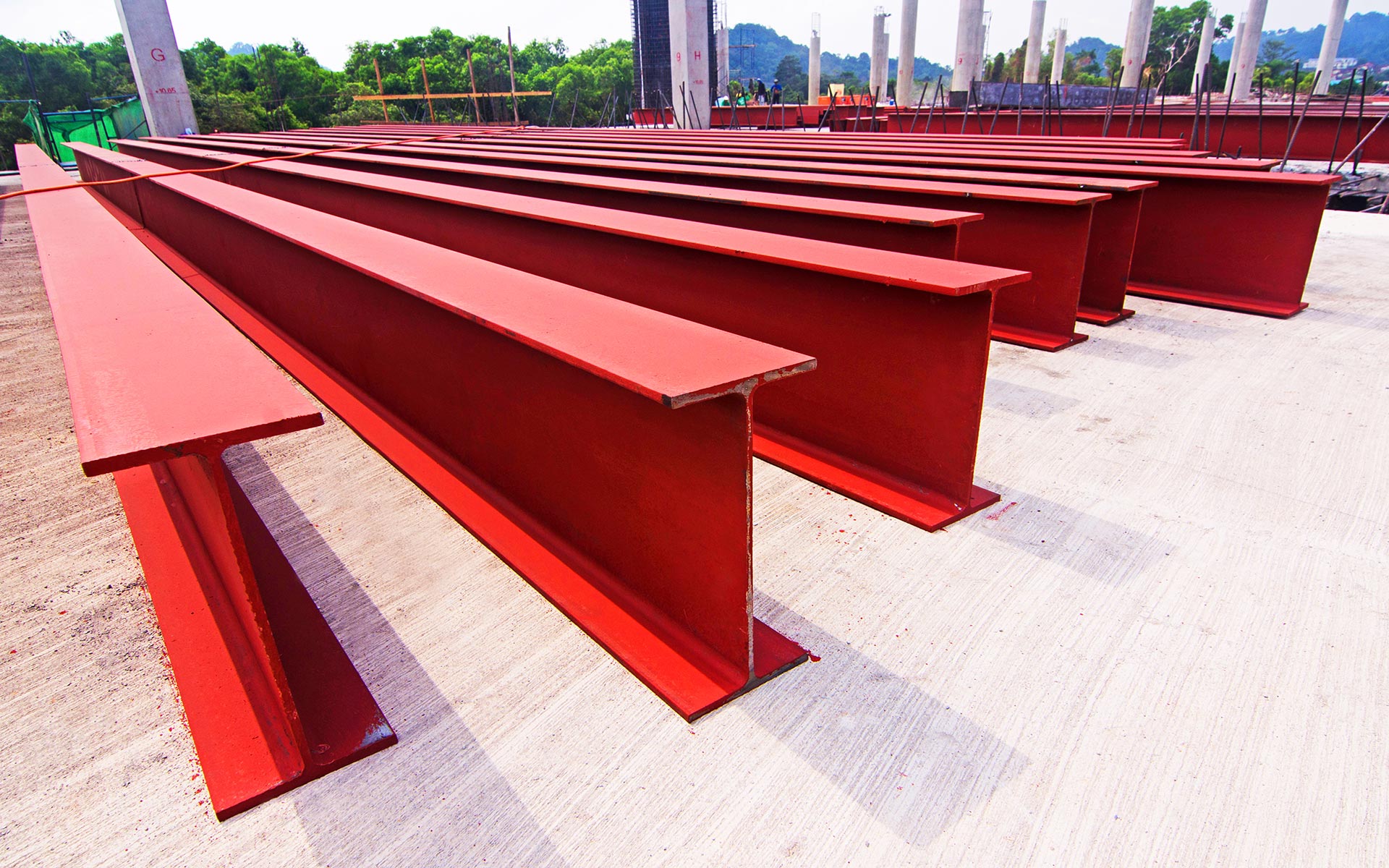
European steel beams market sluggish; prices widen lower
“December rolling is booked in Europe,” said a trader in northern Europe, who expects little purchasing activity in the remainder of 2023.
Fastmarkets heard of offers in a range from €730-750 in the past seven days that were only “partly booked.”
Fastmarkets’ weekly price assessment for steel beams, domestic, delivered Northern Europe was €730-750 ($780-802) per tonne on Wednesday, widening downward from €740-750 per tonne a week earlier.
Similarly, Fastmarkets’ weekly price assessment for steel beams, domestic, delivered Southern Europe was €730-750 per tonne on Wednesday, widening downward week on week from €740-750 per tonne.
Sources have reported production cuts and mill shutdowns in recent weeks while consumption from the construction sector has weakened against a negative macroeconomic backdrop.
Weak demand has also muted the import market.
Talks between industry participants were also said to be taking place at the Blechexpo international sheet metal trade fair, which is taking place over November 7-10.
Scrap costs in Turkey’s bellwether market rose despite poor sales of finished steel.
Fastmarkets’ calculation of its daily index for steel scrap HMS 1&2 (80:20 mix) North Europe origin, cfr Turkey was $373.15 per tonne on Wednesday, up by $15.23 per tonne week on week from $357.93 per tonne.
Published by: Holly Chant
World’s first building with fossil-free steel inaugurated in Sweden: SSAB
- Material manufacturing accounts for most of construction’s climate impact
- Fossil-free steel contained in sandwich panels that make parts of walls
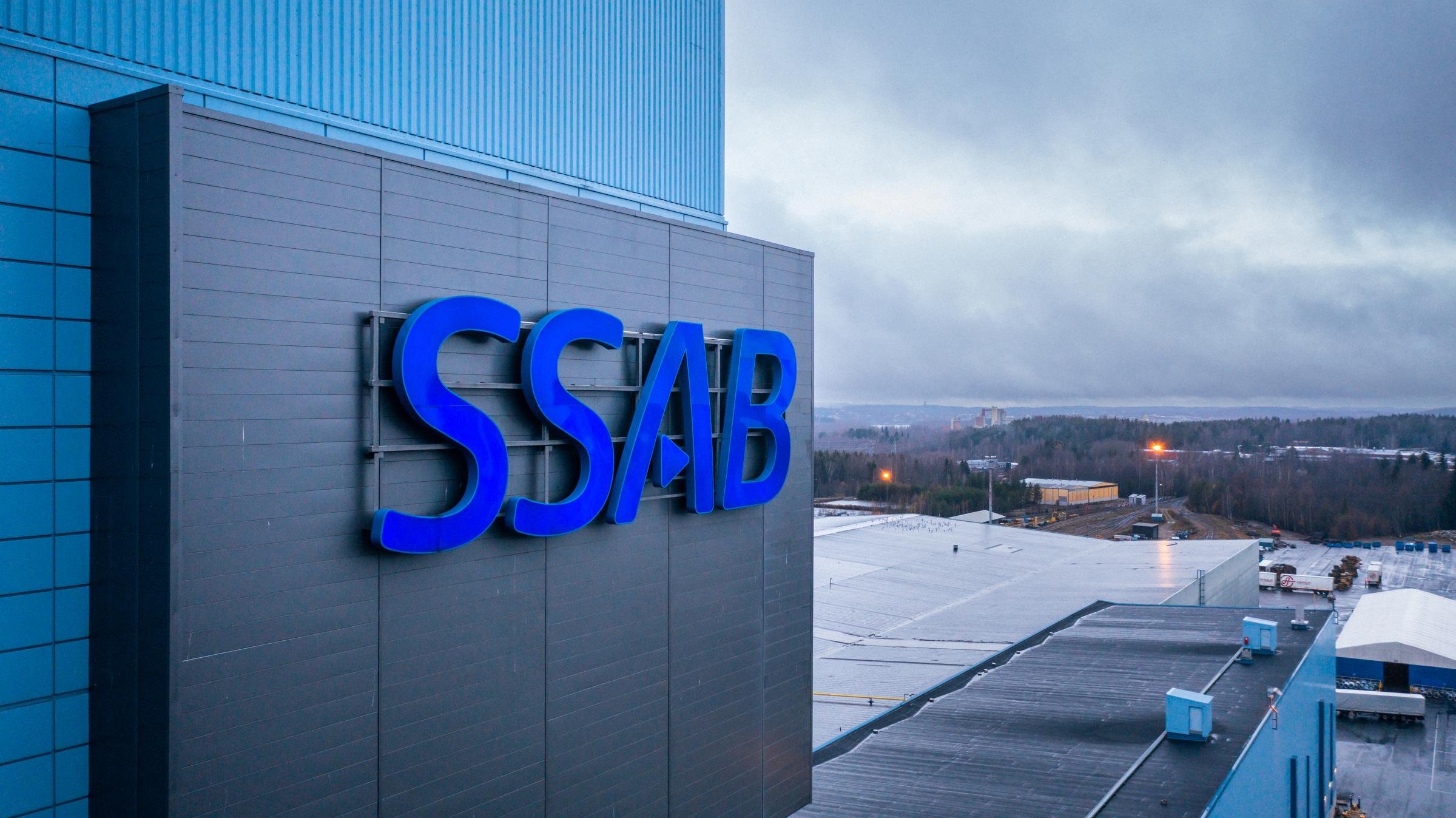
The building — Tomaten 1 — in Lund, in the southern Swedish province of Scania, is an industrial facility covering 6,000 square meters. Its wall and roof structures were designed and produced by Ruukki Construction, a division of SSAB, and parts of it were manufactured using the company’s fossil-free steel.
The SSAB Zero steel — made from scrap and renewable power and biogas with less than 50 kg of Scope 1 and 2 carbon emissions per metric ton of steel — is contained in the building’s sandwich panels made by Ruukki in Finland for parts of the walls.
SSAB currently produces SSAB Zero in the US state of Iowa, where it operates electric arc furnaces and slab casters. The company said earlier it aimed to make 40,000 mt of this premium-priced steel this year, up from 500 mt made in 2022.
SSAB claims Peab has become the first construction company globally to use fossil-free steel in a completed building project.
“For SSAB, it’s not just about reducing our own emissions…but also about contributing to reducing the carbon footprint in other parts of the value chain,” Head of Sustainability at SSAB Christina Friborg said.
Construction and real estate together account for one fifth of Sweden’s domestic carbon dioxide emissions. In new construction projects, the manufacturing of materials and products accounts for the vast majority of the sectors’ climate impact, and if the construction and civil engineering industry is to reach climate neutrality by 2045, it requires new materials and products with a low impact on the environment, SSAB said, adding that in 2026 it will bring on to the market fossil-free steel that it will manufacture in Europe using HYBRIT technology.
It has trademarked this steel as a brand covering steel that it will produce using direct reduced iron, green hydrogen and fossil-free electricity through its HYBRIT joint venture with Swedish iron ore miner LKAB and Vattenfall. For this, SSAB will deploy EAFs in Sweden and Finland to produce steel commercially without using blast furnaces and iron ore with coke, coal and oil and gas-based fuels.
Author Katya Bouckley, katya.bouckley@
Platts is part of S&P Global Commodity Insights.


EU HRC transaction prices rise, mills aim for further increases
- Two mills to restart blast furnaces in Germany
- Mills aim for stable first-half 2024 contracts
Northwest European domestic transaction prices for hot-rolled coil increased on Nov. 8, while steelmakers tried to achieve further increases.
Northwest European mills made deals at Eur645-650/mt ex-works Ruhr and Eur650-660/mt ex-works Northwest Europe. Tradable values were heard at Eur630-650/mt ex-works Ruhr.
Official offers were reported at Eur680-700/mt ex-works Northwest Europe, and some sources said that the mills were planning to increase offers above Eur700/mt ex-works Northwest Europe.
Platts assessed domestic prices for hot-rolled coil in Northwest Europe up by Eur10 on the day to Eur645/mt ex-works Ruhr on Nov. 8.
Production cuts implemented by majority of the Europe-based steelmakers played a major role in the price recovery. The bullish market mood, however, was fragile due to generally bearish view of the buyers on the real demand and concerns about flat furnaces restarting in Germany this year and in the first quarter of 2024.
“We will focus on back to back business, it makes no sense to build stocks with more expensive coil when real consumption is struggling,” a Germany-based service center source said.
Although distributors recognized that mills need to achieve higher prices to cover rising production costs, they also did not want to risk building stocks with more expensive coil. Some market participants believed that the steelmakers would rather close more capacities than they would allow price fall.
“With current prices every mill is losing money, so price rise is inevitable,” a mill source said. “Although there are doubts among the buyers if the price rise would be sustainable, the mills have no other choice.”
In addition, mills have been targeting settled contracts for the first half of 2024, with end-users at unchanged prices compared with 2023, despite the decrease of spot prices in the second half of this year. The steelmakers have been aiming for prices around Eur750/mt ex-works Ruhr for HRC and for about Eur850/mt ex-works Ruhr for hot-dipped galvanized coil. Buyers from the automotive industry have been expecting contracts to be settled about Eur100/mt below those prices.
“Carmakers have postponed some volumes they originally requested for the fourth quarter into the first quarter [of 2024] because they expected prices to go down,” a second service center source said. “Which gave mills a good argument to increase prices as now they have good order books for the beginning of next year.”
Author Maria Tanatar, maria.tanatar@
Platts is part of S&P Global Commodity Insights.
European steel HRC prices trend higher; mills to seek substantial rises for Q1
Fastmarkets calculated its daily steel hot-rolled coil index, domestic, exw Northern Europe, at €645.13 ($689.91) per tonne on November 8, up by €5.13 per tonne from €640.00 per tonne on November 7.
The index was up by €22.63 per tonne week on week and by €28.13 per tonne month on month.
Transactions in Germany were reported at €640-650 per tonne ex-works, while in the Benelux region deals were heard at €660 per tonne ex-works, but only for limited volumes.
“Some restocking is necessary, but the market is too uncertain to order big volumes,” a steel service center source in Northern Europe said.
Lead times from integrated mills in the region remained at 4-6 weeks, while offers were reported at €680-700 per tonne ex-works.
Market sources said that, for first-quarter rolling, producers would like to consolidate prices “starting with a 7” – meaning, €700 per tonne or more.
Currently, reduced supplies due to output cuts, restocking and the uptrend in imports were the major factors driving up prices, industry sources told Fastmarkets.
“I think it’s realistic to forecast higher prices in the first quarter [of 2024] because imports are getting more expensive and the ‘other countries’ quotas for fourth-quarter HRC are full,” a market participant told Fastmarkets, referring to the EU’s quarterly limits on steel-product imports.
“Distributors will have to restock to avoid overly long lead times resulting from all the temporary shutdowns of capacity,” a steel service center source said. “The mills are not prepared to negotiate spot offers because they want to secure their positions for the negotiations with the automotive sector.”
European steelmakers were said to be hoping to roll over their automotive contracts for the first half of 2024, while original equipment manufacturers in the industry were seeking a price reduction.
In Southern Europe, Fastmarkets calculated its daily steel hot-rolled coil index, domestic, exw Italy, at €621.46 per tonne on November 8, up by €0.21 per tonne from €621.25 per tonne on November 7.
The Italian index was also up by €17.71 per tonne week on week and up by €15.49 per tonne month on month.
In Italy, one integrated steelmaker was reported to be out of the market, but other sources said that the price idea from the mill for first-quarter rolling would be no lower than €680 per tonne delivered (€665 per tonne ex-works).
But the market sources said that a more realistic price for HRC in the first quarter of 2024 would be around €650-660 per tonne delivered (about €635-645 per tonne ex-works).
The most recent transactions for December-rolling HRC in Europe were heard at €635-640 per tonne delivered (€620-625 per tonne ex-works).
Import offers, meanwhile, were trending higher, with most Asian suppliers offering January-shipment HRC to Europe, which would mean February-March arrival.
“With the current lead times, import tonnages booked now could be customs-cleared only by April 1, for the [EU’s] second-quarter safeguard period,” a trading source in Italy said.
Asia-origin HRC was on offer to Europe at €610-620 per tonne CFR, although several market sources said that, for volumes of 30,000 tonnes or more, Vietnamese mills were accepting €590 per tonne CFR to Italy.
Indian mills were quite bullish, with offers reported at €640-650 per tonne cfr to Europe.
“The Indian steel market is booming, so they are not interested in exports to Europe, really,” a second trader said.
Only Turkish mills were still able to offer material for December shipment, but their offer price of €640-650 per tonne CFR to Italy, duty included, was not considered workable by EU buyers.
Published by: Julia Bolotova
CBAM could drive China to cleaner green steel but DRI cost struggles ahead likely
The transformation will speed up after the European Union’s Carbon Border Adjustment Mechanism (CBAM) regulation was implemented in October this year with a two-year transitional period ending January 1, 2026, industry sources told Fastmarkets.
The EU’s CBAM is a tool aimed at putting a fair price on the carbon emitted during the production of carbon-intensive goods that are entering the EU.
Steel products are key carbon-intensive goods and raw materials for automotive and manufactory sectors. As the largest steel producer in the world with 1 billion tonnes of crude steel output in 2022, China exported steel products directly to some countries in EU, as well as to other countries to be further processed into industrial goods to be shipped to EU countries. This has made it important for Chinese steelmakers shift to low-carbon steelmaking route, Fastmarkets understands.
In the first 10 months of 2023, China exported about 74.73 million tonnes, up by 34.8% year on year from 55.44 million tonnes, according to China customs data.
An increasing number of market participants are exploring non-blast furnace (BF) steelmaking processes to achieve ultra-low carbon emissions in steel production, including using electricity arc furnaces (EAF) with ferrous scrap feedstock, production of direct reduced iron (DRI) via gas-based shaft furnaces, as well as iron reduction via technologies such as Corex, HIsmelt or Finex.
But major market sources in the steel industry see both challenges and opportunities for the transformation in the short- and long-term, Fastmarkets learned at China’s Non-Blast Furnace Ironmaking Forum on October 27-29.
Challenges for new DRI projects in China
Coke oven gas or natural gas-based DRI plants were developed in response to China’s decarbonization goals. But the high cost of building such projects and restrictions on new ironmaking capacities have limited such projects to only a few large state-owned and private Chinese steelmakers.
“To produce one tonne of DRI, there is a requirement of about 700 cubic meters coke oven gas with high quality and low impurity, as well as high-quality iron ore pellets,” Wang Tianyi from the China Metals Association said.
Wang added that the key disadvantage of DRI production powered by natural gas or hydrogen in China was poor cost efficiencies compared with other ironmaking routes, due to the low energy resources available, and steelmakers seeing thin margins in recent years.
Meanwhile, some sources in China said more specific and supportive policies for new non-BF steelmaking projects are expected in the future.
An industry source added that China issued a plan to push high-quality steel development in August this year, which includes measures to delay the shutdown of old ironmaking capacity if the newly-built facilities are catered for low-carbon ironmaking.
While developing hydrogen-based DRI capacity is supported by the Chinese government, the current policy of no new ironmaking and steelmaking capacity makes it difficult to carry out specific DRI ironmaking projects if there are no new capacity allowances for independent plants, Fastmarkets understands.
“To apply to build a non-BF ironmaking project, including a direct-reduced iron plant, [the company] needs to move away from old ironmaking capacity. Only green-hydrogen ironmaking projects might be approved on a case-by-case basis, but the cost and technology needed for the latter is much higher,” an industry source said.
“Steelmakers have already taken risks to apply new ironmaking technologies, but the lack of old ironmaking capacity, or the high cost to buy capacity quotas from other steelmakers have restricted new DRI projects,” a Tianjin-based industry source said.
Some market participants added that there were also some current restrictions of building new DRI capacity via coal-based shaft furnaces route from local governments, such as carbon emissions and energy consumption quotas.
Another key challenge for developing non-BF steelmaking projects is the high ratio of BF-based steelmaking in China with major BFs built within the past 15 years and mature ironmaking technologies, which leaves steelmakers unwilling to replace them with high cost and new non-BFs steelmaking facilities, such as DRI and EAF-based routes.
“[However,] adding high quality DRI in EAFs could help reduce the total cost as well as increase the hot metal quality,” China Metals Association’s Wang said.
“Steel mills with BFs under the decarbonization drive have shown increased interest in non-BF low-carbon steelmaking technologies, but most adopted a wait-and-see attitude due to a lack of pivot sample and clear production data [of DRI products],” another Tianjin-based mill analyst said.
Opportunities with DRI technology and raw materials sources
An industry source told Fastmarkets that the Chinese steel industry has obtained the capability to operate DRI plants powered by non-natural gas and high-quality iron ore produced from domestic miners.
Gas-based shaft furnace is the major route to produce DRI, accounting for more than 75% in global output with relatively mature technologies, sources told Fastmarkets.
The gas-based shaft furnace could produce relatively high output of DRI products with low emission and energy consumption compared with other facilities and has become the market focus with a major state-owned steel mill conducting pivot production as a sample for other steelmakers.
In China, eight companies with about 5.5 million tonnes per year of DRI capacity powered by coke oven gas were under construction or pivot production over 2021-2024, according to the survey by a DRI working group of the China Association of Metalscrap Utilization.
For raw materials to produce DRI, Chinese steelmakers and mining associations have been working closely to increase the supply of high-grade iron ore for DRI production using China’s domestic low-grade iron ore fines to produce high quality iron ore concentrate for pelletizing.
“There has been regular production of 71.5% Fe iron ore concentrate from Liaoning, Anhui and Shanxi province in China, with additional beneficiation [costing] less than 100 yuan per tonne compared to produce normal concentrates,” the same mill analyst from Tianjin said.
Published by: Alice Li