


Steel hollow sections prices in Europe rise on increasing HRC feedstock costs
Fastmarkets’ weekly price assessment for steel sections (medium) domestic, delivered Northern Europe was €750-800 ($814-869) per tonne on Wednesday, up by €15-30 per tonne from €720-785 per tonne on November 8.
Fastmarkets’ weekly price assessment for steel sections (medium) domestic, delivered Southern Europe was €750-800 per tonne on Wednesday, up by €20-30 per tonne week on week from €720-780 per tonne on November 8.
Prices rose and narrowed in the past seven days, with sections mills producing at cost and therefore unwilling to book at lower levels, but also targeting an upwards move in the market, sources said.
Offers at €810 per tonne were reported during the pricing period.
But a distributor source told Fastmarkets that a weak end-user market was putting pressure on downstream sales prices and narrowing profit margins for traders.
The distributor added that buyers will be hesitant to purchase sections at higher market levels, and that trade was sluggish.
Rising hot-rolled coil feedstock costs have supported an upward move in the market however, with further increases expected before the year’s end.
Fastmarkets’ daily calculation of its steel hot-rolled coil index domestic, exw Northern Europe was €654.13 per tonne on Wednesday, up by €9 per tonne from €645.13 per tonne a week earlier and €39.38 per tonne month on month.
Traders were skeptical around the sustainability of price increases in both the sections and HRC markets in the past seven days, due to ongoing weak end-user demand.
Published by: Holly Chant

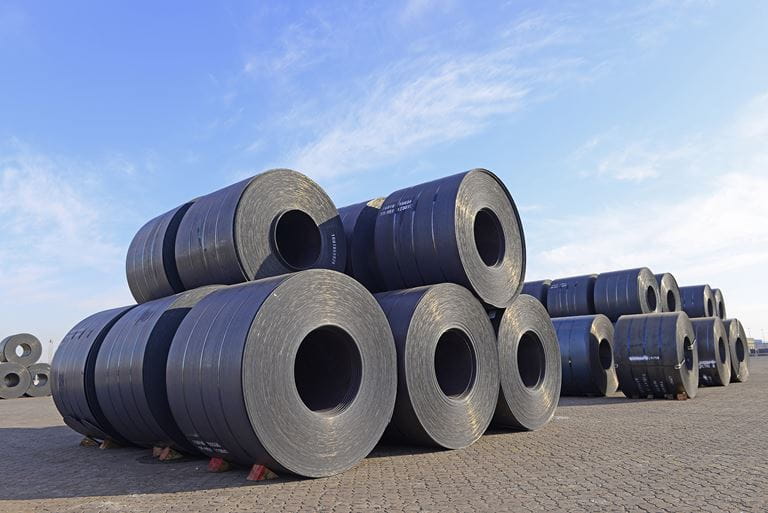
Uptrend in European HRC market supported by improved apparent demand, reduced supply
In Northern Europe, more buyers have been coming back to the market for restocking in the week to Thursday. Mill sources were also reporting higher numbers of inquiries for HRC tonnages with delivery in the first quarter of 2024.
“The buyers are back, but they are trying to negotiate lower prices,” a distributor in Germany said. “So we have a classic situation — producers’ market versus buyers’ market. However, the chances of achieving the offer prices in deals are quite good, given the improved buying, lower availability domestically and uncompetitive imports.”
Offers of HRC with lead times of six to eight weeks were heard at €680 ($738) per tonne ex-works, and even €700 per tonne ex-works from some suppliers.
A re-roller in the Benelux area was offering January-delivery HRC at €650 per tonne ex-works, up from €620 per tonne ex-works for December.
“Mills are not prepared to negotiate on offers and most buyers believe that domestic prices have bottomed-out,” a steel service center in the region said.
“The range of €650-680 per tonne ex-works [for HRC] sounds reasonable, but demand is still below the normal levels,” a trader in the region said.
A second trading source also pointed out that real demand for steel in Europe was still rather low, so the current uptrend might not be sustained into the first quarter of 2024.
Transactions were reported at €650-660 per tonne ex-works in the region. Also, a sale of January-delivery coil from a Nordic producer was heard at €670 per tonne ex-works on Thursday, but was not confirmed at the time of publication.
Italy-origin coil was offered to Germany at €680-700 per tonne delivered.
As a result, Fastmarkets calculated its daily steel hot-rolled coil index domestic, exw Northern Europe at €655.67 ($712.05) per tonne on November 16, up by €1.54 per tonne compared with €654.13 per tonne a day earlier.
The index was up by €5.07 per tonne week on week and by €40.92 per tonne month on month.
Meanwhile, in Southern Europe, Fastmarkets calculated its corresponding daily steel hot-rolled coil index domestic, exw Italy at €633.33 per tonne on November 16, up by €0.83 per tonne from €632.50 per tonne on November 15.
The index was up by €5.41 per tonne week on week and by €38.33 per tonne month on month.
The market was slower in Italy, but local steelmakers were also pushing for higher prices.
Offers of material for first-quarter delivery were heard closer to €680 per tonne delivered (€665 per tonne ex-works), but no trades have been heard at such prices yet.
Tradeable values were estimated by buyers at €630-640 per tonne ex-works.
Import HRC offers were largely stable day on day, with HRC for January shipment from Asia available to European ports at €610-620 per tonne CFR. This would mean arrival in March.
“Asia-origin coil, bought now, will arrive in Europe only in March [2024], and therefore could be customs-cleared only after April 1 [2024] to fit the [European Union’s] safeguarding [quota] allocations. The price gap to European [domestic HRC] is not sufficiently attractive to take such a risk,” a buyer in Italy said.
From India, offers were heard even higher, at €640 per tonne CFR.
Published by: Julia Bolotova
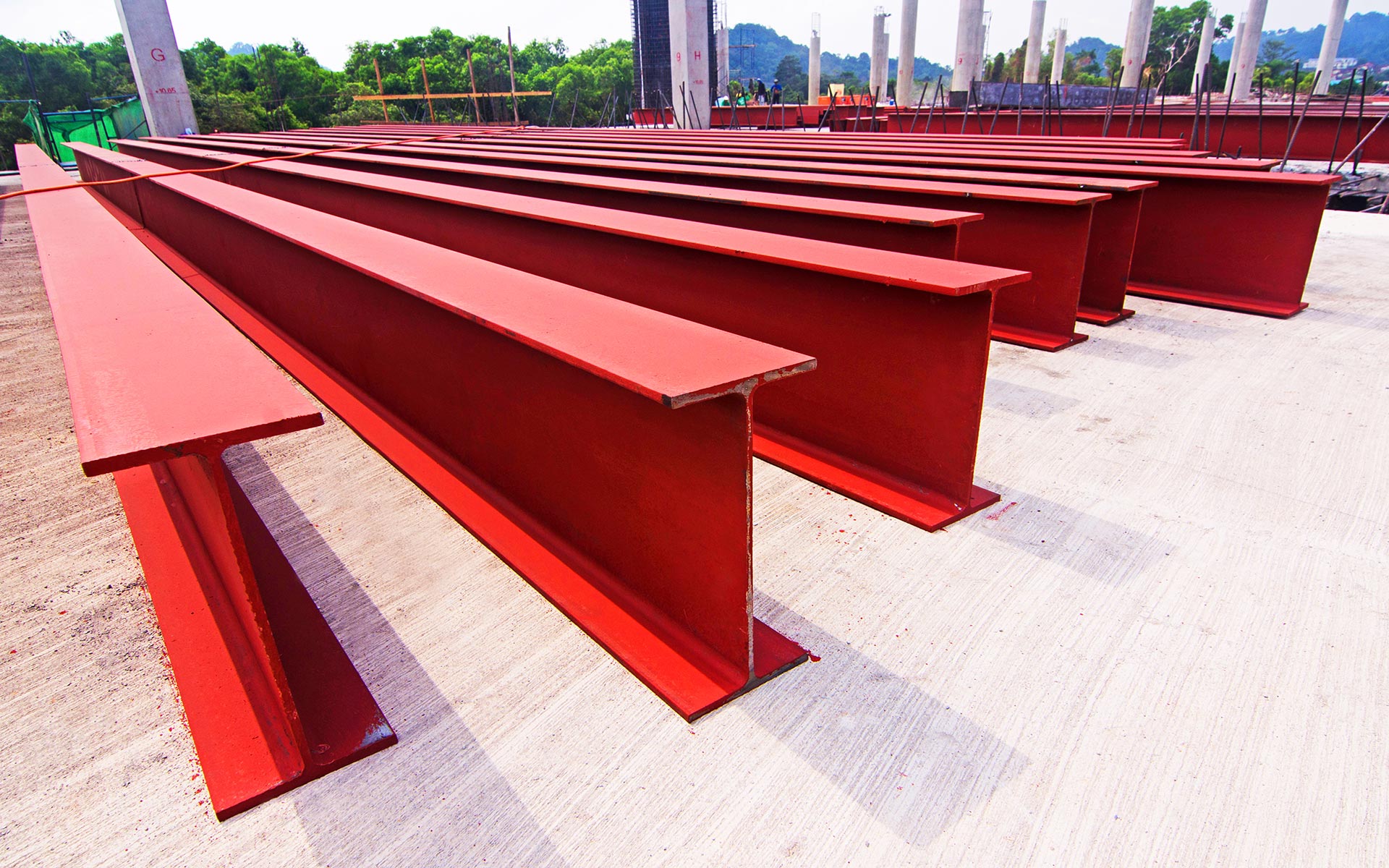
Steel beams prices in Europe flat; trading slow
Fastmarkets’ weekly price assessment for steel beams, domestic, delivered Northern Europe, was €730-750 ($793-814) per tonne on Wednesday, unchanged from a week earlier.
Similarly, Fastmarkets’ weekly price assessment for steel beams, domestic, delivered Southern Europe, was €730-750 per tonne on Wednesday, also stable week on week.
Market participants said that an economic environment of high interest rates and high inflation continued to contribute to weak end-user demand. So trading was sluggish, with little need to restock because of poor demand and “sufficient” stocks at distributors.
Traders said that beams were now being offered for January production, but market sources said that distributors were unwilling to pay higher prices due to pressure on slim margins.
Scrap feedstock costs in Turkey’s bellwether market rose in the week, and month on month, but trading activity was muted later in the pricing period following a flurry of bookings.
Fastmarkets’ calculation of its daily index for steel scrap, HMS 1&2 (80:20 mix), North Europe origin, cfr Turkey, was $378.93 per tonne on Wednesday, up by $5.78 per tonne week on week from $373.15 per tonne and up by $19.43 per tonne month on month.
Published by: Holly Chant

Italian rebar flattens
Italian rebar prices are stable on-week after ticking up by some €30/tonne ($32) this month compared to the low point of the range seen in October. This follows the hike attempt by local steelmakers, who pushed November asking prices to €320-350/t base ex-works depending on mill, sources tell Kallanish.
Transaction prices are flat at €300-310/t base ex-works. Including extras, domestic rebar is fetching €560-570/t base ex-works. Domestic mesh is meanwhile being sold at about €400/t, to which buyers must add transport and around €300/t size extras. However, for rebar, prices should reach €320/t base ex-works in the coming days, sources observe.
Persistent bad weather conditions in central Italy are causing building works and deliveries to be delayed, with no change from last week. A distributor says he has enough business until the first quarter next year. Several distributors are waiting for large infrastructure projects that should be financed by the European recovery fund to start in 2024.
“Many service centres are discounting material to sell. We had a good beginning of the year which is going to save our financial results, but the second half has been extremely quiet. We are keeping our stocks low. We have several clients who are idling their production plants,” a source comments.
Natalia Capra France


Ukraine-UK partnership to ease Black Sea corridor access
Ukraine, in collaboration with a consortium of British insurance companies, has established a specialised mechanism to facilitate access to the Black Sea corridor for exporters, according to Ukrainian Prime Minister Denys Shmyhal.
“This will make it possible to provide a discount on the cost of insurance against military risks for exporters of all products from Ukraine. This will make the Black Sea corridor more accessible to a wider range of exporters,” Shmyhal said.
This comes after discussions between Ukrainian President Volodymyr Zelenskyy and UK Prime Minister Rishi Sunak aimed at providing more affordable war risk insurance for exporters shipping goods from Ukraine, including steel and iron ore.
Denys Shmyhal emphasised the Ukrainian government’s commitment by allocating funds to ensure coverage of potential losses. The mechanism involves the participation of the Export Credit Agency, Ukrgasbank, Ukreximbank, and a consortium comprising 14 insurers, Kallanish notes.
Last Wednesday, a Russian anti-radar missile struck a civilian Liberian-flagged cargo ship in Pivdennyi port in Odesa, resulting in the death of a harbour pilot and injuries to three crew members and a port worker. The cargo ship was in the process of loading iron ore destined for China. The missile was believed to have been utilised to potentially target Ukrainian military radars in the region.
After withdrawing from a UN-brokered agreement guaranteeing safe transport of Ukrainian grain via the Black Sea, Russia has frequently targeted Ukrainian port infrastructure.
In response to the de facto Russian blockade in the Black Sea hindering Kyiv’s seaborne exports, Ukraine established a “humanitarian corridor” in August for ships heading to African and Asian markets. This route traverses Ukraine’s southwestern Black Sea coast, crosses into Romanian territorial waters, and extends towards Turkey. This corridor, initially designed for humanitarian purposes, is now also utilised for agricultural and steel products shipments.
Meanwhile, ship traffic continues both in and out of the ports of Greater Odessa. Since 8 August, 91 vessels have exported 3.3 million tonnes of agricultural and steel products, while 116 vessels have arrived for loading at the ports of Odessa, Chornomorsk – prior to 2016 named Illichivsk – and Pivdennyi – prior to 2017 named Yuzhnyi.
Elina Virchenko UAE

Italian HRC price hikes
Following a period of quiet activity, Italian coil prices are increasing significantly, in line with European mills’ hiking asking prices, Kallanish learns from market participants.
Over the past two weeks, strong demand has returned to the market and hot rolled coil prices have gradually gone from the level of €600/tonne ($651) base ex-works at the beginning of the month to €630-650/t base ex-works this week. Producers have filled January order books and are now quoting February lead times.
All service centres have gone back to purchasing for January delivery, with limited material availability persisting as European steelmakers are allocating lower volumes to buyers for first-quarter delivery.
The import market is not attracting service centres due to the exhaustion of EU safeguard quotas and the long lead times. A high-volume transaction for HRC from India is rumoured to have taken place at €640/t cfr Italy for January boarding.
Some optimism is back and the wave of price increases should also interest coil derivatives. Sheet and tube makers are also pushing up their values, although the downstream market remains fragile, sources say.
All producers in Italy are reporting increased demand and prices for HRC, and some sources expect values to increase to €670-680/t delivered in the coming days. A service centre however believes that, if European prices go over this level, buyers will turn to the import market.
Natalia Capra France
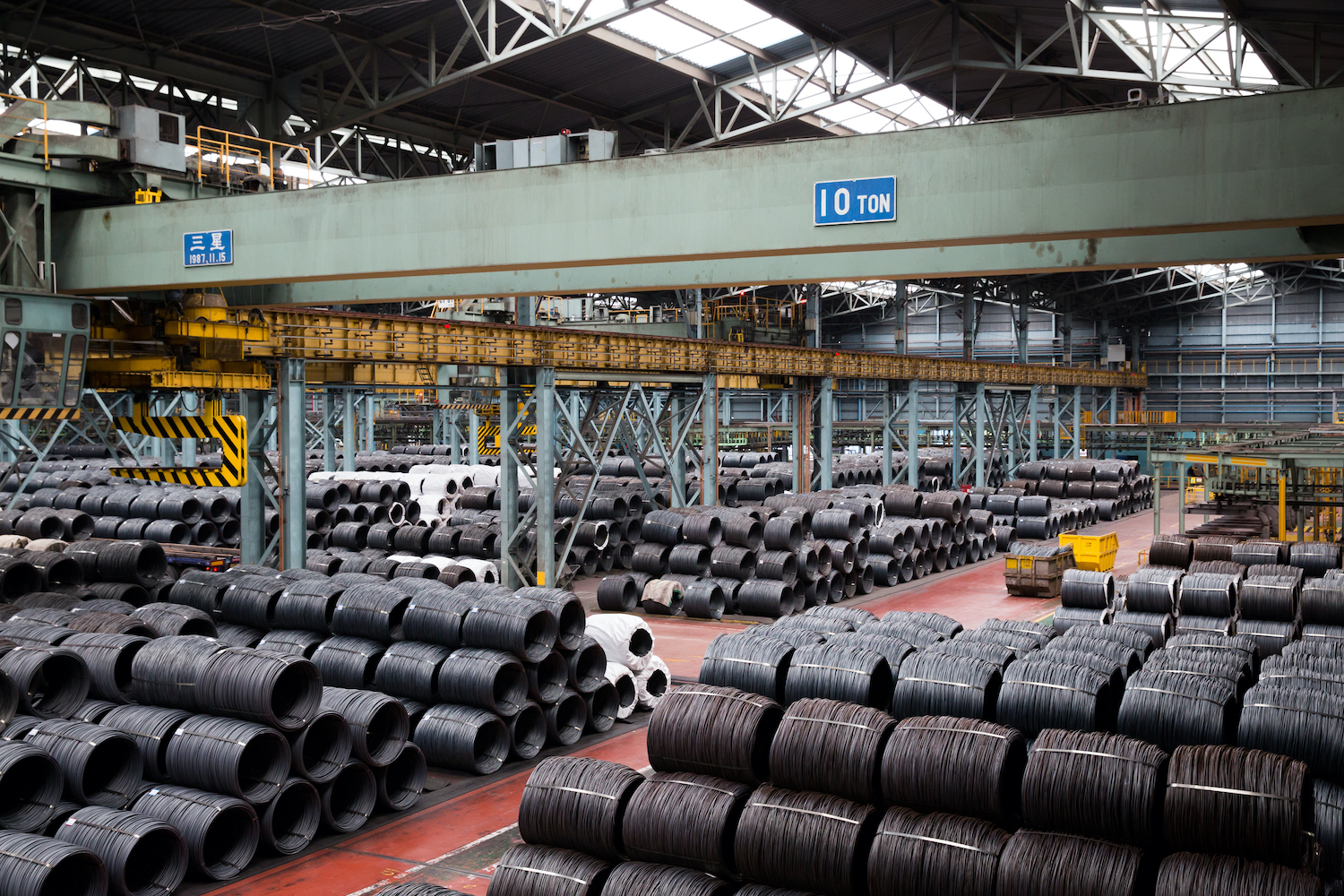
Swedish steel output continues downward trend
Production of crude steel by Sweden’s mills continued in September the downward trend seen so far this year, and in fact accelerated it.
Crude steel output totalled 315,000 tonnes, 12.7% less than in September 2022, Kallanish learns from the latest statistics of national steel federation Jernkontoret. The decline is notably steeper than the year-to-date drop of 4.4% in the nine months through September to 3.279 million tonnes.
This was still relatively in line with the January-June period, which saw 4.5% less output than the first half of 2022.
“The declining demand continues to affect crude steel production,” says Mathias Ternell, trade policy director at Jernkontoret. The production statistics are compiled by Jernkontoret and are based on data from 11 steel manufacturers in Sweden.
Christian Koehl Germany

European steelmakers struggle to raise CRC, HDG prices amid thin demand, competitive imports
In Northern Europe, integrated producers were hoping to achieve rises of €30-50 ($32-54) per tonne for cold-rolled coil and hot-dipped galvanized coil for deliveries in January-February.
Offers of CRC were reported closer to €770-780 per tonne ex-works, and around €800 per tonne ex-works for HDG.
But buyers estimated tradable prices to be lower, at €740-750 per tonne ex-works for CRC and €750-770 per tonne ex-works for HDG.
Bookings for January and February deliveries were quite limited, market sources said.
“Real demand is rather low, and CRC imports are very competitive, so European mills have difficulty achieving higher prices,” a trader in Germany said.
“Prices [for CRC and HDG] are nudging upward but very slowly. However, when hot-rolled coil prices are firmer at higher levels, it’s a matter of time before CRC and HDG follow suit,” a trading sources said.
HRC is the feedstock for CRC production, while CRC is used to produce HDG.
Since the week ended November 10, European mills have been pushing for higher HRC offers, to €680-700 per tonne ex-works. According to mill estimates, the premium for CRC over HRC should be “at least €100 per tonne” and at least €120-130 per tonne for HDG, considering current costs.
Fastmarkets’ weekly price assessment for steel cold-rolled coil, domestic, exw Northern Europe, was €740-750 per tonne on Wednesday, up by €10 per tonne from €730-740 per tonne seven days earlier.
And the corresponding weekly price assessment for steel hot-dipped galvanized coil, domestic, exw Northern Europe, was €750-780 per tonne on Wednesday, up by €10-30 per tonne from €740-750 per tonne in the same comparison.
Meanwhile, competitive offers from overseas suppliers were putting additional pressure on European prices.
“Unlike for HRC, for CRC imports there are no allocation concerns [related to EU import restrictions] and the price gap with European mills is quite workable,” a trading source in Italy said.
Offers of Taiwan-origin CRC for January shipment were reported at €685 per tonne CFR to European ports, while CRC offers from South Korea and Japan were around €700-710 per tonne CFR.
Market sources reported bookings of Taiwanese and South Korean CRC at those prices to Antwerp during the assessment week.
And a Vietnamese supplier was offering $840 per tonne CFR for 0.5mm HDG with Z140 coating, for January shipment.
Published by: Julia Bolotova
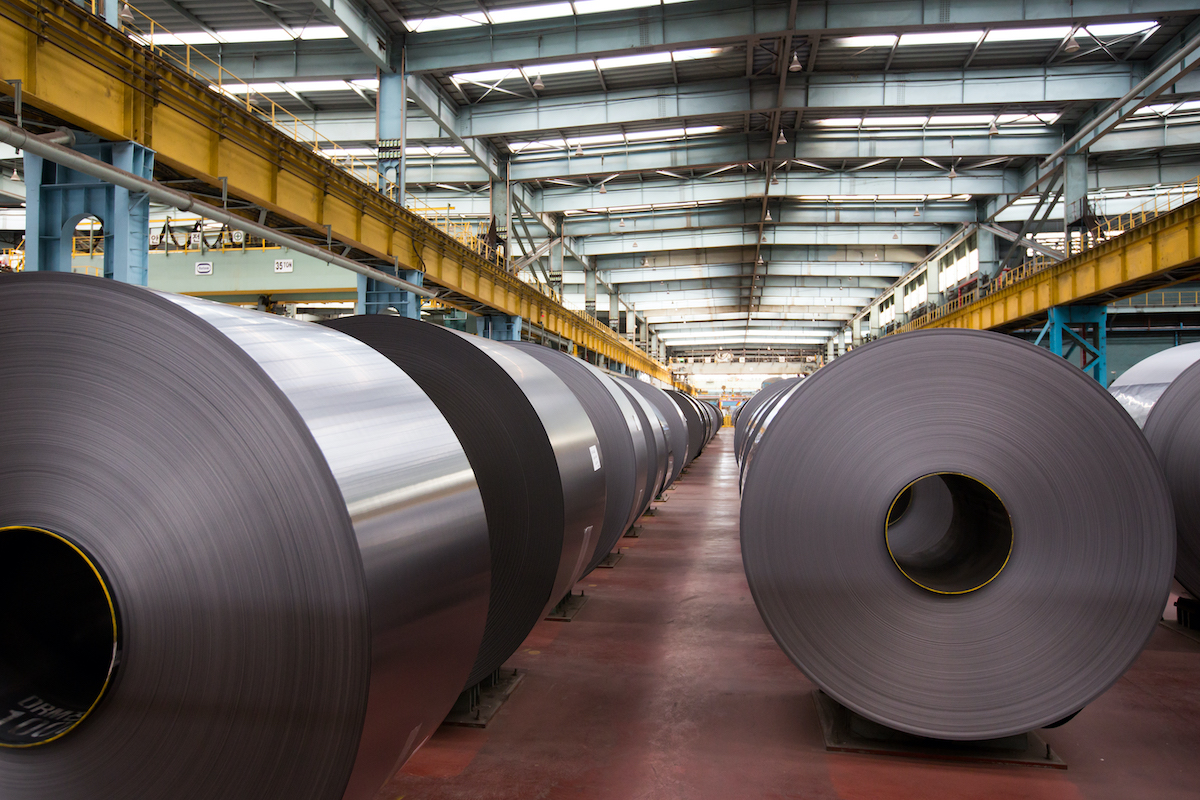
Steel HRC buying improves on restocking in Northern Europe, prices edge higher
Fastmarkets calculated its daily steel hot-rolled coil index, domestic, exw Northern Europe, at €654.13 ($704.66) per tonne on November 15, up by €1.13 per tonne compared with €653.00 per tonne a day earlier.
The index was up by €9.00 per tonne week on week and by €37.05 per tonne month on month.
On Wednesday, several sources reported a transaction for HRC in Germany at €650-660 per tonne ex-works, for delivery in 6-8 weeks’ time, Fastmarkets heard.
Tradeable values were estimated by buyers at €640-660 per tonne ex-works, with sales at €645 per tonne ex-works for January-delivery HRC reported in the region earlier this week.
Trading activity in Northern Europe has picked up after the Blechexpo trade fair, held in Stuttgart on November 7-10.
“Many buyers have been waiting for the outcome of the Stuttgart fair,” a steel service center in Northern Europe said. “Besides, now is [a good] time for distributors to make orders for first-quarter-delivery coil, because lead times are getting longer, import prices are moving up, and the effect of the [carbon border adjustment mechanism (CBAM)] regulations is not clear but could have consequences for imports in general.”
Official offer prices from integrated mills in the region were still being heard around €680-700 per tonne ex-works, for HRC shipments with lead times of 6-8 weeks.
Market sources suggested that, before holiday stoppages, producers might try to push for another round of price increases for the first quarter of 2024.
“I suggest that mills will push offers above €700 per tonne ex-works starting in December [2023], but it is very uncertain whether customers will accept this,” a trading source in the region said. “[With domestic prices at this level], imports would become attractive again.”
The major concern for both buyers and sellers was the lack of real steel consumption.
“There is no substantial pickup in the market as a consequence of a better economy, so the higher apparent steel demand, driven by restocking now, might be followed by a slowdown in December-January,” another trading source said.
“Mills should keep capacities under control,” a third trader said. “If too many blast furnaces are restarted in the first quarter of 2024, we might see the previous year’s scenario all over again – actively push for higher prices, availability increases, imports become more attractive, European prices collapse.”
Several blast furnaces in Europe have been taken offline in the third and fourth quarters of 2023, with reduced availability one of the factors supporting the recent uptrend in flat steel markets.
But there were now discussions about three or more blast furnaces being brought back online in the fourth quarter of 2023 and the first quarter of 2024, sources told Fastmarkets.
Meanwhile, in Southern Europe, Fastmarkets calculated its daily steel hot-rolled coil index, domestic, exw Italy, at €632.50 per tonne on November 15, up by €2.50 per tonne from €630.00 per tonne on November 14.
The index was up by €11.04 per tonne week on week and by €39.48 per tonne month on month.
In Italy, transactions for coil with six-weeks’ lead times were reported at €640-650 per tonne delivered recently (about €625-635 per tonne ex-works).
Market sources said that the mill’s new price target was likely to be around €670-680 per tonne delivered (equivalent to €655-665 per tonne ex-works), with €700 per tonne the next target for the first quarter.
In general, sentiment in the market was cautiously positive, with restocking and limited supply supporting the uptrend.
Also, in the secondary market, prices for HR sheet have started to pick up recently, to about €720-740 per tonne CPT. But trading remained quite slow, market sources said.
Similarly to Northern Europe, Italian buyers were cautious because of the still-weak demand from end-users.
Import offers were also trending higher recently.
Vietnam-origin coil offers for January shipment were heard at €610 per tonne CFR, while HRC from Egypt, also for January shipment, was offered at €620 per tonne CFR to European ports.
One source reported an offer of January-shipment HRC from Japan at €650 per tonne CFR to Antwerp, but this was not confirmed by other market participants.
And Turkish mills could offer December-shipment coil at €640-650 per tonne CFR, but that did not take into account any anti-dumping duties.
Published by: Julia Bolotova
Italian service centres struggle to increase prices
Stagnating demand and depressed prices are persisting in Italy for coil derivatives, such as sheet and welded tube. European steelmakers are nevertheless increasing coil prices significantly due to limited supply, following several production stoppages and import quota exhaustion, Kallanish notes.
Service centres are seeing continued weak demand. They are pushing up sheet prices to €750/tonne ($814) ex-works for hot rolled sheet and €780/t for pickled material, but this is barely enough to cover their costs. They are now receiving hot rolled coil bought weeks ago at €650/t base ex-works, while their sheet selling prices hovered at €680-690/t ex-works or lower in October and at the beginning of November.
While some prefer to lose orders rather than sell at below cost, many have been chasing volumes and discounting material. Their customers are now ready to purchase for first-quarter and first-half delivery in 2024, and have been able to secure fixed prices for the entire H1 2024 at October’s low levels.
Companies downstream have not been united in pushing forward increases, giving end-users the upper hand. Selling sheet at €700/t delivered will eat significantly into companies’ earnings and Q1 is not seen improving. Some service centres report they are increasing selling prices to €720/t for hot rolled sheet and believe that, gradually, values will hike.
Meanwhile, European steelmakers are giving buyers lower allocations for Q1 due to shortages. After slow sales last week, several sources now report domestic HRC values beginning to increase in contracts to €630-640/t delivered. HRC prices are seen increasing further to €670/t delivered, sources suggest.
Natalia Capra France