


UK trade body urges government to link its ETS with EU as carbon prices slump
The slump in UK carbon prices has already cost the government billions of pounds in potential revenues, trade body Energy UK said Oct. 30, urging Whitehall to link its Emissions Trading Scheme with the EU’s cap and trade carbon pricing system.
The trade association also reiterated that “weak and volatile” carbon prices under the UK ETS were undermining investment in clean energy, and with the introduction of the EU’s Carbon Border Adjustment Mechanism, UK companies could incur “hefty costs” for simply trading with its largest export market.
UK carbon prices slumped to record lows in recent months as Prime Minister Rishi Sunak rowed back on some key climate commitments. Reduced gas-for-power burn, a higher share of renewables in the energy mix and shaky manufacturing data also dragged prices down.
“If low carbon prices persist, the Treasury could lose out on GBP3 billion in revenue per year and from 2026, UK companies exporting to the continent could end up paying half a billion pounds a year in carbon taxes to the EU as a result of the bloc’s Carbon Border Adjustment Mechanism,” Energy UK said in a statement.
Lost revenues
UK Allowances, or UKAs, plunged to an all-time low of GBP33.50/mtCO2e ($40.65/mtCO2e) in intraday trading Sept. 21, Intercontinental Exchange data showed. Prices have recovered slightly since then, but they remain at a discount of almost $40/mt to EU Allowances, or EUAs.
Platts, part of S&P Global Commodity Insights, assessed UKAs at GBP37.55/mtCO2e ($45.53/mtCO2e) on Oct. 30, and EUAs at Eur78.72/mtCO2e ($83.53/mtCO2e) on the same day.
Energy UK said that over the past six months carbon prices from the UK’s ETS have raised over GBP1 billion less than if prices had remained at last year’s levels.
“Linking our carbon pricing regime with the EU’s would exempt UK companies from these costs and remove the problems caused by the disparity between the two schemes,” said Energy UK’s Deputy Director Adam Berman. “It would also stabilize and strengthen our carbon price, sending a powerful signal to bring forward investments in homegrown clean energy that can cut bills, reduce emissions, and bolster our energy security.”
UKAs have averaged GBP58.56/mtCO2e ($71.05/mtCO2e) so far in 2023 as of Oct. 27, compared with an EUA average price of Eur87.49/mtCO2e ($92.75/mtCO2e) over the same period, data from Platts showed. Meanwhile, UKAs averaged GBP79.08/mtCO2e ($95.95/mtCO2e) in 2022, compared with Eur81.17/mtCO2e ($86.05/mtCO2e) for EUAs.
Piers Forster, interim chair of the UK’s influential Climate Change Committee, told S&P Global in a recent interview that carbon price worries were “really hampering good green investment. It is making the whole thing slow down, which is not good.”
Some UK-based renewable energy companies have also recently written to the government in recent months about concerns over the price direction of the country’s compliance carbon market.
ETS linkage
Energy UK urged the government to take steps to link the UK ETS with EU ETS, especially with CBAM phasing in from 2026 to 2034.
“Such a move would exempt UK companies exporting to Europe from the CBAM, saving them billions in potential tax payments, provide higher revenues for the Treasury, and cut red tape through the removal of complex reporting requirements for companies,” it said.
The EU’s new carbon border tax, whose transitional phase started Oct. 1, will officially be phased in from 2026 to 2034, in step with the phasing out of free allowances in the EU ETS. Initially, importers will be required to buy certificates for 2.5% of their emissions in 2026, rising to 100% by 2034.
CBAM essentially levies a tax on imports of selected carbon intensive materials and products (including aluminum, cement, electricity, fertilizers, hydrogen, iron and steel) into the EU, removing the gap between the EU Emissions Trading System carbon price and export country of origin carbon price.
If UK carbon prices remain at a sharp discount EUAs, UK companies will have to pay a hefty cost on the price disconnect if they still want to keep exporting these goods to the EU.
“We strongly believe that both sides would benefit from linkage, so we urge the government and the EU to get round the table before UK companies start paying the price,” said Berman.
The main purpose of the tax is to reduce the risk of carbon leakage — EU industries relocating abroad — and encourage importer nations to introduce their own carbon markets and, so, limit CBAM impacts on their traded goods.
UK reforms
In early October, the UK ETS Authority also said it was exploring measures of a supply adjustment mechanism, which could help link closer to the EU ETS.
The EU ETS has the Market Stability Reserve, which helps provide stability by matching the delivery of allowances with changes in demand. The MSR, in place since January 2019, addresses the current surplus of allowances and also improves the system’s resilience to major shocks by adjusting the supply of allowances to be auctioned.
“This provides an openness to regulating the market in a way to ensure more scarcity and support prices with better alignment with EU ETS,” said Roman Kramarchuk, head of future energy analytics at S&P Global.
The UK ETS Authority decided to limit the number of carbon allowances for companies to buy in 2024 to 69 million mt, the lowest since the ETS came into force in 2021 and a fall of 12.4% from this year.
This announcement helped UKAs rebound to over GBP50/mtCO2e, but prices have again slumped on weak demand from the power and industrial sectors.
The UK ETS has been operational only since January 2021. Like the EU ETS, it regulates CO2 emissions from power generation, emissions-intensive heavy industries and aviation.
Author: Eklavya Gupte


Eurofer cuts steel demand outlook again, rebound uncertain
Eurofer has again cut its outlook for 2023 apparent steel demand due to persistent tensions created by economic weakness and geopolitical developments. The association expects the rebound to materialise from the fourth quarter and into 2024, but uncertainties remain high.
Apparent steel demand in full-year 2023 is now set to decline 5.3% year-on-year. After the two-digit decline of 11.3% y-o-y in Q1, the negative trend slowed down somewhat. Eurofer expects apparent demand to rebound 3.6% on-year in Q4, but challenges continue to raise questions.
In 2024, the rebound could be as strong as 7.6% for apparent steel demand, potentially taking consumption to above 2022 levels – 140 million tonnes. It is worth noting, nevertheless, that the latest peak apparent consumption levels registered in 2018 and 2021 – approximately 150m t/year – remain far off.
“The perspectives for the European steel sector get gloomier every quarter amidst disruptive wars, global tensions, an unresolved energy crisis, high inflation, tightening economic conditions and historically high import shares that are strangling manufacturing. This situation negatively impacts steel demand,” Axel Eggert, director general of Eurofer, says in a note seen by Kallanish.
Despite weakening apparent demand, real demand is still expected to remain stable, seeing 0.3% y-o-y growth this year, followed by 0.2% in 2024.
The declining demand trend has also impacted imports, which fell significantly in Q1 and Q2 this year. Nevertheless, imports continued to maintain their share of market supply at above historical levels, at 28% of total European supply, according to Eurofer.
Emanuele Norsa Italy

EU imports, exports fall, trade balance stable
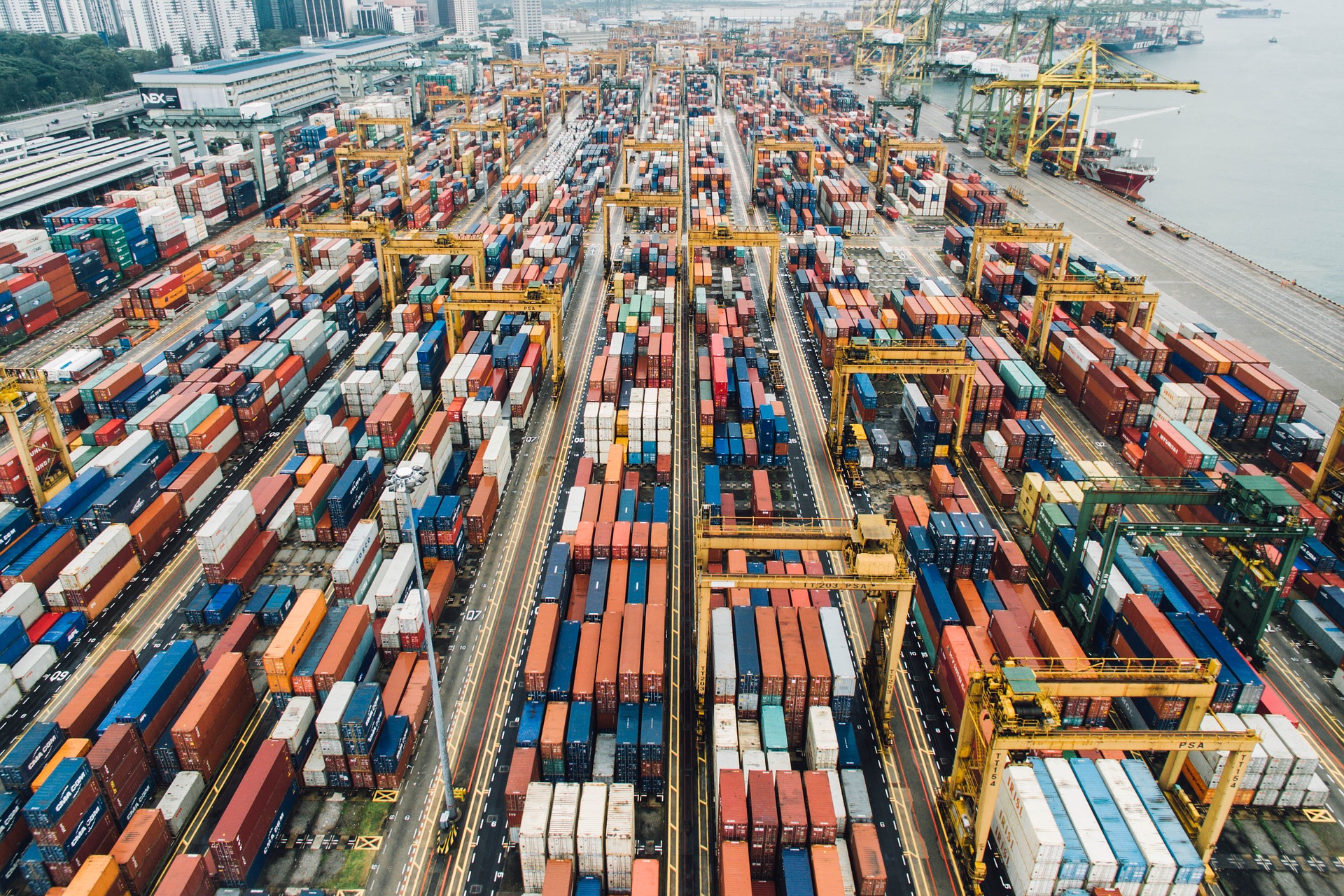
During the first eight months of 2023, the trade balance for steel in Europe remained stable compared with the overall figures registered in 2022. Imports and exports each decreased, maintaining the tonnage differential, Kallanish notes.
According to Eurofer data, January-August trade balance for all steel products – finished plus semis – stood at negative 1.6 million tonnes per month on average, in line with the figure registered during 2022. In 2021, the trade balance was negative 1.5m t/m.
Total eight-month exports declined by 5% year-on-year, with flat products falling 11% while long products actually recovered 3%.
Imports declined by almost 20% y-o-y during the same period. Flats and longs imports fell 17% and 24% respectively.
Despite falling in general terms, imports of finished products into Europe maintained a record-level market share of 28%. They continued to be mentioned by the steelmakers’ association as a major factor impacting the market.
Emanuele Norsa Italy
Lusosider orders payoff reel from Danieli
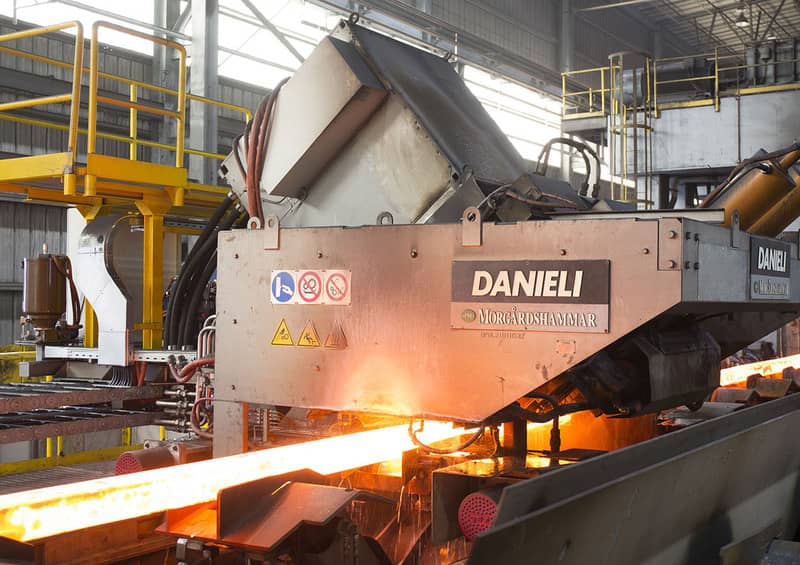
Brazilian CSN Potuguese subsidiary Lusosider Aços Planos has awarded Danieli an engineering contract, Kallanish learns from the Italian technology supplier. The agreement involves upgrades to the payoff reel at pickling line No.2 in Aldeia de Paio Pires.
“The project consists of replacing the existing mandrel with a new, tailor-made designed equipment, which will be supplied along with on-site advisory services for erection and commissioning,” Danieli explains. The contract includes an external bearing to limit the current deflection of the mandrel under coil loading and belt tension.
The installation of the new equipment is scheduled for October 2024.
Todor Kirkov Bulgaria
Trading slow across European HRC market
Prices were largely unchanged from October 27.
Fastmarkets calculated its daily steel HRC index, domestic, exw Northern Europe at €614.00 ($648.64) per tonne on Monday, down by €1.21 per tonne from €615.21 per tonne on October 27.
The index was up by €4.00 per tonne week on week but down by €6.42 per tonne month on month.
The market was unmoved on Monday, with trading remaining thin and sentiment bearish.
“There are no updates as the market has not moved since last week,” a trader source in the region said.
Buyer estimates of achievable values were in the range of €600-620 per tonne EXW.
In the week to October 27, mills were targeting offer prices for December-delivery HRC at €620-650 per tonne EXW.
Despite continued low demand, mills resisted dropping their prices further due to high feedstock costs, specifically energy.
Fastmarkets’ daily steel HRC index, domestic, exw Italy was €601.67 per tonne on Monday, up by just €1.04 per tonne from €600.63 per tonne a day earlier.
The index was down by €0.83 per tonne week on week and down by €7.08 per tonne month on month.
Buyer estimates of tradable prices were reported at €580-600 per tonne EXW.
Offers of HRC for December delivery from Italy were reported at €620-630 per tonne EXW. These levels were not considered workable however given weak market conditions.
“The current asking price is around €580-600 per tonne EXW but mills are refusing this price level and targeting price increases of up to €50 per tonne to levels of €620-630 per tonne for December delivery,” a buyer source said. “Demand remains very weak, but mills are trying to support price increases with production cuts.”
“Mills are trying to raise prices but there is very little buying interest to support price rises,” another buyer source in the region told Fastmarkets.
Appetite for imports remained muted on Monday due to depressed market conditions. Sources reported limited offers, expecting new import prices to come in towards the end of the week.
Import offers were heard at €600 per tonne CFR from Asia but there was minimal interest from domestic buyers, Fastmarkets heard.


EU stainless market to remain under pressure: Eramet
The surplus in nickel production compared to demand is forecast to continue for the remainder of 2023, says French miner Eramet in its third-quarter earnings report monitored by Kallanish.
In Q4, demand for nickel is forecast to continue to increase thanks to the recovery in the electric vehicles batteries sector in China. However, a sluggish stainless steel market in Europe is expected. The nickel used in stainless steel is a different grade from battery nickel.
Prices of nickel pig iron and nickel ore exported by Eramet’s subsidiary in New Caledonia, Societe le Nickl (SLN), are seen flattening this quarter. The Weda Bay mine in Indonesia will pursue its production ramp-up but the company has revised downwards its target to around 30 million wet metric tonnes (wmt) over the year. In Q3, SLN sales decreased by 5% to €224 million ($236m), reflecting “a strongly unfavourable price effect”.
Global stainless production was up 16% on-year to 14.8 million tonnes in Q3 and increased by 3% over the first nine months of the year. The class I and II nickel supply/demand balance was at break-even over the third quarter but remained in surplus for the first nine months of the year, Eramet says.
Nickel inventories at the London Metal Exchange (LME) and Shanghai Futures Exchange (SHFE) were at 47,000t at end-September. In Q3, the LME price average of class I nickel was $20,342/tonne, down 8% y-o-y.
“The third quarter saw a difficult macroeconomic environment with selling prices significantly lower than last year,” says Eramet chief executive Christel Bories. The group’s turnover amounted to €980m in Q3, down 26% on-year owing to a negative price effect, compared to the high level seen in Q3 2022. January-September turnover reached €2.8 billion, down 30% on-year.
Class I nickel is produced with a nickel content above or equal to 99% while Class II is made with a nickel content below 99%.
Natalia Capra France

Beyond electricity: is hydrogen the key to greener smelting and refining?
In the metals and mining industry, the top contributors to CO2 emissions are smelting and refining processes.
To date, much of the industry’s decarbonisation efforts have been focused on electrification. However, we’re starting to see a shift towards hydrogen as a replacement for fossil fuels in metallurgical processes.

Given the range of differences between the higher and the lower 10% emitters in these emissions, it’s clear that each production value chain requires a unique approach to decarbonisation.
The need to transition from fossil fuels
Our report finds that iron and steel production accounts for 93% of GHGs in the metals and mining industry due to the use of coal in metallurgical reactions. By contrast, the production of non-ferrous metals accounts for 62% of emissions due to the onsite fuel mix in power plants or grid electricity.
Despite the need to decarbonise these processes, at present, most global efforts are focused on electrical consumption targets. In turn, fossil fuel emissions in the non-ferrous industry especially, remain largely unaddressed.
As such, there’s a clear need for organisations to look beyond green electricity measures and to also focus on technological innovations that address the wider power generation mix.
Hydrogen as a replacement fuel in iron and steelmaking
In iron and steel production, 93% of emissions originate from the smelting process, which includes the use of blast furnaces, coking, and sinter plants.
In refinery operations, steelmaking, and the use of casting plants account for another 5% of emissions. Overall, the carbon impact of steelmaking represents a significant 92% of emissions, largely from burning carbon-rich fuels.
The use of hydrogen as a replacement for blast furnaces has been investigated extensively. Research suggests that the fuel can act as a cleaner, making it an effective alternative to coal and coke due to its capabilities of reducing carbon in the direct reduction of iron (DRI) process.
The use of hydrogen in alumina refining
Our research finds that 78% of aluminium value chain emissions arise from the smelting process, the casthouse and electrolysis. The electrolysis emissions that arise from the reduction process ranges from 0 to 14 tonnes of CO2e/tonne of aluminium.
Breaking down the aluminium refining process further, 70% of emissions arise from steam during digestion and 30% comes from fossil fuel combustion in calcination.
Norwegian aluminium company Hydro has been conducting experiments at its Navarra plant, and has found that hydrogen could act as a replacement for natural gas at cast houses and in digestion processes.
Similarly, the Anglo-Australian mining group Rio Tinto and Japan’s Sumitomo corporation are currently working on a proposal for the construction of a hydrogen pilot plant that will trial lower-carbon alumina refining. The initiative will use a 2.5MW electrolyser with a production capacity of more than 250 tonnes of hydrogen annually, which could pave the way for hydrogen adoption across the industry.
Hydrogen as a replacement for natural gas in copper heating
In copper mining operations, 22% of emissions come from consumption in loading and hauling activities, and 10% is attributed to the smelting process.
Solvent extraction-electrowinning (SX-EW) processes represent 20% of global copper production, whereas the recycling of scrap copper accounts for approximately one third of the market.
In the copper industry, hydrogen can be used as an alternative to traditional fuels. Aurubis, a global supplier of non-ferrous metals, has been running trials that suggest hydrogen can replace natural gas in anode furnaces and replace ammonia in cathode shaft furnaces.
Hydrogen also has the potential to replace natural gas in the copper heating process and act as a reducing agent in slag-cleaning and anode furnaces.
Hydrogen use in zinc fuming processes
Zinc mining contributes 20% of the total CO2 emissions in the zinc value chain – mostly from electricity consumption during the crushing and grinding stages. Zinc smelting accounts for the other 80%.
In the smelting process, 80% of fossil fuel emissions come from the pyrometallurgical treatment of leach residues in the electrolytic process. Whereas imperial smelting furnace (ISF) and vertical retort (VR) processes, contribute 20%.
Hydrogen and ammonia are both promising alternatives to coal use, especially in the fuming process for zinc-contained residues. However, operational application is still in the trial stages and further kinetic studies are required in combination with large-scale experiments for validation.
Final thoughts
Hydrogen has the potential to play a key role in iron and steel decarbonisation and to contribute in part, to the decarbonisation of non-ferrous value chains. Moving forward, organisations need to take a strategic viewpoint on its inclusion in energy mixes and its use as an alternative fuel in metallurgic processes.
However, for hydrogen to be incorporated into metal and mining production chains, more research, collaboration and policy backing is needed. The progress of green hydrogen projects like Hydro’s Navarra, Aurubis’ trials, and Rio Tinto’s projects are promising and will undoubtedly provide positive results and learning points alike.
Beyond electricity: is hydrogen the key to greener smelting and refining?
Source: woodmac.com


European HRC producers mull price rises on higher costs
Fastmarkets calculated its daily steel HRC index, domestic, exw Northern Europe at €615.21 ($648.91) per tonne on October 27, up by €1.79 per tonne from €613.42 per tonne on October 26.
The index was also up by €2.08 per tonne week on week, but down and by €10.42 per tonne month on month.
Market sources largely agreed that that HRC prices have touched the floor and further drops were seen as unlikely due to mounting costs at mills.
December-delivery HRC was offered by integrated mills in the region at €620-650 per tonne ex-works, while buyer’s estimates of achievable values were still in the range of €600-620 per tonne ex-works, stable from a day earlier.
A re-roller in the Benelux region was offering similar material at €595-600 per tonne ex-works.
But sources pointed out that lower prices were only achievable for December-delivery tonnages, while mills planned to announce increases for January-delivery coil.
Deals have been scarce recently, with most buyers tending to book small volumes to cover urgent needs.
But sources noted a slight increase in buying interest this week, because there is more of an understanding that prices have reached a floor.
“Big distributors and steel-service centers are sending inquiries. Nobody is looking to buy big tonnages yet, but compared to a completely quiet first half of October we are now seeing some movement in the market,” a mill source in Northern Europe said.
Producers hope to achieve price increases for HRC with January lead times on the expectation of fewer imports, production cuts and the emergence of some restocking demand.
Some buyer sources, however, were more pessimistic, claiming the slow consumption at present was not supportive of any price rises.
“Demand is still very weak and there is no light in the end of the tunnel. Lead times are short, some even within four weeks, which indicates the thin orderbooks mills have at the moment,” a steel-service center source in the region said.
Fastmarkets’ daily steel HRC index, domestic, exw Italy was €600.63 per tonne on October 27, up by €0.63 per tonne from €600 per tonne a day earlier.
The index was up by €3.96 per tonne week on week, but down by €8.33 per tonne month on month.
Offers for December-delivery HRC from Italian producers were reported at €620-630 per tonne ex-works, however such levels were not achieved in deals yet.
Buyer’s estimates of the tradable price were closer to €600 per tonne ex-works since mills were rejecting bids below this level.
Market sources also noted slightly improved trading in Italy, with some distributors and steel service centers feeling the need to replenish inventories, Fastmarkets heard.
Asia-origin HRC imports for end-December-January shipment were on offer to Italy at around €580-600 per tonne CFR, mainly from Vietnam, South Korea and Japan, which is stable week on week.
Published by: Julia Bolotova

Polish domestic rebar, wire rod prices flatten on subdued trading
Attempts by local mills to achieve higher prices were not widely accepted by buyers, and demand for both productshas remained low. Most market participants have decided to wait for new offers to be published in November before making purchasing decisions.
Rebar
Polish mills were offering rebar at 2,800-2,840 Polish zloty ($661-671) per tonne delivered in the week to October 27, a consumer source told Fastmarkets. This would net back to 2,780-2,810 zloty per tonne ex-works.
Market sources reported even lower offers from some Polish mills, in the range of 2,725-2,737 zloty per tonne ex-works. But deals were heard at 2,820 zloty per tonne delivered during the assessment week, which would net back to 2,800 zloty per tonne ex-works.
As a result, Fastmarkets’ weekly price assessment for steel reinforcing bar (rebar), domestic, exw Poland, was 2,725-2,810 zloty per tonne, widening downward slightly from last week’s assessment at 2,730-2,810 zloty per tonne.
The market remained comparatively quiet during the assessment week. Demand from the construction sector, which is the major consumer of rebar, was still soft. After some restocking in the first weeks of October, market participants were waiting to see the new offers for November.
Most buyers were waiting because steel scrap prices were decreasing. In Poland, most new contracts for scrap are signed by the tenth day of each month. This period will be crucial to understanding the direction that rebar prices will take, a consumer source told Fastmarkets.
This week, prices in the secondary market were 2,780-2,800 zloty per tonne CPT.
More import prices for rebar were in the range of €615-630 ($649-665) per tonne CPT, market sources said. Imports were not particularly attractive, given recent currency exchange rates.
According to online currency converter Oanda.com, the Polish currency was trading at 4.234 zloty to $1 on October 27. A week earlier, it was trading at 4.219 zloty to $1.
Expectations of short-term price developments were mixed.
A distributor source forecast that prices would decrease further in November, when one of the leading local producers would be back in the market after a maintenance stoppage.
According to the same source, prices from the Polish mills would decrease to 2,680-2,700 zloty per tonne CPT next month. And the expected price in the secondary market would be 2,720-2,750 zloty per tonne CPT.
“There will not be enough demand to hold prices up around 2,800 zloty per tonne CPT,” the source said.
Other market participants were more optimistic, however. According to a consumer source, the situation in the construction sector was not particularly bad. “If the winter is mild, this would support demand from construction. Besides, the current prices for rebar are too low,” the source said.
Another producer source also said that mills would continue to try to push prices upward because of high production costs.
Wire rod
The wire rod market was also quiet this week. Market participants estimated the workable prices between 2,800 and 2,900 zloty per tonne CPT. But no major deals were heard.
“Customers are waiting for the offers in November. It is a ‘dead season’ now,” a distributor source told Fastmarkets. The same source added that price increases in November might be inevitable, due to rising costs at mills.
Fastmarkets’ weekly price assessment for steel wire rod (drawing quality), domestic, delivered Poland, was 2,800-2,900 zloty per tonne on October 27, unchanged for the past month.
Two other producer sources in Europe shared the view that an increase in wire rod prices was necessary. According to them, the price should be at least 3,000 zloty per tonne CPT to cover the increasing production costs.
Offers of imported wire rod, mesh quality, from Italy, were heard at €615-620 per tonne CPT, while mesh quality wire rod of Ukrainian origin was offered to Poland at €620 per tonne DDP.
Published by: Julia Bolotova, Darina Kahramanova
Gestamp purchases zero-carbon steel from SSAB
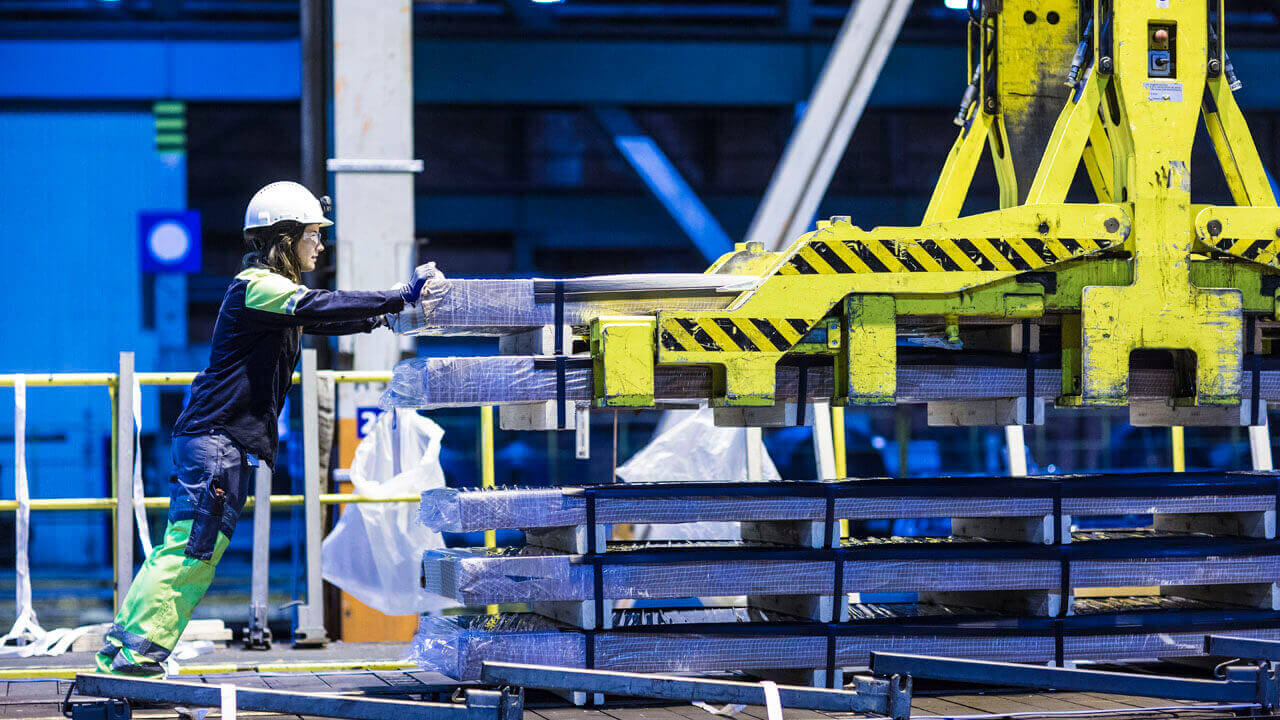
According to Gestamp, the agreement represents a new step in the long-standing partnership with SSAB that comprises a variety of actions addressing all aspects of the development chain, from sales to production to testing of steel products.
“This partnership will further strengthen our position in the development of innovatively designed and sustainable automotive parts for increasingly safer and lighter vehicles, thus reducing energy consumption and environmental impact,” Gestamp chief purchasing officer Javier Imaz says. “The agreement enforces Gestamp’s ESG strategy related to the circular economy that the company is applying throughout its business model.”
SSAB plans to deliver fossil-free steel to the market on a commercial scale in 2026 and to largely eliminate CO2 emissions from its operations by 2030. During the steelmaking process, coking coal will be replaced by renewable electricity and hydrogen.
Todor Kirkov Bulgaria