


Salzgitter Mannesmann Stahlservice became a member of EUROMETAL
We are pleased to inform that Salzgitter Mannesmann Stahlservice joined as member of EUROMETAL.
Salzgitter Mannesmann Stahlservice (SMS) is the name of the two Steel Service Centres owned by German Steel and Technology company Salzgitter AG.
Due to being a member of stock listed Salzgitter AG, SMS has the full power and support of the corporate organisation and the steel mill in Salzgitter, as well as being able to operate in a flexible and Service Centre like way.
SMS has a capacity of over 600,000t of steel service, with four slitting lines, four cut to length lines, both equally split over the two production sites as well as various dedicated multi blanking lines for specific industries.
An array of shears completes the main production program. The inventory carried is usually well over 100,000t.


Due to water access and railroad access with own Salzgitter trains and train operators, SMS has a strong and secure supply chain.
SMS sells material from Salzgitter Flachstahl, as well as from an array of other European and International suppliers to always have the right fit for the customers.
Due to the strongly developed Customer Support organisation, SMS is able to help customers use the steel in an optimal way.
SMS holds ISO 9001, IATF 16949 as well as ISO 14001 certificates.
Salzgitter is at the forefront of decarbonizing the steel making process. SMS carries the SALCOS® low CO2-products produced by Salzgitter and as such takes responsibility for its share of reduction of its CO2 footprint.
More information: salzgitter-ssc.de
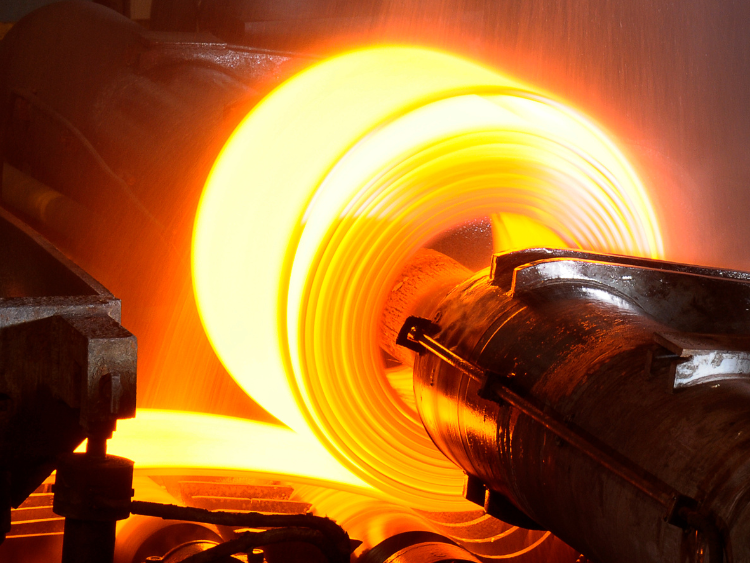
European HRC producers increasingly bullish on prices amid rising costs, reduced supplies
Integrated steelmakers in Northern Europe are aiming for €30-50 ($32-53) per tonne rises for January delivery coil, citing higher costs and limited availability due to production cuts.
Offers for January delivery HRC from the mills in the region were reported at €660-680 ($699-720) per tonne ex-works.
Buyer price ideas for HRC, however, were reported at €620-630 per tonne ex-works.
Even lower bids – at €600-610 per tonne ex-works – were heard for December delivery HRC, but mills were reluctant to accept the lower prices, sources said.
Buyers were coming back to the market for to restock, but remained cautious about making bookings, due to being unconvinced about the sustainability of the price uptrend and citing deteriorating demand from end-user sectors and a poor outlook for 2024.
“Prices are, indeed, moving up a bit, but it’s not because of an improving economy,” a steel service center source told Fastmarkets. “It’s restocking to secure deliveries and confirmed lead times, so as not to run out of material. [But] most mills are reducing production.”
Fastmarkets calculated its daily steel hot-rolled coil index domestic, exw Northern Europe at €622.50 ($659.98) per tonne on November 1, unchanged from Tuesday.
But the index was up by €11.04 per tonne week on week and by €2.08 per tonne month on month.
In Southern Europe, Fastmarkets’ calculated its corresponding daily steel hot-rolled coil index domestic, exw Italy at €603.75 per tonne on November 1, also stable day on day.
The Italian index was up by €3.75 per tonne week on week, but down by €5.00 per tonne month on month.
The market was quiet on November 1 due to a public holiday in Italy, but sources said there had been a slight pick-up in activity due to some cautious restocking.
For December delivery, Italian mills were looking to get €640-650 per tonne delivered, which nets back to €625-635 per tonne ex-works. But for January tonnages some producers were aiming as high at 650 per tonne ex-works, sources said.
Buyer price ideas came in at about €600-610 per tonne ex-works, or even €600 per tonne delivered in some cases, but producers were not accepting any lower bids, they added.
Import offers were getting scarce, however, with the lowest-cost options reportedly already gone and with some suppliers also mulling prices rises.
In general, prices for Asia-origin HRC for early January shipment were consolidating at around €600 per tonne CFR.
Published by: Julia Bolotova

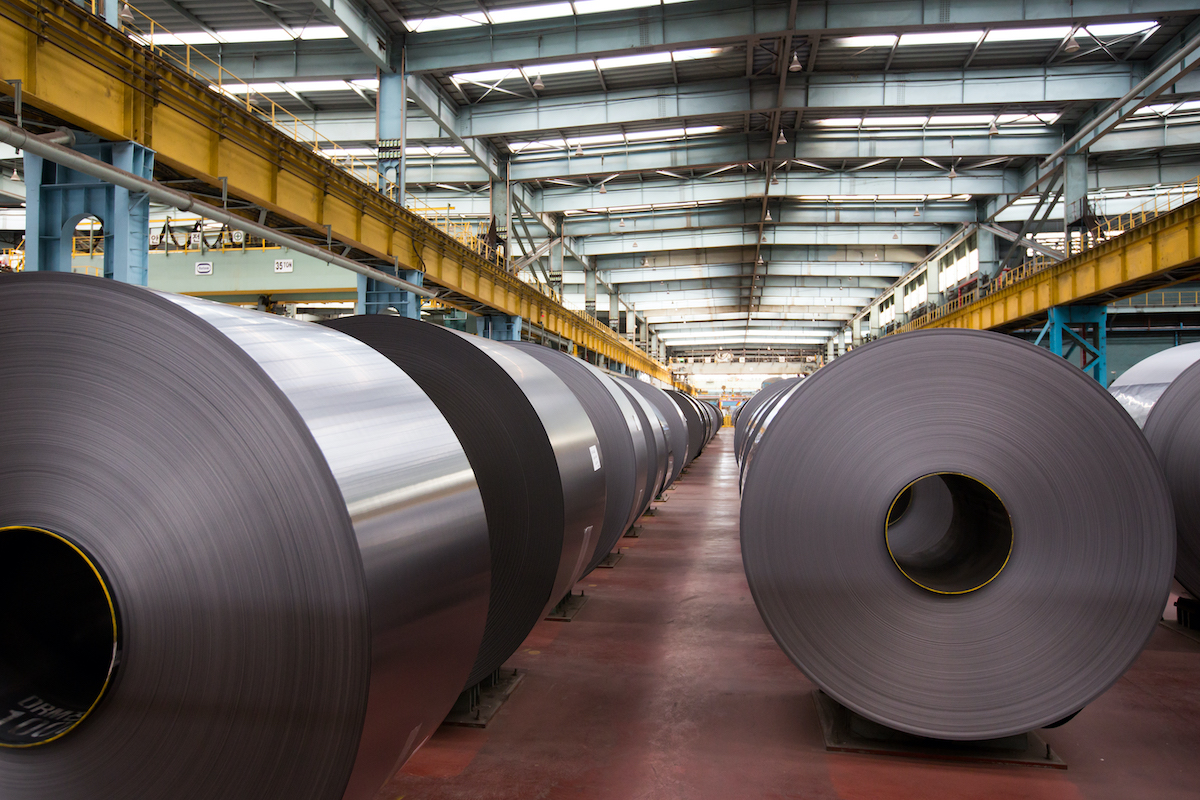
European CRC, HDG producers aim for higher prices
In Northern Europe, local producers were aiming for some €30-50 ($32-53) per tonne rises for CRC and HDG with January-February delivery.
Firm offers were still rare, however, sources said.
One mill estimated the price for CRC at €750-770 per tonne ex-works and around €780-800 per tonne ex-works for HDG.
Another producer pointed out, however, that for first-quarter delivery, prices for both CRC and HDG in the region “should start with ‘8’ just to cover costs of production.”
Buyers, however, estimated tradable values lower, at €700-720 per tonne ex-works for CRC and €720-740 per tonne ex-works for HDG coil.
The major problem was deteriorating demand from key consumers — the construction and automotive industries — and severe competition between
steel-service centers and distributors in the downstream market.
“There is a severe competition between SSC’s and stockholders, as everybody is trying to lower inventories for December,” a distributor said.
Fastmarkets’ weekly price assessment for steel cold-rolled coil domestic, exw Northern Europe was €710-720 per tonne on Wednesday, up by €10 per tonne from €700-710 per tonne on October 25.
And the corresponding weekly price assessment for steel hot-dipped galvanized coil domestic, exw Northern Europe was €720-740 per tonne on Wednesday, widening upward by €15 per tonne from €720-725 per tonne seven days earlier.
Import CRC and HDG offers were getting scarce as some suppliers withdrew from the market to reconsider prices.
“[A South Korean mill] will only come back with new offers in mid-November, and they will be increasing the price,” a trading source in Southern Europe said.
Offers of Japan-origin CRC for January shipment were reported at €675-680 per tonne CFR to Southern Europe.
Turkish suppliers, however, were able to offer December shipment, January delivery CRC at €700-710 per tonne CFR.
A Vietnamese supplier was offering $820-830 per tonne CFR for 0.5mm HDG with Z100-120 coating for Janaury shipment.
Published by: Julia Bolotova

Austria’s steel production rebounds in September, down on-year
Austria’s steelmakers decreased crude steel production in September compared to the previous year, according to worldsteel data.
Output amounted to 514,000 tonnes, up by 17.4% compared to August, but 8.7% less on-year, Kallanish notes.
In January-September, the country produced 5.4 million tonnes of steel, down 7% on-year.
In 2022, Austria reduced steel production by 4.7% on-year to 7.51mt.
Overall EU output in September fell by 1.1% on-year to 10.6mt. In January-September, EU steelmakers produced 96.2mt, down 9% on-year.
Earlier, Austria’s commerce chamber Wirtschaftskammer Österreich (WKO) expressed concern over the crash of demand and orders for commodities in the country (see Kallanish passim). WKO sees orders declining by as much as 30%, and there is no relief in sight.
Austria’s largest steelmaker voestalpine recently broke ground on the electric arc furnace project at its Donawitz site, part of the Austrian steelmaker’s “greentec steel” plan for low-emission steelmaking (see Kallanish passim). Danieli has been chosen to supply the engineering, production, and commissioning of the EAF, using DIGIMELTER Technology.
Construction of the 850,000 tonnes/year capacity EAF will begin in 2024, with commissioning scheduled three years later.
Previously, voestalpine approved an investment of around €1.5 billion ($1.6 billion) for the construction of one EAF at each of its two sites in Austria – Linz and Donawitz. These will ultimately replace two blast furnaces by 2027.
Voestalpine expects good earnings after a strong 2022/23 fiscal year (see Kallanish passim). It recorded the highest level of revenue and the best operating result in its history, surpassing even its record year of 2021/22. The firm said in June that expectations were more cautious because of the war in Ukraine, among other geopolitical tensions worldwide, and persistent inflation in both Europe and North America.
Svetoslav Abrossimov Bulgaria


Toyota records September production high
Standalone auto production, surged 12.8% on-month to 900,919 units, though it was just 1.5% higher than a year earlier. Of that, both domestic and overseas production hiked from the prior month, but were up 12.8% and down 3.6% on-year respectively to 310,920 and 589,999 units.
Japan and North America are the main ares to see growth because of solid demand and an easing of semiconductor shortages. However, a previous fire at a parts plant in Czechia and intense competition continued to impact European and Chinese production, leading to a yearly decrease of 27.6% and 6.7%.
Between January and September, standalone production rose 6.7% on-year to 7.57 million units. Trends continued with a huge gap, with production inside and outside of Japan rising 32.9% and 2.5% to 1.28m and 6.29m units respectively.
For consolidated production including Daihatsu and Hino Motors, the monthly figure also hit a high for September of nearly 1.04m units.
Year-to-date output gained 8.2% to 8.51m units. In the fiscal year-to-date starting from April, the figure also hit a record high at 5.6m units, 8.3% higher than a year earlier.
In addition, both standalone and consolidated sales also hit a high for September at 921,308 and over 1m units. Y-t-d sales rose 6.7% and 6.5% on-year respectively to 7.57m and 8.27m units on standalone and consolidated bases.

Cliffs/USS merger would be anti-competitive: auto group
In a letter to Congress and regulators, the Alliance for Automotive Innovation (AAI) argues that the merged entity would control too much of the automotive steel market, threatening to increase costs for manufacturers. The group, representing Hyundai, General Motors, Toyota Motor and Volkswagen, is concerned about the availability of competitively priced essential car parts should the sale proceed.
“The potential concentration in domestic steel production that will result from this proposed transaction deserves antitrust scrutiny from the subcommittee and government regulators. In particular, the government should examine the potential for anti-competitive pricing of materials used by steel-reliant automotive manufacturers,” writes John Bozzella, ceo of AAI.
if Cleveland-Cliffs acquires US Steel, the combined entity would produce “more than 90% of US advanced high-strength steel used for automotive underbody panels, bodyside reinforcements and impact areas,” AAI’s letter states. Furthermore, the company would provide “80% of body in white (BIW) steel used to produce a vehicle’s structural frame [and] 65 percent of US exposed grade steel used for automotive surface panels like doors, hoods and fenders.”
Domestic steel market participants tell Kallanish that the auto group has a point.
The operator of a large service centre in the Midwest says: “The AAI is correct. Prices, all things being equal, would be much higher with a Cleveland-Cliffs’ purchase of US Steel. Antitrust issues are driven by how regulators define the relevant markets. The usual way the Clayton Act would be applied, you would think there isn’t a path to approval without a major break-up.”
A second service-centre source adds: “This deal will never happen. The administration will not allow it.”
The AAI letter addresses how the consolidation of blast furnaces and the ownership of most iron ore mining and processing facilities would put automakers at a costly disadvantage. There are implications for electric vehicle manufacturers too.
“A consolidation is also problematic for the production of electrical steel (e-steel) used for electric vehicle (EV) motors. Currently, there are two primary domestic suppliers of automotive grade e-steel in the US: Cleveland-Cliffs and Big River Steel (owned by US Steel). In a combined company, 100 percent of the domestic e-steel needed for electrical motors and EV production will be concentrated in a single company,” Bozzella writes.
Cleveland-Cliffs made an unsolicited offer to purchase US Steel for $7.25 billion but was rebuffed (see Kallanish passim). Later US Steel announced it was considering bids from multiple potential buyers (see Kallanish 30 August).
Kristen DiLandro USA

Eurofer once again downgrades steel consumption outlook in Europe for 2023
If this forecast proves to be correct, it will be the fourth annual contraction in the steel market in the past five years, but a stronger recovery is expected in 2024, the association said.
Eurofer expected apparent steel consumption in the EU to drop by about 5.2% year on year in 2023, to 132 million tonnes, it said in its fourth-quarter 2023 outlook report. This is be down from the previous outlook’s expected 3% year-on-year consumption drop to 158 million tonnes, published in July this year.
In 2024, apparent steel demand in the bloc is expected to recover by 7.6%, rising to 142 million tonnes. This is a revision from Eurofer’s previous forecast for a 6.9% recovery in 2024.
“The perspectives for the European steel sector get gloomier every quarter, amidst disruptive wars, global tensions, an unresolved energy crisis, high inflation, tightening economic conditions and historically high import shares that are strangling manufacturing. This situation negatively impacts steel demand. It is essential that EU policymakers steer a course which maintains a sustainable industry in Europe and responds to the call of the clean tech value chain — of which steel is a fundamental part — for an EU Clean Industrial Deal and urgent actions to keep Europe in the world’s clean technology race,” Axel Eggert, director general of Eurofer, said.
Steel-using sector outlooks
Automotive
The automotive sector’s output in the EU recovered by 3.5% in 2022, but this was mostly a rebound from the low comparison base of 2021, due to a components shortage that year.
The sector is expected to record further growth in 2023, by 7%. This was revised from a previous recovery rate of 6.4%, according to the association.
But output levels will still remain far below the pre-crisis levels seen in 2018-2019, and the sector is expected to shrink by 4.6% in 2024.
The automotive industry in Europe was one of the few relatively well-performing steel-consuming sectors in 2023, with data from the European Automotive Manufacturers Association showing that new car registrations in the EU continued to grow strongly in September 2023.
Notably, the EU car market grew by 9.2% to 861,062 registered units in September, marking the 14th consecutive month of growth. But this growth can be attributed to the region’s rebound from a low comparison base last year, primarily driven by vehicle component shortages.
Market sources noted that demand for steel coil from the automotive industry has been broadly stable at low levels during the course of 2023.
“Long-term contracts [for flat steel] for the second half of 2023 with automotive industry, were done at same levels as for the first six months. In general, automotive demand is not booming, but it is not terrible,” a trading source in Germany said.
Fastmarkets’ daily steel hot-rolled coil index domestic, exw Northern Europe averaged at €639.06 ($674.07) per tonne in September 2023, down by €126.14 per tonne from the monthly average of €765.20 per tonne in September 2022.
Construction
Meanwhile, Eurofer expects the construction industry to decline moderately, by 1.7% in 2023 (revised down from a 0.5% drop forecasted in July), after recording a 4.8% growth in 2022. The sector is expected to recover modestly, by 0.2% in 2024 (previously expected at +0.7%).
This sluggish trend in construction industry performance is expected to worsen in the next three quarters due to the effects of rising prices for construction materials, a shortage of construction workers and, in particular, the consequences of continued monetary policy tightening on housing demand, the association said.
“Looking at construction sub-sectors, rise in interest rates — as a consequence of policy rate hikes by the ECB [European Central Bank] and other central banks — has already impacted residential construction demand. Civil engineering is expected to continue providing the strongest contribution to the construction sector’s performance, but to a lower extent,” Eurofer said. “This segment will continue to be supported by EU-wide public policies (NextGenerationEU, etc.), but their effects have become increasingly uncertain and difficult to quantify due to the recent deterioration of the economic outlook.”
Weak construction demand has weighed heavily on the European long steel market in recent months, with producers’ recent bullish attempts falling through due to lack of demand, market participants told Fastmarkets.
The price for steel reinforcing bar (rebar), domestic, delivered Northern Europe fell to a low midpoint average of €589.38 per tonne ex-works in September 2023, from highs around €1,014.38 per tonne ex-works in September 2022.
Published by: Julia Bolotova

Thyssenkrupp starts reversing mill for automotive grade steels
On 26 September, thyssenkrupp Steel produced the first coil on the new 2-stand reversing cold mill at its plant in Bochum, Germany, supplied by Primetals Technologies.
The mill was inaugurated on October 30 during a festive event and is considered a centre piece in the steelmaker’s future plans, Kallanish understands.
The double reversing stand can be used to produce higher-performance steels for electric mobility, as well as other high-strength grades. The location in Bochum will be expanded into a centre of excellence for electric mobility by 2025. In addition to the now completed unit, an annealing and isolating line and an electrical steel inspection line are being built there. The total investment at the site amounts to about €300 million ($319m).
The mill will help to “satisfy the ever-increasing and demanding requirements for premium electrical steel,” says Heike Denecke-Arnold, chief operations officer of tk Steel. “With even thinner highly silicised sheets, for example, we can help to further increase the energy efficiency and thus the performance of electric motors.”
Electrical steel strips with a thickness of less than 0.35 millimetres can only be rolled efficiently and in high quality on reversing stands such as the newly installed stand, due to high material requirements. The technology used ensures a stable rolling operation with very thin and hard strips, tk Steel says.
Christian Koehl Germany

Turkey initiates dumping investigation on hot-roll imports
Turkey is opening a dumping investigation on hot-rolled flat steel originating from China, India, Japan and Russia, according to Turkey’s Official Gazette announcement on Tuesday.
A dumping investigation concerns imported hot roll falling under numerous items containing customs codes 7208, 7211, 7212 and 7225, Kallanish notes.
The imports from China, India, Japan and Russia, allegedly unfairly sold at low prices, have inflicted significant harm or posed a threat of significant harm to the economic performance of the domestic production sector, according to Turkey’s Ministry of Commerce notice. The domestic complainants are represented by Çolakoğlu Metalurji Ereğli Demir ve Çelik Fabrikaları (Erdemir), İskenderun Demir ve Çelik (Isdemir), Habaş Industrial and Medical Gazlar İstihsal Endüstrisi, and Tosçelik Profil ve Sac Endüstrisi.
The imports from the four nations experienced substantial growth both in terms of quantity and market share from 1 January, 2020, to 30 June, 2023. This surge in imports had a disruptive and depressing effect on the sales prices of Turkish domestic products, the notice alleges.
Furthermore, the Turkish domestic market witnessed a decrease in sales from 1 July, 2022, to 30 June, 2023. This, in turn, had adverse consequences on Turkish domestic production, sales figures, stock levels, stock value, product cash flow and capacity utilisation rate. It resulted in a negative impact on critical economic indicators and unit profitability.
“It may be decided to apply temporary measures during the investigation, and definitive measures may be applied retroactively,” the statement says.
Elina Virchenko UAE

Klöckner adjusts guidance, plans job cuts
Hence, due to the ongoing macroeconomic weakness, especially in Europe, the German-based steel distribution group is adjusting its previous earnings forecast of €220-280m to €170-200m, Kallanish hears.
In the first nine months of the year, the company’s revenue amounted to €6.0 billion, compared with €7.4 billion in the corresponding 2022 period. Ebitda adjusted for material special impacts was €172m, versus €439m in the first nine months of 2022. Net income was a negative €8 million in the first nine months of 2023, down from a profit of €301m a year earlier.
Shipments in the third quarter came to 1.191m tonnes, up 4% y-o-y, due to acquired business in the USA. The company highlights a continued positive development of its business in North America and Switzerland. In North America, it expects improved demand in most customer sectors going forward. In Europe, it anticipates a flat development, with continued weakness in construction.
In response to the challenging macroeconomic environment in Europe, Klöckner will cut back organisations in the Kloeckner Metals EU and Kloeckner Metals Non-EU segments. Implemented step by step from the fourth quarter of 2023, it anticipates a 10% workforce reduction in the European distribution business.
At a conference call for the publication of quarterly figures, ceo Guido Kerkhoff detailed that some 300 employees will be laid off, 80 of which are in Germany. The cutbacks will be spread over the entire organisation, and no closure of individual sites is planned, Kallanish heard from Kerkhoff on the call.
Christian Koehl Germany