


Tight supply continues pushing CRC, HDG prices higher across Europe
Downstream flat steel prices in Europe increased in the week to Wednesday March 15, driven by limited supply, Fastmarkets heard.
European producers of cold-rolled and hot-dipped galvanized coil had good order books and could offer coil with June-July delivery to the market.
Offers for CRC in the region were reported at €940-970 ($1,007-1,039) per tonne EXW and at €970-990 per tonne EXW for HDG during the assessment week.
Estimations of tradeable values, meanwhile, were reported at €920-950 per tonne for CRC and at €950-970 per tonne for HDG.
Fastmarkets’ weekly price assessment for steel cold-rolled coil domestic, exw Northern Europe was €920-950 per tonne on Wednesday, up by €10-30 per tonne from €910-920 per tonne on March 8.
Fastmarkets’ corresponding weekly price assessment for steel hot-dipped galvanized coil domestic, exw Northern Europe was €950-970 per tonne on Wednesday, up by €20-30 per tonne from €930-940 per tonne on March 8.
Buyers preferred to book small lots of CRC and HDG, given long lead times and mixed views on market trends in the summer.
The demand from the automotive industry — a major end-user — was stable recently.
“Demand from the automotive industry had stopped dropping; it has stabilized since early 2023, but we do not see it increasing,” a distributor said.
Nevertheless, supply of CRC and HDG in Europe was still falling short of demand, with the situation aggravated by production issues at one of the major suppliers.
Tata Steel Netherlands declared force majeure on CRC deliveries in late February, which is supposed to have aggravated the supply tightness, according to sources.
Southern Europe
Producers in Southern Europe were also aiming for higher prices, despite cautious buying. Similar to Northern Europe, tight supply was the major factor behind the price rise.
Offers for CRC in Southern Europe were heard in the range of €930-950 per tonne EXW during the assessment week, while buyers’ estimations of tradeable levels were heard at €920-930 per tonne EXW.
HDG offers in the region were heard at €950-970 per tonne EXW. Transactions for small lots were heard at €940-950 per tonne EXW.
“[A supplier in Italy] was offering us €950 per tonne EXW for HDG [in the week to March 10], but starting this week the minimum offer from them is €970 per tonne EXW,” a distributor in Italy said.
Fastmarkets’ weekly price assessment for steel cold-rolled coil domestic, exw Southern Europe was €920-930 per tonne on Wednesday, up by €10-20 per tonne from €900-920 per tonne on March 8.
The corresponding weekly price assessment for steel hot-dipped galvanized coil domestic, exw Southern Europe was €940-950 per tonne on Wednesday, up by €10-30 per tonne from €910-940 per tonne on March 8.
Both assessments reflect the lower end of offers, rare deals and estimates of achievable prices.
Import offers to the region remained limited and quite high. Most overseas supplier could offer May-June shipment, which would mean July-August arrival.
So, general buying interest for imports was rather weak due to long lead times and safeguards-related risks.
CRC offers from South Korea were heard at €865-875 per tonne CFR for May-June shipment, compared with the latest bookings at €835 per tonne CFR done from South Korea in February.
Two sources also reported an offer for a limited allocation of CRC from Taiwan at €820 per tonne CFR, but it was not clear if the offer was still standing.
An offer for 0.5mm HDG with Z100 coating from Vietnam was heard at around $1,045 per tonne CFR for May shipment, stable week-on-week. No bookings were reported at this level during the assessment week so far.
Published by: Julia Bolotova


European HRC producers keep offers high, deny discounts despite subdued demand
Prices for steel hot-rolled coil across Europe were stable or slightly higher on Wednesday March 15, despite limited trading, with low availability cited as the major market driver, sources told Fastmarkets.
HRC producers in Northern Europe were offering June-delivery HRC at €840-870 ($900-932) per tonne ex-works, sources said.
Earlier in the week, ArcelorMittal increased its European flat-steel prices once again, with new offers for HRC reported at €870 per tonne ex-works and at €990 per tonne ex-works for hot-dipped galvanized coil, effective for June deliveries.
Some buyers in Germany said that tradable values were no higher than €820-830 per tonne ex-works, but producer sources said that such prices were no longer achievable. Transactions were only reported for small tonnages of HRC, at €830-840 per tonne ex-works.
Trading sources from the Benelux area estimated a workable price of €840-850 per tonne ex-works.
Numerous production restarts announced by European mills since January this year have yet to affect the market.
“Mills are managing their capacities wisely, keeping buyers hungry,” a distributor in the region said.
One integrated mill in the Netherlands was reported to be out of the market for technical reasons, sources said.
“Customers of [an integrated mill in the Netherlands] are inquiring with other producers for automotive grades [of HRC],” a trading source said.
Fastmarkets calculated its daily steel hot-rolled coil index, domestic, exw Northern Europe, at €837.92 per tonne on Wednesday, up by €2.42 per tonne from €835.50 per tonne the previous day.
The latest calculation of the index was up by €13.23 per tonne week on week and by €71.04 per tonne month on month.
HRC prices in the region were likely to keep climbing in March, supported by reduced supply, sources said.
In southern Europe, Fastmarkets’ calculation of its daily steel hot-rolled coil index, domestic, exw Italy, was €815.50 per tonne on March 15, up by €2.78 per tonne from €812.72 per tonne on Tuesday.
The latest calculation of the index was up by €20.34 per tonne week on week and by €58.00 per tonne month on month.
Offers were reported at €820-830 per tonne ex-works in Italy, mainly for June-delivery HRC. One supplier was targeting prices as high as €850 per tonne ex-works.
Buyers, meanwhile, reported estimates of tradable values at €800-820 per tonne ex-works.
Imported HRC prices were largely unattractive for European buyers, given long lead times. Notably, offers from Southeast Asia for May-June shipment were reported at €780-790 per tonne CFR.
India-origin HRC was offered at $830-840 per tonne CFR to Southern Europe. A transaction for a limited tonnage of HRC from one Indian supplier was, however, reported at €750 per tonne CFR during the week to March 10, two sources said.
But they added that this offer price was no longer available in the week starting March 13.
Published by: Julia Bolotova

GFG Alliance shares arguments for overturning Aartee Bright Bar administration
Steel, metals and energy grouping GFG Alliance has disclosed the arguments it planned to present in court at a hearing on March 15 as it seeks to overturn the administration of the collapsed UK steel producer Aartee Bright Bar.
The group acquired ABB on Feb. 17 with the intention of incorporating it into its Liberty Steel Group subsidiary.
The acquisition followed the appointment of administrators over ABB on Feb. 6, with the company citing challenging economic conditions and high metal costs for its collapse.
According to a statement released March 14, GFG planned to argue that ABB was wrongly put into administration by financial services provider FGI Finance, which was being advised by management firm Alvarez & Marsal.
The group said that it has a business plan that would ensure AAB remains solvent and which is supported by the majority of its creditors.
According to GFG, AAB would also benefit from ongoing financial support from the group in order to cover working capital needs and satisfy existing creditors.
GFG also noted that it has already provided GBP620,000 to fund wages and avoid immediate redundancies.
“The administration process at ABB is unjustified, unnecessary and unsupported by a majority of its creditors and employees whose jobs are on the line,” said chief transformation officer Jeffrey Kabel.
“We urge creditors, employees and stakeholders to get behind our application to save ABB,” he added.
Platts, part of S&P Global Commodity Insights, assessed the weekly UK hot-rolled coil price at GBP 755/mt ($918/mt) DDP West Midlands March 9, down 38.3% from the all-time high of GBP 1,225/mt April 22, 2022.
— Euan Sadden

ArcelorMittal increases HRC offers in Europe as others expected to follow
ArcelorMittal has increased offers for hot-rolled coil across Europe as other mills have not been active in the market, and market participants expect them to also move prices up, sources told S&P Global Commodity Insights March 15.
ArcelorMittal has set new prices for June shipment coil at Eur870/mt ex-works Ruhr, up by Eur20-30/mt from previous offers.
Trading activity, in the meantime, remained limited as buyers have been holding back from acquiring bigger lots of coil. The reluctance to buy volumes was caused by uncertainty in price sustainability in the third quarter. European steelmakers have been offering May-July shipment flat steel, indicating full order books.
The supply from both domestic and overseas mills has remained tight. European mills have full order books, equipment restarted in February-March has not reached necessary production rates, and technological issues at Tata Steel’s cold-rolling mill in the Netherlands contributed to the issue. Tata Steel Nederland invoked force majeure due to difficulties following its Cold Mill 21 upgrade, the steelmaker had said Feb. 24
“Situation at Tata Steel has a big influence in the market,” a steelmaker source said. “Their customers are now looking for alternative supply, but mills are not interested in selling spot, but they can offer any other longer-term arrangement.”
“There is lack of supply and offers both from European mills and imports,” a trader said.
As a result, buyers have been accepting higher prices only for small tonnages of specifications they needed to restock.
The further price recovery could be supported by such trading activity in the short run, but prices are expected to soften in the second half of summer, following the traditional market cycle, sources said.
“Customers are reluctant to buy,” another mill source said. “There is almost no interest in the commodity coil, but anything with higher added value is booked. But not big volumes. Some mills withdrew offers and are preparing to increase offers.”
Platts assessed domestic hot-rolled coil prices at Eur850/mt ex-works Ruhr March 15, up by Eur2.50/mt day on day.
The assessment was based on deals and tradable values reported at Eur840-850/mt ex-works Ruhr and offers heard at Eur870/mt ex-works Ruhr.
In South Europe, the assessment for domestic hot-rolled coil prices remained unchanged at Eur810/mt ex-works Italy March 15.
Deals have been heard at Eur800-810/mt ex-works Italy and tradable values at Eur800-820/mt ex-works. Offers were expected to rise to Eur850-870/mt ex-works Italy.
The number of import offers heard in the market has been limited, and the only material available from Asia was for delivery in late July-August. As a result, buyers have been holding back from overseas bookings.
Platts assessed prices for imported hot-rolled coil in Northwest Europe at Eur780/mt CIF Antwerp March 15, up by Eur10/mt day on day. Offers of the material from Asia have been heard at Eur780-800/mt CIF Antwerp.
Platts assessed import prices for hot-rolled coil in South Europe up by Eur10/mt day on day to Eur770/mt CIF Italy March 15.
Material from Asia has been offered at Eur770-800/mt CIF Italy and from Egypt at Eur820/mt CIF Italy.
Platts is part of S&P Global Commodity Insights.
— Maria Tanatar

Tata says new induction furnaces at Corby, UK, tube mill would cut CO2 emissions
A GBP 5 million ($6 million) investment in new electric induction furnaces will reduce emissions from one of Tata Steel’s tube mills in Corby, UK, by 2,000 mt/year of CO2, Tata Steel Europe said March 13.
The site, in Northamptonshire, is capable of manufacturing 250,000 mt/year of thin-wall welded tube for a range of applications, including construction, engineering and energy infrastructure.
Supplier Inductotherm Heating and Welding will be replacing the original Radyne units installed in 1980 with 12 more technically advanced and energy efficient induction heating coil assemblies, along with associated electrical infrastructure, cooling systems and process control gear, London-headquartered Tata Steel Europe said in a statement. The work will be carried out over two weeks at the end of October.
The package includes a stretch reduction mill that takes 169-mm diameter steel tubes and heats them to around 1,100°C before they are stretched into as small as 40mm diameter hollow sections with wall thicknesses as thin as 3.2 mm.
“The improved efficiency of the new furnaces means we’ll need less pre-heating from the gas-fired furnaces and therefore fewer associated emissions,” said Project Lead Paul Ilko.
The project is in line with Tata Steel’s environmental ambitions of becoming net-zero globally by 2045. As part of its sustainability commitment, the Corby works also aims to move its electricity supply towards low-carbon, renewable sources in due course, it says.
— Ekaterina Bouckley

French construction outlook deteriorates
Sentiment among French construction companies deteriorated again in February. The firms surveyed say they saw a negative performance in their past activity and cannot predict the future evolution of the market due to the current uncertainty, Kallanish learns from a l’Institut National de la Statistique et des Études Économiques (Insee) report.
Last month, as many contractors as in the previous month considered their order books to be higher than average and have orders for over eight months of work. Production capacity also decreased in February.
The same number of construction firms as in January reported slowing output because of supply difficulties. The issue however is easing. “Slightly less than half of the companies (49%) have reported to be at the limit of their production capacity (production bottlenecks), that is to say that they could not produce more with their current means if they were to receive more orders” the report states.
Fewer companies than in January will increase their prices over the next three months.
The French rebar market is going through a weak patch, with prices and sales volumes reducing. Uncertainty is causing buyers to purchase small quantities and adopt a wait-and-see attitude (see Kallanish passim).
Natalia Capra France


Klöckner & Co confirms public takeover offer
Klöckner & Co’s board says it has taken note of Swoctem GmbH’s intention to make a voluntary public takeover offer for the distributor’s whole issued share capital. Swoctem is offering €9.75 ($10.47) cash per share. KlöCo’s share price on the Xetra exchange was €9.98 on 13 March.
Swoctem is by far the largest single shareholder in the German-based steel distribution group. It is owned by Friedhelm Loh, whose Loh Group includes steel processing and distribution units, which makes it Klöckner’s only large stakeholder with related activities. At the latest notification in 2016, Swoctem held slightly more than 25% in Klöckner. Other companies hold a maximum of 5% each, but mostly less, Kallanish notes.
Klöckner’s board says it welcomes the fact that Loh supports the implementation of the “Klöckner & Co 2025: Leveraging Strengths” campaign and that his announcement underlines his interest in KlöCo’s long-term development.
It also says it is evaluating the situation and will inform shareholders with its assessment of the offer and its conditions in a timely manner after the submission of the offer document.
Christian Koehl Germany
Italian plate prices flatten
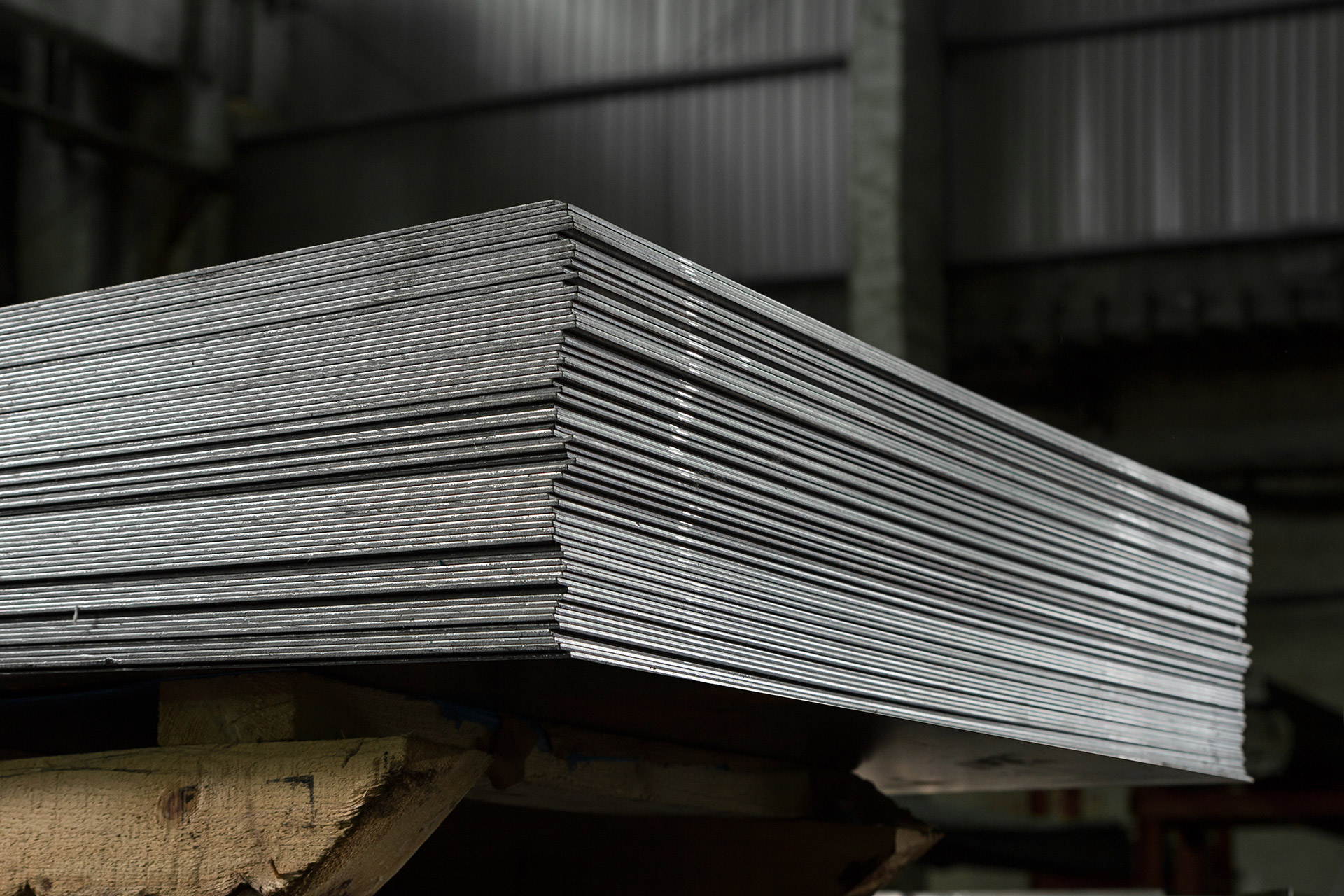
Italian plate transaction prices remain flat compared to the beginning of the month. Sales this month are slower as the large buyers purchased sizeable volumes in February, Kallanish learns from market participants.
Plate re-rollers are quoting €960/tonne ($1,024) for the basic S275 grade and €1,010/t for the higher 355 grade. Lead times continue to extend to end-April and May for some steelmakers. Domestic contracts are flat at €920-950/t ex-works for S275 and €1,000/t for 355. The gap in price depends on buyer and tonnage.
Because slab prices will remain high this month amid relatively short supply, producers intend to continue increasing plate values, targeting €1,000/t for S275, with €50/t more for 355, a price already consolidated in northern Europe. Order books for the second quarter are considered good. One plate re-roller observes his clients have work in hand and is reporting a strong first quarter for sales.
Asian-origin slab is being bought at $720-750/t cfr Italy, sources suggest.
Natalia Capra France

Klöckner expects stabilising markets, lower prices in 2023
Klöckner & Co expects global steel markets will increasingly normalise this year. A stronger demand trend in the company’s key European and US markets will bring a considerable increase in shipments compared to 2022, it predicts.
Last year, the volume of shipments dropped by 4% on-year to 4.7 million tonnes, owing to a disciplined margin-over-volume strategy in early 2022, and negative macroeconomic environment in the second half, Klöckner says. Regarding the development of prices, the German-based steel distribution group expects a lower level overall compared to the prior-year period and correspondingly lower revenue.
At the group’s annual press conference in Dusseldorf last week, attended by Kallanish, chief executive Guido Kerkhoff stated that overall demand in the first two months of 2023 in Europe and the USA “has been stronger than we had thought”. Sold volumes have risen quarter-on-quarter, as the automotive industry recovers from shortages, books at plant-builders are full, and infrastructure projects are a driver mainly in the USA.
In 2022, high average prices boosted the group’s revenue significantly year-on-year to €9.4 billion ($10 billion). Despite the challenging economic environment, it achieved what it says was a strong operating income (Ebitda) of €417 million before material special effects, after €848m in 2021.
Christian Koehl Germany

Blastr eyes Norway captive pellet plant, merchant sales
Blastr Green Steel plans to invest in an iron ore pelletising plant in Gildeskål municipality, northern Norway, Kallanish learns from the company. The pellet plant will supply Blastr’s projected steelmaking plant in Inkoo, Finland.
The planned facility in Gildeskål will convert iron ore pellet feed into high-quality direct reduction pellet, which is used as raw material for green steel production. The power needed for the process will be based on hydropower, and Blastr is now in discussions about long-term power contracts. The location is considered beneficial as it provides an ice-free harbour with easy access to seaborne iron ore from the Norwegian Sea, Blastr notes.
It says the plant will provide 120 jobs when operational, in addition to significant indirect employment opportunities and economic effects for the municipality and the region. The investment in Gildeskål is estimated to exceed €1 billion ($1.06 billion). According to Blastr chief executive Hans Fredrik Wittusen, the pellet plant will also supply “a significant and growing world market for direct reduction pellets”.
A final investment decision is expected in 2025, subject to relevant permits and agreements. The plant is tentatively planned to start production in 2028.
Christian Koehl Germany