


H-Beam rises for fourth straight month, but gains slow as buying weakens
Wide-flange H-beam import prices into Southeast Asia rose for the fourth straight month Feb. 28, but the gains weakened compared with a month earlier due to a sluggish buyer’s market.
Platt’s assessment of S275JR H-beam rose $9/mt month on month to $789/mt CFR Malaysia Feb. 28, with an offer from Thailand rising $10-$15/mt, while buyers’ acceptable level remained below $790/mt CFR.
South Korean H-beam from Hyundai was heard offered at $910/mt CFR Singapore, while Thailand’s SYS was heard to have offered at $810-$815/mt CFR Singapore and $790-$800/mt CFR Malaysia.
Chinese H-beam was heard offered at $720-$725/mt CFR Manila for ASTM A36 grade H-beam.
“Prices keep on fluctuating. There was a time in February when Chinese offers breached $740/mt CFR Manila. Demand is not too good, stable. Customers are only buying for replenishment and not stocking up too much,” said a Philippine trader.
A Malaysian importer was bearish about prices. “The Malaysian market is still struggling. We just ended the Lunar New Year, but there is another round of holidays and Ramadan fasting, so demand will be flat for two months of April and May,” the source said, adding that “buyers can only accept below $790/mt CFR Malaysia.”
— Edward Low


Revista InfoAcero Febrero 2023
En el siguiente enlace pueden acceder a la edición de Febrero de nuestra revista INFOACERO
Destacamos a continuación algunos de sus contenidos:
- Opinión – D. Alberto Fernández– Junta Directiva UAHE.
- Evolución del Índice de Precios de Productos Siderúrgicos – UAHE
- Información Asociativa: Conferencias UAHE- Perspectivas en nuestro sector- SUSIDER (2 febrero), CL Grupo Industrial (9 febrero)
- Sector Siderúrgico: Evolución de los sectores consumidores de acero, consumo real y aparente de acero- Eurofer 1er Trimestre 2023.
- Próximos Eventos: Steel Net Forum Iberia (Oporto, 16,17 Marzo), Kallanish Europe Steel Markets (Amsterdam, 16, 17 Mayo)


ArcelorMittal Bremen ramps up production, Hamburg DRI following
The blast furnace at ArcelorMittal Bremen whose production was reduced to a minimum is now back to regular operation, Kallanish is told by a German official of the ArcelorMittal Group.
Blast furnaces in various European countries were temporarily shut down last autumn in response to low demand and purchasing activity, with most now reactivated. Most German mills, on the other hand, kept all their active blast furnaces in operation. ArcelorMittal Bremen decided to stop pig iron production at one BF but still kept it running for power generation purposes.
The fact no German blast furnaces were fully idled may have to do with the country’s high electricity costs, meaning mills tried to maintain their on-site power production with the top gas from their blast furnaces.
One unit that was stopped, however, was the direct rection plant at ArcelorMittal Hamburg, the only of its kind in Western Europe. While blast furnaces have a by-function as power generators, a DRI plant is subject to external supply of power and especially gas, which both became too costly for the mill to keep going. This unit, too, is projected to come back on stream in the first half year, “sooner than we had planned”, the spokesman says.
Christian Koehl Germany


EU-UK deal agrees steel quota solution
The EU Commission and UK government have agreed a solution for the movement of the most sensitive categories of steel from Great Britain to Northern Ireland that are subject to tariff rate quotas (TRQs). This comes as part of the changes agreed to the Northern Ireland Protocol on Monday, Kallanish notes.
Northern Ireland companies will now be able to use the EU’s TRQs for steel, providing them access to UK-origin steel in these categories. This will allow them to avoid having to pay the 25% tariff linked to the EU safeguard measures currently in place for steel imports into the EU, the Commission notes.
In response, UK Steel director general Gareth Stace says the deal “will make a significant difference in being able to move steel tariff-free from Great Britain to Northern Ireland, in the context of a complex interplay between the terms of the Protocol and the EU’s steel safeguard quotas. The provision of separate quotas for certain products that can be earmarked for the UK’s use for shipments into Northern Ireland creates a blueprint that can be more widely applied and demonstrates a willingness to find workable solutions.”
“The previous arrangement had meant that the UK was dependent on whether countries like Turkey were using up the EU’s quotas to determine whether steel could be moved within the UK tariff-free. This was clearly illogical and we are hugely pleased that a sensible solution has been agreed in what until recently appeared as a stalemate,” Stace continues.
“While the new arrangement does not solve all problems in relation to trade with Northern Ireland, it marks a positive step forward, addressing the most urgent issues and creating a framework for reaching further solutions,” he concludes.
Since the start of 2021, the UK implemented a temporary “workaround” to ensure steel moved from Great Britain to Northern Ireland remained tariff free. However, changes the EU made to its steel safeguard regime last July resulted in this workaround no longer working for constructional steels including steel beams and reinforcing bar. The exhaustion of EU quotas for these product categories had resulted in steel movements from Great Britain to Northern Ireland being liable to tariffs.
Adam Smith Poland
Turkey postpones imposition of higher customs duties on flat steel imports
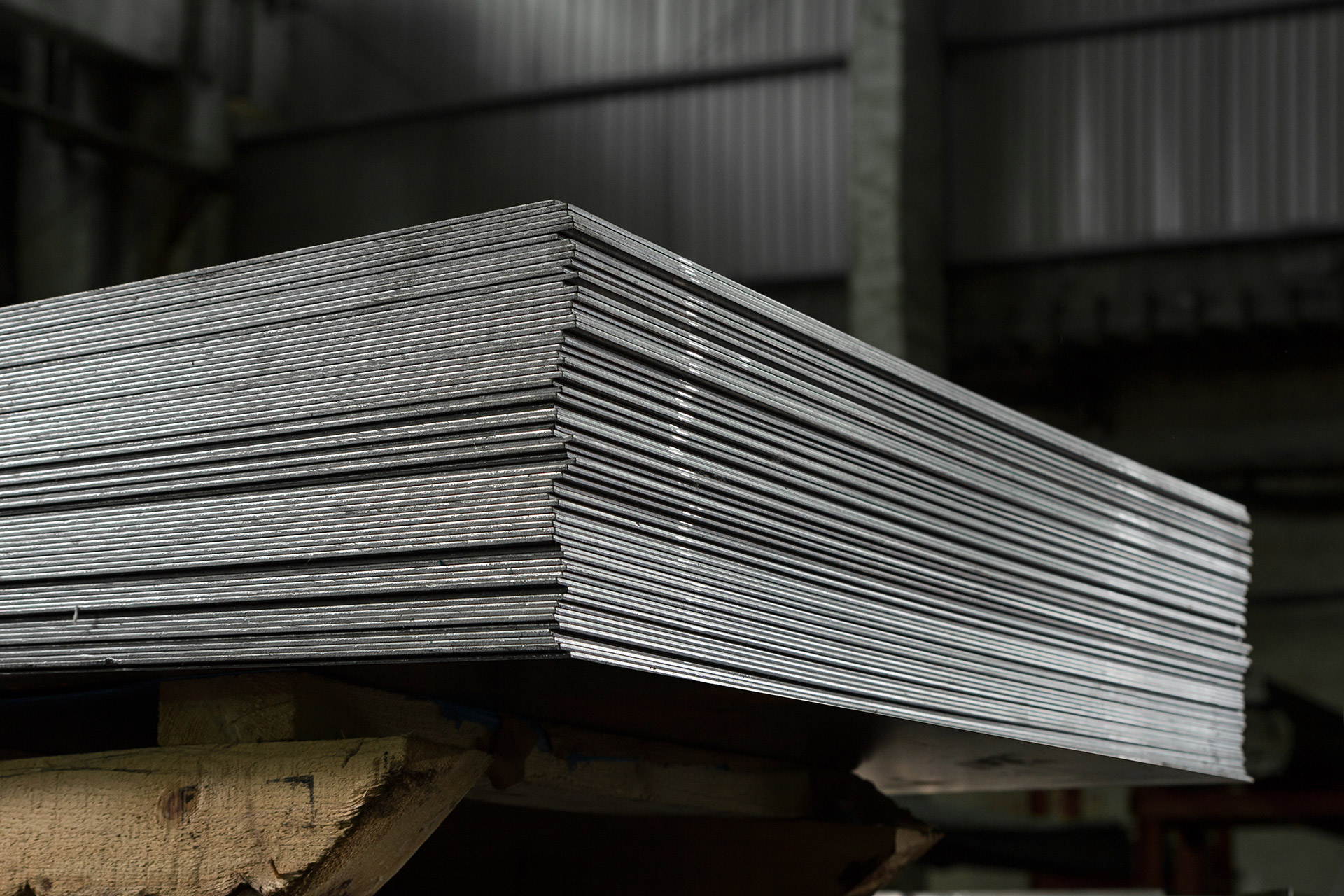
Turkey has postponed the effective date of the increase in customs duties on imports of flat steel with a new presidential decree published Feb. 26, following an earlier decree on the same on Jan. 28.
According to the decree seen by S&P Global Commodity Insights, the effective date of the custom duty rise will now be April 1 instead of Feb. 27
Customs duties on unalloyed hot-rolled, cold-rolled and coated coil imports will be increased by 6%-7% to 15%, 17% and 20%, respectively, as of April 1.
EU countries and countries with which Turkey has free trade agreements will be exempted from the customs duty rise.
Both long and flat steel prices in Turkey’s domestic market have increased recently amid some temporary mill stoppages due to the Feb. 6 earthquakes and increased demand from reconstruction activities that are expected to start from March, sources said.
As Turkish producers could reserve most of their steel capacities for reconstruction projects, prices in Turkey could rise further, sources said.
“The government’s latest move is probably aiming to prevent the increase in flat steel prices in the domestic market, however, it could technically have limited effect as the effective date is still very near,” a steel service center manager said Feb. 26.
Platts assessed the Turkish HRC steel price at $815/mt ex-works Feb. 24, $50/mt higher than on Feb. 4 before the earthquake.
— Cenk Can

European inventories are still weak
Recently, European OEMs have been forced to trim build significantly, while incoming orders have slowed. How has this affected inventories?

While inventory figures are not publicly available in Europe, recent events have highlighted that stock movements are a critical component when it comes to understanding the likely evolution of production volumes.
Following the Lehman Brothers collapse in 2008, OEMs were immediately faced with crashing market volumes. They responded by slashing output to minimise unplanned or unrequired stocks. But the scale of the crisis was such that this response proved to be too slow, leaving European OEMs sitting on circa one million Light Vehicles by the close of 2008, all of which were stuck in the supply chain and surplus to requirements. Of course, such shocks are not uncommon. Following the German reunification boom, the European market crashed in 1993. More recently, with the outbreak of the COVID-19 pandemic and the ensuing lockdowns, European OEMs saw days’ supply rocket to over 115 days in the first quarter of 2020. An ideal level for European days’ supply is around 60 days, meaning that the region was overstocked by 55 days!
European OEMs have been forced to trim build significantly, while incoming orders have slowed as both have been impacted by the chip shortage. While the impact of chip shortages has improved in recent months, full normalisation of semiconductor supply is not anticipated to be achieved during this year. In addition, China’s recent change in approach to managing COVID-19 is set to cause a rapid spike in local supply-side disruption, with knock-on effects feeding through to wider automotive supply chains.
But there is some good news – European inventories have essentially been flat since the start of last year, in contrast with the destocking of -1.2m cars suffered during the first in 2021 (itself worse than that suffered under Lehman Brothers). Indeed, we saw a recovery in Q4 of 2021, but at +320k units this was still far from an exceptional performance.
Our outlook for this year is what can be described as a ‘fragile recovery.’


So, unlike the Lehman Brothers-induced recession of 2008/9, the sector is in a much healthier position to respond to the market if supply difficulties ease. Much, therefore, rests on how the war in Ukraine and COVID-19 restrictions in China unfold.
by ARTHUR MAHER, DIRECTOR OF RESEARCH


Stainless steel production forecast at 60mt in 2023
MEPS forecasts that global crude stainless steel production will reach 60 million tonnes, in 2023. Significant contributors to this growth will be steelmakers in China and Indonesia.
While India is likely to remain the third largest stainless steel producing country next year, its output is predicted to surge by more than ten percent. The authorities in that nation are investing heavily in major stainless steel-consuming infrastructure projects.
Downside risks to MEPS’ latest forecasts include geopolitical tensions and the recent period of destocking in the West lasting longer than expected. However, falling energy costs and easing inflationary pressures provide some cause for optimism in the stainless steel market.
China
In China, production in the fourth quarter of 2022 was higher than anticipated, due to the government’s decision to relax Covid-related restrictions. This move boosted market sentiment, and, as a result, domestic steelmakers lifted their output. Moreover, the authorities are providing stimulus to the indebted property sector, which many market participants believe will fuel economic activity.
The International Monetary Fund predicts that China’s GDP growth will rebound to 5.2 percent, this year. This should support key stainless steel-consuming sectors such as construction and consumer appliance manufacturing. Consequently, MEPS estimates that stainless steel production will reach 34 million tonnes, in 2023.
Europe
In Europe, output in the July/September 2022 period decreased by approximately one third, quarter-on-quarter. Local mills withdrew melting capacity, due to weakening demand from customers. High interest rates and energy costs caused end-user consumption to fall.
However, production data for October/November 2022 suggests that output should recover, to 1.47 million tonnes, in the fourth quarter. Furthermore, several major stainless steel producers expect shipments to improve, in the first quarter of 2023. They believe that restocking will begin in the short term. Recent reductions in energy costs, and signs that peak inflation has already been reached, are also fuelling market confidence.
United States
US production in the fourth quarter of 2022 is estimated to be 450,000 tonnes. The recovery in melting activity, in the first three months of 2023, is expected to be slower than that in Europe. The period of destocking undertaken by local distributors may last longer than previously foreseen. However, melting activity should rebound in the middle of the year, for seasonal reasons.
East Asia
In South Korea, output in the final three months of 2022 reached only 161,000 tonnes. This was due to hurricane damage to POSCO’s stainless steelmaking facilities, sustained earlier in the year. However, the company recently announced that its stainless cold rolling mill came back online, in January. MEPS envisages a staged ramp-up of production in 2023, with the total for the year reaching 2 million tonnes.
Production in 2023 is forecast to increase, year-on-year, by 7 percent, in Japan, and 8.5 percent, in Taiwan. Improving market sentiment in East Asia should support an upturn in stainless steel consumption, in 2023. Nonetheless, while peak inflation may have been passed, end-user demand in segments such as white goods and catering equipment may remain constrained.

Tata Steel Nederland invokes force majeure on extended rolling mill upgrade
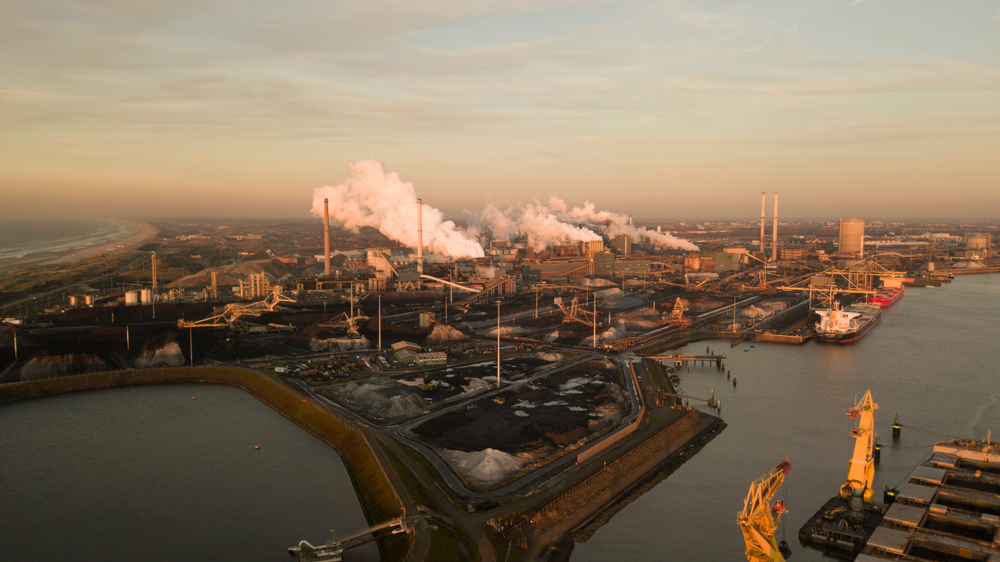
Tata Steel Nederland has invoked force majeure due to difficulties following its Cold Mill 21 upgrade, the steelmaker said Feb. 24.
The company said it was experiencing severe disruptions during the upgrading process of its cold rolling mill 21 at IJmuiden steelworks on the Dutch North Sea coast in the north of Holland.
Unforeseeable challenges have led to an extended commissioning of the upgraded mill, putting extreme pressure on the steelworks’ supply chain, said Tata Steel Nederland.
Despite Tata Steel’s efforts to mitigate disruptions and reduce supply risk through its own or alternative channels, the company has now reached a point where it has to inform its customers that delivery obligations cannot be fully met adding it will continue to explore all options to minimise the impact on their operations.
Tata Steel Nederland had started the upgrade of Cold Mill 21 in August 2022 to further improve the surface quality.
The blast furnace-basic oxygen furnace-based IJmuiden plant is capable of producing up to 7.5 million mt/year of hot- and cold-rolled coil in a variety of finishes, according to Tata Steel Nederland’s website, but the company declined to disclose its actual production.
— Ekaterina Bouckley

German distributors’ steel product sales, stocks fell on year in January: BDS
Steel product sales in the German distribution and stockholding system fell to 836,149 mt in January from 857,602 mt a year earlier, German steel stockholders’ association BDS reported Feb. 23.
The January total was nonetheless markedly higher than sales of 536,626 mt in December, indicating that a destocking cycle in the European steel sector late last year may have started to give way to restocking activity.
January’s sales comprised 229,246 mt long products and 537,595 mt flat products, with both product categories showing a marked increase from December.
Total January sales were also higher than both the 825,630 mt/month averaged in 2022 and 707,808 m averaged in Q4, according to BDS.
Again pointing to market upturn accompanied by client restocking, German stockholders’ stocks fell on a year-on-year basis to 1.969 million mt in January from 2.184 million mt a year earlier, the DBS data showed.
The stocks were also lower than the 2.18 million mt/month averaged in 2022 and 2.054 million averaged in Q4.
However, January’s stocks were still marginally higher than 1.951 million mt in December, with both long products at 745,054 mt and flat products at 1.185 million mt edging higher on a month-on-month basis.
2022 sales fall
German steel product sales by distributors and stockholders plunged 36.4% month on month to 536,626 mt in December and were also down 15.3% year on year, earlier DBS data published Jan. 23 showed.
For full-year 2022, steel product sales totaled 9.91 million mt, down 6.8% from 10.62 million mt in 2021.
Sales of long products, used primarily in construction, totaled 152,506 mt in December, down 40.9% month on month and down 11.1% year on year, while sales of flat products, used in automotive and construction industries, fell 34% month on month and 11.1% year on year to 345,526 mt.
The decline in monthly steel product sales in December coincided with a 4.7% month-on-month reduction in domestic steel inventories to the lowest level since June 2021.
Stocks of all steel products totaled 1.95 million mt in December, down 5.9% year on year, with long product stocks up 3.3% at 742,255 mt and flat product stocks down 10.7% at 1.17 million mt, the lowest level since July 2021.
Stocks fell alongside a slowdown in domestic steel production, which fell 14.6% year on year to 2.6 million mt in December, the lowest since May 2021, Germany’s steel association Wirtschaftsvereinigung or WV Stahl reported Jan. 23.
The country’s steel producers have been forced to curtail steel production in recent months due to high energy prices in the wake of Russia’s invasion of Ukraine.
Platts, part of S&P Global Commodity Insights, assessed domestic prices for hot-rolled coil in Northwest Europe stable at Eur795/mt EXW Ruhr Feb. 23, amid reports of strong mill order books.
— Diana Kinch and Euan Sadden
European heavy plate prices rise despite softening demand
Domestic prices for heavy plate have increased in Europe in the week to Feb. 24 despite a slow down in trading activity.
“Plate market entered slow period as stockists have not been active in the market,” a steelmaker said. “But projects have already started looking for April-June plate.”
Bigger distributors have been holding back from booking volumes, unwilling to commit to making deals for the material with longer lead times. Earliest production plate available in the market was April rolling.
End-users that acquire heavy plate for projects or by long-term contracts, however, have continued to show healthy demand.
Platts assessed domestic prices for heavy plate in Northwest Europe up Eur25/mt on the week to Eur1,050/mt ex-works Ruhr on Feb. 24.
For integrated mills in the region tradable values have been reported at Eur1,050/mt ex-works Ruhr and offers heard at Eur1,050-1,100/mt ex-works Northwest Europe.
German mills have had limited volumes for spot buyers due to good order books with projects.
A Northwest European re-roller has been offering plate at Eur1,050/mt delivered Germany.
Offers from Central Europe have been limited. A producer from Poland remained out of the market. A steelmaker from Romania has been offering June delivery plate at Eur1,035/mt ex-works. And a re-roller from Czech Republic has been offering the s355jr grade material at Eur1,068/mt delivered.
Platts assessed domestic heavy plate prices in South Europe up by Eur10/mt on week to Eur930/mt ex-works Italy on Feb. 24.
Few transactions have been heard at Eur930-940/mt ex-works Italy, offers – at Eur930-950/mt ex-works Italy and tradable values – at Eur910-940/mt ex-works Italy.
Platts assessed prices for imported slab in South Europe unchanged on the week at $750/mt CIF Italy on Feb. 24.
Offers and tradable values for imported slab from Asia have been heard at $720-$750/mt CIF Italy.
Platts is part of S&P Global Commodity Insights.
— Maria Tanatar