


Polish rebar producers refuse to cut prices more despite zero demand, citing costs
Steel rebar prices in Poland remained flat during the week to Friday February 24 amid persistently slow demand, sources told Fastmarkets.
Producers in the region maintained offers at around 3,300-3,330 zloty ($738-744) per tonne CPT (3,250-3,300 zloty per tonne EXW) for 12 mm rebar, stable week on week.
Trading was close to zero during the assessment week, but local mills were reluctant to reduce their rebar prices further, claiming that offers are already at the cost line.
“In fact, mills claim that they need to increase prices because selling at current levels is loss-making. But there is no room for a price rise in such conditions, and neither is there room for a price drop due to costs. So the standstill continues,” a distributor in the nation said.
Fastmarkets’ weekly price assessment for steel reinforcing bar (rebar), domestic, exw Poland was 3,250-3,300 zloty per tonne on Friday, stable week on week
Trading was very low in the nation amid poor end-user demand.
Some cut-and-bend companies started closing their rebar shops in mid-February due to low prices and high costs, several sources told Fastmarkets.
In the secondary market, rebar was offered and traded at prices around 3,350-3,400 zloty per tonne CPT, widening from 3,400 zloty per tonne seven days ago.
Italian producers were offering rebar for March delivery to Poland at €700 ($742) per tonne CPT, but only very limited volumes. Moreover, sources said that closer to the end of the assessment week, Italian mills withdrew from the market and were expected to come back with higher offers in March.
Published by: Julia Bolotova

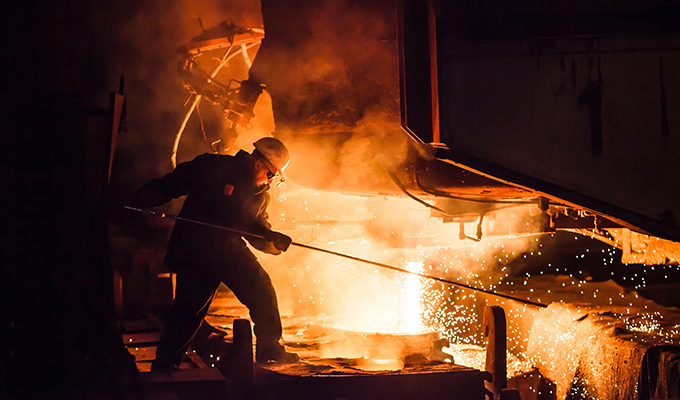
ArcelorMittal accelerates Fos’ decarbonisation through hydrogen
ArcelorMittal France is accelerating the decarbonisation of its steel processing through hydrogen. Spanish engineering company Idom has been contracted by “GravitHy”, the joint venture created last year by a consortium of energy and steel-related companies, to produce the pre-feasibility studies to build a green hydrogen-based direct reduced and hot briquetted iron (DRI/HBI) facility at the steelmaker’s plant in Fos-sur-Mer, southern France, Kallanish notes.
The plant will generate green and low-carbon hydrogen to produce DRI that will be used either on-site as a feedstock for green steelmaking or traded globally as HBI. Construction is set to begin in 2024 for commissioning in 2027. The future facility is planned to have an annual throughput of 2 million tonnes of DRI. Located on the Mediterranean coast, the plant will have direct access to European trading markets.
Last year a consortium of European companies established the GravitHy joint venture to build the hydrogen and DRI plant at Fos. GravitHy’s shareholders include companies such as EIT InnoEnergy, Engie New Ventures, Forvia, Idec, Plug, and equipment maker Primetals Technologies. The JV plans to intercept about €2.2 billion ($2.3 billion) of EU funding for the clean energy transition to build the new H2 and DRI facility.
“The PFS will consist of the preliminary engineering, project implementation strategy and CAPEX/OPEX development, which will allow GravitHy to prepare a solid dossier for the permitting process, define core packages, mitigate risks, validate key business fundamentals as well as to advance in the project financing” Idom explains in a note.
Natalia Capra France


Finnish SSC installs Voortman technology
Finnish steel service centre BE Group will be installing an automated routing system from Dutch supplier of sheet processing technology Voortman Steel Machinery.
The new machine line will be installed in March, Kallanish learns from the supplier company. Profiles can be loaded from six different halls, from where automated processes start, it explains. Different infeed locations, machines and processes will form the core of the logistics route. The scope of supply includes a Voortman drilling and milling machine and band saws with an automatic short piece removal system.
A separate route will be installed with the Voortman VB1250 band saw with backstop system, which allows high volume profiles to be cut and bundled. According to Voortman, data-driven logistics routing enables production to be tripled with more efficient use of crane capacity. BE Group says it aims for added customer value, offering drilling, milling and marking as a complete package supplier.
Christian Koehl Germany

Thyssenkrupp selects SMS for DRI plant
Thyssenkrupp on Friday announced that it has awarded SMS group with the construction of the hydrogen-driven direct reduction plant it will set up at its Duisburg location, to partially replace blast furnaces, Kallanish reports.
SMS will furthermore supply two “innovative melters,” thyssenkrupp says in a short statement. This could refer to submerged arc furnaces, which the company mentioned earlier as a technology of choice.
Thyssenkrupp did not give more details, but will do so at a press conference on 1 March. Attendants will include the ceos of thyssenkrupp Steel, parent group thyssenkrupp AG, and SMS group, as well as North Rhine Westphalian prime minister Hendrik Wüst and state economy minister Mona Neubaur.
Although it is not mentioned explicitly in Friday’s statement, SMS for the DRI part will likely work with Midrex, its standard partner in this technology. According to thyssenkrupp, it will become the largest direct reduction plant in Germany. Other German mills have also announced plans to replace blast furnaces with DRI plants. Salzgitter in this respect will be cooperating with Tenova.
Germany is the only country in Europe which has an operating direct reduction plant – in Hamburg, since the 1970s, today owned by ArcelorMittal.
Christian Koehl Germany
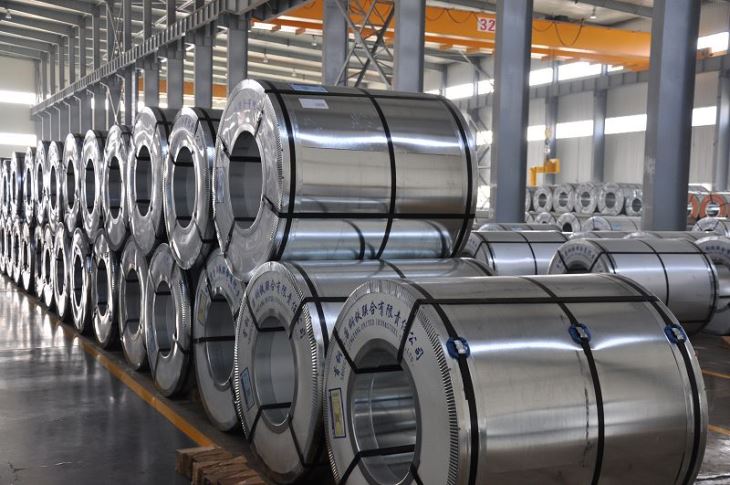
European CRC, HDG prices set to rise on limited supplies, good order books at mills
European cold-rolled and hot-dipped galvanized coil prices were stable to slightly higher in the week to Wednesday February 23 and, despite still-subdued trading, mills are set to increase their offers, citing good order books and limited supplies, Fastmarkets understands.
European producers are largely sold out of April delivery CRC and HDG and are now offering May lead times, sources said.
Producers in Northern Europe maintained their offers for May delivery CRC at €900-920 ($957-979) per tonne EXW and at €920-940 per tonne EXW for HDG, but those prices were still above the level of reported transactions, sources added.
Notably, tradable values were heard at €880-900 per tonne EXW for CRC and €880-910 per tonne EXW for HDG in the north.
One Italian mill was offering HDG to Germany at €940 per tonne delivered.
But trading activity was still muted in both Northern and Southern Europe in the seven days to Wednesday because buyers have not yet started restocking for May volumes.
Producers were quite optimistic, however, citing good order books and limited supply.
Steel mills producing CRC and HDG have been running at reduced rates, keeping the market balanced, sources said.
Fastmarkets’ weekly price assessment for steel CRC domestic, exw Northern Europe was €880-900 per tonne on Wednesday, widening up by €10 per tonne from €880-890 per tonne last week.
Fastmarkets’ corresponding weekly price assessment for steel HDG domestic, exw Northern Europe was €880-910 per tonne on Wednesday, widening from €900 per tonne seven days ago.
Both price assessments reflected the lower end of offers, rare deals and estimates of achievable prices made in the week to February 22.
Southern Europe
Fastmarkets’ weekly price assessment for steel CRC domestic, exw Southern Europe was €880-890 per tonne on Wednesday, narrowing up by €10 per tonne from €870-890 week-on-week.
The corresponding weekly price assessment for steel HDG domestic, exw Southern Europe also unchanged week on week at €880-900 per tonne on February 22.
Both assessments reflect the lower end of offers, rare deals and estimates of achievable prices.
CRC offers in the region were heard at €900-920 per tonne delivered (€880-900 per tonne EXW), while HDG offers came in at €920-940 per tonne delivered (€900-920 per tonne EXW).
Buyer estimates of achievable prices were reported at lower levels during the assessment week, however – at €870-880 per tonne EXW for CRC and at €870-900 per tonne for HDG.
Trading was also quiet in Southern Europe during the assessment week, with most buyers having no need to restock.
Sources said they expect distributors and steel service centers to come back to the market in about two weeks’ time for May volumes, with higher offer prices likely to be gradually accepted in deals
Import offers to the region, meanwhile, were scarce and quite high, supporting the uptrend in the domestic market.
An offer of CRC from South Korea was heard in Southern Europe at around €840 per tonne CFR, sources told Fastmarkets.
And a CRC offer from Japan was heard at €850-860 per tonne CFR for April shipment.
Sources also reported an offer from Vietnam for 0.5mm HDG with Z100 coating at around €900 per tonne CFR.
Published by: Julia Bolotova

Steel hollow sections market in Europe quiet, prices unchanged
The steel hollow sections market in Europe remained stable in the week to Wednesday February 22, with minimal trading because of weak demand, market sources said.
Fastmarkets’ weekly price assessment for steel sections (medium), domestic, delivered Northern Europe, was €970-980 ($1,032-1,042) per tonne on Wednesday, unchanged from a week earlier.
The corresponding weekly price assessment for steel sections (medium), domestic, delivered Southern Europe, was also €970-980 per tonne on Wednesday, similarly stable week on week.
Sections prices increased last week due to rising costs for hot-rolled coil feedstock, but the market remained quiet amid low consumption by the construction sector, market participants said.
HRC feedstock costs have risen over the past seven days, but some sources expected a downtrend in these prices due to low end-user demand.
Fastmarkets’ daily calculation of its steel hot-rolled coil index, domestic, exw Northern Europe, was €776.00 per tonne on Wednesday, up by €9.12 per tonne from €766.88 per tonne a week earlier.
Published by: Holly Chant
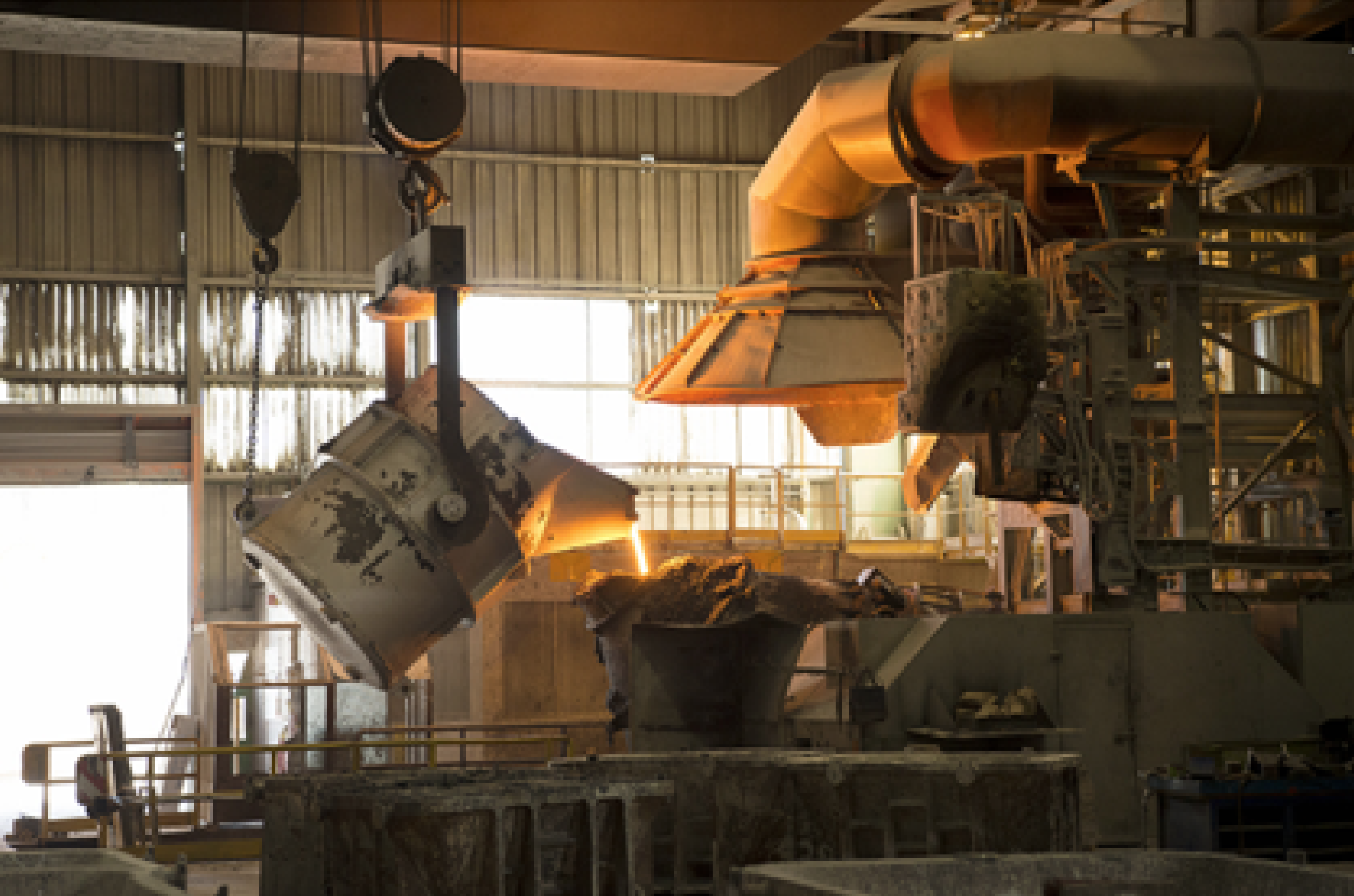
Erasteel finds a buyer
Syntagma Capital has issued an exclusive put option to purchase high-speed steel producer Erasteel from French miner Eramet, Kallanish notes.
The sale of the company should be completed “in the months ahead”, Eramet says in its 2022 earnings report. In June last year, the miner signed a share purchase agreement with a consortium that includes Airbus, Safran and Tikehau Ace Capital to buy its lossmaking subsidiary Aubert & Duval (A&D). The divestment of A&D is expected to be completed at the end of March. Together with Erasteel, A&D is part of Eramet’s high-performance alloys division.
In February, Eramet said this divestment is in line with the company’s strategic roadmap, which aims to refocus on its upstream activities and develop in metals for the energy transition. The miner has been looking for a buyer for its troubled French subsidiary since last year (see Kallanish passim).
Last year, Erasteel’s turnover increased by 48% to €273 million ($289m). The sales growth of high-speed steels “was also supported by the positive impact of reinvoicing raw material and energy price increases to customers … EBITDA almost doubled, ending at €23m in 2022. The high level of Erasteel’s order book enables the entity to face the first half of 2023 with confidence, despite the macroeconomic uncertainties weighing on its main markets,” the report says.
Natalia Capra France
German Steelag expands in Italy
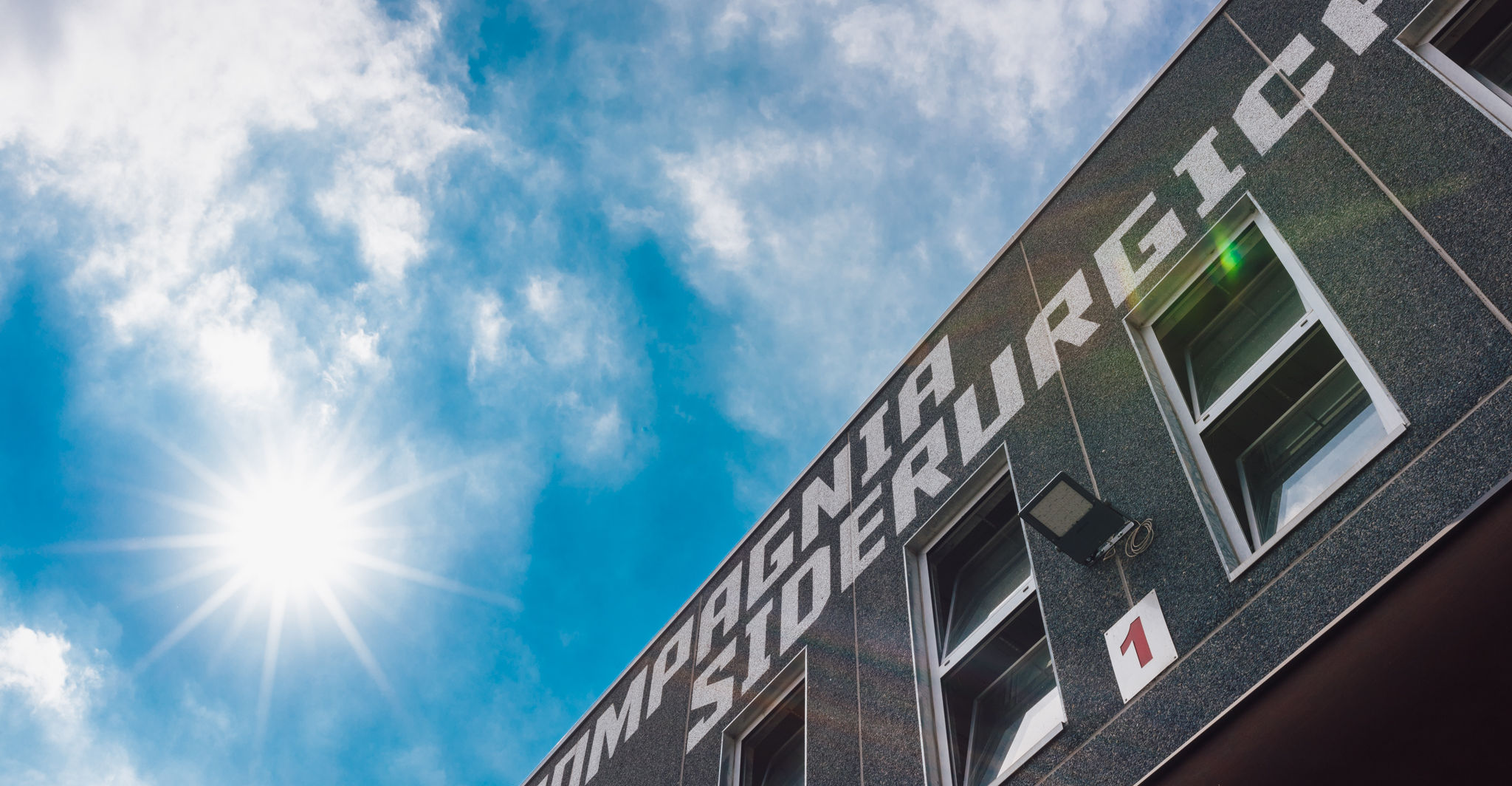
The European Commission has given the go-ahead to the buyout of Italy’s Compagnia Siderurgica Italiana by German longs specialist Steelag.
Located near Vicenza in northern Italy, Compagnia Siderurgica Italiana is a sheet treatment service centre performing plasma, laser and oxy-fuel cutting and calendaring, CNC machining, bending, sandblasting and chamfering.
With a capacity of over 40,000 tonnes/year, the company serves mostly the construction industry. Steelag Deutschland specialises in the production and distribution of construction steel such as rebar in bars and coils, wire mesh and cold-drawn wire products supplying customers in Germany, Austria and Belgium and expanding into flat products in Italy thanks to the acquisition.
The Commission concluded that the proposed acquisition would raise no competition concerns, “given the limited overlaps and vertical links between the companies’ activities in the relevant markets in the European Economic Area,” the EU says in a note seen by Kallanish.
Natalia Capra France

EU HRC stays more stable than galvanized coil
Northwestern European buyers keep questioning if prices of more than €900/t ($953) for hot-dip galvanized coil can be achieved by domestic mills, but they have fewer doubts about the more than €800/t called for hot-rolled coil.
Various sources point out that especially steel service centres are cautious about accepting the latest price hikes by the market leader mill, as they are having trouble handing them down to their customers. This would paint galvanized coil as a typical SSC product in particular.
A northern European mill manager concedes that “we have some reluctance from distributors /SSCs to accept, as they see challenges with increasing their resale prices.” Still, he claims that his HDG prices have passed the €900/t mark already “and are very close to €950/t.” Against this stands the word of a manager at a northern fabricator, who tells Kallanish that he still buys HDG below €900/t and HRC below €800/t.
The latter option could be expiring, however, other buyers say.
“For HRC the direction is most clear. Within 2-4 weeks we will see in prices of €800/t+, no doubt about that,” one Dutch manager finds. “Demand is a little increasing and competition is not available at the moment.”
A German SSC buyer confirms that “no mill currently sells for a figure starting with a 7.” He notes that in January lead times stretched to 11 weeks, “which is rather long for straight black material.” This duration has not shortened since, although quite many mills are bringing back idled blast furnace capacity.
He doubts that mills are being kept very busy in terms of order intake.
“Warehouses restocked in January, but there is not enough demand to keep up buying; I myself sell rather little these days,” he cautions.
Christian Koehl Germany
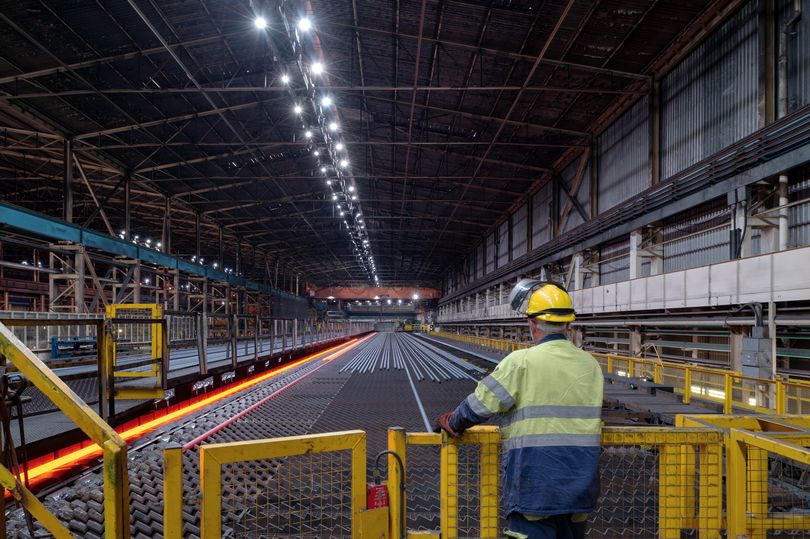
UK consults on exempting heavy industry from green levies, network charges
UK steel, metals, chemicals and paper industries are set to benefit from exemptions to green levies and network charges proposed by the government under the British Industry Supercharger scheme, the Department for Business, Energy and Industrial Strategy said Feb. 23.
A day earlier British Steel announced it would shut its Scunthorpe coking ovens and cut up to 260 jobs, noting its energy and carbon offsetting costs had increased by GBP190 million ($229 million) in 2022.
“The measures announced by the Business and Trade Secretary Kemi Badenoch today will bring the energy costs of the UK’s energy-intensive industries in line with those charged across the world’s major economies,” BEIS said.
The government is to consult on the measures and bring forward legislation in due course, meaning the relief might not start for a year, Director General of UK Steel Gareth Stace said Feb. 23.
Support under the British Industry Supercharger scheme would be available to 300 businesses exposed to the cost of electricity, notably in the steel, metals, chemicals, and paper sectors, BEIS said.
“These industries employ around 400,000 skilled workers right across the UK and support many more in their supply chains. In 2019, their exports made up around 28% of total UK exports,” the ministry said.
Exemptions would relate to renewable energy obligations such as the Feed-in Tariff, Contracts for Difference and the Renewables Obligation, as well as GB Capacity Market costs.
The government would also look at reductions on network charges, BEIS said.
Speaking to BBC Radio, UK Steel’s Stace said UK industrial electricity prices “have been uncompetitive for many years, and today, this announcement from the government goes a long way to bridging the gap between what we pay and what our competitors pay in France and Germany.”
UK steel had been paying 60% more for its energy than its German competitors, Stace said.
“There is a long way to go, and what is particularly concerning is that we might see our electricity prices going down in just over a year’s time” given the government’s proposals had only just gone into consultation, he said.
“My fear is that if we don’t see competitive power and carbon prices within the year we won’t see investments and we might see more closures,” he said.
In a statement to S&P Global Commodity Insights, Liberty Steel, a subsidiary of GFG Alliance and the UK’s third-largest steel producer, also welcomed the announcement but warned that the UK steel industry faces immediate challenges that require further intervention from the UK government.
“With the proposed new measures subject to consultation and not expected to be in place until Spring 2024, the challenges the steel industry in the UK has been facing for some time are still set to continue for another year,” GFG said
“The Chancellor has an opportunity with the budget statement in March to set out additional measures that will foster more confidence in the UK’s commitment to enabling a sustainable future for the industry and its customers, and to securing jobs, growth, and economic resilience in communities across the UK,” it added.
Chemical Industries Association Chief Executive Steve Elliott described the announcement as “welcome news” for UK manufacturers but noted that the package only applies to a “limited number of firms” with many businesses still subject to “high and increasingly volatile prices.”
The CEO of the UK Aluminium Federation, Tom Jones, said that Alfed “very much welcomes” the announcement of the British Industry Supercharger scheme and the measures to reduce UK electricity prices for energy-intensive industries.
“Industrial growth, the development of the UK’s aluminum sector, and job creation come from our sector being competitive with Europe and the rest of the world. This action today from the government recognizes the strategic value of UK manufacturing, the contribution the sector makes to the UK economy and its role in the drive to developing a sustainable manufacturing future,” Jones said.
Two weeks ago, Alfed called on the government to develop a long-term integrated green growth plan encompassing all the departments of the UK government.
Aluminum is among the UK’s most energy-intensive industries. The UK currently has only one aluminum smelter, operated by GFG Alliance in Scotland, although various processing works in the UK make aluminum products, including extrusions. A large smelter previously operated by Alcan at Lynemouth in northern England was mothballed in 2012 due to factors like high electricity prices.
UK spot wholesale prices assessed by Platts, part of S&P Global, are averaging Eur156.11/MWh in the year to Feb. 23, 28% higher than the comparable EPEX spot price average for Germany.
— Henry Edwardes-Evans, Staff
