

Eurofer lowers consumption growth forecast after Q3 low
EU apparent steel consumption (ASC) is forecast to see a deeper-than-expected drop of 4.6% on-year for 2022, compared to the previous 3.5% fall projection. Consumption in 2023 is expected to decline a further 1.6%, says European steelmakers’ association Eurofer.
Despite the general resilience of the EU economy, in the third quarter of 2022 apparent steel consumption reached its lowest level since the Covid pandemic, down 11% on-year to 32.2 million tonnes.
“We are witnessing what we have been warning against in the past months: energy crises, inflation, supply chain issues, unparalleled decarbonisation costs combined with massive cheap imports from third countries, are a toxic cocktail for industry. The health of the steel sector is the litmus test for the whole EU industry, given the numerous value chains with steel at their core,” Eurofer director general Axel Eggert says in a note sent to Kallanish.
In parallel with sluggish demand, domestic deliveries collapsed as well in Q3, by 10.5%, for the third consecutive quarter. Imports recorded a sharp decrease of 17.2%, reverting for the first time the expansionary trend which had been uninterrupted since 2021.
The stronger-than-expected resilience of steel-using sectors has allowed for the continuation of their steady growth trend, which started after the pandemic, with Q3 seeing 4% growth. The good performance of the construction, mechanical engineering and transport sectors – especially automotive, experiencing a marked rebound of 20.7% – offset a 0.3% contraction in domestic appliances.
On the other hand, the rapid deterioration of the global industrial and economic outlook coupled with the long-lasting effects of the rise in energy costs is expected to yield a drop in output over Q4. However, 2022 should still see a general output expansion of 2.1%.
As a result of a likely continuation of these downside factors into the first two quarters of 2023, EU steel-using sectors’ output is expected to contract 0.6% this year.
Adam Smith Poland

Italian rebar makers push up asking prices
Italian rebar makers are seeking a €50/tonne ($54) increase with the objective to slow the downward trend in rebar values that started in mid-January. Contract prices are again losing €10/t ($10.9) week-on-week, market sources tell Kallanish.
This week, paid values are hovering at €460-470/t base ex-works, down from last week’s €470-480/t. Including size extras, domestic prices are now at €720-730/t ex-works, sources suggest.
Distributors are reporting a high level of stocks following a very low rebar sales performance last month. January is seasonally a slower month but this year, activity has been particularly subdued, with the private residential construction sector ordering small steel volumes and delaying projects because of persistently high prices of steel, cement and timber. Construction costs increased significantly in 2022 due to higher energy, transport and financial costs.
Some rebar makers are asking for €520-530/t base ex-works. Considering the current uncertainty and sluggish orders from construction contractors, distributors believe any increase is not sustainable and say they prefer to rely on their stocks for the coming weeks.
Natalia Capra France
US steel industry ‘not particularly concerned’ about EU carbon border mechanism
The US iron and steel industries are shrugging off the EU’s latest plan for a carbon border adjustment mechanism, experts told S&P Global Commodity Insights.
Members of the European Parliament reached a provisional agreement with the European Council in December 2022 on a law to establish the new carbon fee. Under the rule, companies importing select products “including iron, steel, and some items made of the two metals” will be required to buy certificates that represent the difference between the carbon price paid in the country of production and the carbon price in countries participating in the EU emissions trading system. Once finalized, the policy will go into effect in October, beginning with a transition period.
Iron and steel could have high fees, given the industry’s carbon-intensive industrial processes, but US producers are unconcerned: EU countries are not big customers. The world imported about $37.1 billion worth of US iron, steel, and iron and steel products in 2021, up 34.1% from 2020, according to data from Panjiva. Western European countries, which include the largest economies in the EU, bought only $1.3 billion worth, or 3.6%, of US exports.
Panjiva is the trade analysis unit of S&P Global Market Intelligence, a division of S&P Global.
“We’re not particularly concerned about the EU [carbon border adjustment mechanism, or CBAM] … principally because only a very small percentage of US steel exports go to the EU,” said Kevin Dempsey, president and CEO of the American Iron and Steel Institute, a trade organization for US iron and steel producers. “I think the issue of carbon tariffs is an important one, [and] we’re not advocating for a system like in the EU, but I think some of the ideas that are being discussed in the US about a tariff at the border that is based on that differential between domestic industry [carbon] intensity and foreign producers’ emissions intensity do have a lot of merit.”
Export destinations for US iron and steel products have been heavily concentrated in North America in recent years. Canada received 8.9 million mt, or 61.4%, of US iron ore exports in 2021, according to S&P Global data.
Mexico took the lead on purchases of US iron, steel, and iron and steel products, receiving $11.7 billion worth, or 31.7%, of US exports in that category in 2021. Canada followed closely with $11.5 billion in imports of the same materials. Both countries’ individual consumption was roughly nine times higher than that of Western Europe as a whole.
Canada and Mexico have free trade agreements with the US as well as their own carbon pricing systems, reducing concerns that any EU adjustments would affect the market for US products.
Despite the EU’s relatively small demand for US iron and steel, the border adjustment proposal has sparked concern among some policy analysts about a split in global climate approaches that could undermine the effectiveness of carbon pricing systems.
“When it comes to particularly heavy industries like steel … domestic policies alone in the US or in the EU can only really do so much from a climate perspective; the real goal has to be global,” said Noah Kaufman, a research scholar at Columbia University’s School of International and Public Affairs’ Center on Global Energy Policy. “If you’re a policymaker in the US or the EU and you want this global change, you really need to have a vision for how we are going to cooperate and leverage our joint economic and geopolitical power to try and get more of a global agreement on the decarbonization of the sector.”
The US Congress has not passed legislation for a federal carbon pricing scheme or any legislation in response to the EU’s CBAM, although some lawmakers have criticized the EU for what they see as “rogue” behavior. Instead, the US has sought to incentivize clean energy adoption that would reduce the carbon intensity of industrial production, while urging international partners to jointly develop a carbon management system.
“Despite an environment ripe for cooperation and collaboration on climate policy, the European Union has gone ahead with its [CBAM] on its own,” Sen. Kevin Cramer, R-North Dakota, and a member of the Senate Environment and Public Works Committee, wrote in an opinion piece for The Wall Street Journal. “Instead, the EU should step back and work with the US and other allies to develop a trade-centered approach that rewards high environmental performance and holds the world’s polluters accountable.”
Meanwhile, US trade officials proposed forming a “club” of steel-producing countries that would pay carbon emissions tariffs based on an emissions intensity standard to be negotiated. The US Trade Representative sent a proposal describing the plan to the EU, Reuters reported in December.
“There would be an advantage of being in the club, as it would provide a lower level of carbon tariffs, while countries outside the club would pay higher tariffs,” an unidentified source familiar with the plan told Reuters.
This kind of approach is one that US steel producers are likely to support, Dempsey said.
“We do need to, I think, work towards a broader international consensus on the right way to approach a carbon tariff regime,” Dempsey said. “I think the more flexible approach based on actual carbon intensity rather than on domestic taxes or domestic allowance prices is a better approach, and it’s worth further consideration and discussions with our colleagues in Europe and in many other parts of the world.”
S&P Global Commodity Insights reporter Camellia Moors produces content for distribution on Capital IQ Pro.
— Camellia Moors

Eurofer expects 4.6% fall in EU steel demand in 2022, 1.6% in 2023
The European Steel Association, or Eurofer, said Feb. 2 it is expecting a steeper fall in 2022 steel consumption figures after data from the third quarter that confirmed and deepened the negative trends seen in Q2, with consumption set to continue falling in 2023 although at a slower pace.
In its latest economic and steel market outlook report, Eurofer said it was now expecting a 4.6% fall in 2022 steel consumption, compared with a 3.5% drop it had flagged for the year in its previous outlook.
For 2023, consumption is expected to decline a further 1.6%, slightly less than its previous forecast of a 1.9% fall for the year.
It said that, despite a more general resilience of the EU economy, apparent steel consumption in the third quarter of 2022 reached its lowest level since Q3 2020, falling 11.2% to 32.2 million mt, after a 4.7% drop in Q2.
All downside factors that materialized in H1 2022 have persisted, it said, with further drops expected in Q4 2022 and until the first half of 2023 at least. As a result, 2023 is set to be the fourth year of steel demand recession in the last five.
Steel demand is then expected to recover 1.6% in 2024, although uncertainty remains and the recovery would remain conditional on the evolution of energy prices, the Russia-Ukraine war, and their impact on inflation and global supply chains, Eurofer said.
The association said that domestic deliveries dropped 10.5% in Q3 2022, the third consecutive quarter of falls, as did imports, including semi-finished products, which fell 17.2% for the first time since 2021.
“We are witnessing what we have been warning against in the past months: energy crises, inflation, supply chain issues, unparalleled decarbonization costs combined with massive cheap imports from third countries, are a toxic cocktail for industry,” Eurofer Director General Axel Eggert said in a statement.
“The health of the steel sector is the litmus test for the whole EU industry, given the numerous value chains with steel at their core,” he added, which he said should “ring the alarm bell for the development prospects of Europe’s cleantech economy.”
Eggert explained that the energy transition’s foundations must lay on and boost EU low carbon steel demand to be successful.
Q3 growth in steel-using sectors
Despite overall lower demand, Eurofer said in the report that there had been continued growth of 4% in Q3 2022 in steel-using sectors output, the seventh consecutive year-on-year quarterly growth, due to their stronger-than-expected resilience and the removal of the COVID-related lockdown measures after the pandemic.
“This positive trend has continued ever since, despite the negative impact of increasing supply chain issues and rising energy prices on total production activity in steel-using sectors,” Eurofer said.
It said the rebound of 20.7% from the construction, mechanical engineering and transport sectors, especially automotive, could offset the negative dynamic of domestic appliances, which dropped 0.3%.
Automotive sector output rose 20.7% in Q3 2022, due to the easing of supply chain disruptions and lack of components, among others, the association said.
“Steel-using sectors’ growth is expected to come to an end in the fourth quarter of 2022,” Eurofer said, citing the rapid deterioration of the global industrial and economic outlook coupled with the long-lasting effects of the rise in energy costs.
However, it added that 2022 should still see a general output expansion of 2.1%, up from the previous outlook of a 1.9% rise.
“The consequences of high energy prices, the continuation of the war in Ukraine and its related disruptions, are set to drag on and weigh more heavily in the first half of 2023,” Eurofer said, which it said could lead to a recession of 0.6%, the second in Steel Weighted Industrial Production since 2013.
“The overall evolution of steel demand remains in any case subject to very high uncertainty, which is likely to continue to undermine demand from steel-using sectors at least for the first half of 2023,” it said.
However, it expected a gradual recovery in 2024 of 1.6%, if there was a confirmed positive scenario and returned confidence.
— Jacqueline Holman
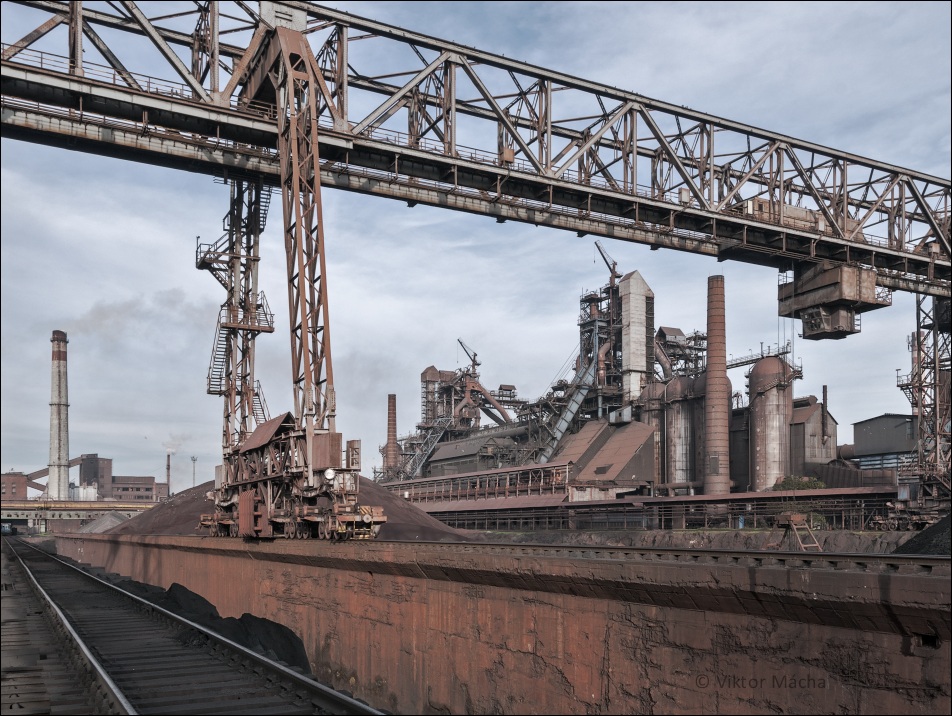
Idled Hungarian steel mill Dunaferr to return to market towards end-February: sources
Hungarian integrated flat steel producer Dunaferr is expected to return to the market with coil offers in late February to March, according to two market sources.
The sources told S&P Global Commodity Insights Feb. 1 that the steelmaker was planning to keep its blast furnaces idled and to use slab from Romanian steel producer Liberty Galati, which belongs to UK-registered Liberty Steel Group.
Spokespeople for Liberty and Dunaferr declined to comment on the matter
The 1.6 million mt/year steelworks has been idled since the third quarter of 2022, when it suspended its two blast furnaces, and went into administration about a month ago.
A mill representative last week confirmed that Liberty Steel’s specialists were investigating the restart of Dunaferr.
In the meantime, Hungarian Prime Minister Viktor Orbán this week met with the team of temporary administrators appointed to run Dunaferr led by Lajos Mészáros (Fidesz), a member of parliament for Dunaújváros, the town where the mill is located.
“We are working to save Dunaferr,” he subsequently said on his Facebook page Feb. 1, adding that the mill had been damaged by the previous owners, company executives and finally EU sanctions against Russia.
According to Orban, the government will pay the wages of Dunaferr’s workers for the next six months, allocating Forints 16 billion ($45.4 million) for that purpose.
That should allow enough time for a suitable new owner to be found who can ensure reliable and stable operation at Dunaferr, an enterprise essential for Hungarian industry, said Orban.
Dunaújváros Mayor Tamás Pintér has made numerous public speeches saying that a key condition for any new owner would be to keep the liquid phase and operate the entire plant.
— Maria Tanatar, Ekaterina Bouckley
Eurofer forecasts decline in European steel demand in 2023
European steel demand was expected to have declined in 2022 and to continue on that trend in 2023 because of weak performances by key steel-using sectors, but to recover in 2024, regional steel association Eurofer said in its fourth-quarter 2022 outlook report published on Thursday February 2.
Russia’s war on Ukraine and the consequent disruptions to global supply chains, and high levels of volatility in the energy market, were expected to take a toll on the steel sector in the region at least until the end of the first half of 2023.
Eurofer expected apparent steel demand in the EU to have declined by 4.6% in 2022 and to go down by 1.9% in 2023, which would mean two consecutive recessions in the steel market in the past five years.
In 2024, the apparent steel demand in the bloc was expected to recover modestly, by 1.6%.
But the evolution of the European steel market will remain subject to a high degree of uncertainty, which was likely to continue to undermine demand from steel-using sectors.
EU steel market overview
The year 2023 started on a positive note for the European flat steel market, with prices rebounding in January from the low levels seen in December 2022.
European mills managed to achieve higher prices in sales thanks to a more balanced market that was itself a result of output cuts and restocking activity.
Notably, Fastmarkets calculated its daily steel hot-rolled coil index, domestic, exw Northern Europe, at €752.50 ($820.53) per tonne on Thursday, up by €0.62 per tonne from €751.88 per tonne on February 1.
The latest calculation of the index was up by €5.00 per tonne week on week, and up by €83.75 per tonne month on month.
But the recovery was still fragile, according to market sources, because steel demand from end-user sectors remained slow.
Eurofer said that automotive sector output was expected to have recovered by 2.7% in 2022, but that this would mostly be a rebound from the low comparison base in 2021 due to a components shortage that year.
The sector was expected to return to growth in 2023, albeit very moderately (+1.1%), according to Eurofer.
Demand for steel coil products from the automotive industry has slightly picked up early in 2023, mainly due to a backlog of automotive orders, several sources said.
“I would say that prospects for the first half of 2023 are not bad, but for the second half of 2023 there might be a gap in consumption,” a mill source said.
“It is extremely hard to pass higher steel prices downstream. There is a lack of buyer confidence,” a steel service center said.
Meanwhile, the construction industry, which was usually more resilient to economic shocks, was expected to have rebounded by 4.4% in 2022, but to decline by 1.6% in 2023.
The overall economic slowdown due to the war in Ukraine was also expected to weigh on the construction sector, with drops between the fourth quarter of 2022 and the second quarter of 2023.
Slow demand from construction, a key consumer sector, as well as the uncertainty among buyers, resulted in minimal activity in the European steel rebar market in January 2023.
Fastmarkets’ weekly price assessment for steel reinforcing bar (rebar), domestic, delivered Northern Europe, was €700-740 per tonne on February 1, down by €40-55 per tonne from €755-780 per tonne last week.
Imports
Over the first 11 months of 2022, carbon steel imports into the EU amounted to 25.9 million tonnes, down from 27.8 million tonnes in the corresponding period of 2021.
Russia’s war in Ukraine had reshuffled traditional trade flows, with countries in Southeast Asia increasing their presence in the EU market.
For example, with traditional volumes of HRC from Ukraine and Russia missing from the market, European buyers started to import more coil from Japan, South Korea, Taiwan and India, Eurofer statistics showed.
Notably, HRC imports from Japan to the EU amounted to 944,230 tonnes in January-November 2022, compared with 591,355 tonnes during the entire year of 2021.
HRC deliveries from South Korea to the EU also increased, amounting to 713,186 tonnes in January-November, versus 463,777 tonnes in the whole year of 2021.
Market sources did not expect overall steel imports to increase in 2023, given weak European steel market fundamentals and the long lead times offered by overseas suppliers.
“When the market is so volatile,” an HRC buyer in Germany said, “taking a risk and booking coil for May delivery now [in January] is like gambling, because of all the related risks [such as] safeguard measures, the risk of price collapse, fragile demand, etc.”
Published by: Julia Bolotova

Action needed in UK to attract investment for low-carbon steelmaking projects: ETC
Urgent action is needed over the next 24-month to create certainty for investors and financiers to make final investment decisions in near-zero emissions primary, or ore-based, steelmaking projects in the UK, according to the Energy Transitions Commission.
The ETC released a report, “Unlocking the first wave of breakthrough steel investments in the UK” Feb. 1 highlighting the key actions needed by industry and government to enable a first wave of these projects, which currently face a gap to a viable investment case.
The report was developed as part of a series of roundtables held by the ETC in the UK in the second-half of 2022 which were open to UK steel value chain stakeholders, including policymakers and financiers.
The UK’s climate targets cannot be met without reducing emissions from steelmaking, the ETC said, forecasting demand to rise by 20% between 2020 and 2030, due to increased consumption from the energy transition and wider economy.
Steelmakers are aiming to make their steel low carbon by pairing direct reduced iron, or DRI, production technologies using green hydrogen with electric arc furnaces, or EAFs.
“Low-emissions primary steelmaking is not only desirable for the UK, but eminently possible, requiring only a few, strategic interventions by industry and government to enable a viable investment case,” ETC Chair Adair Turner said.
He added that the ETC report provided a path for industry and government to rapidly decarbonize UK steel, while preserving the capability to produce domestically.
Actions
The actions the ETC report called for include the implementation of effective carbon pricing on steel imports and domestic production, lowering electricity prices to make scrap recycling more economical, premium forward offtake agreements and guarantees to manage technology risk.
According to the ETC, a progressive carbon price would act as a foundation for the low carbon steel investment case.
It noted that the UK government was reported to be considering support measures totaling GBP600 million ($739.75 million) to maintain and make production low-carbon at existing integrated steelmaking sites, which would be a good use of the funding, but not if the plants remained systematically uncompetitive while imports faced lower or zero carbon costs.
“Implementing a UK carbon border adjustment mechanism (or equivalent measure) to ensure both steel imports and domestic production face the same progressive carbon pricing would be essential,” the ETC said.
High energy costs faced by UK steelmakers when processing scrap was one factor causing scrap to be underutilized, with exports reaching 8 million mt/year. This is caused by — among other factors — the high electricity costs faced by UK steelmakers. Lower electricity prices would, therefore, make scrap use more economical for EAF projects, the ETC said.
Forward purchase agreements from buyers would help the investment case for such projects, while financial guarantees, normally backed by governments, were also an effective tool to help financiers de-risk uncertainty surrounding investment in novel technologies.
Government support
The ETC said direct government support in the form of subsidies was also needed to strengthen the investment case, particularly for the high upfront costs of developing breakthrough projects.
Subsidies for operational expenditures, chiefly for green hydrogen, would also be very impactful but would involve a longer-term commitment on the part of government, according to the report.
“All these actions are feasible in the short term and could unlock a first wave of breakthrough steel investments in the UK,” the ETC said, adding that the necessary breakthrough iron- and steelmaking technologies were already available, while the right conditions for encouraging project proposals and enabling FIDs were also within reach.
In addition to these actions, the report called for cross-value chain collaboration to advance the first wave of projects to achieve FIDs.
The most important condition for unlocking investment was the role of government, as well as switching away from an approach of moving from crisis to crisis and rather setting out a clear vision for the future of the industry.
Platts, part of S&P Global Commodity Insights, assessed the weekly UK hot-rolled coil price at GBP710/mt DDP West Midlands Jan. 26, down 14.5% from the start of 2022.
— Jacqueline Holman
EU Green Deal Industrial Plan must promote investment in low-carbon steel projects: Eurofer
The EU’s Green Deal Industrial Plan must have an overall vision and provide a business case for investment in the continent comparable to the US Inflation Reduction Act to ensure low-carbon steel projects and other clean-tech investments take place, European Steel Association Eurofer said Feb. 1.
The European Commission presented its Green Deal Industrial Plan Feb. 1, which is aimed at enhancing the competitiveness of Europe’s net-zero industry and supporting the fast transition to climate neutrality.
The plan aims to provide a more supportive environment for the scaling up of the EU’s manufacturing capacity for the net-zero technologies and products required to meet Europe’s ambitious climate targets, the EC said.
Main objectives of the plan are to provide a predictable and simplified regulatory environment, faster access to funding, open trade for resilient supply chains and skills enhancement.
Eurofer said in its response to the plan that low-carbon steel was a key driver to the net-zero industry, with it being used in wind turbines to electric vehicles, making it essential for clean-tech value chains to be circular and carbon neutral.
It said the implementation of the plan was crucial to adopting a value chain approach focusing on all key upstream and downstream sectors that were indispensable for reaching the EU’s climate and circular economy objectives.
“Competitiveness will be key to attract clean investment in the EU as the Inflation Reduction Act will do in the US,” Eurofer said, with Director General Axel Eggert adding that the IRA showed it was possible to have a “proactive, structural, carbon-neutral industrial policy centered on incentives and industrial competitiveness, rather than relying primarily on obligations and targets complemented only by piecemeal, uncertain support.”
Eurofer estimated that the IRA, combined with additional resources from the US Department of Energy, could provide at least $85 billion of funding available for low carbon steel production and upstream decarbonized energy, Eggert said, adding that the US measures were estimated to result in green hydrogen costs falling about $3-$4/kg.
There was a risk that this would widen the current gap in steel cost production between the EU and the US by up to 60%, he added.
Platts assessed domestic HRC prices in Northern Europe at Eur755/mt ex-works Ruhr Jan. 31, down 18% since the start of 2022, S&P Global Commodity Insights data showed.
There were 60 industrial-scale low carbon steel projects ready to be implemented in Europe before 2030, which could place the steel industry as an industrial front-runner in deep CO2 emissions reduction cuts, Eurofer said.
However, these required capital investment of around Eur31 billion ($33.8 billion), for which decisions had to be taken in 2023, as well as access to abundant, affordable low-carbon energy.
The association estimated total operational expenditure at Eur53 billion, adding that low-carbon steel needed a level playing field with global competitors and demand-side measures to become viable and boost its uptake in the market.
“We call on the Commission to work out, jointly with industry, a concrete plan that secures access to timely, abundant and affordable fossil-free energy and hydrogen for steel and other sectors which are ready to speed up decarbonization, as well as access to carbon capture, utilization and storage, together with more certainty for and swifter access to funding and permitting of projects,” Eggert said.
He said the industrial policy should be structured, comprehensive and long-term and match the level of incentives provided by international competitors.
“This is why we should consider a re-assessment of the EU policies, based on the principles of competitiveness and level-playing field, with an open and target-focused discussion between policymakers and the industry,” Eggert said.
“They can be mainstreamed and actively promoted in all relevant policy areas for industry, as the US has already done with the IRA,” he added.
The Eurofer statement comes a day after the European Automobile Manufacturers’ Association called Jan. 31 for an ambitious and structured automotive industrial policy to rival that of other competitor regions.
The UK’s Energy Transitions Commission also called Feb. 1 for urgent action over the next 24 months to create certainty for investors and financiers to make final investment decisions in near-zero emissions primary, or ore-based, steelmaking projects in the UK.
— Jacqueline Holman

Borusan Mannesmann to start new Romania steel pipe facility end-2023
Turkey’s largest steel pipe producer Borusan Mannesmann will start construction of its new steel pipe facility in Romania in March, which is scheduled to start serial production at the end of 2023, it said Jan. 31.
“We will process pipes at the facility to meet our automotive customers’ special pipe requirements, like cylinder tubes used in dashpots as well as cutting and processing works of the monotubes,” the company said.
The facility worth Eur15 million ($16.3 million) will have a 4,800 sq m production and stock yard and has a sales target of more than 10,000 mt as of 2026, it said.
The company had already received a Eur5.8 million government incentive for the project.
Borusan Tube Products was established in Romania in July 2021.
The company also has a 28,000 mt/year plant in Vobarno, Italy, that produces cold-drawn special pipes.
Its electric-resistance welded pipe mill in Baytown, Texas, has a capacity of 300,000 mt/year and the company plans to raise this to 400,000 mt/year with new finishing lines.
Borusan Mannesmann’s Turkish mill capacity is 750,000 mt/year of ERW pipes and 300,000 mt/year of HSAW pipes.
Platts, part of S&P Global Commodity Insights, assessed Turkish HRC at $750/mt EXW Jan. 27, down from an intra-year high of over $1,200/mt reached mid-March 2022.
— Cenk Can

EU HRC prices stable as buyers question price sustainability
Domestic prices for hot-rolled coil in Europe have been fairly stable on Feb. 1 as buyers have been showing doubt about the sustainability of the prices.
Import offers have increased in Europe after Asian mills returned from Lunar New Year holidays, supporting domestic prices in the EU. In addition, domestic mills have full order books for the first-quarter rolling coil and they have been in no hurry to give discounts for the second-quarter production material.
Buyers, however, have been uncertain that the positive trend would continue due to combination of limited end-user demand from some industries, such as construction, availability of competitive import from stocks in Europe and anticipated increase of availability. After three European steelmakers confirmed the restart of blast furnaces in Spain, Finland and Slovakia, market participants have been waiting for return of other equipment idled in 2022.
“Market is more relaxed as peak of restocking ended and now we see signals that prices are likely to soften in the second quarter,” a German service center said.
“On one hand, I think that prices are stable with some tendency to increase further as industries, including automotive, are showing reasonable activity,” a German distributor said. “This will support remaining automotive negotiations of course. On the other hand, when I hear that some EU mills restarted idled furnaces, scheduled or not, I am worried. I doubt that the additional capacities are needed in the market now. As a consequence, if things are running bad, mills will get pressure to sell their available capacity and we all know well which impact that will have on prices.”
Platts assessed domestic prices for hot-rolled coil in Northwest Europe at Eur755/mt ex-works Ruhr on Feb. 1, stable day on day.
Tradable values have been reported at Eur750-760/mt ex-works Ruhr and offers at Eur780/mt ex-works Ruhr.
The assessment for imported hot-rolled coil in the region was Eur735/mt CIF Antwerp, reflecting offers from Asia reported at Eur730-740/mt CIF Antwerp.
Platts assessed domestic prices for hot-rolled coil in South Europe at Eur740/mt ex-works Italy on Feb. 1, down by Eur5/mt on day.
Deals have been reported at Eur730-740/mt ex-works Italy, tradable value at Eur740/mt ex-works and offers at Eur760-770/mt ex-works Ruhr.
Platts is part of S&P Global Commodity Insights.
— Maria Tanatar, Laura Varriale