


European HRC buyers expect prices to correct; mills optimistic on good order books
Trading in the European hot-rolled coil market was limited on Wednesday February 1 due to buyers being cautious about accepting higher prices, sources told Fastmarkets.
Fastmarkets calculated its daily steel hot-rolled coil index domestic, exw Northern Europe at €751.88 ($815.63) per tonne on Wednesday, edging lower by €3.75 per tonne from €755.63 per tonne on Tuesday.
The latest calculation of the index was down by €2.32 per tonne week on week, but up by €83.13 per tonne month on month.
Offers from producers in the region for April-delivery coil were reported at €770-800 per tonne EXW, sources told Fastmarkets. But tradeable values were lower, between €740 and €760 per tonne EXW, according to buyer sources.
Distributors and steel service centers said that end users were reluctant to accept higher HRC prices and only limited volumes had been traded recently.
“We actually expect a downward correction in one or two weeks, since demand from both the automotive and construction industries remains slow,” a buyer source in Germany told Fastmarkets.
But producers remained firm citing strong order books and limited availability of coil due to production cuts.
Fastmarkets’ assessed the daily steel hot-rolled coil index domestic, exw Italy was €750.00 per tonne on Wednesday, down by €1.67 per tonne from €751.67 per tonne on Tuesday.
The latest calculation of the index was up by €7.22 per tonne week on week, and by €97.50 per tonne month on month.
For bigger volumes, it is still possible to book coil at €730-740 per tonne EXW in Italy, sources told Fastmarkets.
But buyers preferred to make hand-to-mouth bookings while assessing market conditions.
Offers from local producers were heard at €760-780 per tonne EXW for second-quarter delivery.
One Italian integrated mill was overbooked and might delay deliveries of material bought in December, according to local sources.
Meanwhile, another integrated steelmaker in Italy was opting to produce more value-added flat products, such as hot-dipped galvanized coil, so HRC volumes for the spot market were limited.
Sources suggested the limited availability of HRC would support an uptrend in the second quarter.
Meanwhile, other sources questioned further rises in the local HRC market while demand from end users was still stable at low levels with no sign of a rebound.
Import HRC offers from Taiwan were heard at €720 per tonne CFR, but for limited volumes.
Several sources, however, said this offer was no longer available in the week starting on January 30.
April-shipment HRC from India was offered to Italy at €735 per tonne CFR.
Turkey-origin HRC with April delivery was offered to Italy at €735-750 per tonne CFR, sources said.
Published by: Julia Bolotova

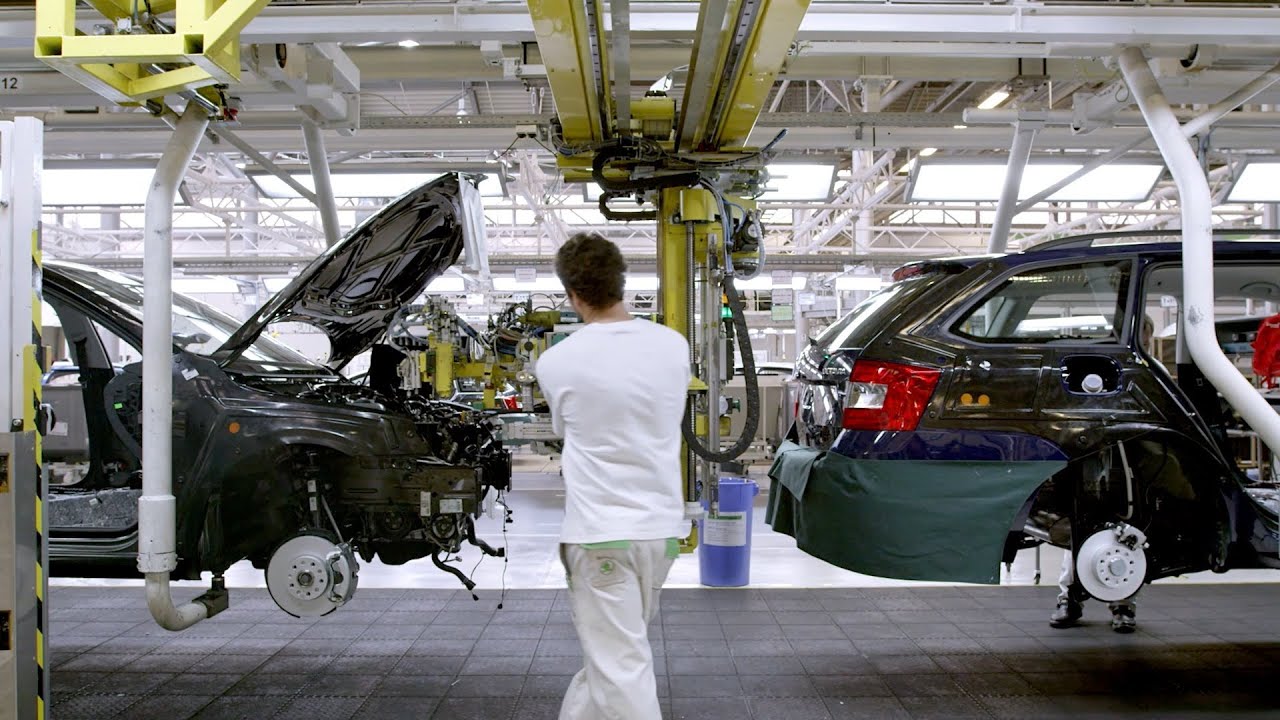
Europe urgently needs structured automotive industrial policy: ACEA
The European Automobile Manufacturers’ Association, or ACEA, has called for an ambitious and structured automotive industrial policy to rival that of other competitor regions.
In a Jan. 31 open letter to EU policymakers, ACEA President Luca de Meo said that the automotive sector has been a “key driver of Europe’s prosperity, competitiveness and innovation.”
To ensure it remains so, ACEA is “urgently calling on Europe to put in place an ambitious and structured automotive industrial policy, to rival those of other world regions — while safeguarding and promoting free trade across the globe,” de Meo said.
ACEA expects around 9.8 million new cars to be sold in 2023, up 5% year on year, although this is would still be 25% below 2019 pre-pandemic levels.
“In this context, it is of all the more importance that our industry strengthens its position on the global stage,” ACEA Director General Sigrid de Vries said in a statement.
The continent’s automotive industry has been gradually losing ground to global competitors in the past two decades, de Meo said in the letter.
“Car production and sales in China for instance have risen more than 25-fold since 2003, while they have dropped by some 25% in Europe,” he said, adding that automakers’ domestic market share had dropped to 70%, down 7 points over the same period.
“And recent political decisions risk putting Europe’s automotive industry in an even more unfavorable situation compared to its Chinese and American competitors,” de Meo said, referring to the US’s Inflation Reduction Act, or IRA, and the Made in China 2025, or MIC, plan.
He pointed out that Europe was also set to be at a disadvantage with the shift to electric vehicles and the associated value chain, especially compared to China, as by 2030, no more than 5% of the raw materials needed for battery production would be sourced in Europe.
Platts, part of S&P Global Commodity Insights, assessed seaborne lithium carbonate and lithium hydroxide at $70,500/mt CIF North Asia and $79,000/mt CIF North Asia Jan. 31, up 109% and 149%, respectively, since the start of 2022.
Decarbonizing road transport
De Meo also pointed out that, while other industries were being asked under the EU’s Fit for 55 climate package to reduce emissions by 50%-70% by 2035, passenger car emissions were being asked to reduce by 100%.
“Make no mistake, the auto industry is unequivocal and fully committed to decarbonize road transport as fast as possible, working with all partners… this puts us way ahead of most other industries,” de Meo said.
He called for the EU to adopt a consistent and holistic regulatory approach, saying that policies and regulations should align with and support this goal.
“We therefore need the regulator to speak with one coordinated voice, considering the specific rhythms of industry, research and investments,” de Meo said, adding that this was not the case with the recent Euro 7 proposal, which would force automakers to invest billions in engine and exhaust aftertreatment technology, for minimal environmental gains.
“This means moving substantial engineering and financial resources from battery and fuel-cell electric vehicles back to the internal combustion engine,” he said, adding that the funds would be better spent on zero-emission technologies that would tackle CO2 and pollutant emissions.
Charging infrastructure
De Meo also called for EU policymakers to ramp up private and public charging and hydrogen refueling infrastructure, saying more commitment and coordination was needed among member states and with other sectors.
There were only 2,000 public charging stations being installed EU-wide weekly, well below the 14,000 a week needed to ensure the transition to electric mobility, he said.
Another factor highlighted in the letter was affordability.
“The cost of batteries and electricity is bound to remain high, for reasons that we do not control,” de Meo said, citing heavily taxed electricity consumption, high battery costs, and reduced purchase incentives due to budgetary constraints.
“Notwithstanding all this, demand for electric cars already remains insufficient to reach the critical mass we need to make the system work in the time we are given,” he said, adding that only 1.5% of the 250 million cars on European roads were fully electric, with it estimated that this proportion should be around 25% by 2030.
“If we really want to have an impact on climate change, there is no doubt that we will also have to find solutions for the existing vehicle fleet, without limiting the mobility of our fellow citizens,” de Meo said in the letter.
— Jacqueline Holman


EU HRC domestic prices mostly remain stable as market awaits imports
Domestic prices for hot-rolled coil were fairly stable in Europe on Jan. 31 as market participants waited for the return of Asian producers in the EU market after the Lunar New Year holidays.
Import offers have been limited — so far only an India-based supplier had returned to the market looking for Eur735/mt CIF Italy for HRC and Eur810/mt CIF Italy for cold-rolled coil.
the latest deals for HRC from Turkey were reported at around Eur740/mt delivered CIF Southern Europe, including anti-dumping duties. The Turkish exporters have been planning to increase the offers soon, according to three market sources.
“Now everyone is waiting for China to return with export offers and for Asian mills to give new offers for Europe,” a steelmaker said. “Then the domestic coil price rise in Europe should resume.”
An Italy-based service center source said that if imports from Asia remained at prices around Eur735/mt CIF and Turkish mills managed to increase offers, then domestic prices of Eur780/mt either delivered or ex-works Italy would be possible.
In the meantime, domestic offers of HRC in Southern Europe were heard at Eur730-Eur780/mt ex-works, and tradable values at Eur730-Eur750/mt ex-works Italy and a few deals at Eur740-750/mt ex-works Italy were reported.
Platts assessed domestic prices for hot-rolled coil in Southern Europe at Eur745/mt ex-works Italy on Jan. 31, up Eur5 on the day.
In Northwest Europe, offers were reported above Eur800/mt delivered Ruhr. Tradeable values were talked at Eur750-Eur780/mt ex-works Ruhr and deals were heard at Eur750-Eur760/mt ex-works Northern Europe.
A Northwest Europe-based distributor also said that prices for HRC from re-rollers were lower at Eur730/mt ex-works Northern Europe.
Platts assessed domestic hot-rolled coil prices in Northwest Europe at Eur755/mt ex-works Ruhr on Jan. 31, unchanged on the day.
The bullish mood among European steelmakers was supported by good order books. The majority of the mills had sold out the first-quarter rolling coil, and only limited volumes for March production material were available in the market.
Despite long lead times from European mills, more buyers were turning to domestic coil suppliers, as lead times of overseas material were even longer, with delivery for Asian coil reported in June-July.
“It is clear that due to long lead times, buyers turn to domestic suppliers,” a Southern Europe-based distributor said. “It is unclear what is going to happen in the future and they do not want to risk and book material that would arrive in June-July. And the import prices with all additional costs and in line with those from the EU mills. And risks are less when you buy domestic.”
Buyers, meanwhile, were cautious in their purchases due to concerns that European steelmakers would bring more capacities in operation, and increased availability would drag coil prices down.
Slovakia’s US Steel Kosice, ArcelorMittal Spain and SSAB Raahe in Finland confirmed the restart of blast furnaces idled in 2022. Some market sources believe that the capacity restart is likely to result in domestic coil prices softening in the second quarter.
Platts is part of S&P Global Commodity Insights.
— Maria Tanatar, Benjamin Steven

Global crude steel production falls 4.3% on year in 2022: worldsteel
Global crude steel production in 2022 fell 4.3% year on year to 1.83 billion mt, according to World Steel Association data published Jan. 31
Largest producer China produced 1.01 billion mt of crude steel during the year, down 2.1% year on year, making up 55.3% of the overall total.
The world’s second-largest steel producer India increased output by 5.5% in 2022 to 124.72 million mt, while production from Japan dropped 7.4% to 89.23 million mt for the year.
Output from the US fell 5.9% year on year to 80.71 million mt in 2022, while an estimated 71.5 million mt was produced in Russia, down 7.2%, mostly likely affected by the Russia-Ukraine war and related sanctions.
South Korea production for the year also decreased 6.5% on the year to 65.86 million mt and output from Turkey dropped 12.95% to 35.13 million mt.
European output falls
Crude steel production in the whole of Europe, including the UK, fell 10.9% year on year to 181.43 million mt in 2022, with Germany, the largest European steel producer, producing 36.85 million mt, down 8.4% from 2021.
A number of European steelmakers curtailed or shut production in the second half of 2022 due to high energy prices and/or low demand.
Platts, part of S&P Global Commodity Insights, assessed domestic hot-rolled coil prices in Northern Europe at Eur680/mt ex-works Ruhr Dec. 30, down 26.2% since the start of 2022.
Brazil’s output for the year declined 5.8% year on year to 34 million mt, while Iran produced 30.59 million mt in 2022, up 8% from the previous year.
The data released covers the 64 countries that report to worldsteel, accounting for around 98% of the world’s crude steel production.
The worldsteel data also showed that pig iron production for the year from 38 countries totaled 1.28 billion mt, down 3.8% year on year, while total global direct reduced iron output climbed 6.9% year on year to 110.5 million mt in 2022.
— Jacqueline Holman

European HRC buyers delay purchases, mills insist on higher prices
European hot-rolled coil prices were largely stable amid quiet trading on Tuesday January 31, sources told Fastmarkets.
European integrated mills were sold out of first-quarter HRC volumes and have been maintaining offers for April-delivery at €780-800 per tonne EXW, sources said.
There was, however, an offer from a re-roller in Northern Europe at €760 per tonne EXW, they added.
Lead times for HRC in Northern Europe were reported at a minimum of eight weeks, which also suggests that producers have healthy order books.
“There was a restocking in January and buyers were gradually accepting higher prices [for HRC]. But the new increase will be harder to achieve because demand remains slow,” a trading source said.
Estimates of tradable values from buyers in the region varied from €740 per tonne EXW to €770 per tonne EXW, depending on tonnages and lead times.
Fastmarkets calculated its daily steel hot-rolled coil index domestic, exw Northern Europe at €755.63 ($821.46) per tonne on Tuesday, up by €0.21 per tonne from €755.41 per tonne on Monday.
The latest calculation of the index was up by €1.08 per tonne week on week, and by €86.88 per tonne month on month.
Offers from Italy to Germany were reported at around €780-800 per tonne CPT with some transactions for limited volumes heard withing the range.
In general, European buyers were reluctant to make bookings at higher prices, sources told Fastmarkets.
“Buyers have bought what they need in January, so now it’s a bit of wait-and-see [moment, in terms of] a new round of bookings, because the new offers are not sexy,” a mill source told Fastmarkets.
Fastmarkets’ calculation of the corresponding daily steel hot-rolled coil index domestic, exw Italy was €751.67 per tonne on Tuesday, up by €0.42 per tonne from €751.25 per tonne on Monday.
The latest calculation of the index was up by €7.91 per tonne week on week and by €99.17 per tonne month on month.
Offers for April-delivery HRC from Italy were heard at €780-800 per tonne delivered, which is equivalent to around €760-780 per tonne ex-works.
Buyer indications of tradable prices were still at €730-750 per tonne ex-works on Tuesday, sources told Fastmarkets.
Buyers in Italy have also been delaying purchases because they consider the current offer prices too high.
Given the bullish sentiment in the domestic market, European buyers generally considered the latest imports offers to be competitive – although the number of offers was remained limited, with some Asian producers still out of the market.
Import offers from India were reported on Tuesday at €735 per tonne CFR to Italy for April shipment. And Turkish suppliers were offering April-delivery HRC to Italy at €740 per tonne CFR.
Published by: Julia Bolotova
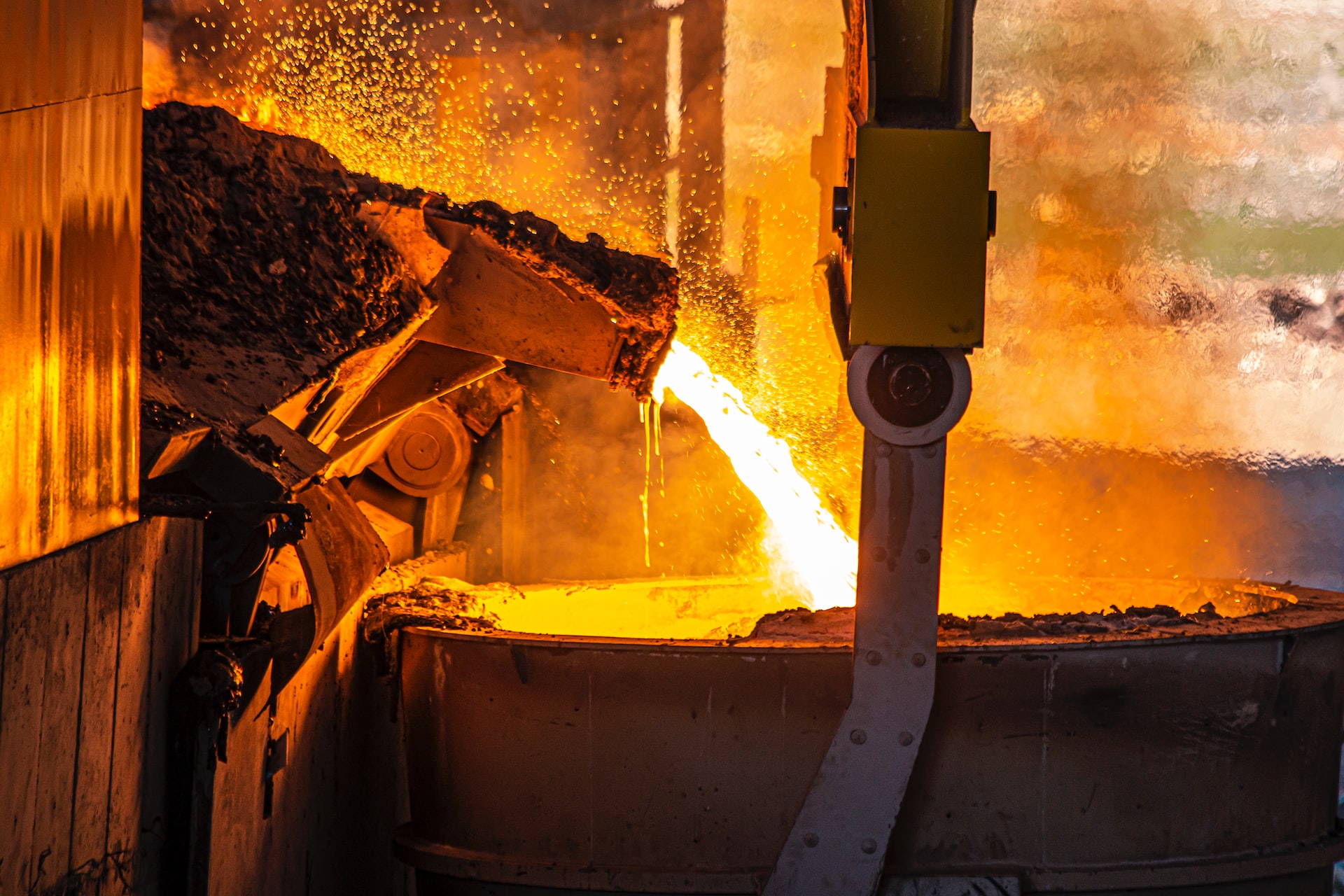
Steel to comprise 40% hydrogen 2050 demand: BP
British oil company BP expects low-carbon hydrogen demand to grow by a factor of ten between 2030 and 2050, potentially reaching 460 million tonnes/year, Kallanish reports.
By 2050, around 40% of total industrial hydrogen demand will come from iron and steel production, BP forecasts.
According to its annual Energy Outlook report, released on Monday, low-carbon hydrogen (green, blue and biogenic hydrogen) will play a critical role in decarbonising the energy system, but its growth is relatively slow this decade. By 2030, demand is forecast at between 30-50m t/y, replacing unabated gas- and coal-based hydrogen in industrial processes.
The pace of growth will pick up in the 2030s and 2040s as falling costs of production and tightening carbon emission policies allow these types of hydrogens to compete with incumbent fuels. Demand is estimated to grow to 300-460m t/y.
Besides steel, other heavy industries such as chemicals and cement will also start using more low-carbon hydrogen. Within the transport sector, hydrogen will be mostly used in marine and aviation. Hydrogen-derived fuels will account for 10-30% of total energy demand in the aviation sector and 30-55% in the marine sector, the report says.
BP analysts expect supply and demand to be aligned, enabled by a trade mix of regional pipelines and global shipping. Green hydrogen should dominate supply at around 60% in 2030 and 65% by 2050, while blue hydrogen will serve as an “important complement” offering a lower-cost alternative in some regions and a “firm (non-variable)” supply option, they say.
The dynamics of supply and demand vary according to geographic locations and its demand drivers. The EU is expected to produce 70% of its low-carbon hydrogen needs in 2030 and 60% by 2050% – if it reaches a net-zero scenario then. The bloc’s remaining needs should be met by imports – half via pipeline from North Africa and European countries such as Norway, and half shipped by sea from global markets.
Gabriela Farhangi UK


French construction sector outlook deteriorates
Sentiment among French construction companies deteriorated in January. The firms surveyed were less optimistic than in December regarding their expected and past activity, Kallanish learns from a l’Institut National de la Statistique et des Études Économiques (Insee) report.
However, fewer companies than in December “considered the evolution of their company situation to be unpredictable”, the report shows, adding that compared to the fourth quarter last year, the general outlook for activity remains stable.
In January, fewer contractors than in the previous month considered their order book level to be higher than average. The current order levels provide for 8.9 months of work.
This month, production capacity remains stable and the tension exerted on production by global supply disruptions is slightly easing. A higher number of construction firms than last month reported slowing output in January due to workforce shortages, but fewer companies reported supply difficulties.
The share of companies at the limit of their production capacity also dropped in January: 29% of business managers reported being in this situation. 12% meanwhile reported supply difficulties, the report states. This month, more companies than in December say they will increase their prices over the next three months.
Natalia Capra France

Spain’s Megasa upgrades Zaragoza merchant bar mill
Spanish steelmaker Megasa says it will invest almost €100 million ($108.84m) in 2023-2024 in a new preheating furnace at the Megasider Zaragoza plant.
The company will also replace its existing rolling mill with equipment based on environmentally-friendly heating technology, Kallanish notes. The new facility will be designed to produce a wide range of merchant bar.
Megasider’s production was almost 500,000 tonnes last year, with net sales approaching €400m, up 23.1% on €325m in 2021. “These results allowed us to plan a significant investment in expanding the product range and on future-oriented technology to improve energy efficiency at the mill,” the steelmaker’s chief executive, Eduardo Piñera, told Spanish news outlet Heraldo de Aragón.
The upgrade has already been awarded to Germany’s SMS Group. The project includes a walking beam furnace with capacity of 120 tonnes/hour. In addition, the company will supply the so-called SMS Prometheus Level 2 control, which ensures uniform temperature distribution and low oxidation and carbon enrichment of steel.
It will also provide the SMS DigiMod combustion management system and ZeroFlame HY2 burners. These are capable of operating with both natural gas and a blend of natural gas and hydrogen in any ratio, making this furnace hydrogen-ready, SMS says.
Megasider Zaragoza produces merchant bar, as well as a wide range of dimensions and grades of rebar and steel sections.
Todor Kirkov Bulgaria
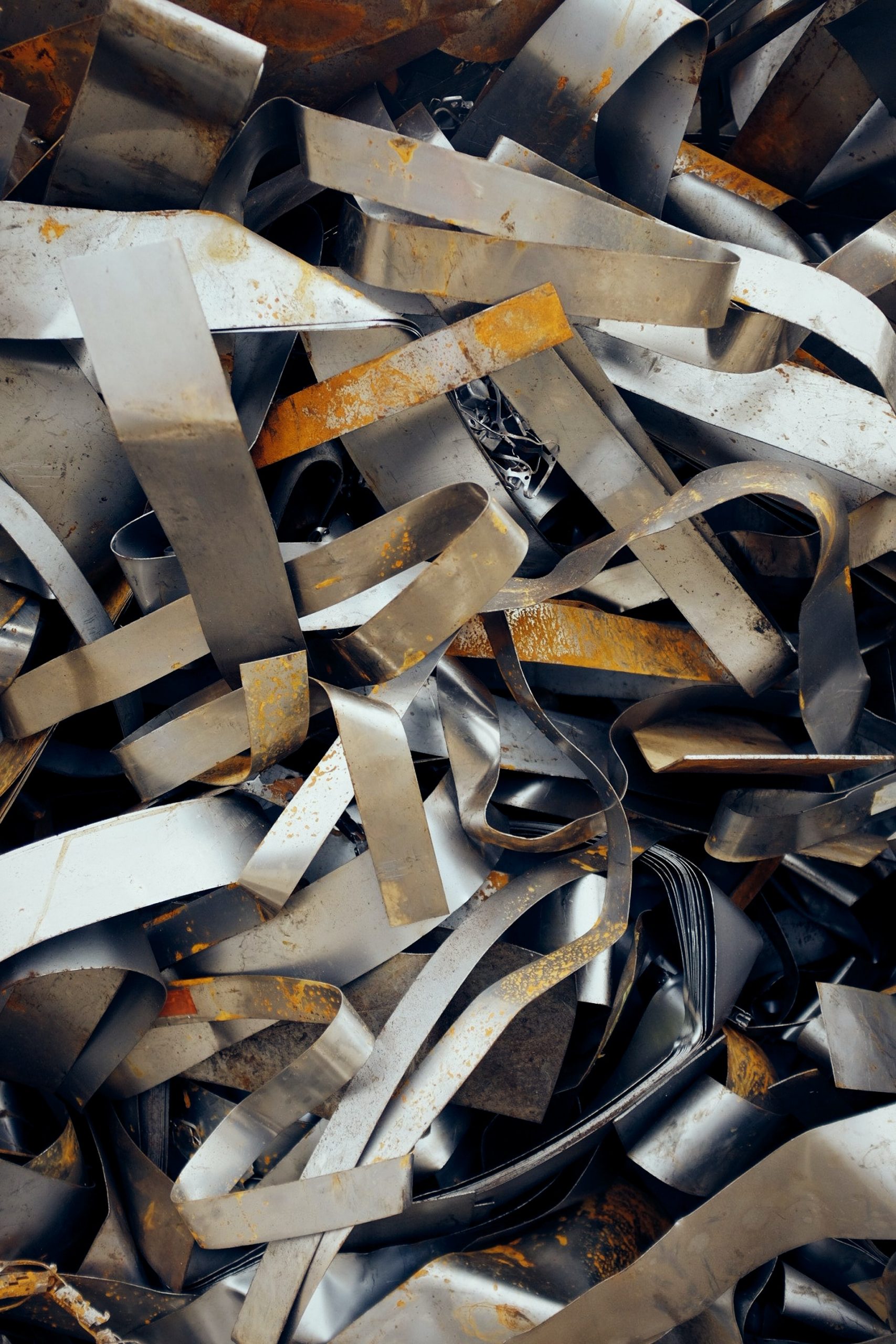
Benelux scrap recovers, supply issues continue
Scrap prices in the Benelux have recovered since last week. However, even a price recovery does not seem to be helping ease ongoing supply limitations.
Exporters’ dock prices, which were at around €320-330/tonne a week ago, were mostly at $340-350/t ($370-381) delivered on Monday.
Benelux exporters, however, are bemoaning the lack of material as sourcing from collectors remains an issue, even at €350/t.
A Benelux exporter tells Kallanish: “When you buy at €350/t, you have to sell to Turkey at above $420/t cfr [Turkey]. However, those values are not yet available in Turkey.”
“On the other hand, collectors are not keen to sell at €350/t. Most say they prefer to wait today. We do not have favourable market conditions here,” says another exporter.
In Turkey, prices rose throughout last week, with EU-origin HMS 1&2 80:20 reaching $414/t cfr on the latest booking, from $407-410/t cfr levels earlier last week.
However, suppliers are seen targeting higher levels this week amid positive developments arising from China’s strong return from holiday. Also supportive are the decrease in Turkish mills’ energy prices and strong Turkish flat steel prices, which have found even further support from the increase in import duties last weekend.
One European exporter is heard targeting $425/t cfr Turkey for HMS 1&2 80:20.
In India, although buyers’ appetite is not strong, sentiment has also turned bullish. EU-origin containerised shredded is offered at $455/t cfr levels, although buyers are bidding at $440-445/t cfr.
Burcak Alpman Turkey

SSAB reignition of Raahe BF adds to January furnace restarts across Europe
Nordic steelmaker SSAB restarted the blast furnace at its facility at Raahe in central Finland early in 2023, the company said on January 27 and now expects the market to stabilize.
The company confirmed the restart of the 1.25-million tpy Raahe BF earlier in January 2023 after 1.5 months of downtime.
SSAB stopped the BF in mid-November for maintenance, with the outage was brought forward to reduce output during the fourth quarter in the face of weak steel demand.
“Maintenance work lasted around six weeks and the blast furnace was re-started in the beginning of 2023,” the company said.
In the fourth quarter 2022 SSAB’s crude steel output amounted to 905,000 tonnes, down from 1.19 million tpy in the same quarter of 2021.
Steel shipments from SSAB’s production assets in October-December 2022 was also down year on year at 778,000 tonnes, down from 832,000 tonnes in October-December 2021.
But SSAB said the steel market in Europe has now stabilized, although it acknowledged there is still some uncertainty.
SSAB is the third steelmaker to recently relight a BF idled in the fourth quarter 2022, which has raises concerns among European flat steel buyers, sources said..
Last week Slovakia-based integrated steelmaker US Steel Kosice restarted a second BF at its Kosice facility while earlier in January, ArcelorMittal said it was considering restarting a BF at its facility in Gijon, in northwest Spain.
Most market participants said the recent prices rises in Europe’s flat steel sector have been achieved mainly thanks to more balanced market, in other words, due to the numerous output cuts, so the return of idled capacity could threaten that uptrend.
“It takes several weeks to restart a BF, so I wouldn’t worry about an immediate effect on the market, but if real steel demand doesn’t pick up, we might see tumbling prices in the second half of 2023,” a steel distributor in Norther Europe said.

Published by: Julia Bolotova