


EC publishes new steel trade regime; country quota allocations still pending
The European Commission has officially published Regulation (EU) 2026/1384, establishing the new EU steel trade regime that will apply from 1 July 2026, replacing the current steel safeguard measures which expire on 30 June 2026.
The new framework introduces annual tariff-rate quotas of 18.3 million tonnes and an out-of-quota duty of 50%, alongside new provisions such as the “melt and pour” requirement aimed at strengthening trade enforcement and preventing circumvention.
A key element, however, remains to be finalised. While the Regulation establishes the overall quota volumes, the country-specific allocation of these quotas will be determined through a separate Commission implementing act, which has not yet been published. The Regulation states that this implementing act should apply from 1 July 2026 and will define the distribution of tariff quotas among exporting countries.
Commenting on the publication, trade lawyer Yuriy Rudyuk highlighted that the absence of the implementing act creates uncertainty for importers and supply chains, particularly as negotiations with several FTA partner countries are reportedly still ongoing. Until the country allocations are formally adopted, questions remain regarding the practical operation of the new quota system from day one.

Philippe Mercier elected President of Belmetal
The Board of Directors of Belmetal, the Belgian federation representing steel and metal distributors, has unanimously elected Philippe Mercier, Managing Director of Groupe Aciers Grosjean, as its new President. He succeeds Vanessa Espeel following the federation’s recent General Assembly and the election of a new Board.
Mercier brings nearly four decades of experience across the transport, automotive, logistics and steel distribution sectors. Since 2015, he has served as Managing Director of Groupe Aciers Grosjean in Charleroi and has held a variety of management positions in Belgium and France throughout his career.
He will be supported by two Vice-Presidents: Nicolas Caeymaex of Van Meerbeeck Metalen and Johan Rosseel of Staalhandel Rosseel.
His appointment comes at a challenging time for Belgium’s steel and metals sector, which faces rising costs, increasing regulatory requirements, trade tensions and the need to accelerate decarbonisation efforts. Belmetal represents companies supplying steel and metal products to key industries including construction, manufacturing, energy and infrastructure.
A long-standing Belmetal board member, Mercier is also active within EUROMETAL and serves as a board member of the Chamber of Commerce of Hainaut. As President, he aims to strengthen Belmetal’s role as a representative of the sector, focusing on competitiveness, workforce development and supporting the future of Belgian and European industry.
“The priority is to preserve the conditions that enable companies to invest and create jobs while maintaining the competitiveness of our industrial base in a changing climate and regulatory environment,” Mercier said.

European industry calls for fair competitive conditions for steel-based finished products
Representatives from the steel trade, the steel-processing industry and politics have used a confidential expert exchange with the German Chamber of Commerce and Industry (DIHK) to draw urgent attention to the growing competitive distortions caused by imported steel-based finished products.
The central message was a call for fair and competitive framework conditions to ensure that industrial value creation, employment and technological expertise remain in Europe.
Unfair competition is affecting the entire value chain
The discussion made clear that European companies are not only coming under pressure from traditional steel imports. Increasingly, steel-based finished products and components from third countries are entering the European market under significantly different cost, subsidy, energy and environmental conditions. This creates competitive distortions that affect both European producers and processors.
Participants in the exchange included Alexander M. Julius, President of EUROMETAL and Managing Partner of macroMETAL Handelsges. mbH, Dr Michael Waasner, Managing Partner of Gebr. Waasner GmbH, Domenico Marino, COO of Knauf Interfer SE, Jan Hobert, Head of Metal | Corporate Purchasing at Hettich Management Service GmbH, as well as representatives of the Federal Ministry for Economic Affairs and Energy.
Call to effectively include downstream steel products in trade defence
The participants advocated giving greater trade-policy consideration to imported steel-based finished products where demonstrable market distortions, subsidised overcapacities or circumvention strategies are displacing European suppliers. The objective is not blanket protectionism, but a rules-based, WTO-compatible and targeted framework that restores fair competitive conditions.
Among the issues discussed were clearer rules on origin and traceability, the examination of “melt and pour” approaches, and stronger consideration of downstream steel products in existing and future trade-policy instruments. Concepts such as European value-added shares or “Made with Europe” were also mentioned as potential building blocks.
Safeguarding Europe’s resilience and independence
Steel and steel-based products form the foundation of numerous key industries – from mechanical and plant engineering to automotive supply, energy, infrastructure, defence and security projects. Preserving this industrial base is therefore not only a matter of competitiveness, but also of European resilience and strategic independence.
With the European Steel and Metals Action Plan, the European Commission has highlighted the strategic importance of the sector for competitiveness, decarbonisation and security. From the industry’s perspective, this approach must now be consistently extended to steel-based finished products and downstream stages of the value chain.
Need for action by the Federal Government and the EU
- Give greater consideration to imported steel-based finished products in trade-policy investigations where competitive distortions can be demonstrated.
- Improve rules on origin, traceability and proof in order to prevent circumvention strategies.
- Design existing trade defence instruments to be faster, more practical and more closely aligned with real value chains.
- Better coordinate industrial, climate and trade policy so that European production is not displaced by cumulative burdens.
- Create a shared evidence base involving the Federal Government, EU institutions, associations and companies in order to identify affected product groups in a targeted manner.
Signal from industry
The exchange sends a clear signal: Europe must secure its industrial base through fair competitive conditions, effective rules and strategic capacity to act. Anyone who takes resilience, independence and climate-neutral transformation seriously must prevent steel-based value creation from being permanently displaced from Europe by unfairly priced imports.

Deutsche Bahn tackles bottlenecks on railway routes
Representatives of German states and railway operator Deutsche Bahn (DB) have met to discuss the stabilisation of critical raw materials travelling via rail following concerning supply problems on routes to Salzgitter and ArcelorMittal.
The German railway network is suffering from interruption along the lines, mainly due to ongoing construction work. Recent weeks have seen serious shortcomings with railbound supplies of ore and coke to Salzgitter Flachstahl as well as ArcelorMittal’s mills in Bremen and Eisenhüttenstadt.
In a statement, DB says it has taken immediate measures to prioritise supply transport, and has also increased staff to support this, Kallanish learns.
Meanwhile, three German states with intensive steel production have called on DB for talks in the matter. Last week, the ceo of DB, Evelyn Palla, met with the prime ministers of three German states, Lower Saxony, Saarland, and Brandenburg. The meeting also involved the heads of subsidiaries DB InfraGO (railway network) and DB Cargo (freight) and was a signal that DB that it takes the worries of the industries very seriously.
As a result of the talks, DB InfraGo will form a round table to debate long-term remedies. “I welcome that DB has recognised that the situation is serious, and that it will keep discussing long-term solutions for a resilient supply chain with steelmakers,” says Olaf Lies, Prime Minister of Lower Saxony.
Author: Christian Koehl

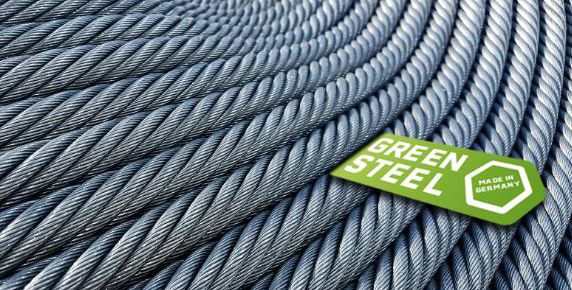
Chinese, EU green steel standards need harmonising
Varying regional standards for low-emission steelmaking need to find common ground to enable the establishment of credible lead markets for steel, a German research institute states in a study on Chinese versus European standards.
Harmonised standards for low-carbon steel are an important basis for billion-euro investments in climate friendly steel production, says the Wuppertal Institute, a research body specialising in topics related to climate, environment and social sustainability.
Standards create demand by reducing uncertainty for investors, according to Chun Xia-Bauer, Lukas Hermwille and Anna Leipprand, the authors of the study, entitled “Green Steel, Shared Rules?”
Comparing the European Low Emission Steel Standard (LESS) and China’s “C2F Steel” standard, they find that the two standards are largely comparable from a technical perspective, Kallanish understands. Both support the transition to highly decarbonised primary steel and scrap-based steelmaking powered by renewable energy. Still, significant differences remain in their system boundaries, which is why full technical interoperability is unlikely in the near term, the authors write.
A realistic next step would be establishing mapping and conversion tools that help firms, buyers and policymakers understand how products classified under one standard would be interpreted under the other, they suggest.
Author: Christian Koehl

German sections prices stable, as mills prepare breaks
Prices for sections in Germany and neighbouring countries are now seen stabilising, following recent small decreases, ahead of the upcoming summer pauses at the mills.
Many players in May had predicted that prices will reach and potentially surpass €850/tonne ($974) delivered for category 1 sections, but were proven wrong. Instead, prices saw softened slightly by €10-20/t, and are now in the range of €820-830/t from domestic mills. Offers from Spain or Poland can be even closer to the €800/t mark, one buyer notes.
In April and May, distributors reported some shortage of sections categories 1-3, which encouraged mills to seek higher prices.
According to one manager, this was partly caused by high temporary order activity from the UK, which has now expired. Also, technical problems at a Benelux mill that have been an issue since last autumn have meanwhile been overcome.
“Several factors played a role but have disappeared now, so that the supply capacity returned to normal, and mills had to revert offers by €10-20/t in the meantime,” he tells Kallanish.
Going forward, noteworthy moves are expected before the summer breaks at mills. According to observers, one German mill will take its two-week maintenance break in early July, and another mill later that month. “And once they are back on stream, the Italians will take their breaks, and so will the Luxembourgers and the Polish.”
For the remaining weeks of operation, “mills are pretty well utilised, also with deliveries as far as Canada and the USA,” one observer notes. The next noteworthy trend of prices will not show before September, he says.
Author: Christian Koehl

Green steel producers urge EU to maintain ETS
GravitHy, Outokumpu, SSAB, Stegra and Hydnum Steel are urging the EU to maintain the current level of ambition of its Emissions Trading System (ETS), Kallanish notes.
The group of green steel producers is reacting to calls by other European steelmakers to pause the system, arguing that a strong and predictable carbon price signal is essential to unlocking investment in low-carbon technologies.
Their joint statement, seen by Kallanish, says that foundations for decarbonisation investment are already in place, including the Carbon Border Adjustment Mechanism (CBAM) and steel safeguard measures, with further tools in development.
However, the signatories warn that decarbonised products must be able to compete with fossil-based alternatives for investment to materialise.
The EU ETS, they argue, is a key instrument to achieve this. “Maintaining an upward trajectory of CO2 prices is essential to achieving both the European Union’s climate goals and its industrial ambitions,” the statement says.
It sets out three priorities, including ensuring long-term regulatory stability, preserving the integrity of the ETS, and directing revenues toward industrial transformation.
According to the Climate Leadership Coalition (CLC), the European steel sector is entering a new and key investment cycle as blast furnaces are gradually being phased out.
The near-zero emission production routes, including hydrogen-based direct reduction and EAF steelmaking, are advancing.
Carbon pricing is a crucial condition to make clean steel competitive. “The ETS has begun to deliver what industrial investments need most: a credible long-term, technology-neutral price signal…Without that price signal, the business case for transformation weakens and, in the worst case, investments
“The EU ETS is delivering emissions reductions while providing the foundation for Europe’s industrial transformation. The task now is not to redesign the system, but to preserve and strengthen what works, and to ensure that the system’s design continues to reward investment in the clean transition,” the note continues.
The coalition calls for a strong and predictable ETS trajectory beyond 2030, with carbon prices high enough to drive investment in clean technology. It urges the preservation of the ETS market architecture and the Market Stability Reserve, and supports the phasing out of free allowances to strengthen the case for near-zero emission production.
Finally, it calls for ETS auction revenues to be directed toward industrial decarbonisation rather than absorbed into national budgets.
Author: Natalia Capra

Europe’s green flat steel trade slow; selective premium deals reported
Fastmarkets defines green steel as material with combined Scope 1, 2 and 3 carbon emissions not exceeding 0.8 tonnes of carbon dioxide (CO2) per tonne of steel produced.
One seller reported achieving premiums within the range of €180-200 ($207.10-230.11) per tonne in deals with customers who have committed to buying a share of low-carbon material.
A producer said that deals for green flat steel are combined with purchases of traditional grey material. And while the share of green material in total purchase is low, the total cost of the premium does not feel as punitive.
Still, the producer does not see demand for green flat steel.
Fastmarkets’ weekly assessment of the green steel domestic, flat-rolled, differential to HRC index, exw Northern Europe was €0-200 per tonne on Thursday, widening upward by €50 from €0-150 per tonne on June 11.
While business was thin, lobbying intensified in recent weeks, including an early June push by Transport & Environment (T&E) for low-carbon steel credits in EU automotive CO₂ standards as a mechanism to support green steel deployment.
This week three of Europe’s leading steelmakers – ArcelorMittal Europe, thyssenkrupp and voestalpine – have jointly called on EU policymakers to halt the rises in the costs of carbon under the bloc’s Emissions Trading System (ETS) until low-carbon steelmaking becomes economically viable.
The producers, which together account for around 60% of Europe’s integrated steel output, warned that the current trajectory of the ETS risked undermining the region’s industrial base unless adjustments were made.
Under the current framework, the cost of producing steel in the EU could increase by around 50% by the early 2030s, while imported steel-intensive products were not subject to equivalent carbon costs and EU exports received no compensation, creating a competitive imbalance.
The three companies estimated that, without reform, steel-intensive manufacturing activity in the EU could decline by 30-40%, putting as many as 5 million jobs at risk across the value chain, and undermining the bloc’s intention to raise manufacturing’s share of gross domestic product (GDP).
To address these risks, the steelmakers were calling for a temporary pause in ETS cost escalation until the conditions for economically viable decarbonization were in place, alongside stronger support for early-stage projects and measures to balance import and export competitiveness.
According to Fastmarkets base scenario forecast, the cost of ETS in 2026 should average €80.52 per tonne in 2026 and rise to €104.62 in 2027.
At the same time, media reports earlier this week suggested that the European Commission is preparing amendments to the ETS that would prolong free emissions allowances for industry in return for investment commitments within the EU, according to an internal document seen by Reuters.
Although the bloc had originally intended to gradually eliminate free allocations as part of its decarboniZation strategy, mounting pressure from industrial groups and member states has led policymakers to reconsider measures aimed at protecting Europe’s industrial competitiveness.
The revised ETS proposal is due to be presented on July 15 and is also expected to require member states to channel a greater share of ETS revenues into supporting industrial decarboniZation efforts.
According to market sources, free allowances cover around 75-80% of European steel industry emissions, with details depending on the installation, production route and efficiency.
Under the current system, free allocations are supposed to gradually phase out from 97.5% in 2026 to 95% in 2027, 09% in 2028, 77.5% in 2029, 51.5% in 2030 and down to 0% in 2034


European steel HRC market mostly quiet ahead of new safeguard measures
In Northern Europe, one buyer reported a transaction at €675 ($773) per tonne ex-works, lower than indications at €685 per tonne ex-works and offers at €700 per tonne ex-works, reported by a second buyer.
“Activity is basically zero, because nobody knows what will happen after July 1,” a third buyer said, referring to the start date of the EU’s new safeguard measures.
The same source added that demand was poor and buyers were sufficiently stocked up. “The market is calm and some people are even saying it’s dead,” the third buyer said.
Due to lack of input, price points heard on June 18 were continued to June 19’s index. A seller reported an indication at €685 per tonne ex-works on Thursday.
Fastmarkets’ daily steel hot-rolled coil index, domestic, exw Northern Europe, was calculated at €686.25 ($786) per tonne on June 19, down by €0.25 per tonne from €686.50 per tonne on June 18.
The index was up by €1.04 per tonne week on week and by €4.25 per tonne month on month.
In Italy, offers were reported in the wide range of €660-690 per tonne ex-works, but market sources could not indicate workable prices due to limited trading.
Fastmarkets’ daily steel hot-rolled coil index, domestic, exw Italy, was calculated at €682.50 per tonne on Friday, up by €7.50 per tonne from €675.00 per tonne on Thursday.
The index was down by €5.00 per tonne week on week but up by €3.12 per tonne month on month.
Buying interest for imported HRC was limited, sources told Fastmarkets on June 17, when the most recent offers to Italy were reported at €595-610 per tonne CFR from Turkey and India, and at €680-700 per tonne DDP from the same origin.
Material from Southeast Asia was offered at €680-700 per tonne DDP, while Algerian HRC was heard offered at €700-710 per tonne DDP to Italy and Spain. The highest offer was at €740 per tonne DDP from Japan.
Davide Montagner in London contributed to this article.

European steel heavy plate prices show marginal increases during market stability
Italy
Indications for tradeable local plate prices were heard at €730-760 per tonne ex-works in Italy during the week, while deals were reported at €730-740 per tonne ex-works, linked to base-grade material.
A producer said base plate at €730 per tonne ex-works “feels like bottom in plate with hard resistance to go low from most producers,” adding that the level is “fully conditioned by the cost of production”.
Prices for steel slab imports into Italy increased in the week to Thursday, driven by the consistent push from Asian mills for higher levels, sources said.
Fastmarkets’ weekly price assessment for steel slab, import, cif Italy, was $590-620 per tonne on Thursday, widening upward by $15 per tonne from $590-605 per tonne a week earlier.
“[There were] no attempts to change anything with the prices so far, [and] all new movements seem postponed until the [new steel import] quota details are published,” the producer source said, referring to Italian plate.
Fastmarkets’ weekly price assessment for steel domestic plate 8-40mm, exw Southern Europe, was €730-740 per tonne on Thursday, narrowing upward by €10 per tonne from €720-740 per tonne a week earlier.
Plate import prices into Southern Europe were indicated at €720-730 per tonne CFR, without any additional duties.
Fastmarkets’ weekly price assessment for steel plate (8-40mm), import, cfr main port Southern Europe, was €720-750 per tonne on Thursday, narrowing upward by €20 per tonne from €700-750 per tonne a week earlier.
Germany
Offers for steel heavy plate in Germany were heard at €790-850 per tonne ex-works, unchanged from a week earlier.
No significant fresh activity was reported in the market, with sources citing slow demand, which normally occurs during the summer season.
Fastmarkets’ weekly price assessment for steel domestic plate 8-40mm, exw Northern Europe, was €790-850 per tonne on Thursday, widening upward by €10 per tonne from €790-840 a week earlier.