

Eurofer slashes demand outlook, 2023 deteriorates significantly
Eurofer slashes demand outlook, 2023 deteriorates significantly
Eurofer has slashed its demand outlook for the European steel industry for both this year and next. The association now expects apparent steel demand to contract also in 2023.
According to its latest report issued this week, Eurofer expects apparent steel demand to move down 3.5% year-on-year in 2022 and 1.9% y-o-y in 2023. In August, when the previous report was published, the outlook predicted a drop of 1.7% y-o-y this year, followed by a strong recovery of 5.6% in 2023.
“The positive trend seen in apparent steel consumption throughout 2021 came to an end in the second quarter of 2022, due to the impact of ongoing disruptions linked to the war in Ukraine, poor demand outlook and severe rises in energy prices and production costs. All these downside factors are expected to weigh even more in the second half of 2022 up to the second quarter of 2023 included, as a result of the prolonged effects of the war in Ukraine,” Eurofer explains in a note sent to Kallanish.
“Apparent steel consumption is set to decrease also in 2023, albeit at a lower rate, as demand from steel-using sectors is expected to remain severely subdued, at least until the second quarter of 2023. These developments are conditional on the evolution of energy prices and the Russia-Ukraine war – which are unforeseeable at the time of writing – and its impact on global supply chains,” the association adds.
The negative correction in 2022 demand would be the third registered during the last four years, taking apparent consumption in Europe back to 145 million tonnes, the level registered in 2019.
As demand remains under pressure in Europe, available data indicate that import activity has been higher than in 2021 during the first eight months of 2022. Nevertheless, the trend is slowing down significantly as the year progresses.
In Q2, total steel imports into the EU rose 1.6% y-o-y, after a jump of some 28.5% y-o-y in Q1. During the first eight months of the year the European steel trade deficit was of 2.1 million tonnes/month on average; in 2021, the full-year trade deficit reached 1.5m t/m on average.
Emanuele Norsa Italy


Ford signs deals with three European steelmakers
Ford in Europe has announced further steps to secure supply of low-carbon steel for its future products and help reach its carbon neutrality target by 2035.
The carmaker has signed memorandum of understandings (MoUs) with its strategic suppliers, Salzgitter Flachstahl, Tata Steel Nederland and thyssenkrupp Steel Europe, to secure supply of low-carbon steel.
As a first application, Ford plans to use the low-CO2 steel for the production of its all-new, all-electric, medium-sized crossover vehicle, starting in 2023, the carmaker tells Kallanish. The cars will be assembled at the Cologne Electrification Centre from 2023.
Ford says it targets carbon neutrality across its European footprint of facilities, logistics and suppliers by 2035. To reach this, it is analysing the whole value chain. Major updates to the Cologne Electrification Centre, with new energy efficient solutions, will save more than 2,000 tonnes of CO2 and more than 2,600 MWh of electric energy per year, it claims.
Tata Steel Nederland, in a statement of its own, notes that Ford will be the first customer committed to offtake the green steel that Tata Steel plans to produce via the hydrogen route, which is labelled with the brand name Zeremis.
Christian Koehl Germany

Weak trading activity drags on Northern Europe rebar market
Demand in the Northern European steel rebar market remained depressed in the week to Wednesday October 26 amid weak end-user consumption and a continued wait-and-see attitude among buyers.
Fastmarkets’ weekly price assessment for steel reinforcing bar (rebar), domestic, delivered Northern Europe, was €850-920 ($852-922) per tonne on Wednesday, down by €30-65 per tonne from €915-950 per tonne on October 19.
Mills offered significant discounts to stimulate market activity. But low demand and an uncertain outlook resulted in little trading activity.
“Demand is very poor. This is causing downward pressure on prices. There is a small window where price could drop further, however it cannot go down too much and remain profitable for producers to keep producing,” a buyer source said.
While there is still a considerable number of construction projects in development in the public and infrastructure sectors, many projects have been postponed due to a lack of labor force and high costs for building materials.
Demand has dramatically fallen in the private housing sector as many projects have been cancelled, sources said.
Despite falling prices, market activity has not picked up. With so few transactions taking place, it has become difficult to gauge a market price, Fastmarkets heard.
“Producers are talking prices down but no one is buying. You can say the price is €600 per tonne but no one is buying so it’s not really the price,” a second buyer source said.
“If prices keep dropping there will be more activity. Prices are still comparatively high and so mills may have to drop prices further,” the second source added.
Despite energy costs stabilizing over the last fortnight, energy prices are expected to surge toward the end of the fourth quarter as demand for energy rises.
If demand does not pick up but energy costs surge again, mills may cut output further, Fastmarkets heard.
The market is not expected to recover for the remainder of the year, sources said.
International scrap prices impact the price of all long steel products. Scrap prices have stabilized through mid-October.
Fastmarkets’ daily calculation of the index for steel scrap, HMS 1&2 (80:20 mix), North Europe origin, cfr Turkey, was €351.83 per tonne on Wednesday, down from €365 per tonne a week earlier.
Published by: India-Inés Levy

German scrap market expects bearish prices in November
German scrap prices increased in some parts of the country this month, according to local scrap market participants. Most sources continue to expect the market to be very sluggish in November, with sales low and customers adopting a wait-and-see attitude. The main reason for this remains high energy costs and low purchases by steel mills.
Prices in some parts of Germany have increased only for old scrap by €5-10/tonne ($4.9-9.7/t), a buyer tells Kallanish.
Nationwide average prices for old thick scrap sort 3 are at €360/t. The price for new scrap sort 2/8, meanwhile, fell to €350-360/t. E40 shredded scrap has reached €370/t.
In Austria, scrap prices also changed in October depending on the sort. Old thick scrap sort 3 increased to €360/t but new scrap sort 2/8 fell to €355/t.
“There were some exports to Turkey and Italy, but the volumes were again very low,” another merchant notes. “In Germany, prices increased slightly only for old scrap, which is more in demand. Downward pressure weighed primarily on new scrap, which is hardly in demand from flat steel producers due to the lack of new orders from the automotive industry.”
This month, German steel recyclers federation BDSV said skyrocketing electricity and gas prices in Europe pose major challenges for steel recycling and jeopardise the ambitious goals of climate neutrality and circular economy in Germany and at EU level (see Kallanish passim).
BDSV also urged more scrap transport by rail due to the ongoing logistics problems on road and waterway routes in Germany.
Most participants in the German scrap market expect prices to continue to be sluggish in November due to the same reasons like this month – high energy prices and low demand. This is causing great uncertainty among steel manufacturers.
Svetoslav Abrossimov Bulgaria
NBH aims to supply plate products to renewable energy industry with DanSteel merger
The merger of NLMK DanSteel and NLMK Belgium Holdings has been formally concluded following the EU approval Oct. 11, the steel plate producer said Oct. 25.
With its integration with NLMK DanSteel, NBH said it is expanding its European plate business and aims to become a premium steel supplier of plate products for the wind energy industry in the continent.
“The integration of DanSteel reinforces our presence in the wind industry sector — a particularly important and growing segment of renewable energy, and enables NBH to additionally contribute to global efforts for the transition to a less carbon-intensive society,” NBH CEO Ben de Vos said.
“We are very excited to have DanSteel in the perimeter of Belgium-based NBH. This will complement the capabilities of the Plate Division in serving the European industry with one of the most comprehensive product portfolios,” CEO of DanSteel Igor Sarkits said.
Platts assessed heavy plate in Northern Europe down Eur10/mt at Eur1,040/mt ex-works Ruhr.
NBH is a joint venture primarily between SOGEPA at 49% and NLMK with another 49%. It is comprised of various steel production facilities, service centers and distribution centers.
The Strip Products Division includes NLMK La Louvière (Belgium), NLMK Strasbourg (France) and NLMK Manage Steel Center (Belgium). The consolidated Plate Products Division includes NLMK Clabecq (Belgium), NLMK DanSteel (Denmark) and NLMK Verona (Italy).
The consolidation of DanSteel extends the JV’s Plate Division footprint to three production facilities in Europe.
DanSteel has a strategic portside location in Denmark and is a key supplier of XXL dimensioned, wide and thick heavy plates.
— Annalisa Villa

EU steel demand to fall 3.5% in 2022 as economy worsens: Eurofer
Eurofer, the European association of the steel industry, has forecast steel demand in the EU to drop by 3.5% to 145 million mt in 2022, owing to a deeper-than-expected recession caused by the continuing worsening of the EU economy following Russia’s invasion of Ukraine and the energy crisis.
Earlier this year, the association had forecast steel demand to drop by 1.7% in 2022.
In an Oct. 26 report, Eurofer cited that negative demand was expected to continue for at least the first half of 2023, posting a drop of 1.9% year on year to 142.4 million mt of steel products.
Although consumption rebounded after 2021 with an increase of 16.3% post-pandemic, the positive trend in steel demand came to an end in the second quarter of 2022 owing to a drop of 4.8% to 38.6 million mt.
According to the association, 2022 and 2023 would mark the third and fourth respective years of recession for steel consumption in five years.
“All downside factors have remained in place and even exacerbated, especially skyrocketing energy prices, which lead to unbearable production costs,” Eurofer Director General Axel Eggert said in the report.
“This has entailed a further cut in apparent steel consumption and a significant downward revision of steel-using sectors’ output in the EU for the remainder of this year and supposedly for the first half of next year,” he said, adding that Eurofer was still worried about the “persistent high level of distortive steel imports into the EU.”
Although imports into the EU continued to grow, albeit at a slower pace, in the second quarter at 1.6%, they were significantly down from 28.5% in the first quarter.
EU steel-using sectors
Steel-using sectors had proved to be more resilient in Q2 than initially thought, owing to the carry-over effect of 2021’s post-coronavirus rebound of 8.4%, Eurofer said in the report.
However, the Russia-Ukraine war and consequential energy price increases are likely to impact the end of 2022 and at least Q1 2023, the report added, with steel-using sectors’ output in 2023 expected to fall by 0.9%, compared with the previous forecast of a 2.2% increase.
Among the main steel-using industries, positive developments were recorded in the construction, mechanical engineering, and transport sectors, and particularly in the automotive sector, in which growth of 1.9% was expected for 2022.
The association revised its forecast for the construction sector upward, with a growth of 5.6% expected in 2022, compared with 5.3% previously, due to bullish developments in H1.
However, this trend was expected to ease over the forthcoming quarters due to the impact of rising construction material prices, easing growth in construction and low supply.
Eurofer said growth in construction output was set to lose speed in the coming quarters of Q4 2022 and Q1 2023, with full-year 2023 construction activity to fall by1%.
Rebar prices, the main steel product used in the construction sector, have seen a large drop in prices since March 2022, it said.
According to Platts, part of S&P Global Commodity Insights, the weekly Northwest Europe rebar ex-works price moved from Eur809/mt at the beginning of January to Eur1,264/mt at the end of March, before falling to Eur865/mt on Oct. 19.
After a severe slump of 18% in 2020 due to the coronavirus pandemic, automotive output rebounded by 3.3% in 2021. However, Eurofer expected the production to drop again, albeit at a moderate pace, in 2022, revising its forecast to a 1.7% drop from 0.5% previously.
The automotive sector was forecast to see moderate growth of 1.1% in 2023, according to Eurofer, although this was based on “that war-related disruptions and uncertainty will ease substantially as a result of an improved economic and industrial outlook,” it said.
Platts assessed hot-rolled coil, the main steel products used in the automotive industry, in Northwest Europe stable day on day at Eur650/mt ($648.38/mt) ex-works Ruhr Oct. 25, although it has dropped Eur272/mt since the beginning of the year.
— Annalisa Villa

Italian railway firm places orders with five steelmakers
Italian railway company Rete Ferroviaria Italiana (RFI) has awarded a large order of over 200,000 tonnes of rail to five steelmakers in Europe, Kallanish learns from RFI.
The order with a total value of €1.1 billion ($1 billion) will be divided into two phases. The first phase has a total value of €946 million and includes the allocation of five lots. Lot no.1, a supply batch worth over €236m, will be awarded to JSW Steel Italy in Piombino. The €208m lot no.2 has been awarded to ArcelorMittal Poland. Voestalpine Rail Technology has won lot no.3 with a €189m value. Saarstahl Rail was awarded the €170m lot no.4, while ArcelorMittal Spain has bagged lot no. 5 for €142m.
The second phase of the supply has been awarded to JSW Steel Italy for over €153m.
The rails will go into new infrastructure projects and maintenance supported by the European recovery fund, Piano Nazionale di Ripresa e Resilienza (PNRR). The order will satisfy RFI’s need for 43,000 rails of approximately 108 metres per year, the company reveals in a note.
According to JSW’s financial-year 2022 report, the steelmaker’s Italian division sold over 315,000t of re-rolled products including bars, wire rod and rails. It reported €309m revenue, Kallanish notes.
Natalia Capra France

AMKR operates at 25% amid coal shortages: ceo
ArcelorMittal Kryvyi Rih (AMKR) is in an extremely difficult situation, which is likely to last beyond year-end if the military situation does not improve, according to AMKR chief executive Mauro Longobardo.
“This is unfortunate, given that we were one of the most competitive plants in the ArcelorMittal Group,” Longobardo noted in an interview with Germany’s Stahl-Punkt. “At present, the steel plant operates only one blast furnace, producing 100,000 tonnes of products per month and operating at 20-25% capacity. We are now shipping our products to the ports of Poland and the Baltic countries, from where they are sent to our customers.”
“However, these ports are not equipped for our product type and quantity we ship,” he adds. “Even with a favourable market situation, the entire system can only provide about 50% of our capacity. The company’s logistics costs have increased significantly – by $100/tonne.”
This means that transportation costs are higher than the market price of the goods, preventing the company from starting a second blast furnace, the ceo noted. “However, if the situation improves and ports open, our losses could quickly approach zero, as we will immediately save on additional logistics costs and this would be enough to launch another blast furnace and reach maximum capacity,” Longobardo concluded.
According to him, another problem is the supply of coking coal, the consumption of which is typically 300,000 t/month. It was usually delivered to Ukraine from several countries, including Australia and the US, but this is no longer possible. The enterprise now depends on coking coal which goes through Polish ports.
“Since Metinvest, another large Ukrainian steel company, has lost its factories in Mariupol, we can use coking coal that could have been consumed there. But none of this will provide us with the necessary capacity utilisation,” Longobardo observed.
AMKR announced earlier it is counting on growth of export deliveries of its steel products to EU countries in the fourth quarter (see Kallanish passim). The company plans to fill the gap in the European market, which was formed due to the temporary stoppage of some EU steelmakers amid rising electricity costs.
Svetoslav Abrossimov Bulgaria
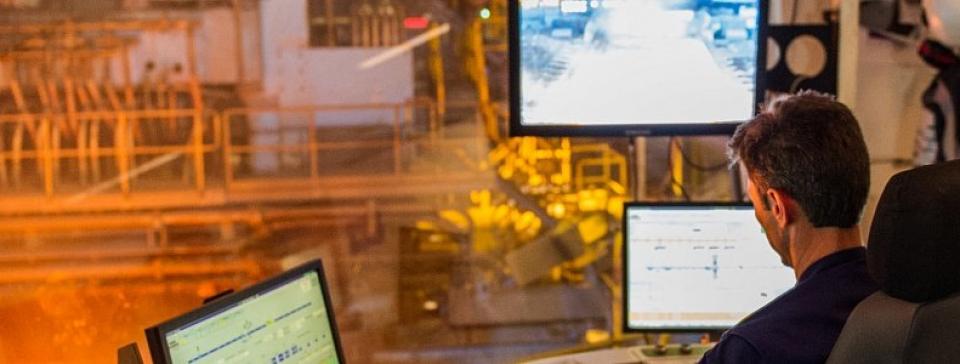
NLMK Belgium concludes integration of DanSteel
NLMK has formally concluded the integration into NLMK Belgium Holdings (NBH) of NLMK DanSteel. As a result, NBH has further expanded into the steel plate market, increasing its offering and becoming a player, for example, in the wind energy segment.
NBH is a Belgium-based joint venture between the public entity SOGEPA and NLMK Group. Dansteel controls a mill in Denmark and has a good reputation in the steel market as a key supplier of extra-large-dimensioned wide and thick heavy plate, Kallanish notes.
“The addition of DanSteel leads NBH to offering one of the widest plate product portfolios in Europe and globally for customers active in shipbuilding, civil engineering, yellow goods, mining, lifting, transport and wind energy,” NLMK explains. NBH also has plate units located in Verona, Italy, and Clabecq, Belgium.
Emanuele Norsa Italy

SSAB to idle blast furnace at Raahe
SSAB to idle blast furnace at Raahe
SSAB says it plans to bring forward maintenance of one of its blast furnaces at the Raahe integrated plant.
The decision has been taken to reduce output in the fourth quarter amid a slowdown of demand in Europe, Kallanish notes.
The furnace, with the capacity of 1.3 million tonnes/year of pig iron, will be idled from mid-November for 6-8 weeks.
In Q3, European crude steel production at SSAB stood at 1 million tonnes, in line with production in both Q3 2021 and Q2 2022. In January-September, crude steel production reached 3mt, some 400,000t less than in January-September 2021.
The firm’s Americas and Special Steel segments carried financial performance in Q3 (see separate story).
Emanuele Norsa Italy