

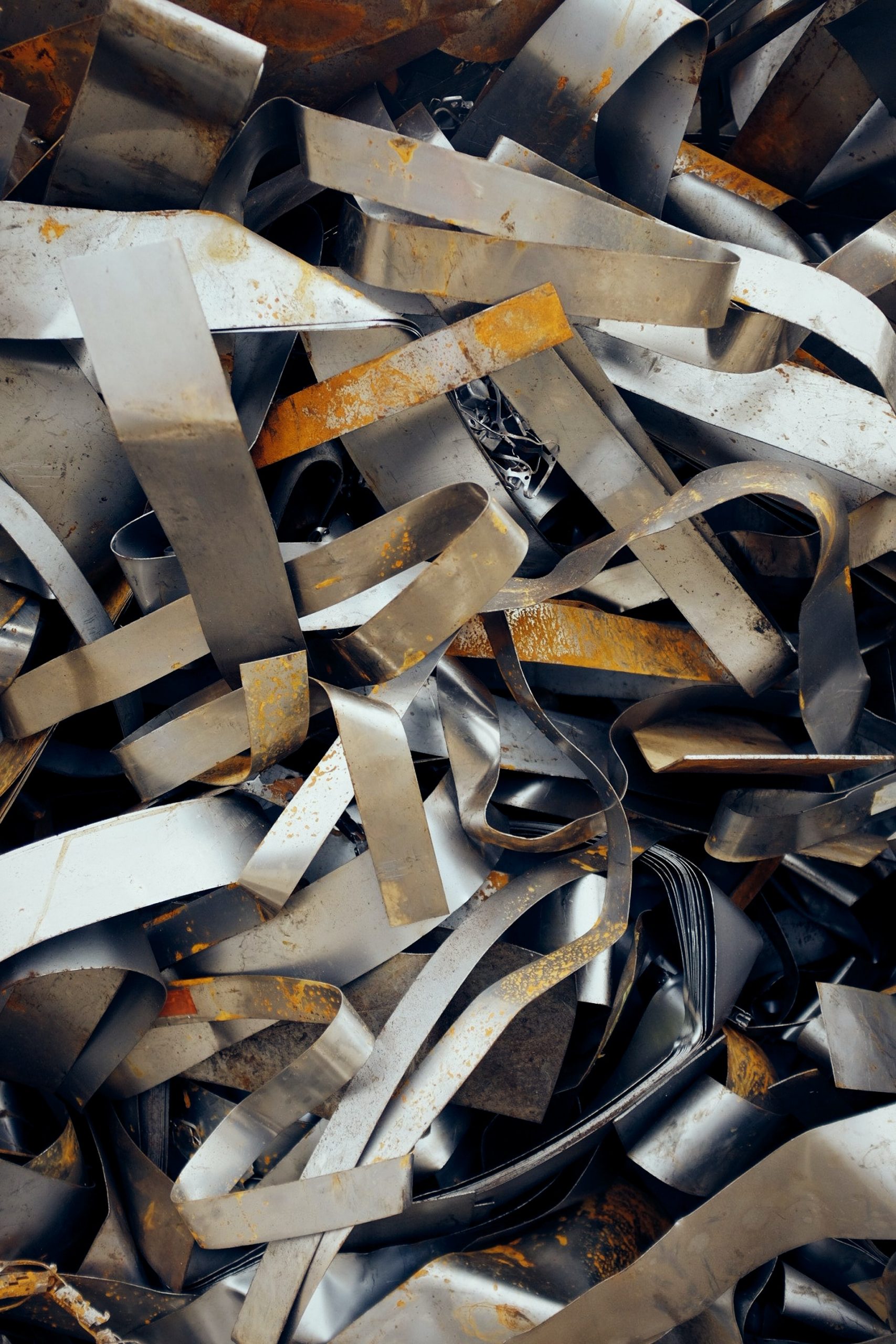
Benelux scrap exporters bemoan weak inflow, buyer pressure
Benelux scrap exporters are seen struggling to source material amid weak material flow in the EU.
Exporters’ dock prices were mostly at €295-310/tonne ($292-307) delivered on Monday, unchanged from one week prior. Activity was, however, quite limited on Monday as some countries in the EU were on holiday.
Due to flow being extremely weak, some exporters have been forced to increase prices to secure material to cover previous sales.
One Benelux supplier tells Kallanish: “We are trying to source HMS 1&2 80:20 at €305/t, although this level does not allow a profit for us. Inflow is still very poor. Two of my German suppliers said this level is not acceptable and they have already closed the year.”
Another exporter adds: “As we are approaching the end of the year, our suppliers, who had really profitable first-half-year financials, do not want to bear a loss and … want to sell the material in their inventories at a good price.”
Benelux exporters seem to be squeezed between high-priced material and buyers’ pressure on prices.
Turkish demand for scrap continues to remain lacklustre as mills do not find current prices workable amid decreasing steel prices and non-existent steel demand. Although a US-origin deal was concluded at $363.5/t cfr Turkey for HMS 1&2 85:15 last week, most mills will not pay this level, instead preferring to either buy cheaper billet or halt production. On the other hand, expectations for further hikes in energy prices in November are preventing them from buying scrap.
A Turkish mill says: “In February 2020, when iron ore was at today’s levels, scrap was at $260/t cfr. Due to costly scrap and energy, Turkey has completely lost its competitiveness in the global arena as all prices except for scrap and energy are falling.”
Most Turkish mills think scrap should fall at least to the low $300s.
In India, offers for containerised shredded stand at around $435-438/t cfr Nhava Sheva, unchanged from last week. However, activity was almost zero last week due to the Diwali holiday. Indian buyers are expected to bid at lower levels this week. Sentiment has now turned bearish due to the arrival of previous bulk purchases, which have increased the availability of material in India.
Burcak Alpman Turkey

Tata Steel UK says has started low-carbon steel sales
Tata Steel, the UK’s largest steel producer, has begun sales of certified low-CO2 steel to customers, the company said Oct. 31.
The lower CO2 certified steel, named “Optemis Carbon Lite,” is based on CO2 savings achieved by Tata Steel in the UK and is verified by independent assurance experts DNV, a company spokesperson said in an email.
Optemis Carbon Lite is being offered as a result of “growing demand from consumer-facing industries such as construction, automotive, packaging, and white goods makers,” according to a Tata Steel UK statement.
The UK launch follows the launch in July of Zeremis Carbon Lite by Tata Steel Netherlands. Zeremis Carbon Lite has an allocated carbon footprint reduction of up to 100% and is also aimed mainly at consumer-facing industries.
Optemis Carbon Lite’s customers have not yet been named. However, feedback from customers was described by the spokesperson as “very positive.”
“This is a flexible certificated scheme (using a mass balanced approach) allowing customers to specify the CO2 reduction they want,” the spokesperson said.
The premium charged for the new steel brand was described as a “commercially sensitive” matter.
Tata Steel UK aims to reduce all CO2 emissions by 30% by 2030 and be a CO2 neutral steelmaker by 2045 – in support of the UK’s ambition to be net-zero by 2050.
‘Speeding up our decarbonisation’
Tata Steel UK recently said it was to formally adopt science-based targets with respect to its program of emission reductions and carbon neutral steelmaking aspirations. The company has been working on a number of projects to reduce CO2 emissions which can now be passed on to customers in the form of certificates allowing them to make Scope 3 emissions savings.
The certificate-based insetting scheme, verified by external third party assurance organization DNV, is a flexible offering allowing customers to choose the CO2 intensity reduction they need, the company said.
Tata Steel’s chief commercial officer, Anil Jhanji, stated that production of the low-carbon steel is possible due to “investments we have made which have had a material impact on lowering our CO2 emissions.”
“Revenues generated from the sale of Optemis Carbon Lite certificates will be used to fund additional projects generating further CO2 savings,” Jhanji said. “These projects would then be verified by DNV, speeding up our decarbonisation. The savings will also help customers achieve their CO2 targets and flow down supply chains.”
Tata Steel UK also announced it is set to commit its integrated Port Talbot site in South Wales to become accredited to ResponsibleSteel certification, the first international standard to set out certifiable requirements for responsible processing and production of steel.
Projects including upgrades to the Port Talbot power plant, installing electric ovens, switching to renewable electricity and increasing steel scrap usage have the potential to reduce CO2 emissions by tens of thousands of tons a year, according to Tata.
Tata Steel UK is also working closely with other industries in the South Wales Industrial Cluster – of which Tata Steel is a founding member – to explore how they can support each other in the decarbonization of the region. The company is collaborating with the University of South Wales on biological fermentation to generate acetates, a high value chemical, from waste carbon and working with Project MESH, led by Swansea University, on thermochemical storage of heat from steelmaking operations, it said.
New ResponsibleSteel certifications
Two more major steelmaking sites have gained ResponsibleSteel certification, the not-for-profit standard and certification organization said Oct. 31. The Pohang and Gwangyang Steelworks in South Korea operated by Posco together with the Jamshedpur site in India operated by Tata Steel are the world’s largest steel sites so far to achieve this certification, the not-for-profit standard and certification organization said.
ResponsibleSteel now has around 13% of the world’s steel industry by volume in its membership, with certified sites on five continents covering the production of over 100 million mt of steel, the organization said in a statement.
“With Asia home to 72% of the world’s steel production, the achievement of site certification by these three substantial steel plants takes ResponsibleSteel into a new phase, one of global roll out,” said Annie Heaton, CEO of ResponsibleSteel, speaking at a Memphis forum on responsibly-produced steel.
The new additions to the ResponsibleSteel Standard mean that “103.5 million mt of steel and the working lives of 157,400 people are managed by sites that are now independently audited every 18 months,” Heaton said.
“Globally, the steel industry is at a critical juncture and the larger impact of how we produce and consume steel needs to be addressed urgently,” T. V. Narendran, CEO and managing director, Tata Steel, said.
Tata Steel, which started producing steel at Jamshedpur, India, in 1912, has now received ResponsibleSteel Certification for three of its facilities and will work towards achieving this recognition for all its production sites, he said.
— Diana Kinch

Marcegaglia increases stainless tube prices on high costs
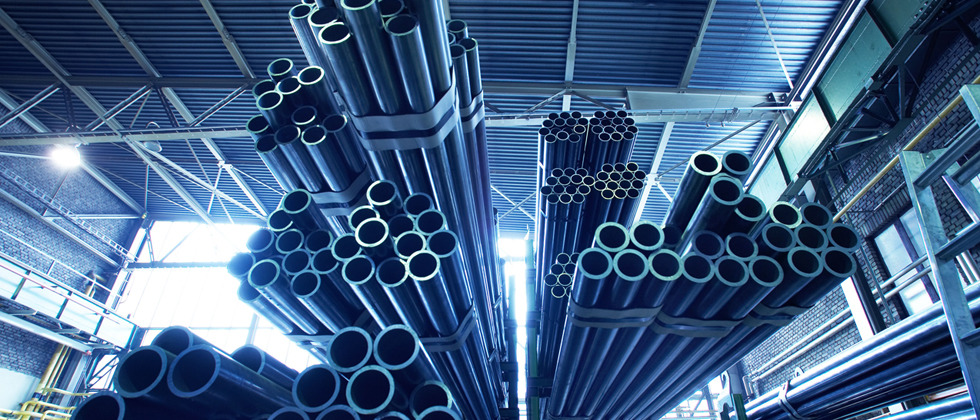
Italian re-roller Marcegaglia is updating its stainless steel welded tube price list, in line with hiking processing costs and increasing prices of coil, Kallanish learns from the company.
The new price list will be effective this week and will involve stainless tube across the entire product range, including decoration and laser. Prices will increase by some €200-300/tonne ($198-297) depending on product thickness and dimension.
Prices of European hot and cold rolled stainless steel coil are increasing due to skyrocketing production costs in Europe. Re-rollers are curbing production to balance demand and supply. Demand for coil derivatives in Italy is also heavily reduced due to the economic crisis.
This week in Italy and France, most re-rollers and mills are implementing production stoppages to coincide with the 1 November public holiday and 31 October bridge holiday. Most players started the production stoppages on Friday and will resume later this week, Kallanish notes.
Marcegaglia is acquiring Outokumpu’s Long Products division for €228 million. The transaction, which represents Marcegaglia’s first foray into steelmaking, should be completed by the end of the year (see Kallanish passim).
Natalia Capra France

EU coil mills cling on to €700
Tension caused by diverting views on coil prices between mills and buyers is persisting in the northwest European coil market. It is spawning some unusual north-south relationships and creating the idea of making slab an item of trade within the EU.
Mills are standing firm on clinging onto the threshold of €700/tonne ($696) for hot rolled coil offers, because it approximately defines the limit of breaking even on high production costs. “It is like on the stock market where brokers try to keep up a certain figure x,” the manager of a processor company finds.
And, “as soon as one gives in, the others will need to follow,” a service centre chief executive says, describing the atmosphere of tension. Speaking to Kallanish at the Euroblech trade fair in Hanover last week, he offered a theory for the particularly low-priced deals between Italian customers and northwest EU mills. The prevailing record-high energy prices might be particularly harmful to the cost structure of the typical Italian re-roller, meaning customers there get more competitive coil offers from north of the Alps.
Meanwhile, from the northern perspective, “mills can sell HRC to Italy for €700/t delivered, thus staying true to their nominal limit”, the manager says. This would net back to an ex-works price of some €650/t. That figure, however, is at best unofficial for domestic northern customers. Such offers are then labelled as “excess material” which does not differ from standard prime material. “It shows that mills are trying to use stories to justify the offer,” one observer quips.
Officially, one northern mill concedes €680/t, but will not admit values could go lower. “Below that, it would make more sense if we sold slab, rather than rolling it,” a mill source says. This could create an alternative market, now that slab imports from the traditionally preferred and competitive Russian/Ukrainian sources have become restricted.
Christian Koehl Germany
European mills maintain some long-term prices for 2023
Players on the northwest European coil market have no hurry proceeding with talks for long-term contracts for 2023, given the prevailing insecurity and unusual lull in business for this time of the year.
Numerous political and economic factors are depressing business and spot market activity, and make it even more difficult to establish a formula for long-term pricing. The reference to prior contracts is virtually grotesque in view of the record leaps spot prices have seen in 2022 so far.
Still, one mill indicates it will try to continue the prices agreed in mid-year. “For existing H2 2022 contracts for automotive, we will aim for a rollover as a bare minimum as again we need to recover inflationary cost,” one manager tells Kallanish. Spot prices for hot rolled coil sunk below the mark of €900/tonne ($895) in July, but held above €800 still for some weeks. This level would have to compete in negotiations with current spot prices claimed by mills to be still at €700, but seen dipping to €650 by buyers.
A comparison will be even more difficult with this time last year, when the Ukraine war was largely unanticipated. According to the mill manager, the prices struck for 2022 HRC contracts had their low end at €1,000. That sounds credible, as spot prices at end-2021 had just undercut that mark. Moreover, contract prices are typically higher than the spot market to ensure long-term supply security.
While current spot prices are €300-350 lower year-on-year, the gap for contracts might be less pronounced. “I believe we will sign at €200-250 below last year,” the manager of a processor company opines.
On contract lengths, the mill manager says that “we are contemplating shorter-term agreements but also happy to discuss annual contracts with OEMs, where we will aim for an increase to recover some of the additional cost we incurred.”
Christian Koehl Germany

Kaltenbach.Solutions industry solution now available in 3 languages
Kaltenbach.Solutions’ digital solutions for the steel processing industry and for machine manufacturers
are now also available in English and Spanish. By the end of the year, the languages Dutch and French
will be added. This is in response to increased demand from companies around the world that use both
Kaltenbach.Solutions hardware and software to make a wide range of work processes around machines
and plants transparent. With the help of digitization, sustainable goals such as increased performance
in processing and energy savings can be achieved in the next step.
Kaltenbach.Solutions is working intensively on internationalizing its products for machine
manufacturers and steel processors. As of this week, the digital platform Steelsuite is available in
German, English and Spanish. A Dutch and a French version are already being planned and Eastern
European languages will follow.
In response to the interest shown by international companies in the best practices of
Kaltenbach.Solutions, two inspection tours were organized at in October for steel traders from the
Netherlands and Spain. First, Valentin Kaltenbach traveled with a group of Dutch steel traders to F.
Hackländer GmbH in northern Hesse who has belonged to Carl Spaeter since 1908. Kaufungen near
Kassel is one of 19 locations where digital management of all operating equipment was introduced at
in 2021. Plant manager Thomas Schröder showed how the digital solution from Kaltenbach.Solutions
is used in day-to-day operations.
The following day, a delegation of managing directors from Spanish steel traders visited the Carl
Spaeter Group site in Hamburg. On site, authorized signatory Reyk Hagelberg, department manager
Stefan Thiel and warehouse manager Holger Behnke gave an insight into their digitalization project.
By measuring data-based information on the machines in the pre-processing department and the
subsequent display of current processes in clear graphics, transparency is also created here as the
basis for a sustainable increase in performance.

(Spaeter), Roberto González Portilla and Roberto Gonzalez (GrupeTirso) and Stefan Thiel (Spaeter)
About us
KALTENBACH.SOLUTIONS GmbH strives for long-term cooperation with both the processing
industry and machine manufacturers and has set itself the goal of becoming a preferred partner.
As a full-service provider with decades of experience in the steel industry, it develops innovative
web- and AI-based industry solutions to improve performance in operations. Thanks to its deep
expertise, KALTENBACH.SOLUTIONS has succeeded in linking the world of machinery and
equipment with the digital world. This unique link guarantees measurable success for customers
worldwide and creates sustainable added value.
Press contact
Nicola Chlench
T +800 454 0 2345
marketing@kaltenbach-solutions.com
www.kaltenbach-solutions.com

Revista InfoAcero Octubre 2022
En el siguiente enlace pueden acceder a la edición de Octubre de nuestra revista: INFOACERO
Destacamos a continuación algunos de sus contenidos:
- Opinión – Dña. Meritxell Serrano – Junta Directiva UAHE.
- Evolución del Índice de Precios de Productos Siderúrgicos – UAHE
- Sector Metal: Informe de Coyuntura- Confemetal
- Información Asociativa: Jornada UAHE, Madrid, 24 de Noviembre, Formación- Curso Técnicas de Venta (Aula Virtual).
- Siderurgia: Previsión sectores consumidores de acero- Eurofer-Informe 4º trimestre

Metinvest continues production, shipments despite war in Ukraine
Metinvest’s enterprises in Zaporizhzhia, Kamianske, Pokrovsk and Kryvyi Rih continue to produce and ship products to Ukrainian and foreign customers at different capacity utilisation levels, Kallanish notes.
The Pokrovske Coal unit, Unisteel, the Ingulets, Northern and Central GOKs, Kametsteel and Zaporizhstal all continue to work at different utilisation levels, based on safety, logistical and economic factors, Metinvest says.
However, output at Avdiivka has been halted because of the hostilities. Due to the occupation of Mariupol by Russia, the group cannot continue production at its entities there – Azovstal, Ilyich Steelworks, Mariupol Machining and Repair Plant, and the Mariupol branch of Metinvest-Promservice.
“Control over them [Mariupol units] and production can be restored only if the occupation ends and the city is returned to the Ukrainian government,” Metinvest says. “In addition, a detailed review of the technical condition of the Group’s assets in Mariupol and appropriate repair work will be necessary. Labour relations with employees of these enterprises are regulated and they have been offered employment options at other Group enterprises, particularly in Zaporizhzhia, Kryvyi Rih, Kamianske and Pokrovsk.”
According to the enterprise, the fight against theft by Russia, which is trying to ship 234,000 tonnes of Metinvest’s steel from Mariupol, is ongoing. “The Group has been making every effort to end the piracy and bring those responsible and their accomplices to justice,” it adds.
At the same time, the warehouses and distribution centres of Metinvest in Ukraine and other European countries still have steel products made by the group’s enterprises in Mariupol before the invasion began on 24 February. These products, with appropriate labelling and documentation, are available for sale, Metinvest points out.
Earlier, Metinvest chief executive Yuri Ryzhenkov said the firm is operating at 30-50% of its pre-war capacity (see Kallanish passim). The company also filed claims at the European Court of Human Rights (ECHR) against Russia for damages caused by Russia to its property and possessions in Ukraine.
Svetoslav Abrossimov Bulgaria

Polish competition authority raises AMP-Moris joint venture objections
Poland’s competition authority, UOKiK, has raised objections to ArcelorMittal Poland (AMP)’s planned joint venture with rail welder and steel trader Moris.
After carrying out a detailed study of and collecting data from participants in the rail market, UOKiK found that the JV could lead to a significant reduction in competition in the domestic market for welded rail sales to end users. The new entity would also be the only supplier of welded rail in Poland, which could lead to increased prices for the product.
“The participants of the concentration are each other’s only significant competitors from the perspective of the end buyer of the rails. Our analysis shows the establishment of a joint venture may eliminate competitive pressure and, with high probability, result in an increase in prices for end users. The concentration may also limit the possibility of new suppliers entering the market,” UOKiK president Tomasz Chrostny says in a note seen by Kallanish.
The objections are not binding on UOKiK’s final decision. AMP and Moris have 14 days from 26 October to respond.
Adam Smith Poland

Steel buyers welcome green premium, ‘value’ critical: panellists
Steel buyers are prepared to pay a premium to secure low-carbon steel. However, how much they are willing to pay depends on how closely aligned the whole value chain is and on society’s recognition of value addition. So said steel users session panellists at the Hydrogen Iron & Steel Making Forum in Stockholm earlier this month.
The premium buyers are prepared to pay “depends on where we are”, Alfa Laval head of research & development Carina Resare said at the event monitored by Kallanish. “If you look really long term, then we think fossil-free steel will be the new standard. And the pricing will be more like steel is priced today … But if we then look now in the beginning, the pricing of fossil-free steel matters differently to our customers – the first movers will for sure be prepared to pay a larger premium because they see the value or the benefits and they want to boost their sustainability journey.”
Since Swedish industrial equipment supplier Alfa Laval and SSAB partnered to create the first heat exchanger using fossil-free steel, “we have had a great interest from our customers. And I think this is really a strong message from the market”, Resare added.
Ørsted head of commodities Fredric Åberg said “value” must be added to the product as well as price. “We have seen steel price increases of 70% during this year [2022] with no added value. It’s not just about the price, it’s about the value of the product. We need the government to start asking where do the components come from, how are the different products being made, and it’s not just offshore windfarms or renewable energy, but how are cars being made, how are construction, houses, bridges being made,” he commented.
Shape Corporation product engineering director Stephane Anquetil meanwhile pointed out that the premium will ultimately be paid by the final consumer. “How much all of us are willing to pay is also a question,” he observed. The body in white sector is a “very challenging environment”, he continued. Many OEMs are moving into electric vehicles and thus focusing more on software and less on body and structural parts.
“You could think that the impact of a 10 or 20% steel [price increase] would be minimum for the global cost of the car but, from what we can see recently in the market, the vehicles are getting heavier and heavier. And the body in white is also getting heavier and heavier,” Anquetil continued. Increased metal consumption, along with the need to source other materials, mean the sector is keen to secure competitive prices. A 30% premium would therefore be difficult, he added, but possible if the entire value chain’s goals are aligned.
Åberg concluded by saying each wind farm uses 300,000-500,000 tonnes of steel in the foundations and towers, meaning it has a substantial carbon footprint. Ørsted “can be part of the solution” by supplying green energy to the steelmakers that supply it, and recycling the steel once the windfarms are decommissioned.
Adam Smith Poland