

HYBRIT starts pilot hydrogen cavern storage in Sweden
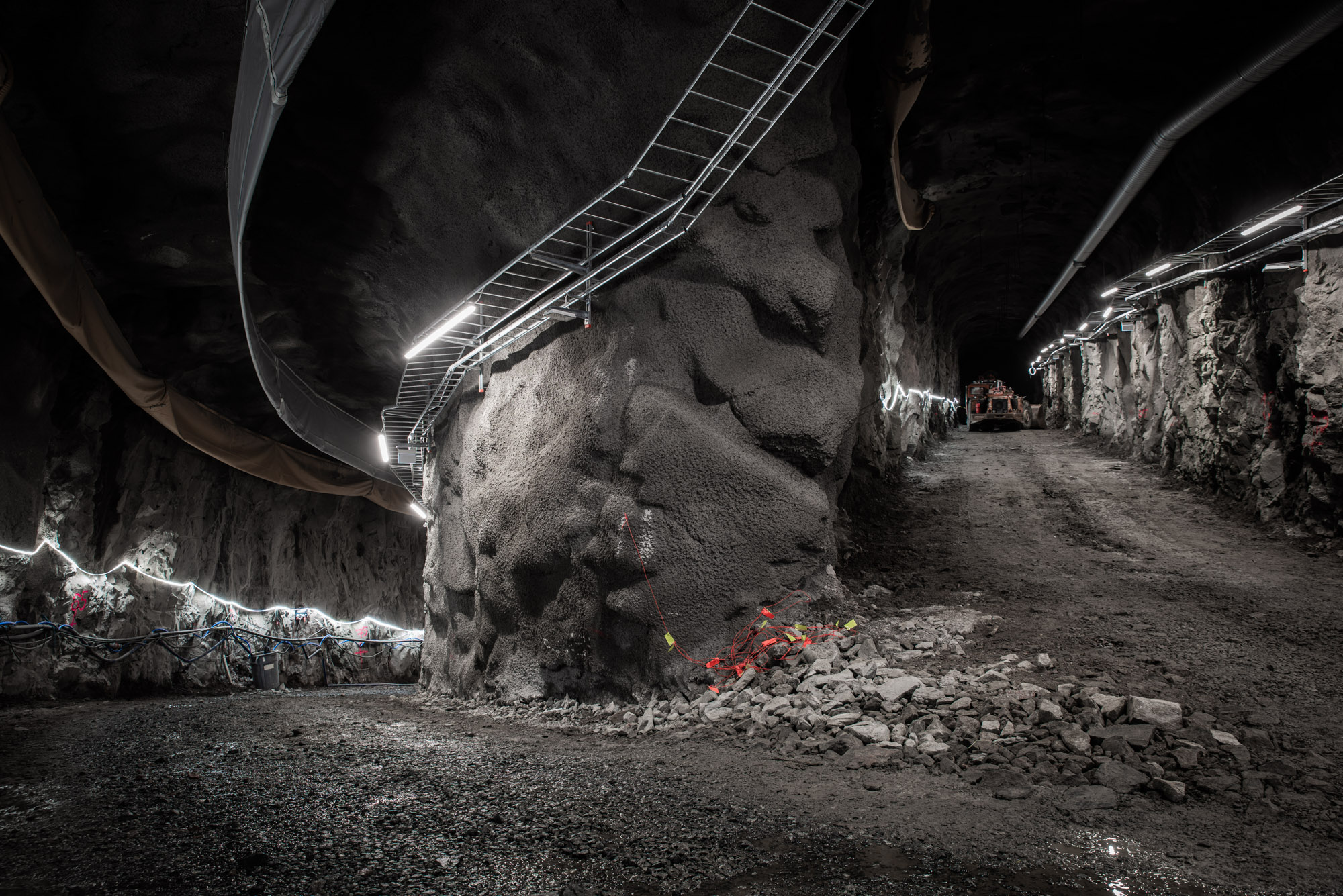
HYBRIT partners SSAB, LKAB and Vattenfall confirmed on Thursday the pilot green hydrogen storage facility to serve the fossil-free steel project is now fully operational, Kallanish reports.
The 100-cubic-metre facility at Svartöberget in Luleå, Sweden, entered a commissioning phase in June. Upon successful completion of tests, it reached the maximum operating pressure of 250 bar meeting all safety requirements.
It will now run a two-year test period to provide insight for a full-scale facility. The HYBRIT project will demand pressurised storage capacity for 100,000-200,000 cubic metres of hydrogen gas. At this scale, the facility would store up to 100 gigawatt-hour of hydrogen, enough to power a full-size sponge iron factory for about three to four days.
According to the Swedish companies, this is the first time in the world that lined rock cavern (LRC) technology is used for hydrogen storage, as opposed to typical natural gas.
“The fact that this technology is now working is great news, and is an important milestone in the development of a fossil-free value chain for ore-based iron and steel production,” comments Mikael Nordlander, Vattenfall director industry decarbonisation.
“The use of large-scale hydrogen storage means that the industry will have a more robust and plannable supply of hydrogen from fossil-free electricity, even when the electricity system becomes more dependent on the weather,” he adds.
Gabriela Farhangi UK

Market deadlock to last until year-end: Italian distribution
The Italian distribution sector is forecasting slow sales throughout the value chain to continue until the end of the year for long products and coil derivatives. Some restocking may happen towards December to accommodate year-end financials.
Companies tell Kallanish the second and third quarters have been weak in terms of sales volumes, with apparent demand at virtually zero. While real demand is still there, the strong September price increases announced by all producers on finished long and flat products have further slowed sales. Some sources believe price falls may trigger a demand resumption.
“We are going back to a normal level of demand, but we are all used to the huge sales volumes of last year caused by the post-pandemic rebound and producers do not want to lower their volumes and price expectations,” a distributor comments. Due to the market stagnation, some companies are beginning to delay payments as financial struggles are again resurfacing in the market.
Significant overcapacity is being reported for coil derivatives, such as welded tubes and sheets. Welded tube discounts are hovering at 20 points and sheet prices are also falling significantly. Some sellers remain aggressive on tube and sheet prices, with the aim of recovering volumes.
Increases for merchant bar did not stick and prices flattened at €670-690/t ($670-690) ex-works. Some sales, however, are happening for sections, for which steelmakers are quoting at €1,300/t ex-works for the first category including size extras. They are being challenged by imported material sold at €1,230-1,250/t delivered in Italy. Following the latest increases, many firms are importing cheaper rebar, wire rod and sections, sources suggest.
Natalia Capra France

Bureaucracy to impede green transition in Germany: conference
The transition to low-emission steelmaking will not only be costly, but will also mean additional struggles with slow-moving authorities to get permissions and approvals, said speakers at the ecoMetals Day in Düsseldorf this week.
In a presentation attended by Kallanish, lawyer Michael Neupert addressed typical hurdles, for example, when it comes to plan pipelines for hydrogen. “In one of the federal states, they had all of one person in charge for the permission of pipelines. I got hold of him regularly after 8pm – not a conventional time for public servants to works,” he said. “And when that one person leaves, who will have the knowledge to fill in?”
The shortage of personnel was also bemoaned by the head of Salzgitter’s SALCOS project, Martin Zappe, He defended the people working at the offices as truly committed, but they are overworked. “When we come knocking with 35 projects items that need to be cleared, their department needs to hire additional personnel,” Zappe said.
Nepert recommended to be early with applications especially when inland waters are under consideration: “That is a typical bottleneck you need to address at an early stage,” he warned. “Water protection is not trivial; they are very strict with it, especially when water shortage becomes an issue, as has been the case with the recent draught waves.”
Even minor measures to improve the green footprint, like insulation to preserve energy, face delays – a problem addressed by Guther Kegel, president of ZVEI, the German Electro and Digital Industry Association. “Even a plain application for insulating your building façade takes seven months,” he said in his keynote speech. “Now that energy preservation has become a broader topic, such applications may wait four times that. We absolutely must cut down on regulation that goes too far.”
Christian Koehl Germany

UK steel output to hit ‘record low’ this year; 2023 prospects uncertain: UK Steel Forum

The UK steel industry is set to produce at a record low this year, its lowest since World War II, and it’s hard to say if 2023 will see an upturn, an official with the UK-based International Steel Statistics Bureau said Sept. 22.
Output is set to fall to below 7 million mt of crude steel in 2022, from 7.2 million mt in 2021 and 7 million mt in 2020 when it suffered a COVID-19-related markets slump, said Steve Andrews, the bureau’s commercial manager, at the first UK Steel Forum. The forum was held in London and organized by a group of six steel industry associations including producers’ group UK Steel, UK-based International Steel Trade Association ISTA and European steel distributors’ association EUROMETAL.
This year’s fall in output occurs in a context of falling steel production globally, Andrews noted. The World Steel Association announced Sept. 22 that global crude steel production was down 5.1% on the year in the January-August period, to 1.25 billion mt: the only region to show an increase in output during the period was the Middle East, which has suffered less with energy price rises than other regions in recent months.
“UK steel production has been falling for decades,” Andrews said at the event, convened by the six associations with a view to enhancing mutual cooperation to the benefit of the overall industry. “In 2000 UK production was 15 million mt, and now it’s half that level.”
The sector lost some capacity around six years ago on Teesside, with the closure of the Sahaviriya Steel Industries UK (SSI) steel slab plant, he said.

‘Subdued’ second half
In the UK, the second half of the year will be “subdued” in terms of market demand, particularly in the automotive sector, while “rampant” inflation — currently hovering around 10% on an annual basis — will have a knock-on effect on consumer confidence and spending, Andrews said.
Construction industry PMI indicators at below 50 are at their lowest level for “quite some time”, and a dampener on the market, the ISSB executive continued. On the brighter side, a recovery in the aerospace sector supports production of specialized products, while a higher oil price could support the tube and pipe market.
Steel import levels into the UK at 3.15 million mt in January-June this year were virtually stable on the year, though slightly less originated this year from the European Union, which supplied 58% of the total, and slightly more from the rest of the world, which supplied 42%, according to ISSB data.
Other factors seen impacting the health of the UK steel sector this year are the increasing energy costs which have more than offset the benefits of lower raw material costs, a large disparity between prices in Asia and Europe and higher interest rates threatening mortgage availability.
ISSB figures show that in 2020 it cost just over GBP400 ($450.20), including electricity and other costs, to produce a metric ton of long steel via an electric arc furnace in the UK, and in August 2022 it cost around GBP790/mt. Now, even with the energy price cap introduced Sept. 21 by the UK government for the October 2022-March 2023 period it will cost around GBP970/mt, which is currently above average market prices for long products in Northern Europe.
Platts assessed domestic EXW NW Europe rebar at Eur960/mt ($944/mt orGBP834/mt) Sept. 21. Platts is part of S&P Global Commodity Insights.
UK Steel Director General Gareth Stace said that what is important to UK steel producers is “the relative price of energy compared to our competitors rather than the absolute price.”

With the new energy price cap introduced by the government, UK steelmakers will now be paying less for their energy than German and French steelmakers although “we expect the German and French governments to take further action,” Stace said. With the price cap, UK producers will be paying GBP199/Mwh, compared to GBP278/Mwh in Germany and GBP217/Mwh in France, Stace said.
Stace added that there are expectations that the UK steel sector will grow in future.
However, “investments will come only if the government creates a competitive business landscape, including competitive energy prices and business rates, and if the government is able to create a market for green steel, favoring green steel from the UK to go into infrastructure projects,” he said. “Energy is still five times higher than the last five-year average,” he said.
The UK’s crude steelmakers belong mainly to foreign-based groups: Tata Steel UK (a subsidiary of India’s major Tata industrial group); British Steel (acquired by China’s Jingye Group in 2020); Liberty Steel, owned by Sanjeev Gupta’s GFG Alliance; Spanish Celsa Steel, Finnish Outokumpu; and UK Ministry of Defence-owned Sheffield Forgemasters. There are also numerous rolling and distribution facilities.
— Diana Kinch


Europe could soon ban semi-finished steel imports from Russia – sources
The European Commission is finally considering a direct ban on imports of semi-finished steel products from Russia, in response to its unprovoked invasion of Ukraine, several sources told Fastmarkets this week.
The move would follow on from the ban on finished steel imports from Russia adopted by the European authorities in March this year.
“There is discussion about the new package of sanctions. It’s highly possible that the way for Russian semi-finished products to Europe will be closed,” Yuriy Ryzhenkov, the chief executive officer of Ukraine’s Metinvest, told local media organizations this week.
“We had expected semi-finished steel imports to be banned in one of the first packages of sanctions [to be applied against Russia], because this counts as direct financing of the aggressor’s economy and secondly as anti-competitive actions against those who cannot buy Russian raw materials,” he said.
The move would have a significant impact on the slab market because Russia is of the main suppliers to Europe.
Russia’s Novolipetsk Iron & Steel Works (NLMK) sidestepped existing sanctions by exporting slab to its own subsidiaries in Europe and beyond.
In 2021, Russia supplied 3.8 million tonnes of slab to Europe, according to International Steel Statistical Bureau, while steel billet shipments to the region totaled 515,969 tonnes.
And NLMK remains one of the main suppliers of slab to Europe because the company is still not subject to any personal sanctions against any of its directors.
In 2021 alone, NLMK supplied 1.17 million tonnes of slab to NLMK Belgium Holdings (NBH), which includes steel plate producers NLMK Clabecq (Belguim),NLMK Verona (Italy) and flat steel producers NLMK La Louviere (Belgium) and NLMK Strasbourg (France), according to the latest company report.
NLMK also shipped a combined total of 1.96 million tonnes of slab to NLMK Dansteel (Denmark) and the company’s US assets in 2021, with no clear breakdown of the total given.
In the first half of 2022 the company supplied 1.89 million tonnes of slab to its group companies outside Russia.
“There is too much Russian slab arriving to Europe for NLMK assets,” a competitor re-roller said, adding that the import ban was possible.
A source previously told Fastmarkets that while NLMK was mainly supplying slab to its own assets in Europe, it was also making deliveries to some Italian steel plate producers at competitive prices.
The source said NLMK had been preparing for a potential import ban on semi-finished steel since the spring and that his company was looking for alternative suppliers along with other European re-rollers.
A European distributor told Fastmarkets he believed the ban on semi-finished steel imports from Russia will eventually be implemented and this will push up prices for steel plate in Europe, or at the very least keep them stable.
The situation in the slab market is crucial for European platemakers, especially in the South of Europe as they are main importers of the Russian product.
Published by: Vlada Novokreshchenova

Russian mills chase slab and HRC orders in the Black Sea market
Russian flat steel exporters were looking for orders for their slab and hot-rolled coils, with Turkey the target market, sources said.
The lowest HRC offers from a large Russian supplier, sanctioned in the EU market, were heard at $610-$620/mt CFR Turkey, a mill source reported. He added that Asian offers were between $640-$660/mt CFR Turkey.
A Turkish importer reported another Russian mill to be asking $630/mt CFR for its HRC. This was quite an attractive price compared with the domestic HRC prices ranging $660-$690/mt ex-works. Despite the seemingly attractive price level for Russian HRC, “the risk is increasing for Russian material, so I don’t know if anyone is interested. The demand is still so slow,” the importer added.
Russian slab prices were also much lower than the competition. A slab sale, for November shipment, was reported at $510/mt CFR Izmir, for a large cargo, possibly 30,000 mt, a trader said. An offer from a different supplier was also heard at $500/mt CIF Aliaga, for December shipment.
According to a European buyer, the $500-$510/mt CFR Turkey range for Russian slab was reasonable for the Turkish market. He also cited slab prices from India at $600/mt CIF Europe and from Brazil at $620/mt CIF Europe.
A market observer said that offers from Brazil and India were between $580-$600/mt CFR Turkey. A Turkish buyer said that Brazilian offers should be higher than $600/mt CFR Turkey.
Some Russian exports were also seen in Asia, with a few lots sold in the spot market at $600-$610/mt CFR Thailand, the market observer said. Saudi and Iranian slab prices were at $540-$550/mt CFR Mediterranean, he added.
An African slab importer said that buying from Russia became complicated because of financing issues. He put recent Russian slab price indications at $430-$440/mt FOB Black Sea. “Based on HRC prices today, slab should be $420/mt FOB Black Sea,” the importer said.
— Wojtek Laskowski

Big investments could be shelved due to uncertainty from partial Russian mobilization: consultancy
Consumers are likely to become more reluctant to make significant investment decisions as a short-term consequence of a partial mobilization announced in Russia Sept. 21 leading to reduced demand for metals, Marcel Genet, managing director of Paris-based consultancy Laplace Conseil, told S&P Global Commodity Insights.
“It is very early to know, the announcement only came out today, but as one of the consequences, uncertainty will grow, which is usually bad for the economy in general and for the steel industry in particular,” said Genet.
“People are digesting information, and steel end-users may decide to wait for better times before proceeding with any big investments and projects, which will translate to reduced demand and production,” he said.
Russian industry analysts believe the mobilization, if it remains partial and to the outlined criteria, should have a minimal effect on the country’s mining and metals industry.
“Mobilization concerns people with special military training. I don’t think that men with appropriate qualifications are concentrated in mining and metallurgical enterprises,” said an industry analyst, who wished to be unnamed.
“It is very unlikely that the partial mobilization will create a labor shortage, and I do not think it poses any risk for the work of metallurgical enterprises, and their production programs,” he said.
The share of working personnel, which directly assist production operations, is relatively small, said another expert. In his opinion, there are much more of those involved in all sorts of divisions that are non-critical for production — marketing, procurements and sales, tax and law specialists, etc — and it is unlikely that production will decrease due to a lack of workers.
So far, the mobilization will affect about 250,000-300,000 Russians, or 1% of the country’s total mobilization base, which is estimated at 25 million-27 million, said the surveyed analysts.
The number of people employed in the Russian mining and mineral development sector in 2020 was 1.6 million, according to Russian federal statistics service Rosstat.
“Let’s assume the percentage of those eligible for mobilization within the mining and mineral resource development industry is twice as high or 32,000 people (equivalent of 2% of the 1.6 million workforce),” said the third metals industry analyst.
If women comprise 30%, this leaves us with just over 22,000 men who can theoretically be recruited, and this is for the entire mineral resource sector, including not only metals, but also oil and gas, etc., according to the analyst’s assumptions.
The partial mobilization should not affect senior managers’ mobility in travelling abroad on business, and a potential loss in IT-competent labor will also be negligible, if any, the analysts reckon, saying that little will change in addition to the adjustments/cutbacks in travel routines and spending that have already been in place since the end of February.
The surveyed analysts expect Russian steel production to decline by a maximum of 10%-15%, and potentially even less, compared with the more negative forecast communicated in the spring. Russian steel is traded at discounts to world prices and is attractive to certain buyers, some said.
“In the past, the Russian steel industry has rarely operated at below 89% capacity. This year, the capacity utilization will certainly decline and I see it at 75%-77%, which is still relatively good by many countries’ standards,” said one of the analysts. He also said that this year will see Russian steel companies transition from being highly profitable to moderately profitable businesses preoccupied with dispatching and freighting optimizations and cost-cutting in their upstream operations, as most such homework in steel casting and rolling has been already completed.
Major steel and mining companies approached by S&P Global declined to comment on possible impacts on them and the industry from the Sept. 21 mobilization announcement.
— Ekaterina Bouckley

Vallourec signs 10-year agreement with Saudi Aramco for premium casing supply, services
French-headquartered seamless tube steelmaker Vallourec has signed a 10-year agreement with Saudi Aramco for the supply of premium oil country tubular good, or OCTG, solutions for its drilling operations, the company said late Sept. 20.
The agreement also includes the supply of premium casing and inventory management services, with the steelmaker manufacturing and delivering the order from its plant in Saudi Arabia, it said.
The agreement is on a call-off basis contract, placed every quarter with the first two on-call orders already received and delivery scheduled for early 2023, Vallourec said.
The agreement strengthens the existing relationship between the Valloreuc Group and Saudi Aramco and “paves the way for extended collaboration with clear opportunities to introduce our wide range of innovative solutions while enhancing our footprint in the Kingdom,” Vallourec Chairman and CEO Philippe Guillemot said.
Seamless tubes are produced mainly via blast furnace using iron ore as a key raw material.
Seaborne iron ore prices fell Sept. 20 as market participants adopted a wait-and-watch stance amid expectations that the US Federal Reserve will raise interest rates. The 62% Fe Iron Ore Index was at $96.65/dry mt CFR North China Sept. 20, down $1.05/dmt from Sept. 19, according to the Platts assessment from S&P Global Commodity Insights.
— Annalisa Villa
Govt’s energy price cap to improve competitiveness ‘for time being’: UK Steel
UK Steel, the trade association for the nation’s steel industry, welcomed the UK government’s Sept. 21 announcement of a six-month electricity price cap for industry as an aid to the sector’s international competitiveness, but warned policymakers need to remain “agile” to preserve the benefits in what is currently a softening market.
“UK Steel expects this will put UK steelmakers on par with steelmakers in France and Germany for the time being,” Frank Aaskov, the association’s energy policy manager, said in an interview with S&P Global Commodity Insights.
“The government must remain agile, so we don’t get left behind,” Aaskov said, noting that the German government recently slashed renewables tariffs for all users and introduced support programs for energy-intensive industries.
A longer-term energy market reform is still necessary to prevent a recurrence of the recent energy price-squeeze in this electricity-intensive sector, UK Steel said in a statement.
The government of new UK Prime Minister Liz Truss has announced it is capping industrial electricity prices at GBP211/MWh ($239.3/MWh) and gas prices at GBP75/MWh for six months.
The discounts will be applied to energy usage in Great Britain, initially between Oct. 1, 2022 and March 31, 2023, the Department for Business, Energy & Industrial Strategy said in a statement. A similar scheme will be established in Northern Ireland, providing a comparable level of support, it said. The scheme is not designed for those favored to profit from it, the BEIS statement said.
According to UK Steel, the price cap stands at four to five times the level of the historical average, but notes that the critical issue for the steel industry is competitive electricity and gas prices, in line with European and global competitors.
Cheaper energy prices also aid the sector’s decarbonization drive, it said.
The government will compensate suppliers for the reduction in wholesale gas and electricity unit prices that they are passing onto non-domestic customers. Wholesale costs in England, Scotland and Wales for this winter are currently expected to be around GBP600/MWh for electricity and GBP180/MWh for gas, it said.
The UK’s crude steelmakers are Tata Steel UK (a subsidiary of India’s Tata group); British Steel (acquired by China’s Jingye Group in 2020); Liberty Steel, owned by Sanjeev Gupta’s GFG Alliance; Spanish Celsa Steel, Finnish Outokumpu; and UK Ministry of Defence-owned Sheffield Forgemasters. Numerous rolling and distribution facilities will also qualify for the cheaper energy prices. The sector produces 7.2 million mt/year crude steel; equivalent to around 70% of the UK’s annual steel products requirement of some 10.5 million mt.
Key steelworks are located in areas of the UK included in the government’s “levelling up program,” aimed to improve employment and living standards outside the more prosperous south-east. The government has in recent times noted it considers the UK steel industry “strategic” and has introduced its own trade protection and import safeguard measures since the UK left the European Union.
While the main steelmakers are owned by international groups which also have assets in Europe, it is vital the UK steel sector competes with its European counterparts, UK Steel notes.
“Prior to today’s intervention, UK Steel analysis showed that UK steel producers faced significantly higher electricity prices than their European competitors, with the price disparity skyrocketing since energy prices increased,” the association stated.
The price cap announcement “today demonstrates that this new Government understands the sheer scale of the issue and the need to deliver a significant solution swiftly,” stated UK Steel’s director general Gareth Stace. “Setting a price cap for electricity at GBP211/MWh for six months gives foundation sectors, such as steel, the chance to get through the winter by giving us a competitive business landscape.”
However, “It is essential that Government is now ‘fleet of foot’ if the situation develops further to ensure that British business is competitive within Europe and across the World,” Stace added. “The Government must now move to rapidly reform the energy market to ensure longer-term competitive price beyond the current price cap.”
The UK steel industry’s electricity use is equivalent to 800,000 homes, and gas use is comparable to 400,000 homes, the association said.
Financing challenges remain
Douglas Grant, CEO at UK-based Manx Financial Group, described the government’s emergency intervention on energy costs as good news for UK business, showing it is taking seriously warnings from a variety of organizations. “We do however believe that more needs to be done,“ Grant said in a note. “Our research recently revealed that 22% of UK SMEs that needed external finance and/or capital over the last couple of years were unable to access it. More than a quarter have had to stop or pause an area of their business because of a lack of finance.”
“SMEs continue to struggle with accessing finance and that worryingly, this lack of availability is costing them and the UK economy in terms of growth at a time when it is needed the most,” the financial services group CEO said.
Platts assessed hot rolled steel coil ex-works Ruhr at Eur740/mt ($739.7/mt) ex-works Ruhr Sept. 20 amid minimal trading activity, virtually half of its March 18 peak price of Eur1,460/mt following Russia’s Feb. 24 invasion of Ukraine, according to S&P Global data.
— Diana Kinch

SSAB to help build US fossil-free commercial vehicles
Swedish-based group SSAB has partnered with US vehicle manufacturers McNeilus and Oshkosh to develop the first commercial vehicle made with fossil-free steel available in the domestic market, Kallanish reports.
According to the company’s announcement, SSAB will supply sustainably produced fossil-free steel to McNeilus and Oshkosh to allow these companies to develop a sustainable commercial vehicle product lineup.
“We are very happy to welcome Oshkosh Corporation and McNeilus into our partner group to be the first in the United States to prototype fossil-free steel in commercial and industrial vehicles,” comments SSAB ceo Martin Lindqvist.
Earlier last year, SSAB delivered the first steel products to be made of hydrogen-reduced iron. The company plans to develop its fossil-free operations to a commercial scale by 2026.
“Creating a more sustainable future is central to our strategic vision. As a leader and innovator in the industries we serve, Oshkosh Corporation and McNeilus are proud to partner with SSAB on this global initiative as a next step in delivering high-performance, more sustainable products to our customers,” adds Brad Nelson, McNeilus’ president and senior vice president of Oshkosh.
SSAB has recently endorsed decarbonisation strategies released pushed by the Mission Possible Partnership (MPP), which includes major steel industry leaders, during the organisation’s New York climate week meeting. The company joins alongside over 60 companies, including several major international steel producers including ArcelorMittal, Liberty Steel, Tata Steel, Thyssenkrupp, and Vale in support of these decarbonisation plans.
Zach Johnson USA