


Marcegaglia launches new price list
Italian re-roller Marcegaglia is launching a new price list effective this month, Kallanish learns from the company.
The new list for welded tubes will take into consideration current hot rolled coil values, but also energy costs. The discount applied will also consider the new cost structure related to energy rates, significantly increasing labour costs due to inflationary pressures, and prices for the materials used to produce tubular products.
The new price list will be published in the coming days and will become effective immediately. Updated discounts will be communicated at publication.
Last month, re-rollers in Italy noticed some demand improvement for welded tubes and other coil derivatives as distributors replenished their stocks before the August summer break.
Natalia Capra France

European scrap activity awakens surprisingly amid holidays
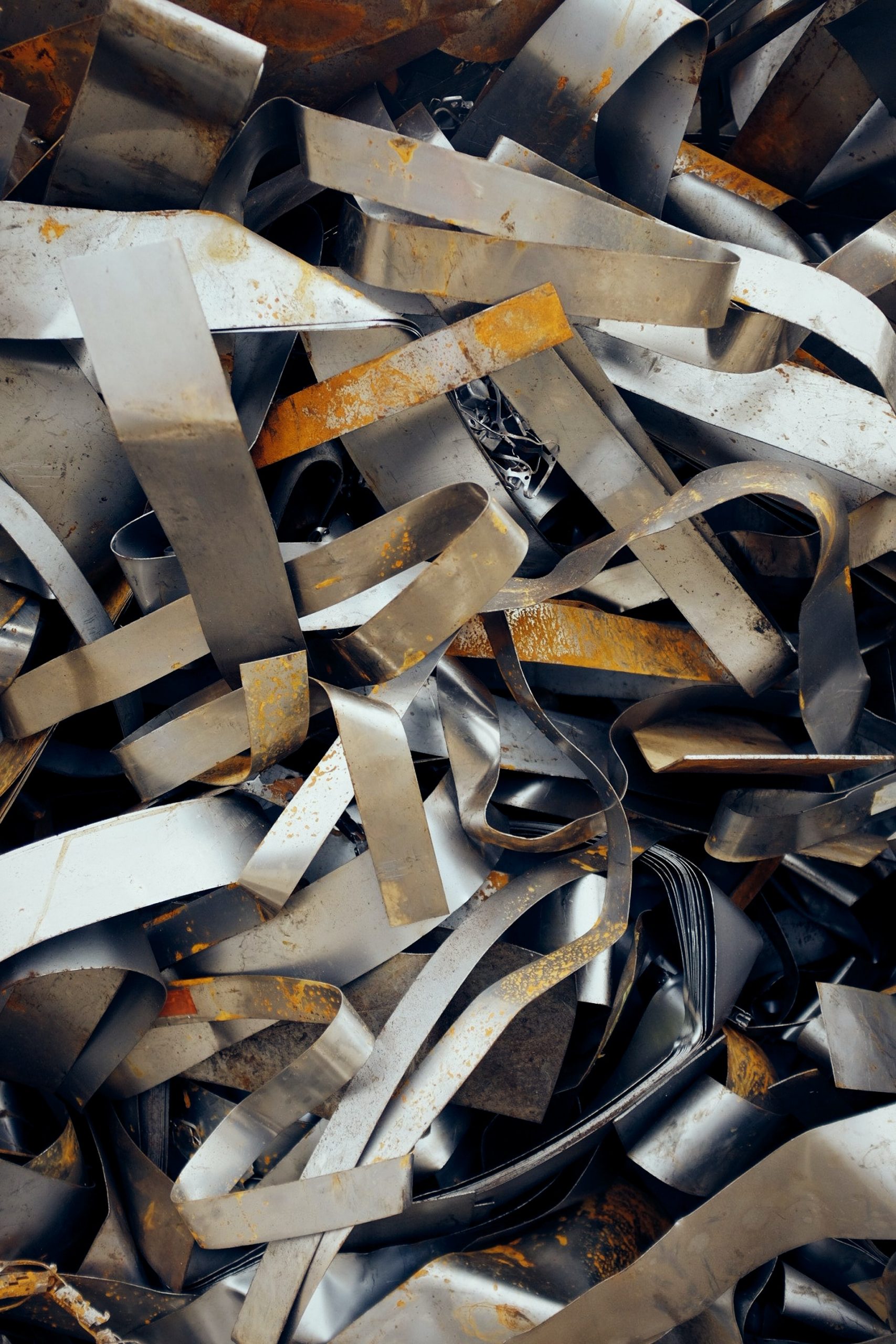
European scrap values seem to be on the verge of increasing this month in an unexpected turn of events that is seeing mills search for material despite the August holidays. This is mostly due to the low availability of new scrap grades, such as new arisings E8 and the high shredded automotive quality, market participants tell Kallanish.
Scrap merchants in Eastern European countries, Germany and Italy say they will not sell material unless they are paid some increases. They are supported by reduced collection of E8 from the automotive industry and the recent stoppages at re-rollers in southern and Eastern Europe to balance supply with demand. European sources expect the scrap market to become lively again in September.
Sales of some finished long products and coil derivatives proved to be better than expected in July but uncertainty is still looming.
Italian scrap merchants are asking for €20-30/t ($20.5-30.7/t) increases. This should bring the E8 mixed grade to the level of €380/t delivered in Italy. Germany and some Eastern European countries such as Poland are adopting a wait-and-see attitude but talking about similar hikes. In Austria, mills are looking for the high E8 grades but availability is said to be low.
By the end of this week, August prices are expected to become more definite in Europe.
Natalia Capra France

German mills sell off excess volumes, spot prices stable
European hot-rolled coil prices were stable Aug. 2, though cheaper material was available from some German mills.
Market sources continued to report Eur850/mt ex-works as the tradable level for the general Northern European market – though deals were reported as low as Eur780/mt ex-works on the day for excess volumes rejected by OEMs and redirected to the spot market.
These deals – reported at Eur780-800/mt ex-works Ruhr – were unanimously characterized as non-representative of workable price levels by distribution sources, only offered to a limited pool of customers.
The market was otherwise heard as quiet in Northern Europe with little transactional activity.
“The market is silent,” said a service-center source. “Demand from automotive is definitely recovering, so hopefully this allows prices to rise again. The big question remains – will mills and other industries have enough gas this year.”
Gas concerns are prevalent in the market related to ongoing geopolitical uncertainties, with speculation that production costs could be driven much higher if gas supplies are further restricted.
HRC in Northern Europe was assessed stable Aug. 2 at Eur850/mt ex-works Ruhr.
In the Southern market, HRC was also stable at Eur780/mt ex-works Italy.
The majority of sources saw the spot price level at Eur780/mt ex-works – with only one service center reporting higher at Eur780-800/mt ex-works Italy.
— Benjamin Steven, Maria Tanatar

Turkish deepsea import scrap prices rise as EU recyclers face difficulties
Turkish deepsea import ferrous scrap prices rose August 2, as collection issues restricted scrap supply, sources said.
S&P Global Commodity Insights assessed the Platts Turkish imports of premium heavy melting scrap 1/2 80:20 Aug. 2 at $352/mt CFR, up $4.50/mt from Aug. 1.
“We have very low inflow and massive problems getting scrap shipped by barge, so there is no possibility of exports for us,” an EU recycler said before citing a minimum workable value of $400/mt, due to low water levels affecting freight rates.
“Inflow is low at the moment and it looks like everyone is just waiting,” a second EU recycler said. A third source corroborated the collection issues Europe is currently facing.
According to a trader, scrap exporters are also unwilling to sell scrap at the moment, opting instead to hold on to their cargo and prop up market prices.
“I, for one, will not sell until mid-September,” stated the third EU recycler, “I think the big players can wait until the August vacation period is over.”
Platts then heard a reported firm bid for premium HMS 1/2 80:20 at $330/mt CFR, which was rejected by a seller.
As a result of the restricted supply, a source said “mills hate the prices they have to pay, but there is no European supply to choose from.”
On Aug. 2, multiple sources shared details of an unconfirmed deal booked for US-origin HMS 1/2 80:20 at $352/mt CFR.
Both parties that were mentioned by several unrelated sources later denied involvement in the trade.
— Abdi Salad

Bekaert forecasts challenging market conditions
Belgian wire specialist Bekaert forecasts a particularly volatile market for the reminder of the year due to macroeconomic and geopolitical uncertainty. The company vows to adapt to market condition changes and will insist on its “pricing discipline” to offset inflation, it says in its first half-year earnings report monitored by Kallanish.
Despite increasing volatility, cost inflation, supply chain disruption and Covid-19 lockdowns in China, Bekaert grew H1 revenue 24% year-on-year to €2.8 billion ($2.8 billion) thanks to high prices and strong demand in the first months of the year.
The company is now focusing on addressing the “ongoing deglobalisation trends, securing supply continuity … adjusting sourcing channels affected by logistic and other supply disruptions,” it observes.
Bekaert is investing in increasing its market share in low-carbon concrete reinforcement products and successfully participating in offshore energy tenders. It is strengthening its presence in the green hydrogen sector, and developing products and services for the energy transition.
H1 Ebitda stood at €381 million, a 5% y-o-y increase.
Natalia Capra France

CPL Industries ships Ecoke trial to Sidenor
CPL Industries has delivered to Sidenor the first commercial trial of Ecoke for the Spanish electric arc furnace-based producer’s Basauri site.
“We are immensely proud to support Sidenor’s robust sustainability agenda. Sidenor’s credentials in reducing CO2 emissions and decarbonisation strategies are already very advanced and we were able to identify a natural fit between our businesses to pursue a common goal,” CPL Industries Solid Fuels chief executive Jason Sutton says in a note seen by Kallanish.
Ecoke, initially launched in October 2021, contains a minimum of 30% fully renewable biomass and has significant potential to reduce carbon emissions in blast furnaces, electric arc furnaces, ferroalloy and soda ash production. CPL has a total production capacity of 500,000 tonnes/year of ecoke. Earlier this year, it delivered the first commercial trial of 50t to Liberty Speciality Steels in Rotherham.
“Where no two furnaces react in quite the same way and no two industries share identical demands, our aim is to develop customer-specific grades and blends to maximise the production and carbon saving benefit,” says Solid Fuels managing director Steve Anson. “We look forward to developing our commercial relationship and technical cooperation with Sidenor over the coming months and years to mutual benefit.”
Adam Smith Poland
Borusan first-half performance skyrockets, sees pre-war prices return
Turkish pipemaker Borusan Mannesmann grew shipments and earnings significantly in the first half of 2022, Kallanish notes.
Revenue in the second quarter alone more than trebled on-year to TRY 4.88 billion ($272.2 million), while net profit soared 271% to TRY 276.65m.
Prices fell back below pre-Ukraine war levels by the end of Q2 due to the decline in Chinese iron ore demand and India’s supply of low-priced feedstock to the market, Borusan says. The problem of supplying steel feedstock stemming from the Russia-Ukraine crisis was largely resolved, with supplies coming instead from Asian markets.
In H1, Turkish pipe exports rose 17% on-year to 1.11 million tonnes, with increased supply to the US, Israel and Egypt worthy of particular attention, the firm observes.
Borusan’s prime-quality product sales in H1 rose 8% to 338,000t, with 66% exported.
The share in total prime products revenue of high value-added pipes, especially pressure, special and spiral pipes, was 67%, while high value-added drilling and well pipe sales, especially in the American market, took 32%.
Shipments of spiral welded pipes with high added value increased by 32% versus H1 2021, and the share of these in total premium product revenue was 8%, Borusan says without providing tonnages. Automotive industry pipe shipments rose 12%, with a 21% share in total premium product revenue.
The share of H1 shipments to the infrastructure and project segment was 4%, to construction and general industry 42% and to automotive 54%. The new product and service segment took 9%.
H1 revenue thus almost trebled to TRY 8.55 billion, while net profit surged 150% to TRY 385.3m.
Adam Smith Poland
Acerinox registers record results in first half
Acerinox, the Spanish-headquartered stainless supplier, posted record results in the first half of 2022. This is despite ongoing uncertainty from the war in Ukraine, as well as cost inflation linked with energy and transportation prices, Kallanish notes.
The group remains concerned by the continuing uncertainties in the market. “The second half of the year will be marked by the conflict in Russia and Ukraine, and the many uncertainties arising from it. The factor which causes greatest concern at the moment is energy, not only because of high prices in Spain, but also because of uncertainties about future regular supply in Germany,” Acerinox explains.
Acerinox chief executive Bernardo Velazquez says the regionalisation in the market will continue and, to some extent, offset economic slowdown. “We believe that this new decade that we are starting in such a turbulent way will allow us to value the geographical diversification of the Acerinox Group and all the progress we are making, which will boost Acerinox’s results,” Velazquez observes.
Acerinox’s melting shop production decreased 4% year-on-year in H1 to 1.2 million tonnes. Revenue jumped 57% y-o-y during the same period to €4.8 billion and Ebitda increased some 150% to €945 million.
Emanuele Norsa Italy
Aperam posts record results again
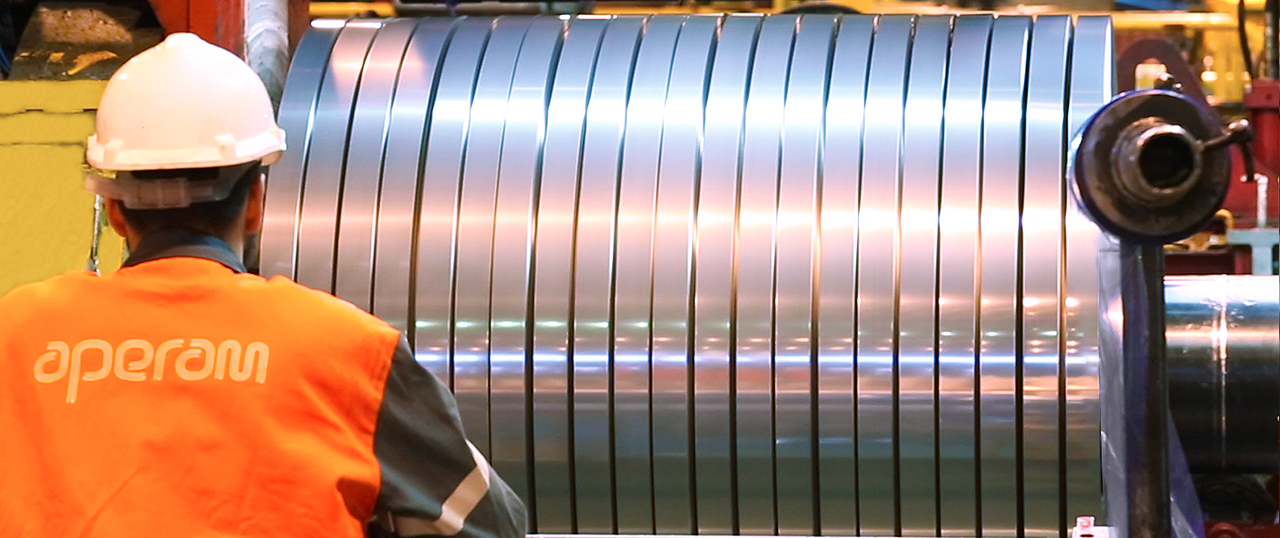
French stainless steelmaker Aperam expects the market to remain challenging in the months to come and forecasts a lower Ebitda compared to the good results achieved in the first half of the year.
“We achieved the sixth consecutive set of record results despite an increasingly challenging market environment. While Brazil is stable at a high level, adverse market conditions have increased in Europe,” chief executive Timoteo Di Maulo says in the company’s first-half-of-2022 financial report monitored by Kallanish.
Aperam’s shipments increased in H1 to 1.31 million tonnes from 974,000t in the same period last year. The company achieved €4.7 billion ($4.8 billion) in sales, up from €2.4 billion in H1 2021. Ebitda stood at €712 million, also a notable increase from the level of €446m in H1 2021. The Stainless & Electrical Steel segment had sales of €3.1 billion, from €2 billion achieved in H1 last year.
The European stainless steel coils and derivatives market is going through a standstill, with low orders and falling hot rolled and cold rolled coils prices. CRC prices are now approaching the level of €3,200-3,400/tonne delivered on average in Europe, depending on country. This is down from the peaks of €5,400/t for CRC seen in May. Some coil producers in Europe are implementing early stoppages to balance demand and supply (see Kallanish passim).
Natalia Capra France

Voestalpine joins Science Based Targets initiative
In addition to direct greenhouse gas emissions from production (Scope 1), voestalpine is now also setting itself ambitious goals to reduce Scope 2 (energy-related) emissions and Scope 3 (raw materials, transport) emissions.
These target reductions will be scientifically evaluated within the framework of the independent Science Based Targets initiative (SBTi) to ensure their compatibility with the Paris Agreement, and validated correspondingly, Kallanish learns from the group. “We have decided to subject ourselves to examination by the Science Based Targets initiative, the greatest possible levels of transparency and comparability of our climate action measures,” says chief executive Herbert Eibensteiner.
The objectives apply not only to the steel-producing sites in Linz and Donawitz, but also the entire group. Taking 2019 as its reference, the company plans a 30% reduction in Scope 1 and 2 emissions and a 25% reduction in Scope 3 emissions by 2029.
The Science Based Targets initiative is a partnership between the Climate Disclosure Project (CDP), UN Global Compact, World Resources Institute, and World Wildlife Fund for Nature (WWF). It helps companies align their business activities with the Paris Climate Goals, and provides scientific proof of this achievement. Globally, around 3,000 companies from a wide range of sectors including the steel industry are involved in the SBTi.
Christian Koehl Germany