


Stellantis H1 global battery EV sales up 50% on year
Automaker Stellantis’s battery electric vehicle sales rose 50% year on year to 136,000 units in the first half of 2022 due to accelerating sales of low emission vehicles, the company said July 28.
The company was ranked second in BEV sales and LEV sales in the EU market, as well as third in the US LEV market, it said, adding its BEV offering included 20 models, with 28 more to be released through 2024.
To support BEV production, Stellantis said it had confirmed locations for five gigafactories — three in Europe and two in North America — through partnerships with Automotive Cells Company, Samsung SDI and LG Energy Solutions.
Stellantis also secured battery metal supply through agreements for low-carbon lithium hydroxide with Vulcan Energy in Europe and Controlled Thermal Resources in North America.
Higher EV demand has boosted prices of battery raw materials, with Platts seaborne lithium hydroxide assessment up 137% since the start of 2022 to $75,000/mt CIF North Asia on July 27, S&P Global Commodity Insights data showed.
Total shipments down 7.5%
Despite strong BEV sales, Stellantis’s overall consolidated shipments in H1 fell 7.5% year on year to 2.9 million units, mainly due to the impact of unfilled semiconductor orders, it said.
In Enlarged Europe, its largest market, H1 shipments fell 18% to 1.4 million vehicles, primarily due to the semiconductor shortage, although that was partly offset by demand for new vehicles, Stellantis said.
North America shipments were up 9.85% to 959,000 units, due to strong demand for the new Wagoneer/Grand Wagoneer Grand Cherokee L and Chrysler Pacifica, as well as a mid-cycle refresh of the Jeep Compass, it said.
H1 shipments to South America slipped 4.95% to 403,000 units, while consolidated shipments to the Middle East and Africa was steady year n year at 138,000 units.
Shipments to China, India and the Asia Pacific region were up 1.6% to 62,000 units, while shipments of Maserati were down 5.6% to 10,200 vehicles.
Outlook cut further
The automaker lowered its 2022 outlook for Enlarged Europe and North America, with the former now expected to fall 12%, from the previous 2% fall, and the latter to drop 8%, rather than be stable, as expected at the end of Q1.
It also lowered the outlook for South America, where it now expected 2022 shipments to be stable.
At the start of the year, all three regions had initially been expected to grow 3% in 2022.
Outlook for all other regions remained unchanged, India and Asia Pacific to see a 5% increase, and China and the Middle East and Africa forecast to be stable.
— Jacqueline Holman

Acerinox Q2 stainless steel output drops 8% on year
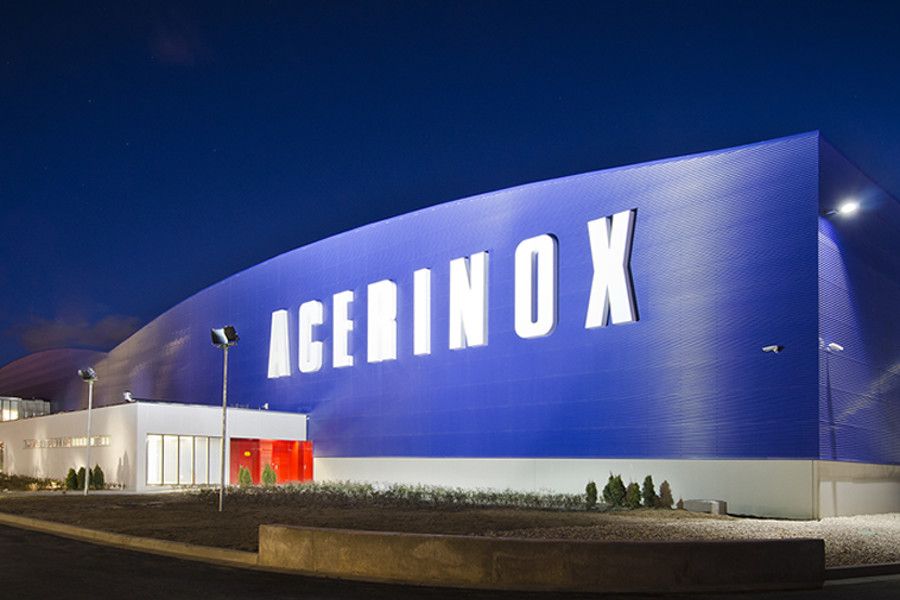
Spanish stainless steel group Acerinox’s secnd quarter melt shop output fell 8% year on year to 601,000 mt as demand for inventory building slowed into the third quarter, the company reported July 28.
The company said it also expects lower activity in Q3 due to seasonality and ongoing lockdowns in Asia, which had impacted cold-rolled production from its Malaysian Bahru Stainless division.
However, its global cold rolling output was up 4% year on year in Q2 to 416,000 mt and longs production was flat at 61,000 mt, the company said, leading to a record EBITDA of Eur523 million ($533 million) on sales of Eur2.5 billion and a revaluation of inventories.
Acerinox operates plants in Spain, Kentucky, US, South Africa and Malaysia with a combined melt shop capacity of 4.5 million mt/year, as well as high performance alloy facilities in Germany, which produced 44,000 mt in the first half of 2022.
Its US subsidiary, Kentucky-based North American Stainless, ran at full capacity in H1, while its Spanish operations at Cadiz reached “satisfactory” levels, it said, following interruptions in Q1 caused by a transport strike and record high energy prices.
Looking forward, Acerinox said it has observed a decline in orders from distributors which had rebuilt stocks depleted at the end of 2020, although its order book coupled with stable pricing in the US market meant it was optimistic for Q3.
However, the Russia-Ukraine conflict could cause more energy price issues and there were also doubts about energy supply in Germany.
Platts assessed domestic CRC prices in Northern Europe at Eur955/mt ex-works Ruhr July 27, down 10.75% since the start of 2022, according to S&P Global Commodity Insights.
— Gianluca Baratti
Thyssenkrupp supplies CO2-reduced steel to Germany’s Gebhardt-Stahl
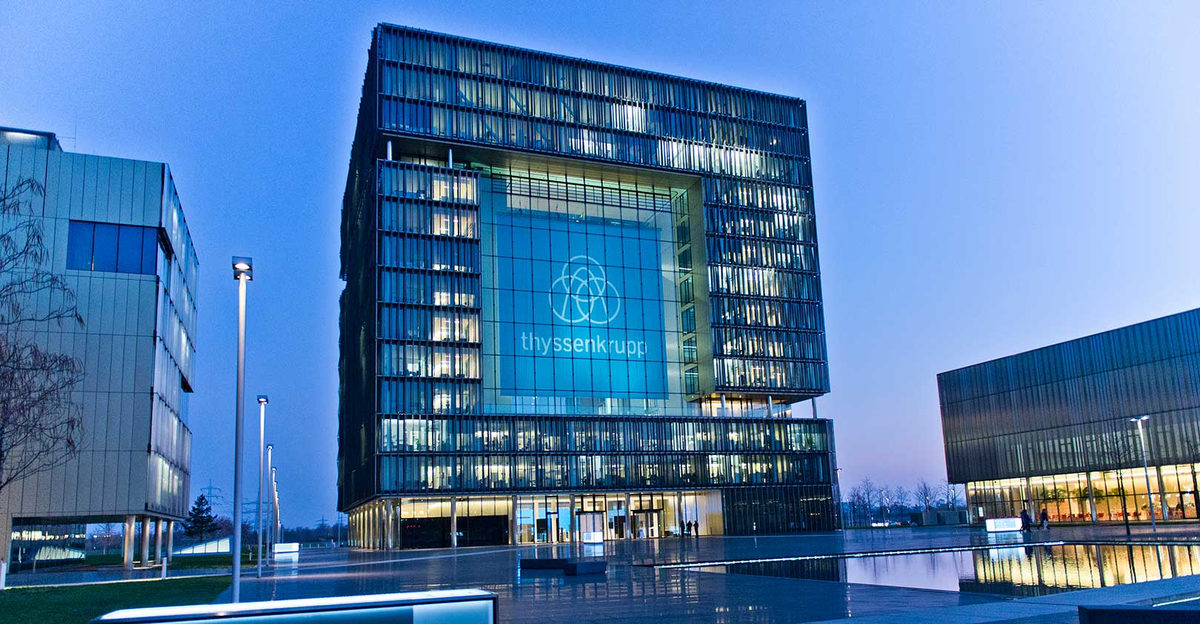
German steelmaker Thyssenkrupp’s steel and aluminum processing company thyssenkrupp Materials Processing Europe has supplied customized, CO2-reduced slit strip to steel profile and reinforcements maker Gebhardt-Stahl, it said July 28.
The CO2-reduced product was made by thyssenkrupp Steel Europe using bluemint steel.
Bluemint — characterized by a high proportion of recycled material — is significant for construction as it demonstrates a reduction in CO2 emissions of over 60% due to modified input materials, according to the producer.
CO2 emissions calculator
thyssenkrupp Materials Processing Europe also informed about the launch of new product carbon footprint calculator in the July 28 statement.
The calculator helps estimate the exact CO2 emissions of each article and transformation of the material showing all steps from production to storage, processing and delivery to the customer in terms of greenhouse gas impact.
The calculation model, which thyssenkrupp Materials Processing Europe claims is unique in the market, has been certified by international classification society DNV and is being used for the first time in the delivery to Gebhardt-Stahl.
With the new transparency across the entire supply chain and data from the calculations, Gebhardt-Stahl customers will have exact initial values for their own product carbon footprint calculations, Marcus Wohl, CEO of thyssenkrupp Materials Processing Europe, said in the statement.
“As a partner to the construction industry, we are increasingly focusing on CO2-reduced steels for our profiles, which in further processing contribute to climate-friendly house construction,” said Gebhardt-Stahl’s Managing Director Dirk Thorner in the statement.
Gebhardt-Stahl makes profiles and accessories for air conditioning and ventilation, reinforcing profiles for window and door systems, fence and vineyard posts, and a wide range of profiles for other applications.
The construction and building sector releases 38% of global CO2 emissions, and to unlock the climate protecting potential of house construction, the choice of materials should be considered more responsibly, and not just the use of energy, according to the statement by thyssenkrupp Materials Processing Europe.
— Ekaterina Bouckley

EU HRC markets enters quiet period; some mills give discounts to achieve deals
Domestic prices for hot-rolled coil across the EU remained largely stable on July 28 as market activity slowed down following traditional yearly cycle.
Some European mills have already started summer maintenance and others are expected to follow soon. Buyers, in the meantime, have also been holding back from new bookings as they prefer to wait until market activity revives in September. In addition, distributors were reported to have sufficient stocks of material.
As a result, the majority of steelmakers have been holding their prices stable to start the traditionally more active September with higher prices.
“There is little activity in the market,” a Northern European distributor said. “Market participants monitor global market and prefer not to make any radical decisions before September. There will not be a shortage of material even with production cuts. But energy costs is a problem and supply could be at risk with current geopolitical situation.”
“Demand has decreased as the market is entering its regular sleepy state during August. And mills have longer maintenances,” an Italian trader said.
Some Northern European producers, however, have been giving discounts in the attempt to spur buyers’ interest in their products.
Platts assessed HRC in North Europe at Eur850/mt ex-works Ruhr July 28, down by Eur5/mt day on day, according to data from S&P Global Commodity Insights.
A trader reported tradable value at Eur840-860/mt ex-works Ruhr.
A distributor reported an offer at Eur845/mt delivered Central Europe from a German mill, the equivalent of Eur800-805/mt ex-works Ruhr taking into the account transportation costs of Eur40-45/mt. Other German producers have not been offering HRC, the source said.
And a service-center source reported tradable value at Eur820-840/mt ex-works Northern Europe.
Some market participants, however, said that the lower prices were available only from one German mill that often cuts prices to sell some volumes fast.
“[The German mill] is one of those mills that are ready to cut prices whenever they have volumes they need to sell, even if it would injure the market,” a trader said.
A trader source reported tradable value higher at Eur900/mt ex-works Northern Europe.
South Europe HRC was assessed stable at Eur780/mt ex-works Italy on July 28.
Few deals have been reported at Eur780-785/mt ex-works Italy. Buyers estimated achievable prices at Eur740-800/mt ex-works Italy and offers have been heard at Eur800-820/mt ex-works Italy.
Import prices have moved down as suppliers from Asia were reported to be looking for orders.
In Northern Europe, offers of HRC from Japan have been reported at Eur700-720/mt CFR Antwerp and from South Korea – at Eur745/mt CFR Antwerp.
In Italy, import offers from Asia have been heard at Eur680-700/mt CFR and from Turkey – at Eur720-730/mt CFR, including anti-dumping duties.
— Maria Tanatar, Benjamin Steven
H1 Brazilian steel exports to Europe skyrocket 710% on year amid war in Ukraine
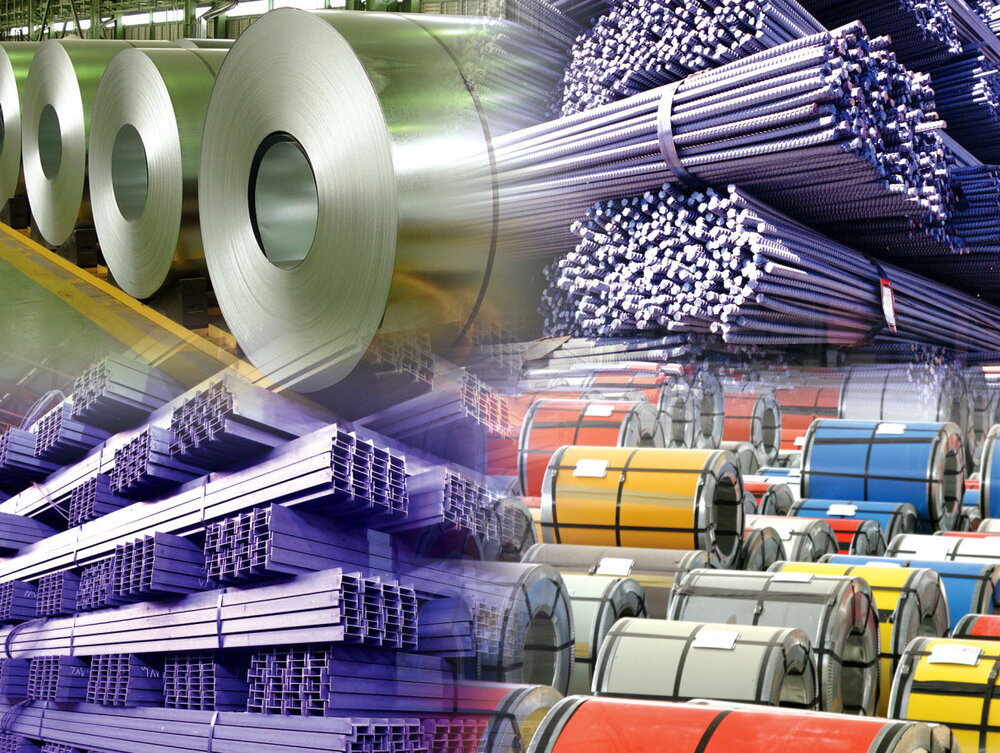
Exports of Brazilian steel products to Europe jumped 710% in the first half of 2022 to 909,828 mt, compared to 112,221 mt in H1 2021, filling the void left by regional suppliers Russia and Ukraine, according to latest data from national steel association Aço Brasil.
The export volume to Europe represented 13.4% of total Brazilian exports in January-June, compared to 2.2% in the same period of 2021, and was mainly composed of coated and uncoated flat steel products.
The supply restrictions derived from the Russia-Ukraine war also prompted Brazil to increase shipments to neighboring countries in Latin America, totaling at 2.12 million mt in H2, up 66.7% on the year. Shipments to Asia followed, totaling 174,663 mt, up 3.1% on the year, and shipments to Africa totaled 128,101 mt, up 594% on the year.
The US remained the main destination of Brazilian steel products, mainly consisting of slabs, at 3.24 million mt, but this figure was down 9.4% compared to H2 2021 exports.
The increase in exports was also favored by attractive foreign exchange rates and strong prices, coupled with a slow domestic market.
Trade barriers shift
The Brazilian Ministries of Economy and Foreign Affairs announced June 25 the revocation of restrictive measures against Brazilian exports of cold-rolled steel products by the US and the UK.
The US ceased to charge additional fees of up to 46% – 35% of which was an anti-dumping duty and 11% of which was a countervailing measure – on imports of CRC from Brazil, while keeping the measures on the same products charged from other origins, such as China, India, Japan, South Korea and the UK. The measure was in effect for five years.
Additionally, the UK excluded Brazil from the application of the safeguard measure on steel sheets and CRC products, which for a year had been subject to a 25% surcharge, once the pre-established maximum periodic volume has been exceeded.
On the contrary, however, the European Commission announced in late May provisional anti-dumping duty rates of 25% on electrolytic chromium coated steel, or ECCS, imported from China and Brazil after an investigation found that imports from the two countries undercut the EU industry’s prices. Definitive measures are set for Nov. 23.
— Adriana Carvalho

Revista InfoAcero Julio 2022
En el siguiente enlace pueden acceder a la edición de Julio de nuestra revista: InfoAcero Julio 22
A continuación destacamos algunos de sus contenidos:
- Opinión – D. Enrique Gimeno – Junta Directiva UAHE.
- Evolución del Índice de Precios de Productos Siderúrgicos – UAHE
- Construcción: Sumario del informe Euroconstruct- Junio 2022
- Sector Siderúrgico: Previsión sectores consumidores de acero- construcción, automoción e ingeniería mecánica – Informe Eurofer 2º trimestre.
- Próximos Eventos: Reunión regional Sur de Europa- Eurometal ( 14, 15 Septiembre, Milán),
- Metal Madrid (19 y 20 de octubre, Madrid)


EU steel sections prices soften amid weak seasonal demand
European domestic steel sections prices continued to soften in the seven days to July 27 because of weak seasonal demand ahead of summer holidays.
The Platts European medium sections price (category 1, S235 JR) assessment was at Eur1,175/mt delivered July 27, down Eur17.50/mt on the week, according to S&P Global Commodity Insights data.
A European mill source placed a tradable value for category 1 medium sections around Eur1,200/mt delivered, adding that the mill received bids around Eur1,150/mt delivered but they were not accepted due to high gas and electricity costs. “It is getting hectic, and forecast says it is going to a real situation,” the source said. Italy will be on summer holidays over Aug. 6-29 and no business will be conducted, according to the source.
A Benelux-based distributor said demand was quiet because of varying holiday periods in Europe spanning from end-July to the first three weeks of August.
The market was also grappling with high energy costs and low capacity of transported volumes through ships amid a heat wave in some European countries. “Water level is getting low so ships can only carry 40% of their usual weight. If you transport less through ships, you have to accommodate that by road so there will be a backlog,” the distributor said. The source placed a tradable value for beams at Eur1,180-Eur1,200/mt delivered.
Another distributor source in the Benelux region cited a deal for 500 mt category 1 medium sections at Eur1,150/mt delivered Benelux. The source said current demand was almost half the average level as most customers are on holiday.
Northwest European domestic rebar prices also fell in the week to July 27. The Platts TSI Northwest Europe rebar assessment was down Eur20/mt at Eur985/mt ex-works July 27, S&P Global data showed.
A distributor source in the Benelux region placed a tradable value at Eur995/mt delivered Benelux, while a seller source cited a workable level for domestic rebars at Eur1,000/mt delivered.
— Rabia Arif, Staff
Tata Steel invests GBP6 million in Trostre plant upgrade
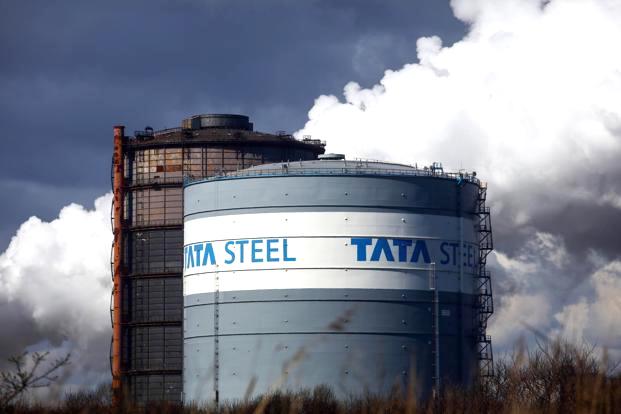
Steelmaker Tata Steel has invested GBP6 million ($7.2 million) to upgrade its Trostre plant in Llanelli, Wales, it said July 27.
Danieli was the key contractor of the six-week project, which initially ran over December 2021 and January 2022 and included completely replacing all the control drives of the site’s continuous annealing process line, or CAPL, with a new system.
“The line capacity will improve by around 10% due to better availability and speed of work from around 7,000 mt/week to around 7,700 mt/week,” a Tata Steel spokesperson told S&P Global Commodity Insights.
The CAPL softens strip steels before they are made into cans for food, aerosols and paint.
“This is one of the biggest single investments in Trostre in recent years and allows us to run the line faster and for longer, removing a key bottleneck at the plant,” Works Manager Joe Gallacher said in a statement, adding that 70% of the plant’s output went through the processing line.
When asked if there were any other investment or upgrades planned for the plant, the spokesperson said the company was expecting to be able to announce further investments at the plant soon, including automatic online inspection and product shape control.
Tata Steel aims to reduce its CO2 emissions by 30% by 2030 and produce net-zero steel by 2050 in the UK.
— Jacqueline Holman
EU HRC stable, summer sentiment stymies sales
European hot-rolled coil market activity was dull July 27, with HRC prices stable on the day across the continent despite a more positive sentiment as summer winds down.
Platts assessed HRC in North Europe unchanged at Eur855/mt ex-works Ruhr July 27.
Distribution sources unanimously said Eur850/mt was tradable on the day, while producers said achievable prices were slightly higher at Eur850-Eur860/mt ex-works Ruhr.
A service center source cited an offer at Eur850/mt delivered Benelux ex-Germany. The source said there was an equivalence between delivered and ex-works prices despite estimated delivery costs at Eur20/mt, with German buyers expected to successfully achieve Eur850/mt ex-works in biddings.
A mill was already offering higher in the market at Eur900/mt ex-works Northern Europe, and sources said other mills could announce increases soon.
“Most are predicting an offer increase now or in the very near-term,” said a trader source. “I heard ArcelorMittal are telling some customers to expect a Eur50/mt price rise.”
Market participants expect other mills to follow suit if ArcelorMittal raises its offer level, but no announcements were made on the day.
South Europe HRC was also assessed stable at Eur785/mt ex-works Italy.
Latest offers are at Eur800-Eur820/mt ex-works Italy, according to distribution sources. No new offers were extant in the Italian market with one electric arc furnace producer undergoing scheduled shutdown and an integrated producer not actively offering.
Buyer sources said achievable prices were lower at Eur770-Eur790/mt ex-works, with a producer source agreeing.
Scarce transactional activity present was focused at Eur780-Eur800/mt ex-works, with deals reported by a distributor. “Demand is still low, and buyers are only taking what is desperately needed,” said the source. “Sliding import offers are also pressuring the market and widening the gap between domestic and foreign prices, but buyers aren’t interested in either at the moment.”
Import offers were around Eur690/mt CIF Italy ex-Asia, and Eur720/mt CIF Italy ex-Turkey, duty included, according to sources.
— Benjamin Steven, Maria Tanatar

EU downstream coil prices edge down in quiet market
Downstream coil prices edged lower on the week on July 27, with transactional activity muted on minimal demand amid the traditional summer wind-down.
Platts assessed cold-rolled coil in Northern Europe stable on the day at Eur955/mt ex-works Ruhr, while Southern European prices moved down Eur15 to Eur875/mt ex-works Italy.
In Northern Europe, buy-side regarded prices of Eur950/mt ex-works as achievable, while producer sources reported a tradable value at a range of Eur950-960/mt ex-works Ruhr.
In the Italian market, the workable range was wider, reported at Eur865-900/mt, with most indications concentrated at Eur870-880/mt, both ex-works Italy.
For hot-dip galvanized material, the North European price was down Eur20 on the week at Eur980/mt ex-works Ruhr. South European HDG also edged lower by Eur5, assessed by Platts at Eur895/mt ex-works Italy.
A service center source reported tradable value in Northern Europe at Eur950/mt ex-works Ruhr based on an offer heard at Eur950/mt delivered Benelux ex-Germany. The source expected the same price level to be achievable for German customers.
Producer sources disagreed, however, seeing the workable higher at a respective Eur980-1,000/mt and Eur1,000/mt, both ex-works Ruhr.
“Galvanized prices are already very close to production costs on current gas and energy costs,” a mill source, who considered Eur950/mt ex-works as unworkable, said.
In the Italian market, the lowest indication was cited at Eur880/mt ex-works, with most pricing HDG at Eur890-900/mt ex-works.
Recent demand for downstream coils has been muted alongside other flat steel products due to the traditional summer wind-down and high stock levels in the market.
Distributors had reportedly structured orders based on booming activity in 2021, leaving them with far more material on stock than usual for this period in the year given reduced demand from end-consumers and key industries such as automotive.
According to one service center source, HDG prices were holding up better than those for CRC due to competitive CRC import offers and reduced automotive demand.
Sentiments for the automotive industry were improving, with sources reporting increasing call-offs for later in the year. However, many in the market remained skeptical given the length and lack of substantive evidence for recovery.
There has been an absence of import offers for galvanized coil, aiding prices somewhat; meanwhile, Southern European import offers for CRC were heard at Eur820/mt CFR Italy ex-India and at Eur815/mt CIF Italy ex-Japan.
An offer for boron-added CRC into Northern Europe was reported on the day at around $820/mt CFR Antwerp ex-India, converted to Eur810/mt on the daily Forex.
— Benjamin Steven, Maria Tanatar