

European steelmakers to accept lower HRC prices to fill gaps in June-July order books
European hot-rolled coil producers decreased offers and were ready to give additional discounts to fill order books for June-July, sources said May 27.
S&P Global Commodity Insights assessed Platts HRC in Northern Europe at Eur1,000/mt ex-works Ruhr, down by Eur40 on day.
Four sources estimated achievable prices at Eur1,000/mt ex-works Ruhr and one source said that prices of Eur950-1,000/mt ex-works were attainable. Deals are expected to be done soon at about Eur950/mt ex-works Ruhr. Official offers have been heard at Eur1,000-1,050/mt ex-works.
“The buyers are aiming to get Eur950/mt ex-works from Northern European mills, and I think they will succeed,” a Northern European distributor said.
Central European steelmakers have been offering and trading HRC to Germany at Eur950/mt delivered in the end of the week, this compared with Eur970-980/mt ex-works offered in the beginning of the week.
Low demand from end consumers, including the automotive industry, high stocks of the Northern European distributors and competitive offers from Central European steelmakers contributed to the downward mood in the market.
“It is really hard now for integrated mills, even EAF-based, they have to produce and they need to make certain amount of steel in June-July. So now they have to chase buyers to sell those volumes at almost any price,” a reroller said.
“Some mills are disparate, they call buyers almost bagging buyers to make deals. They need to sell, particularly June-July delivery material, they have gaps in order books they need to fill and the price is not the main issue for them now,” a trader said.
Activity in the north of Europe remained muted in the week to May 27 partially due to national holidays in the second half of the week. In Italy, in the meantime, demand was reported to slightly recover. Although Italian mills face same challenges as their northern European peers.
As a result, hot-rolled coil in South Europe was assessed down Eur20/mt on day at Eur950/mt ex-works Italy, according to S&P Global Commodity Insights data.
A deal and achievable prices have been heard at Eur950/mt ex-works Italy. Mills have been offering HRC at Eur960-980/mt ex-works Italy, but some customers have also received offers of Eur930-940/mt ex-works. Domestic prices are likely to reach Eur900/mt ex-works Italy, source said.
Overseas suppliers of HRC have been largely inactive in the European market, removing some downward pressure from domestic prices. The exporters are expected to return to the market with higher offers after India set 15% export duty on HRC.
The positive effect, however, might be short-lived as Indian mills reply on export markets and after the introduction of export duties domestic prices in India have dropped.
“Cheap imports of Eur850/mt CIF Italy are gone now after India set export duties, other suppliers are also trying to review the prices upwards,” an Italian trader said. “But it seems that the absence of import might be short-lived as India cannot survive without export. Domestic prices in India have dropped after the export duty was announced. Domestic market there cannot absorb all the volumes produced by Indian mills. So with decreasing domestic prices and need to sell India will return with competitive prices soon.”
The only import HRC offers heard on May 27 was Eur870/mt CFR Italian ports ex-Turkey, the price included anti-dumping duties.
— Maria Tanatar, Benjamin Steven


Severstal could decrease production volumes under sanctions
Russian steelmaker Severstal needs to reorient the direction of supplies in the face of sanctions against Russia and therefore cannot guarantee it will maintain production volumes, says majority owner Alexei Mordashov.
“There are serious challenges for us related to the need to reorient supply lines and procurement channels in the context of sanctions. We cannot confidently say that we are maintaining production volumes,” Mordashov said at the All-Russian Ecological Forum “Ecosystem”. “Despite the difficult access to certain technologies due to the sanctions regime under which Severstal has fallen, we expect to achieve all our goals, including through import substitution.”
Severstal, the largest supplier of Russian flat products to Europe, announced on 2 March that it had stopped deliveries of steel products to the EU after the bloc imposed sanctions on Mordashov, in connection with Russia’s invasion of Ukraine (see Kallanish passim).
The company announced it intends to restore sales of products abroad, refocusing shipments on Asian, South African and South American countries by July. In particular, these will include exports to Iraq, Jordan, Vietnam, China, and India.
Severstal also intends to increase the volume of rolled metal supplied to North Africa, India and Southeast Asian countries, said company chief executive Alexander Shevelev.
“We are already supplying rolled metal products there; in the near future we will increase the volume of rolled metal supplied to these countries,” he noted. “In addition, we are actively looking at the Chinese market, at Korean manufacturers.”
Severstal will revise the forecast for capital expenditures for 2022, since investment projects related to imported equipment will be postponed, Shevelev admitted. “The forecast for capital expenditures will be revised automatically, because most of the investment programme depends on imported equipment,” he observed.
The firm is not publishing its financial performance for the first quarter.
Svetoslav Abrossimov Bulgaria

Spanish automotive sector downturn continues in April
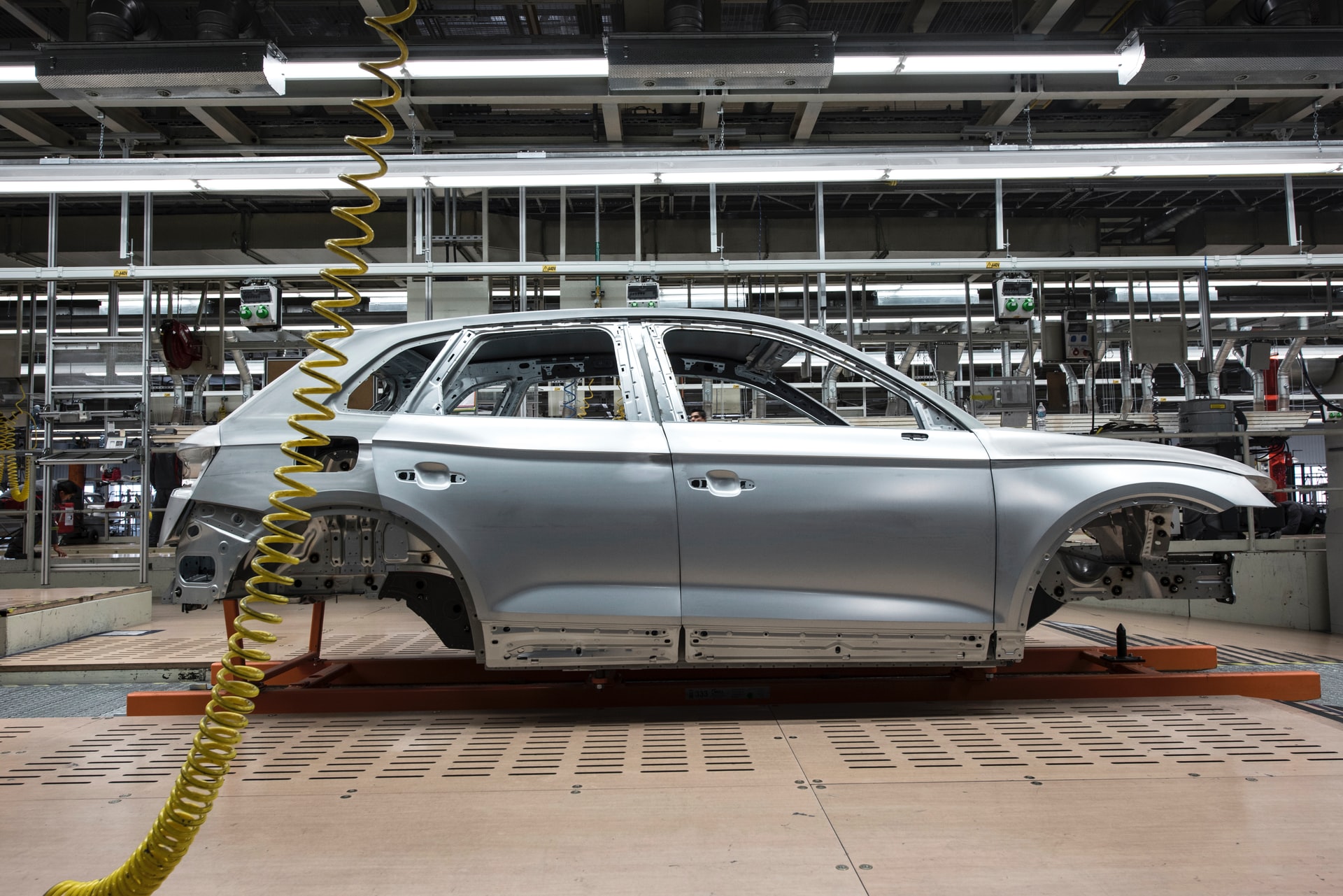
Spain’s carmaking sector remained depressed in April. Production and exports both fell, as a result of the Russia-Ukraine war impact. Lower output also reflects the impact of higher electricity costs in the country and the global semiconductor shortage, Kallanish notes.
Output in April was 168,396 units, a decrease of 10.3% versus the same month last year. Four-month production amounted to 718,850 vehicles, down 15.49% over January-April last year.
Meanwhile, poor sales in major markets, together with the microchip supply crisis and war in Ukraine, continued to undermine Spanish vehicle exports. These were 144,398 units in April, down 9.3% compared to the same month in 2021.
European markets represented 70% of Spanish deliveries in April, down 9.5% on-year. Only five of Spain’s ten main export destinations saw their purchases improve, with German demand growing the most, at 25.8%. Spanish four-month exports fell by 16.1% over a year earlier to 609,369 vehicles, Anfac data show.
Todor Kirkov Bulgaria

Worldstainless foresees slowing stainless consumption in 2022
Worldstainless, the new name for the International Stainless Steel Forum (ISSF), expects global consumption of stainless steel to rise 3.6% on-year in 2022 and a further 3.2% on-year in 2023, Kallanish notes.
This year will see cold rolled stainless flat steel use rise by the most, 4.1%, followed by semi-finished longs with 3.6%. The latter product category will see the highest consumption growth of 5% in 2023, followed by long products with 3.8%.
The Americas and Asia without China will lead growth in 2022, with 5.2% and 4.9% respectively.
The growth is a significant slowdown from the 11% on-year global consumption rise seen in 2021.
In 2021, global stainless steel melt shop production increased 10.6% to 56.29 million tonnes. CrNi (300 series) stainless steel increased its share in overall production to 56.7%. 400 series’ share remained unchanged at 20.8% but 200 series’ share fell to 21.1%.
Adam Smith Germany

Global growth forecast deteriorates rapidly, recession risk increases
Forecasts for global economic growth have deteriorated drastically due to a confluence of factors, Kallanish notes.
The Institute of International Finance (IIF) says the risk of global recession has risen significantly as the Omicron wave in China is more disruptive than previously anticipated, US financial conditions are tightening rapidly, and the Ukraine war persists and could escalate.
The IIF forecasts 2.3% on-year global GDP growth in 2022, with 2.5% and 1% growth respectively in the US and eurozone, while Russian growth should plummet 15%. This leaves little room to avoid an outright contraction of global GDP should downside risks materialise, it points out.
In the case of the eurozone, because the statistical carryover from 2021 into this year is 1.9 percentage points, this is in fact a recession forecast that anticipates falling GDP in the second half of the year, IIF warns.
The rise in real long-term US interest rates is now comparable to the 2013 taper tantrum, IIF observes. “This rapid tightening risks further destabilising the global growth picture, which is already teetering from Russia’s invasion of Ukraine and Omicron’s (re-)emergence in China,” it comments.
Nevertheless, “manufacturing from Russia and Ukraine will likely be relocated to ‘safer’ locations with still-reasonable production costs, especially in the automotive sector where missing parts are already causing disruptions. As a result, the CEE-3 [Poland, Czech Republic and Hungary] and Turkey could benefit from larger FDI inflows over the medium term,” IIF says.
Moody’s meanwhile forecasts 3.1% GDP growth in 2022, with the US and eurozone seeing 2.8% and 2.5% respectively, while Russian GDP is set to fall 7%. Besides Russia, it does not foresee a recession in any other country.
“Several crosscurrents have hit the global economy all at once, and will slow growth more significantly than we envisaged only a few months ago,” Moody’s says. The key factors are the Ukraine war, new lockdowns in China and monetary policy tightening to fend off accelerating inflation. “The rise in prices, especially of essentials, is quickly eroding household spending,” Moody’s points out.
Meanwhile, economies are returning to a post-pandemic normal, which involves reversals of some economic patterns to pre-Covid trends. Households are once again spending a greater proportion of their incomes on high-contact service activities and buying fewer goods.
For Europe, “cuts to the supply of natural gas would force a rationing of energy across sectors, cutting back factory, transportation and other energy-intensive activity, and would plunge the region’s economy into a recession,” Moody’ warns. “A recession in Europe would reverberate throughout the world.”
Adam Smith Germany

First-quarter price surge, earlier re-stocking boost Stalprofil earnings
Stalprofil’s revenue surged 43% on-year in the first quarter to PLN 603.1 million ($140m), while net profit soared 127% to PLN 41.38m, Kallanish notes.
Restricted steel supply in Europe and therefore higher prices as a result of the outbreak of war in Ukraine, coupled with significant inventories amassed by Stalprofil before the price surge, allowed the firm to expand Q1 margins. Sales volume was up 26% on-year, the Polish distributor says without providing tonnages.
Polish apparent steel consumption rose 5% on-year in Q1 to 3.8 million tonnes, the firm says citing Polish Steel Association (HIPH) figures. The increase in prices and demand is happening as steel production declines globally, with EU27 crude steel output down 3.8% in Q1 to 36.8mt.
Stalprofil’s steel product sales rose 12% on-year in 2021 to 207,721 tonnes, with steel structures sales up 9% to 2,216t.
Adam Smith Germany

EU confirms one-year Ukraine trade barriers suspension
The European Parliament and the European Council have voted in favour of the proposal to suspend for one year all trade barriers against Ukraine-origin steel imports, to support the country during the ongoing war with Russia.
The proposal was presented at the end of April by the European Commission (see Kallanish passim). Following the favourable vote, the suspension is now expected to become effective in a matter of days.
As part of the suspension, the Ukrainian steel sector will benefit from being excluded from the existing safeguard measures system. In addition, other trade restrictions would be suspended, such as the anti-dumping duties in place on hot rolled coil from Metinvest, and certain steel tube.
Emanuele Norsa Italy

EU HRC decreases, pace of decline slows
South European domestic hot-rolled coil offers moved down May 26, with the Northern market also seeing decreases on bearish sentiment, although indications were limited due to public holidays in the region.
More activity was seen in the Southern market, with mills reportedly decreasing offer levels in response to bearish sentiments.
Hot-rolled coil in South Europe was assessed down Eur20/mt on day at Eur970/mt ex-works Italy, according to S&P Global Commodity Insights data.
Offers were reported at Eur980/mt ex-works from a North Italian integrated producer; Eur960/mt ex-works from a South Italian producer; and Eur940/mt delivered to Italy ex-Romania.
Demand remained reduced in the South European market, although buyers were expected to return to purchasing in the near term to reserve September material.
However, a mill source was pessimistic about the revival of overall demand, thinking buyers would avoid substantive restocking in June on market uncertainties.
“The fact is, people need to buy now for September, but I don’t see the waiting game as ending fully,” the source said. “Everyone is still playing on whether to order with EU or foreign mills — there are less import offers available now India has new duties, but EU mills are still nervous and offering for July delivery at discounted rates. I think we’ll see limited trade in June, but most won’t restock fully, with poor demand extending into H2.”
A service center source confirmed the sentiment, seeing low import prices as no longer available given India’s new export duties of 15% on HRC exports.
“Local mills have decreased offers again, so it seems the trend hasn’t changed, but the decline has slowed somewhat.”
Demand was similarly muted in the Northern market, accentuated by public holidays on the day.
A service center source provided tradable value at Eur1010-1040/mt ex-works, agreed by a distributor source. A mill source saw tradable value slightly higher at around Eur1050/mt ex-works. A trader considered lower prices of Eur1000/mt ex-works as achievable.
S&P Global Commodity Insights assessed Platts HRC in Northern Europe down Eur10/mt May 26, at Eur1040/mt ex-works Ruhr.
— Benjamin Steven, Maria Tanatar

Ukraine war makes EU safeguard removal possible: Yuriy Rudyuk
The full repercussions of steel trade redirection following Russia’s invasion of Ukraine remain unknown, with the absence of supply from either country causing intense uncertainty for European steel producers and traders, says Yuriy Rudyuk, an expert in international commercial law and anti-dumping and safeguard matters at law firm Van Bael & Bellis. The main question is over which of the existing EU trade barriers will be confirmed or extended.
At this week’s EUROMETAL Iberia Steel Net Forum in Barcelona attended by Kallanish, Rudyuk said: “Significant volumes of hot-rolled products, exceeding 1.6 million tonnes of Russian-origin steel, were redistributed among countries such as Turkey, India, Korea, the UK and Serbia, while some 300,000t of Russian wire rod and more than 260,000t of Belarus-origin steel was redistributed among such countries as Switzerland, Ukraine, the UK, Turkey and Moldova. This is a major correction of import flows in the EU.”
Rudyuk predicts the EU will soon suspend all tariffs on Ukrainian goods initially for one year, including steel safeguards and anti-dumping duties on hot rolled coil and certain seamless pipe and tube.
The expert pointed out that EU safeguard measures are now increasingly detached from the current business reality of trading in steel. “We are seeing an increase of anti-dumping measures, dramatic disruption or complete halt of supplies from Belarus, Russia and Ukraine in various steel product categories, while other steel supplying countries cannot easily substitute these lost volumes because safeguard measures now work as a major trade barrier for such replacement. As a result, a major change of the application of the safeguard measures would be required,” he explained.
The European Commission is considering three options to ease the situation. The first one, according to Rudyuk, is a major softening of the measures by replacing country-specific tariff-rate quotas with global quotas for certain categories, or increasing the liberalisation rate for all products.
Another measure could be to allow new trade flows to form under the safeguard framework, although this is “difficult in practice as this has to be done in a non-discriminatory manner”.
A further option is to keep the measures without major changes, but only for a relatively short period, while the last possibility is to repeal the measures altogether. “Possibly, for the first time in all previous reviews, we come so close to a repeal in terms of arguments and the economic business reality,” Rudyuk observed.
Todor Kirkov Bulgaria

With embedded CO2, steel scrap vital for green steel production: EUROMETAL’s Espada
Already embedded with CO2, ferrous scrap is the “new gold” key for the production of green steel, EUROMETAL President Fernando Espada has told S&P Global Commodity Insights.
Such scrap is “vital for the production via the electric arc furnace route for steel,” Espada said May 24 on the sidelines of the EUROMETAL conference in Barcelona. “We will need more and more scrap, but at one point, as demand is growing amid the European Commission’s target to become CO2 neutral by 2050, we will see less scrap in the market — that’s why a lot of countries are pushing to keep the scrap inside their own borders,” he explained.
The importance of scrap towards lower carbon emissions was echoed by CRU Group European Flat Steel Analyst Matthew Watkins, who told the conference there would be less good quality scrap available in the future for which demand would still be high due to blast furnace/basic oxygen furnace-intensive Chinese production. However, he said overall EAF output is forecast to rise in the coming years.

Talking about the European “green revolution,” Espada told S&P Global that the EAFs and all the basic oxygen furnace steel mills in Europe had very clear and ambitious targets to produce clean steel in a relatively short term.
Spain in particular is “very much ready” and “well positioned,” as it has most of the companies based on the EAF route and also has the possibility to increase its renewable energy production thanks to the wind and sun benefits of its geographic location, Espada said.
Lack of apparent demand
There is currently a lack of apparent demand for steel In Europe, and Spain in particular, Espada said, saying that was a correction from a previous speculative period.
“The apparent demand is missing as the market is waiting to find an equilibrium point,” he said. “Prices are moving down, but I don’t think we will come back to pre-pandemic levels as production costs, such as the energy costs and the raw materials costs, have doubled and, in some cases, even triplicated.”
Rising inflation is also a problem, he added.
Platts assessed Turkish imports of premium heavy melting scrap 1/2 (80:20) May 25 at $465/mt CFR, up just $2/mt from where it started 2022 at $463/mt, but down from the intra-year high of $665/mt reached March 16,.
Real demand had slowed too, but less then apparent demand, Espada said, with flat products suffering due to the automotive slowdown and the relatively well-known supply issues.
Flat steel production in 2022 is expected to be more or less at the same level as 2021, he added.

Production of longs steel products in Spain is expected to stay stable or grow slightly, according to Roberto Gonzalez, president of UAHE, the Spanish Association of Steel Stockholding companies.
“At the moment inflations costs are the problem, but I see good demand in machinery manufacturing and construction in general,” Gonzalez told S&P Global on the sideline of the event.
According to UAHE data the longs market grew by 4.81 % year on year in Q1 2022 to 330,612 mt across all the products.
In 2021, Spain produced 14.3 million mt of crude steel production, up 28% year on year, according to Spanish industry group Unesid.
— Annalisa Villa