


LME scrap contracts fall again on week, trading volumes drop
Near-term scrap futures contracts on the London Metal Exchange saw losses over the week to May 19, while trading volumes also decreased dropped.
Platts, part of S&P Global Commodity Insights, assessed the May contract down $2/mt on the week at $480.50/mt May 19. The June contract fell $18.50/mt to $451/mt, July lost $9/mt to $455/mt, and August dropped $13.50/mt to $445.50/mt.
The backwardated structure over the May-June portion of the forward curve strengthened on the week, suggesting that futures traders on May 19 continued to expect physical scrap prices to soften in the near term.
The backwardation over the June-July portion of the curve shifted into a slight contango, while the backwardation for July-August strengthened slightly.
Spot prices for physical imports of premium heavy melting scrap 1/2 (80:20) dropped $15/mt week on week to $465/mt CFR Turkey on May 19, as market sources heard of a fresh Baltic-origin cargo deal.
“There were some scrap offers around $460-$470/mt CFR over the last few days on the back of a slight upturn in domestic rebar, billet demand but we need to see if that continues — otherwise we’ll see below $750/mt FOB for rebar and below $450/mt CFR for scrap soon,” a Turkish mill source said.
“Under these market conditions and big competition [among recyclers], I do not need to go around with an offer,” one Turkish agent source said. “The problem now is not to negotiate for scrap, but that the mills have to sell [finished products].”
Weekly LME scrap futures trading volumes over the week to May 19 totaled 43,340 mt, down from 86,510 mt last week.
Most near-term rebar futures contracts also saw losses over the week to May 19.
Platts assessed the May contract up 50 cents/mt on the week to $801.50/mt. The June contract fell $8/mt to $744.50/mt, July lost $15/mt to $740/mt, and August dropped $19.50/mt to $730.50/mt.
The backwardation over the May-June portion of the forward curve strengthened over the week, suggesting that futures traders continued to expect prices to fall sharply in the near term.
The contango structure over the June-July portion of the curve shifted into slight backwardation, while the backwardation over July-August strengthened.
Turkish physical rebar export prices fell $55/mt on the week to $765/mt FOB May 19, as weak demand in the export market, along with weakening scrap import prices, kept pressure on the market. Market players heard of limited export deals for rebars booked to Africa and Middle East at softened levels, but the sales were not deemed significant enough.
“Yes, something is happening, however demand is not big enough to make up for all the steel sector in Turkey,” one Marmara mill source said. He noted that price levels were currently not that important in the market and that the important factor was that the market wanted to see some positive indications.
Rebar futures weekly trading volumes in the week on the London Metal Exchange totaled 1,010 mt May 19, down from 24,970 mt the previous week.
The daily outright spread between Turkish export rebar and import scrap was assessed at $300/mt May 19, down $40/mt week on week.
— Rabia Arif, Viral Shah

Turkey’s Q1 wire rod exports rise 7% on year on strong EU demand
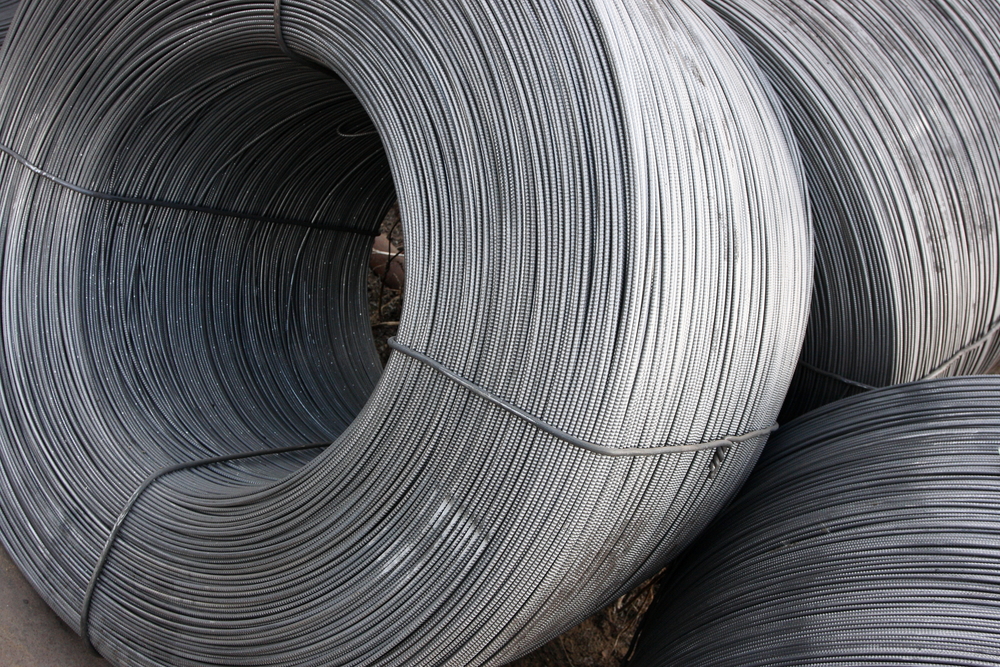
Turkish mills’ wire rod exports in the first quarter of 2022 rose 7% year on year to 300,000 mt on higher EU demand, according to the latest monthly Turkish Statistical Institute data seen by S&P Global Commodity Insights May 20.
According to the latest data, despite a 12% year-on-year decline, Israel remained Turkey’s top wire rod export destination in January-March at 74,500 mt.
Israel was also Turkey’s top wire rod export market in 2021, with shipments totaling 273,200 mt, down 16% on the year.
Turkey’s Q1 wire rod shipments to some EU countries also rose year on year.
Exports to Romania were 53,500 mt, up by 40,000 mt on the year, while exports to the Netherlands totaled 38,700 mt, up 25% on the year.
Shipments to Italy were 20,500 mt, up 66% on the year, while exports to Canada totaled 15,000 mt, up from zero in Q1.
Turkish mills also exported 11,800 mt of rod to Peru in Q1, down 52% on the year, the latest data showed.
Revenue generated from these exports jumped by 48% on the year to $242 million on globally higher steel pricing in the period.
Although prices were strong in Q1, Turkish mills’ wire rod offer prices have fallen in recent days on low demand and bearish scrap pricing, sources said.
According to major long steel producer Kardemir’s new price list seen by S&P Global, the company’s 6-27 mm (SAE 1008-1010) grade wire rod prices fell a further $40/mt on the week to $845/mt EXW May 17, while the price for its 6-27 mm (SAE 1006) grade wire rod fell to $855/mt EXW. These prices remain unchanged as of May 20.
Kardemir’s 10-20 mm (B420C) grade rod price also declined by the same amount to $865/mt EXW, while the list price for its 5.50 mm (SAE 1008-1010) grade fell to $880/mt EXW.
The European Commission’s decision March 15 to allocate Russia’s steel quota to other countries following a ban on Russian steel imports is expected to support Turkey’s wire rod exports in the coming quarters of the year.
— Cenk Can

EU producers accept lower HRC prices on low demand, decreasing import offers
Domestic prices for hot-rolled coil in Europe decreased further day on day May 20 due to weak demand and pressure from declining import offers.
Platts assessed domestic HRC prices in Northern Europe at Eur1,065/mt ex-works Ruhr, down Eur10/mt day on day.
Buyers have made some deals for smaller tonnages on HRC to restock certain specifications at Eur1,050-1,070/mt ex-works. The prices have not reached bottom yet, market sources said. Achievable prices have been estimated by market participants at Eur1,050-1,100/mt ex-works Ruhr, and offers have been reported at Eur1,100/mt ex-works Ruhr.
In Southern Europe, Platts assessed domestic HRC prices at Eur990/mt ex-works Italy, down by Eur10/mt day on day.
Following another decline of import prices and to stimulate buyers’ interest, Italian producers were ready to sell HRC at Eur980-1,000/mt ex-works Italy. One source also reported unconfirmed information that a domestic Integrated mill has already made deals at Eur980-1,000/mt, delivered, to Italian buyers.
Lower import prices have contributed to the domestic price slide, particularly in the south of Europe due to higher exposure to overseas coil.
Offers of HRC from India have been heard at Eur850/mt CFR Italy; from South Korea and Egypt at Eur870/mt CFR Italy; and from Turkey at Eur850/mt CFR Italy, including anti-dumping duties. This compared with import prices of about Eur900/mt ex-works in the start of the week.
“Import is moving down by Eur10-20/mt every couple of days,” an Italian trader said. “Naturally, buyers are not willing to risk and book. This threatens domestic prices. And as domestic demand is low, Italian mills have to adjust their prices down.”
Demand has remained low for flat steel across the EU because of a combination of high stocks across the supply chains and low demand from key end-consuming industries, including automotive.
“Everyone’s stocks are full — mill, distributors, end-users,” a Northern European distributor said. “And the volumes moving in the supply chain are so small that the mills have no opportunity to sell. They will have to cut capacities. That is discussed in the market, but no additional information was provided by either of the mills.”
“Demand is low, automotive is in big trouble due to components shortage,” an Italian service center source said. “But automotive is not the entire market. I think that we are in the period when panic buying earlier this year that resulted in extremely high stocks and weak automotive have been helped to drag prices down.”
Despite the bearish mood in the EU market, some sources believe that stabilization of prices in China might be a sign that the downtrend might end soon.
“Import prices from Asia need to stabilize,” a Southern European trader said. “I think we already see signs of stabilization in China, and then buyers will see that the freefall ended and they might book some volumes.”
“It seems that prices in China started to stabilize, so I think that is the first sign that European coil prices will stop falling too soon,” a producer said.
— Maria Tanatar, Benjamin Steven

Thyssenkrupp extends Merz’s ceo tenure to 2028
Thyssenkrupp’s supervisory board has decided to extend Martina Merz’s tenure as chief executive by a further five years to March 2028, Kallanish notes.
Merz became acting ceo of the troubled conglomerate in 2019 following the ousting of Guido Kerkhoff, who had been in the position for only one year. She was made permanent chief in 2020.
Under her leadership, and following the failed merger between thyssenkrupp Steel Europe and Tata Steel Europe in 2019, thyssenkrupp decided to spin-off its steel business into a standalone unit. However, this plan was suspended in March amid the outbreak of war in Ukraine.
In the six months through March 2022 the steelmaking unit lifted revenue by 46% on-year to €6.06 billion ($6.42 billion) despite a drop in tonnages. Pre-tax profit (Ebit) saw a massive turnaround from a loss of €137 million a year earlier to a plus of €607m.
“On behalf of the entire Supervisory Board, I would like to thank Martina Merz for the resolute approach to the transformation of thyssenkrupp,” says thyssenkrupp supervisory board chairman Siegfried Russwurm. “We are pleased that Ms. Merz has agreed to continue to drive forward this change process in her role as Chairman of the Executive Board of the Company.”
Adam Smith Germany

Spanish scrap corrects from highs, further falls unpredictable
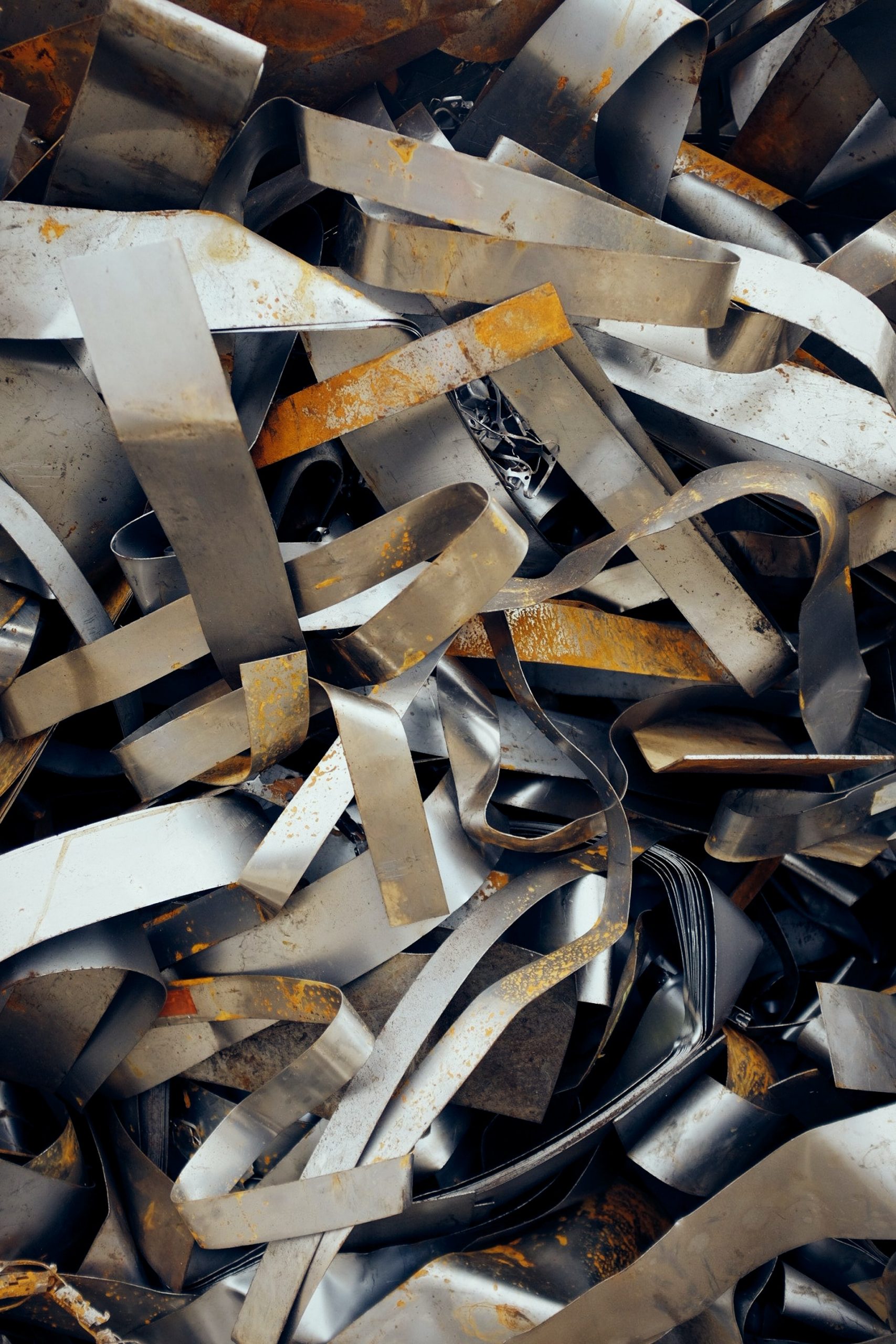
Scrap prices in Spain have continued falling in May. The market saw a new €20/tonne ($21.15/t) correction on Friday, with sources forecasting the downward trend will continue until June, although without being clear about the extent of the drop.
“The correction has followed the international market deceleration. Prices have come back to levels seen in March, but should continue to fall in the short term,” one source tells Kallanish.
Another market participant confirms that large steelmakers remain focused on maintaining a good level of raw material in stocks, while also trying to be prudent about their purchases.
“Mills have their inventories back to normal, but falling scrap prices make the market very cautious when buying material,” he notes. “The decrease in levels is considered unpredictable now since prices decrease day by day.” Although there has been a material shortage as a result of the war in Ukraine, Spanish scrap collection activity and domestic volumes offered look to be improving, the source adds.
The recent fall in global scrap prices has resulted in an almost €90/t ($95.19/t) decline for the new arisings grade in Spain since the beginning of May. E8 scrap is now offered in Spain at €540/t delivered. Demolition quality grade E3 stands at €465-470/t, while E40 is priced at €490/t, both delivered. E1 quality is at €445/t on the same basis.
Todor Kirkov Bulgaria
Vallourec shuts down plants in France, Germany
French pipemaker Vallourec is reshaping its European business structure and downsizing its organisation with the ambition to “refocus European plants”, it says in its first-quarter financial report monitored by Kallanish.
The group is starting the shutdown process of the heat treatment line of Saint-Saulve in France and of the threading line in Bellshill in Scotland, while also completing the divestment of Vallourec Bearing Tubes.
The closing of its finishing tube rolling plants in Germany is also underway and will be carried out over the next two years. The company decided in 2021 to divest its German and other European mills, but has still not found a buyer.
The German output for the Oil & Gas segment will be relocated to the firm’s Brazilian plants by end-2023 for an investment of €110 million ($117m). The German plants’ shutdown will mean a 685,000 tonnes/year reduction in Vallourec’s rolling capacity.
“This rationalisation will entail the consolidation of all European threading activities in a single location in Aulnoye in France,” the company says. It adds it is optimising its activities towards achieving higher productivity, “a leaner organisation in all regions, lower overheads and central costs”.
Vallourec sees an improving market environment and increased investment in global exploration and production (E&P) capital spending for the period 2022-2025. Drilling activity is increasing again globally, particularly in North America and the Middle East, but also in North Africa. Thanks to global demand resumption, OCTG prices are also increasing. The group expects to report strong results this year.
Vallourec posted €916 million ($961m) revenue in Q1, a 30% year-over-year increase led mostly by North America. Ebitda was €45m compared with €80m in Q1 2021, negatively impacted by the iron ore mine shutdown. However, thanks to improved market conditions, the firm forecasts 2022 Ebitda to be significantly above 2021.
Natalia Capra France
German association BDSV submits proposal for ‘scrap bonuses’ into EU ETS
The Federal Association of German Steel and Recycling Companies (BDSV) submitted a proposal to the European Commission for the incorporation of scrap bonuses into the EU Emissions Trading System (EU ETS), documents seen by S&P Global Commodity Insights show.
BDSV defined a “scrap bonus” as a combination of economic advantages and a positive impact on the environment from scrap use. It estimates the bonus at Eur80-213/mt ($84-$224/mt) for ferrous scrap and Eur158-502/mt for alloy scrap.
Steelmaking from scrap saves 1.67 mt of CO2 compared with production using iron ore and coke, BDSV said.
BDSV said the market prices of raw materials need to reflect the advantages and disadvantages that each raw material has for the environment, something that current EU climate policy does not do.
The association proposed several changes to tackle those issues.
According to BDSV, the mining industry should become subject to both EU ETS and the Carbon Border Adjustment Mechanism (CBAM) and ferroalloys should not be exempt from the regulations. For example, BSDV called for a price to be placed on the greenhouse gas emissions that arise in the mining and production of raw materials or in the production of intermediate products, contributing to fairer competition between scrap and mined raw materials.
Emissions from mining in Europe contribute a minor share of CO2 emissions, but their inclusion in the policy would result in fairer competition between scrap and other ferrous raw materials, according to BDSV. As steel imported into the EU is mainly produced from iron ore, raw materials and intermediate products should also fall under CBAM regulations to fully integrate emission costs of mining outside the EU, BDSV said.
As a temporary solution, the use of scrap could be rewarded within the EU ETS by linking it to the free allocation allowances, making use of scrap beneficial for steelmakers.
Alternatively, a mandatory scrap utilization quota could be imposed on domestic steel. “Compared with a positive incentive for the use of scrap, this would constitute a greater intervention on the market, could place strain on the European steel sector and open up the question of whether a mandatory scrap utilization quota would also apply to imported steel,” BDSV said.
International scrap trade, however, should not be restricted, BDSV recommended, as any barriers put on export would lower scrap prices in the EU due to higher supply and reduce the use of scrap outside Europe, leading to increased CO2 emissions. Turkey is currently the world’s largest seaborne importer of ferrous scrap, importing 25 million mt in 2021, up 11.5% year on year, Turkish Statistical Institute (TUIK) data showed. Almost 10 million mt of this total was from EU origins.
European steelmakers have been focusing on securing high quality ferrous scrap supply through acquisitions, as increasing the proportion of ferrous scrap in their raw materials mix is the swiftest way to reduce the carbon footprint of their steel production.
M&A activity
ArcelorMittal acquired several steel scrap recycling facilities from environmental services and recycling company ALBA International Recycling, it said on May 11.
The deal includes 10 scrap yards located in the south of Germany, across three different companies, ALBA Electronics Recycling, ALBA Metall Süd Rhein-Main and ALBA Metall Süd. Together, these companies process approximately 400,000 mt/year of material, the majority of which is steel scrap, ArcelorMittal said.
In March, ArcelorMittal also acquired Scottish steel scrap recycler John Lawrie Metals in March 2022. Lawrie collects about 200,000 mt/year of metal scrap, according to the company’s website.
Elsewhere, European stainless steelmaker Aperam acquired stainless and alloy scrap recycler ELG in December 2021, for an enterprise value of Eur357 million (equity value Eur30 million). ELG collects, trades, processes and recycles stainless steel scrap and high performance alloys, delivering 1.2 million mt/year of materials.
— Viral Shah, Maria Tanatar

British Steel starts up new laser system for dimensional control in manufacturing process
British Steel has started up a GBP1 million state-of-the art laser measurement system at its Special Profiles business, it said May 19.
The new system enables the steelmaker to monitor dimensional control during the manufacturing process and allows it to make adjustments so its bars meet high dimensional tolerances, British Steel said.
The mill at Skinningrove, northeast England, rolls profiles that are used in a wide range of applications, such as track shoes, forklift masts and cutting-edge profiles, the company said.
The investment comes on top of a GBP26 million upgrade to its Special Profiles business, a company spokesperson told S&P Global Commodity Insights.
British Steel has a crude steel production capacity of about 3 million mt/year. The company makes more than 1,450 different specifications of steel rolled into wire rod, sections, special profiles, rail, billet, bloom and slab. The Scunthorpe works in north Lincolnshire produces primary steel and has four blast furnaces, two of which are currently operating. The company’s rolling facilities are located at its Skinningrove mill.
Platts, part of S&P Global, assessed Medium Sections Europe at Eur1,160 on May 18, up from Eur1,000/mt at the beginning of the year, although prices have eased since hitting a record high of Eur1,500/mt at the end of March.
— Annalisa Villa
Liberty Steel gears up for immediate restart of Liege mills
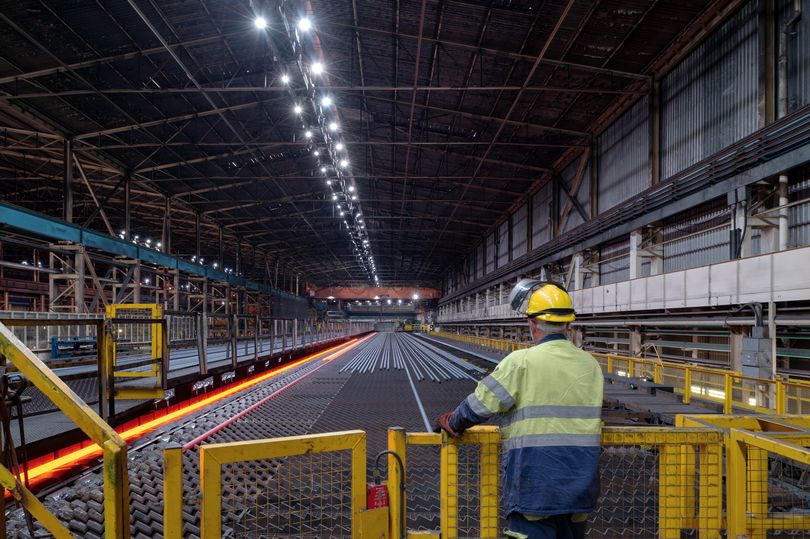
Liberty Steel Group said May 19 it has won its appeal against the Liège Enterprise Court’s decision to appoint administrators to Liberty’s Liège plants in Belgium and has pledged an immediate restart of the business.
This is an unprecedented result, as never in Belgium court history has a liquidation order for insufficiency of net assets been overturned, Liberty said in a statement sent to S&P Global Commodity Insights.
To support that restart Liberty will be assisted by a mediator to help it work with the unions to implement the business plan and rebuild the confidence of the workforce.
“We are looking forward to restarting production as soon as possible and working with the mediator, the unions, our employees, suppliers and customers to rebuild the business,” commented Liberty Greensteel EMEA CEO Toker Ozcan.
Liberty Steel Group aims to ramp up production at the Liberty Liège unit to 110,000 mt/month by October.
To this end, it has recently injected new funding into the plants at Flemalle (housing two galvanizing lines) and Tilleur (tin mill), with further support pledged for the future.
The new funding came on top of Eur80 million that GFG Alliance, which groups together Liberty Steel Group and other metals and energy assets owned by magnate Sanjeev Gupta, injected into Liberty Liège since 2019, when GFG acquired Liege plants from ArcelorMittal.
Liberty Steel’s Flemalle steel galvanizing lines in Belgium – part of the Liege unit – have remained at a standstill since December 2021 due to lack of feedstock and the ongoing restructuring process, while production at the 200,000 mt/year tinning line at Tilleur, also part of Liberty Liege, has already been restarted following three months of maintenance work on this line and intermittent disruptions in raw material supplies, as S&P Global reported previously.
Platts’ weekly assessment of the north European hot-dip galvanized coil domestic price totaled Eur1225/mt ($1,297/mt) ex-works on the week of May 16.
— Ekaterina Bouckley

Steelmakers to benefit as EU moves to drop barriers to imports from Ukraine
The suspension of duties on imports of Ukrainian products won approval in a European Parliament session May 19, with the measure next needing to be endorsed by the European Council for it to take effect, a European Commission spokesperson told S&P Global Commodity Insights.
Final approval is expected during the next Foreign Affairs Council meeting in early June, according to the spokesperson.
To help boost war-ravaged Ukraine’s exports to the EU, the European Commission proposed April 27 suspending for one year its import duties on all Ukrainian exports to the bloc, including on Ukraine’s major revenue item — steel.
The move would see the suspension of all EU anti-dumping and safeguard measures in place on Ukrainian steel, as well as the drop of all rolled steel product-specific quotas, which Ukraine has had to pay 25% customs charges for exceeding, in line with the existing system that full trade liberalization is coming to temporarily replace.
In theory, the biggest effect from the lapse of duties and quotas should be on the exports of hot-rolled coil, or HRC, and plate, as the EU removes the Eur 60.5/mt antidumping duty on Ukraine’s HRC, and drops the quota for plate, which allows the export of 1 million mt/year, the equivalent of roughly a third of the 2.8 million-2.9 million mt/year plate output by Metinvest. However, that total was before Feb. 24, when Russia attacked Ukraine.
Unlikely to fully take advantage of move
Now, with Metinvest’s two major steelworks — Ilyich and Azovstal — remaining disabled indefinitely in Mariupol, the scene of intense fighting, and other mills in the country that have resumed operations still somewhat hamstrung by difficulties with inbound and outbound freight, Ukrainian industry looks too scarred by the war to use the duty-free regime to the maximum.
As a result of the war and production stoppages, Metinvest’s steel output, at 1.96 million mt in the January-March quarter, dropped by 25% on the quarter, with most of this made before the war.
In early April, Ukraine’s major long rolled steel producer, ArcelorMittal Kryviy Rih put back into operation one of its four blast furnaces, all halted in late February. It is gradually ramping up operations but still has little to sell.
“Our production has been on hold for most of the first quarter,” said a spokeswoman for ArcelorMittal Kryviy Rih, which in 2021 accounted for 23% (4.9 million mt) of Ukraine’s steel production.
“We do export exclusively to the EU, because we are cut off from other markets by broken logistics, and because we are linked to the EU by the railway, but everything we managed to ship in January-March were small batches of remaining inventories and iron ore concentrate,” she said, adding that these sales are burdened with long lead times and high delivery costs.
“EU import quotas allow duty-free imports of steel products in volumes equal to our average annual imports,” the spokeswoman said, and the EU has recently even increased the quota for Ukrainian mills via redistributing the volumes of steel imports from Russia and Belarus that the block banned as part of sanction, she added.
Significant help for Ukrainian steelmakers
The blockade by Russia of Ukraine’s sea ports and Ukraine’s severely depressed current demand for steel has left the nation depending effectively on only one market — the EU — so lifting these barriers is without doubt a big aid for struggling Ukrainian steelmakers.
And 4 million mt/year hot- and cold-rolled coil and sheet producer Zaporizhstal, 49.99% owned by Metinvest, seems to be in a stronger position to make the most of the scrapped duties and quotas. Since its restart 1.5 months ago it has already exceeded 50% of its full capacity.
Metinvest’s fully owned billet and long rolled steel producer, Kamet Steel in Kamianske, in the Dnipropetrovsk region, is another one to benefit right away; in Q1, it increased output to 607,000 mt, with a good part of this shipped as billet for further processing to Bulgarian sections and bar mill Promet, also part of Metinvest. Billet exports are not quota-regulated, but removing quotas from Kamet’s rolls should help maximize their sales.
The US suspended the Section 232 25% tariffs May 9 on steel imports from Ukraine for one year, amounting to partial relief because of a few product-specific duties staying in place.
— Ekaterina Bouckley, Annalisa Villa