

Cogne expands in Germany
Italian stainless long steel producer Cogne’s German distribution subsidiary, Cogne Edelstahl, located in Neuss, has completed the purchase of local stainless products distributor Edelstahl und Metallhandel (EMB), located in Stuhr near Bremen, Kallanish learns from the Italian company.
The merger will allow Cogne to develop its commercial presence in northern Germany, reduce delivery times, improve customer service and offer a larger range of products, the firm says.
“The integration of EMB into Cogne will offer customers located in northern Germany decisive advantages … The Stuhr office complements the sales offices in Düsseldorf/Neuss and Rudersberg … This means that delivery times for customers located here will be significantly improved, thanks also to the availability of our fleet,” Cogne Edelstahl says.
The Cogne Edelstahl distribution arm serves Germany, the Benelux and Austria. It operates from two warehouses in Neuss and Rudersberg, near Stuttgart, and now also the Stuhr site.
Natalia Capra France


Sauerland steel traffic suffers from bridge closure
Steel transport in the Sauerland region, in the German state of North Rhine-Westphalia, remains hampered by the closure of a crucial autobahn bridge since early December, following the detection of material fatigue.
The damage appeared on the main girders of the bridge, in 5mm thick metal sheets. A 3D scan showed these sheets had deformed by 12-17mm, compared to the permissible maximum of 5mm. In the 1960s, bridges were built with significantly lower material thickness, at a time when traffic on the route was a third of what it is today.
The A45 autobahn crossing over the Rahmede Bridge near Siegen is an important connection between the Sauerland, which houses many traditional small and medium-sized steel companies, and the Ruhr region. The largest player affected is Deutsche Edelstahlwerke (DEW), which has four mills making special bar qualities, two of them located in Hagen on the Ruhr and in Siegen in the Sauerland.
“The closure is a disaster for us,” Horst Tonn, head of logistics at DEW, tells Kallanish. “Our setup of four mills requires that we move quite a bit of semi-finished material between the plants, also by truck. In addition, we have disposal transports of slag from the Hagen and Witten works to Siegen and back. The plannability of loading space decreases significantly, the availability of loading space tightens and prices develop significantly upwards because the haulers can no longer manage their tours.”
Following further inspection, it has become clear that the bridge cannot be repaired. It will be torn down this year. The construction of the replacement bridge is expected to take five years.
Christian Koehl Germany
Alternative sources offset Russia/Ukraine raw materials disruption: Eramet
French miner Eramet forecasts global steel production to shrink this year because of the output limitations imposed by the government in China, as well as the continued components shortage.
Demand from the automotive industry is also seen slowing this year, while the consequences of the Russia-Ukraine war should remain limited, the firm says. Raw materials and semi-finished products supply from these countries is expected to be compensated by other geographical regions such as China and India. “However, the European embargo on Russian coal could significantly impact European steel production in H2,” Eramet forecasts in its first-quarter financial report monitored by Kallanish.
The company sees high sea freight and energy costs continuing this year. This and the shortage of manganese supply from Ukraine will keep global prices of manganese higher than in 2021, Eramet says. It confirms its manganese ore production target is at 7.5 million tonnes for 2022.
Global production of carbon steel in Q1 reached 463mt, down by 5.9% year-on-year and only slightly up compared to Q4 2021. This is due to falling Chinese output caused by the Chinese New Year, Winter Olympic and fresh Covid-19 lockdowns. While in the rest of the world, carbon steel production increased in Q1, it declined by 1.1% in Europe due to higher energy costs. In this context, global manganese ore consumption was down by 4.6% y-o-y in Q1.
Eramet posted strong revenue growth in Q1 of 80% to €1.2 billion ($1.26 billion).
Natalia Capra France
German steel market expects prices to slightly weaken in May: survey
German steel producers, traders, and buyers expect price and production levels to weaken slightly in May with inventory sentiment mixed, S&P Global Commodity Insights monthly steel sentiment survey showed.
The pricing index stood at 42 for May, suggesting a bearish market sentiment, compared with April’s reading of 75.
Flat steel down in April, long steel stable
Flat steel prices fell over Eur100/mt on the month in April, while long steel prices were fairly stable. Participants were in a wait-and-see mode in the month due to muted demand and uncertainties created by Russia’s invasion of Ukraine end-February.
Buyer inventories decreased in April, with service centers and distributors preferring to sell from existing stock. Mills reported gaps in their orderbooks due to minimal demand and cancellations from key industries, including the automotive sector.
Demand was dull across the flat and long steel products during the month, with the Easter holiday reducing buying interest. Limited demand from end-consumers, uncertainties because of the war in Ukraine, sanctions on Russia, disruption of traditional supply chains and sliding import offers led the bullish trends to relax overall in April and even reverse in the flat steel market.
However, mill sources said rising production costs had put a potential floor under falling prices, as energy, logistics and raw materials drove input costs higher. Many participants interpreted the weakening prices through April as a sign of market stabilization rather than a correction. Some sources said they expect prices to “bounce back” later in the year.
“It’s important to remember these reductions are from record highs, following a historic rally,” said a distributor source. “A slight weakening isn’t unexpected; we see it as a stabilization rather than a correction. Prices may bounce back.”
May sentiment about inventories mixed, production weak
Producers were more bearish about prices in May with an index score of 40, compared with buy-side respondents at a reading of 44.
“We’re expecting EU domestic long steel prices to remain largely stable over May, but perhaps with some small corrections,” a Benelux-based distributor said. “Mills have a good order book. They are fully booked for May rolling and have no real import pressure.”
Producers and buy-side sources expect production levels to remain largely stable or slightly lower in May at an index score of 40, up 11 points from April.
Energy costs are the primary concern, with sources citing mills’ preference to reduce output over price cuts. Sources said they are worried about dramatic losses in production if Russian gas supply to Germany is cut off like Poland and Bulgaria.
Respondents had mixed expectations about market inventory levels. Buy-side sources scored 60 on the index, suggesting an inventory build in May, particularly among flat steel respondents, while producers expect a decrease at 31 points.
Long steel producers were comparatively more pessimistic about inventory levels in the month.
Buyers may look to rebuild depleted stock in May and order material for third-quarter coverage, while producers expect buyers to continue to exhaust inventories.
Sources said they expect prices to stabilize at a more acceptable level for buyers in May, as they look to restock.
— Benjamin Steven, Maria TanatarRabia Arif


Northern European domestic HRC prices down on weak demand
Domestic prices for hot-rolled coil declined in Northern Europe due to limited buying activity, market sources said on May 3.
HRC in Northern Europe was assessed down Eur10 to Eur1265/mt ex-works Ruhr.
Although few official offers were heard at Eur1300-1330/mt ex-works Ruhr, they were viewed as not workable by the buyers. Market sources estimated achievable prices at Eur1250-1280/mt ex-works Ruhr. One source also said that a price of Eur1200/mt ex-works Ruhr would be attainable in the short run.
Buyers across Europe have been holding back from making new deals as they believe prices are likely to move further down.
“Buyers have sufficient stocks and they prefer to wait until prices drop before they make any deals. Demand of end consumers is low, particularly from automotive. Mills have been under greater pressure to give discounts compared to the buyers who can wait longer. Even with high energy and other production costs, the price of Eur1200/mt ex-works should be high enough to cover costs and give margin,” a Northern European trader said.
“It seems that all producers – European and overseas mills – are looking for orders, which means at the end same – lower prices. Currently demand is weak due to lower automotive consumption. But this situation was caused, among other reasons, by the fact that by end of last year automotive and related companies took in all available material due to rising steel prices. Buyers also still have good stock levels. Thus we have prices under pressure and it´s expected a further decrease,” a German distributor said.
HRC imported in Northern Europe was assessed at Eur1125/mt CIF Antwerp, unchanged day on day.
Domestic prices in Italy were stable on May 3, but the situation was similar to the one in the north and bearish sentiment prevailed in the market. Competitive import offers contributed to downward sentiment in Southern Europe.
HRC in Italy stood unchanged at Eur1175/mt ex-works Italy.
Official offers in Italy were at Eur1200-1250/mt ex-works and achievable prices were reported at Eur1150-1180/mt ex-works.
Import offers of HRC were heard at Eur980-1000 per mt CFR Italy ex-Turkey, India, South Korea and Japan.
— Maria TanatarBenjamin Steven
Italian car output continues to decline
Italian passenger car output decreased slightly year-on-year in February and fell significantly versus 2020, Kallanish notes from local carmakers’ association Associazione Nazionale Filiera Industria Automobilistica (Anfia) preliminary data.
Passenger car production stood at 39,055 units in February and 78,293 units in January-February 2022. Output was at 38,813 units in February 2021 and 77,245 in the first two months of 2021. In February 2020, the first year of the pandemic, output reached 52,205 units, and 87,423 units in January-February 2020, Anfia says.
Italian passenger car output decreased by 2.1% y-o-y in full-year 2021 to 442,432 units. It stood at 451,718 units in 2020 versus 542,472 units in 2019.
At present, automakers’ plants in Italy are implementing production stoppages due to the component shortage and sluggish consumer demand. Passenger car registrations continue to fall in Europe and Italy. Italian coil sellers and buyers report slow demand from the automotive sector, which is causing coil prices to fall, Kallanish notes.
Italy has 23 car production plants. By comparison, Spain has 17 plants, France 31 and Germany 42.
Natalia Capra France
Uncertainty to impact stainless raw materials: Eramet
Geopolitical and Covid-19 pandemic-related uncertainty may impact demand for carbon and stainless steel raw materials such as manganese and nickel in the second half of the year, says French miner Eramet.
A recovery in nickel demand in China is expected in the second quarter after the slowdown registered in Q1, the firm says in its Q1 financial report monitored by Kallanish. In Europe, however, demand could continue to slow due to Russian nickel supply disruptions caused by the Ukraine war, and continued high energy prices. Growth in nickel supply from Indonesia however is seen supporting global demand in Q2, offsetting the reduced Russian supply.
In Weda Bay in Indonesia, Eramet confirms the production target for the year at approximately 15 million wet metric tonnes (wmt). Nickel ore exports at the miner’s New Caledonian subsidiary, Société le Nickel (SLN), are also targeted this year at over 4m wmt.
Global stainless steel production stood at 13.9 million tonnes in Q1, reflecting a 3.6% year-on-year decline. While China reported a fall of 10.3% to 7.5mt, stainless output increased in the rest of the world by 5.7% thanks to higher production in Indonesia and the US. Demand for primary nickel also increased by 4.3% y-o-y.
The global nickel market supply and demand balance was in slight surplus in Q1. Nickel inventories at the London Metal Exchange (LME) and Shanghai Futures Exchange (SHFE) remained low, totalling 80,000t at end-March 2022, representing approximately five weeks of consumption, Eramet concludes.
Eramet posted strong Q1 revenue growth to €1.2 billion ($1.27 billion), up by nearly 80% versus Q1 2021. The company talks about a “particularly favourable price environment, in a context of strong supply tension in all of Eramet’s markets, accentuated by the war in Ukraine.”
Natalia Capra France
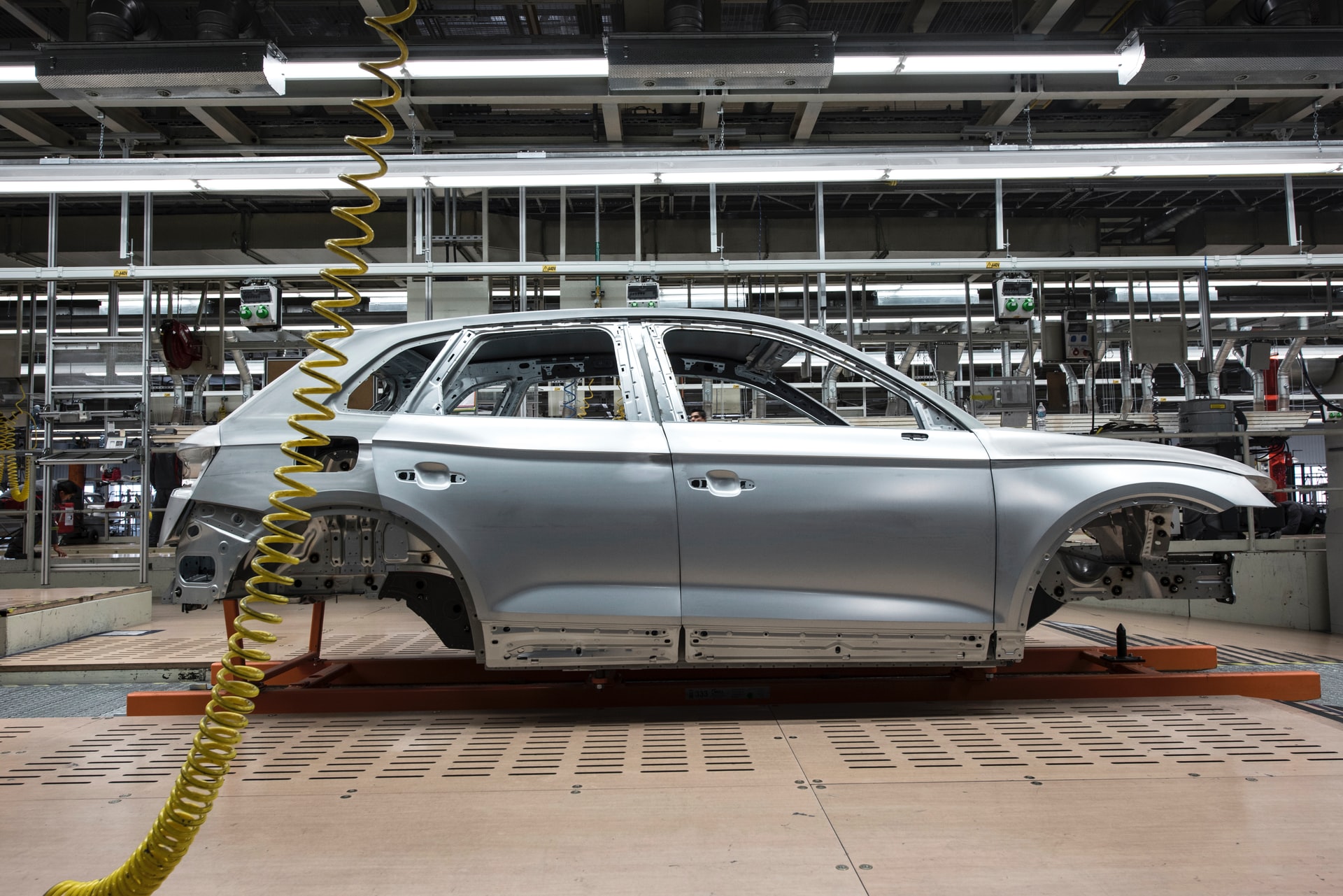
Auto sector driving blind, Reliance says
The beleaguered US auto industry is reacting as best it can to volatile market conditions, but future visibility remains murky, says Reliance Steel and Aluminum executives on a recent earnings conference call.
Reliance president Karla Lewis says auto is “operating with the least visibility that they’ve had in quite some time, and they’re just reacting to support their customers.”
Most production schedules are being done week-to-week, due to the ongoing shortage of semiconductors and other critical components, she adds.
Reliance is a major supply to the US auto industry, Kallanish notes. While auto’s woes have impacted Reliance, the company has offset that through shifting volumes and finding sales opportunities outside of auto.
“We think our operations have done well managing through that [volatility],” Lewis says. “They’re able to move their business around with their multiple locations to support whichever platforms we need to. They’re also seen a lot of opportunity to pick up other non-automotive business with their lines.”
Dan Hilliard USA

WTO recommends EU align safeguards with GATT
The EU should bring its definitive safeguard measure into conformity with the Agreement on Safeguards and the General Agreement on Tariffs and Trade (GATT 1994), a WTO Dispute Settlement Body panel has recommended.
In March 2020, Turkey requested consultations with the EU pursuant to Articles 1 and 4 of the Understanding on Rules and Procedures Governing the Settlement of Disputes (DSU), Article XXIII:1 of GATT 1994, and Article 14 of the Agreement on Safeguards. Consultations were held on 29 April 2020 but failed to resolve the dispute.
In July of that year, Turkey requested the establishment of a panel pursuant to Article 6 of the DSU and Article 14 of the Agreement on Safeguards. The DSU subsequently established a panel.
In concluding its investigation last week, the panel found that Turkey has successfully established that the EU’s definitive safeguard measure is inconsistent with Article XIX:1(a) of the GATT 1994. This is because the European Commission did not ascertain that the increase in imports took place as a result of the unforeseen developments it had identified, and did not identify in its published reports the obligations whose effect resulted in the increase in imports, the WTO says in a note seen by Kallanish.
Also established was that measures are inconsistent with Article 4.1(b) of the Agreement on Safeguards, because two central elements of the European Commission’s determination of a threat of serious injury were not “based on facts” as required by that provision, the note adds.
Turkey did not however establish that measures are inconsistent with Article XIX:1(a) of the GATT 1994 and Articles 2.1, 3.1, 4.1(c), 4.2(a), 4.2(b), and 4.2(c) of the Agreement on Safeguards, or with Article XIX:1(a) of the GATT 1994 and Articles 2.1 and 4.2(a) of the Agreement on Safeguards. They are also not inconsistent with Article 5.1 of the Agreement on Safeguards, Article XIII:2(d) and the chapeau of Article XIII:2 of the GATT 1994 and Article 5.2(a) of the Agreement on Safeguards, or Article 7.4 of the Agreement on Safeguards.
In addition to requesting recommendations, Turkey asked the WTO to suggest that the EU revoke the safeguard at issue. However, the trade organisation has declined to do so.
Adam Smith Germany
Some Turkish mills sharply cut HRC offer prices: sources
Some Turkish producers of hot-rolled coil reduced their offer prices significantly on April 29, sources told S&P Global Commodity Insights, as falling prices at Chinese mills and a slump in imported scrap pricing raised the pressure on Turkish mills amid a sluggish market.
Other producers, however, are still waiting to gauge market direction after the three-day Ramadan holiday starting May 2.
A large Turkish producer on April 29 began to offer HRC as low as $1,050/mt EXW for July rollings, a manager of a major Turkish pipe producer told S&P Global.
This is down more than $100/mt from HRC list prices from Turkish mills last week.
S&P Global’s assessed domestic HRC at $1,245/mt FOB on April 22.
A manager of a major Turkish HRC producer told S&P Global April 29 that it is not officially offering $1,050/mt EXW. “But we will accept it, if someone says he will buy it at that price,” he said.
An executive of another HRC producer said it has been exporting HRC at $1,100-$1,120/mt FOB, although it is not currently offering HRC to the domestic market as there is no ahead of Ramadan.
A service center manager said Russian mills were heard to be offering extremely low prices to Turkey. “They don’t have any other options for exports, besides Turkey and China,” the manager said. “So they are giving crazy prices to these countries.”
A pipe producer source told S&P Global on April 27 that he had heard a Russian producer had recently sold some HRC tonnage to Turkey at $1,000/mt CFR.
“Chinese suppliers have been offering HRC as low as $970/mt CFR Turkey, while Indian mills’ offers have been in a range of $990-$1,000/mt CFR in recent days,” the manager also said.
Confirming an HRC offer by a Turkish producer at $1,050/mt EXW on April 29, a manager of a Turkish steel producer said prices for hot-dip galvanized coil also fell significantly in a bearish market.
“Because of the Ramadan holiday starting next week, there are next to no transactions in the market,” one coated coil producer said, adding that scrap prices were also weak, with the market expecting scrap prices to soften further.
Turkish deepsea import ferrous scrap prices have declined gradually in recent weeks due to a sluggish finished product market. S&P Global assessed Turkish imports of premium heavy melting scrap 1/2 (80:20) at $560/mt CFR April 28, down a further $5/mt on the day.
A trading source said cold-rolled coil prices in Turkey are currently above those of hot-dipped galvanized steel, noting that high demand and less availability of CRC in the domestic market, along with low demand and more capacity for galvanized products, continued to put pressure on HDG prices. The source put mill offers for HDG 0.50 mm thickness at $1,160/mt EXW.
A coated coil producer said its offer price for 0.50mm thick HDG was at $1,150-1,200/mt EXW on April 29.
Another producer source, however, said some producers have already begun to offer HDG below $1,100/mt EXW amid sluggish market sentiment.
— Cenk Can