

EU exports to US buck overall negative trend
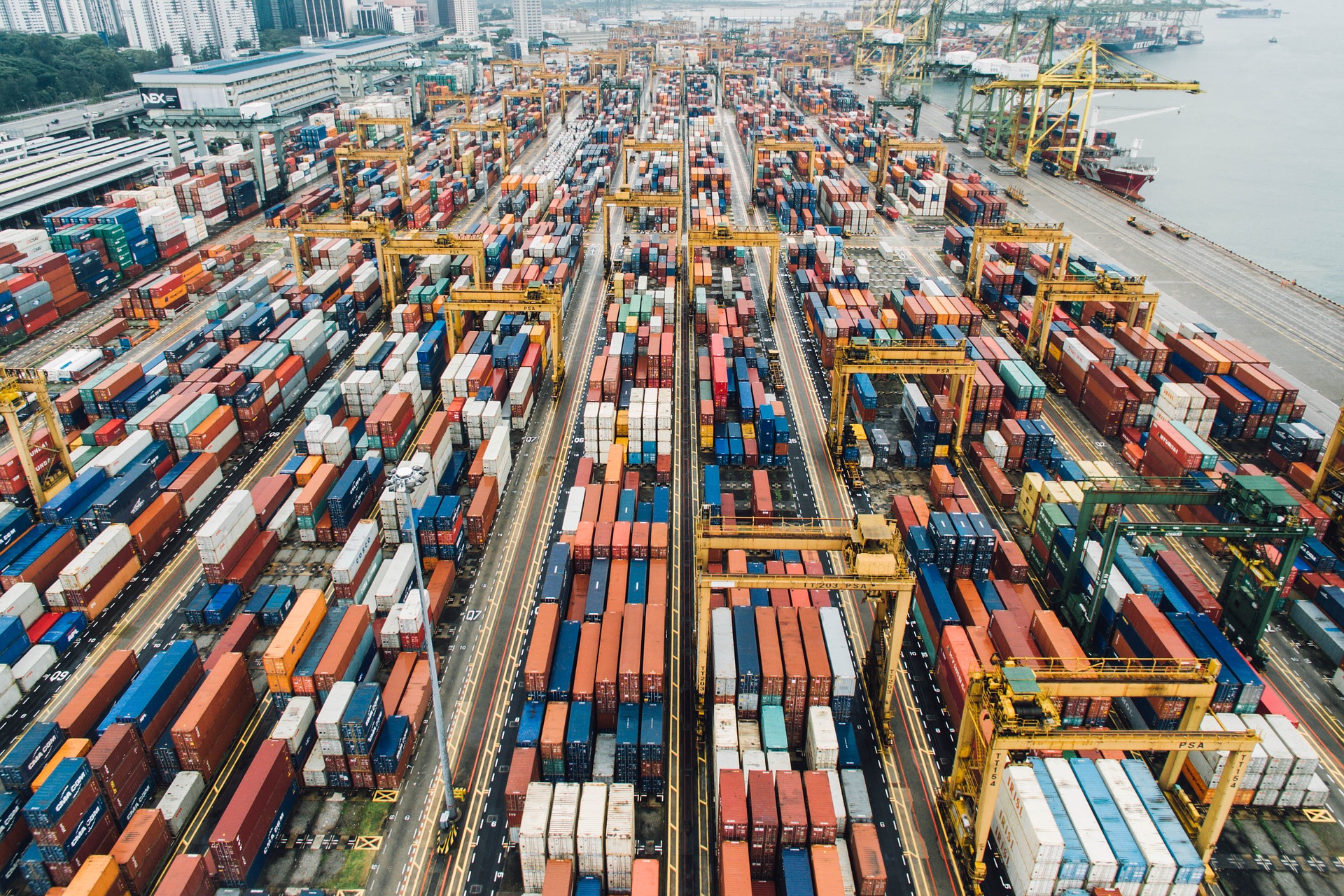
European finished steel exports to the United States are bucking the trend of overall export decline from the continent to third countries, Kallanish learns from the latest data published by Eurofer.
In the fourth quarter of 2021, exports of finished products from the EU to the US jumped 43% on-year, thereby re-establishing the US as the third-largest importer globally of European finished steel, after Turkey and the UK.
In full-year 2021, 2.2 million tonnes of finished products were exported to the US by European steelmakers, up from 1.6mt in 2020. The figure could well increase further this year after the implementation from January of the US-EU trade deal that will swap US Section 232 tariffs for a tariff-rate quota system.
In 2021, European steelmakers exported less than 20mt of finished products, down marginally from 2020 levels. Back in 2012, the continent was exporting over 30m t/year of products, Kallanish notes.
The negative trend seen during the last ten years for finished steel exports has impacted most destinations. The US is among the few markets that could well increase trade with Europe in the medium term. Between 2014 and 2018 Europe was exporting 3-3.5mt/y of finished steel products to the US, according to Eurofer data.
Emanuele Norsa Italy


BMW Q1 sales fall 6% on year, EV sales rise 28%
BMW Group delivered 596,907 vehicles to customers in the first quarter of 2022, down 6.2% from an all-time high in Q1 2021, due to limited availability of components and large-scale lockdowns in China, the German automaker said May 5.
BMW’s Q1 sales of electric vehicles surged 27.7% on the year to 89,669 units, with battery EV sales more than doubling on the year to 35,289 units.
Generally higher demand for EVs has boosted battery raw material prices. The Platts seaborne lithium carbonate and lithium hydroxide assessments from S&P Global Commodity Insights surged 121.9% and 152.4%, respectively, since the start of 2022 to $75,000/mt CIF North Asia and $80,000/mt CIF North Asia on May 4.
BMW said the BMW iX3 and the MINI Cooper SE were the highest selling EVs in Q1, with sales at 11,200 and 8,925 units, respectively.
The company said its BMW i7 luxury sedan, the BMW iX1 and the BMW i3 would expand its BEV range in China in 2022.
The automaker said BEVs were on track to make up at least 10% of its sales volume in 2022.
BMW already has 15 fully electric models in production in 2022, covering around 90% of its current segments. The company aims to have more than 2 million BEVs on roads by 2025.
The automaker was upping the pace of its e-mobility ramp up and accelerating the transformation toward sustainable mobility, BMW Group CEO Oliver Zipse said.
“And with our holistic approach to reducing CO2 emissions from our vehicles throughout the value chain, we are making an effective contribution to combatting climate change,” he said.
BMW’s sales in the Americas rose 2.9% year on year to 99,169 units in Q1, with sales in the US up 3.7% at 80,974 vehicles.
In Europe, the company’s sales fell 7.8% on the year to 220,393 units in the quarter, with sales in Germany, its largest market, down 4.1% at 60,098 vehicles.
Sales in Asia dropped 7.9% to 265,065 units, due to renewed COVID-19 restrictions in China, where sales declined 9.2% to 208,953 vehicles.
The BMW brand delivered 519,796 vehicles to customers in Q1, down 7.3% on the year. MINI Q1 sales rose 1.1% on the year to 75,487 vehicles, due to increased interest in the MINI Cooper SE EV and MINI Countryman plug-in hybrid models, which together accounted for over 17% of total MINI sales.
The group sold 1,624 Rolls-Royce motor cars in Q1, up 17.7% year on year, mainly due to growth in sales of the Ghost and Cullinan models.
— Jacqueline Holman


Alternative-powered vehicles gain market share in EU from ICE automobiles in Q1: ACEA
Alternative-powered vehicles continued to gain market share from diesel- and gasoline-powered, internal combustion engine automobiles in the first quarter in the European Union, data from the European Automobile Manufacturers’ Association showed May 5.
The automotive sector is a key industry for steel producers. On average, 900 kg of steel is used per vehicle. Automotive is also a major consumer of zinc, aluminum alloys, copper, stainless steel, platinum, palladium and rhodium and also battery materials, including nickel, cobalt and lithium.
Platts assessed Northwest European hot-rolled coil at Eur1,260/mt, or $1,330.43/mt, ex-works Ruhr May 4, up 36.7% since the start of 2022.
Hybrid-electric vehicles represented 25.1% of total passenger vehicle registrations in the European Union in Q1, up from 20.9% in Q1 2021, while battery-electric vehicles almost doubled their market share year on year to 10%, surpassing plug-in hybrids, which accounted for 8.9% of the EU market. Diesel- and gasoline-powered vehicles still dominated the market, with a combined share of 52.8% during the quarter.
Gasoline and diesel vehicles
The EU’s Q1 diesel vehicle registrations fell 33.2% year on year to 378,009 units. The market share of diesel-fueled vehicles shrank 5.3 percentage points year on year to 16.8%. Diesel registrations in France fell 44.1%, Italy 39.2%, Spain 30.8%, and Germany 20.2%.
The market share of petrol vehicles contracted to 36.0% in Q1, from 40.8% a year ago, with petrol vehicles the most popular choice in the market and registrations of 808,039 units.
Alternative-powered vehicles
BEVs registrations surged 53.4% year on year to 224,145 vehicles in the EU in Q1, with some EU markets showing a triple-digit gain. Registrations in Spain jumped 110.3%, France 42.7% and Germany 29.3%. Italy was the only EU market to post declines in BEV registrations of 14.9%, while Romania recorded an increase of 408%.
PHEV registrations slipped 5.3% year on year in the EU during the quarter to 199,107 units.
HEVs were the most common fuel type after petrol in the EU, with Q1 registrations up 5.3% year on year at 563,030 units. The EU’s registrations of natural gas vehicles slumped 56% year on year in Q1 to 6,289 units.
LPG-fueled vehicle registrations jumped 48.6% year on year to 67,717 units in the quarter.
— Annalisa Villa
UK vehicle sales drop 15.8% in April, 2022 outlook downgraded: SMMT
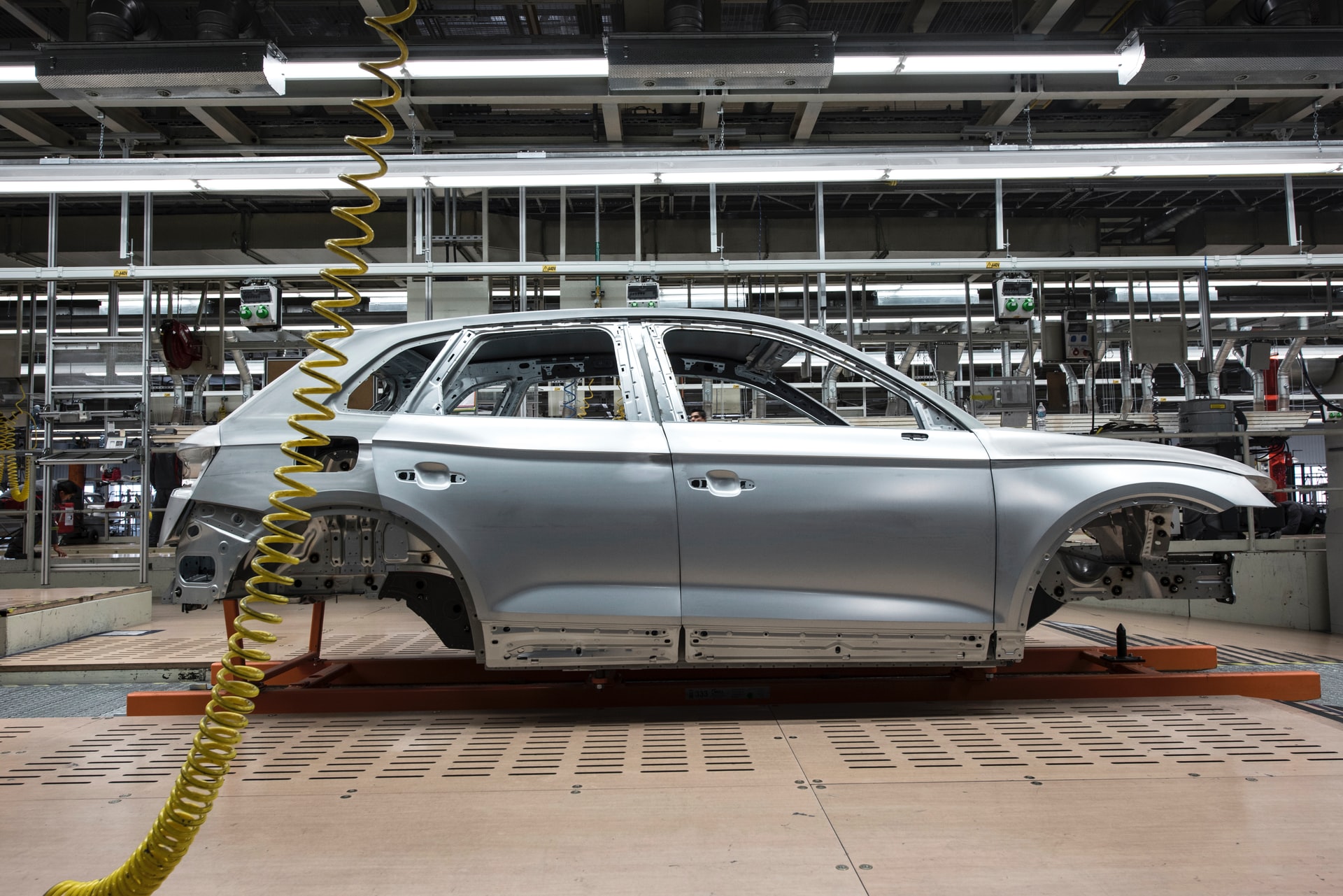
New car registrations in the UK totaled 119,167 units in April, dropping 15.8% year on year as supply chain shortages continued to constrain deliveries, according to data released May 5 by the Society of Motor Manufacturers and Traders.
The April volume was also 51.1% lower than March’s volume.
“The worldwide semiconductor shortage continues to drag down the market, with global geopolitical issues threatening to undermine both supply and demand in the coming months,” SMMT CEO Mike Hawes said.
The auto sector was facing further economic headwinds, the SMMT said, with rising inflation due to rising energy and fuel costs, and further supply chain and other uncertainties arising from the global political situation and the effects of the Russian invasion of Ukraine.
Automakers were doing what they could to deliver the latest low and zero emission vehicles, Hawes said, urging buyers to consider placing orders as soon as possible to benefit from incentives, low interest rates and reduced running costs. Grants for BEVs are set to be in place until at least early 2023.
“Accelerating the transformation of the new car market and the carbon savings demanded of road transport in such difficult times requires not just the resolution of supply issues, however, but a broader package of measures that encourages customer demand and addresses obstacles, the biggest of which remains charging anxiety,” Hawes said.
BEV sales up 40.9% on-year
Battery electric vehicles sales for the month were 12,899 units, up 40.9% year on year, but down 67.2% from March’s record 39,315 units.
The BEV market share was 10.8% in April, up from 6.5% a year ago, but down from March’s 16.1% share to the lowest share level since July 2021.
Higher EV demand has boosted battery raw material prices. The Platts seaborne lithium carbonate and lithium hydroxide assessments from S&P Global Commodity Insights surged 121.9% and 152.4%, respectively, since the start of 2022 to $75,000/mt CIF North Asia and $80,000/mt CIF North Asia on May 5.
Sales of plug-in hybrid EVs fell 32.8% year on year and 59.8% month on month to 6,449 units, taking a market share of 5.4%, down from 6.8% in April 2021.
The market share of hybrid EVs climbed to 11.7% in April, up from 8.3% a year ago, with sales at 13,951 units, a 18.3% year on year jump, but down 49.7% from March’s volume.
The UK government plans to ban the sale of new gasoline and diesel cars by 2030.
Meanwhile, the market share of petrol and diesel internal combustion engine vehicles moved above 50% for the first time since October 2021, accounting for a combined 51.5% of total new passenger car sales in April.
Petrol cars continued to hold the largest market share at 45.8% or 54,633 units, although this was down from 50.3% a year ago. The volume dropped 23.2% year on year and 46.6% month on month, according to the SMMT.
Diesel vehicles’ market share was steady from March at 5.6%, but down from 9.9% a year ago, to 6,725 units, down 52% on the year and 51% lower than March’s volume.
2022 outlook revised
The SMMT revised its market outlook for 2022 lower due to the ongoing impact of supply chain constraints and broader macro-economic factors, it said.
It now expects 1.72 million new passenger vehicles to be registered in 2022, down from the previously expected 1.89 million outlook.
While this would still be a 4.5% rise on 2021’s volumes, it highlighted the effect of the semiconductor shortage on supply and anticipated impacts from rising living costs, The SMMT said.
It also downgraded its outlook for plug-in vehicles, with BEV registrations expected to be 289,000 units, down from 307,000 units, PHEVs at 144,000, down from 163,000, and HEVs down from 198,000 to 193,000.
Overall, plug-in EVs are expected to make up 25.2% of total registrations in 2022, with BEVs alone due to comprise around one in six new cars on the road, the SMMT said.
The Ukraine war was complicating supply chain challenges that were already lingering from the pandemic and the rising cost of living was adding further uncertainty for the automotive industry, KPMG UK Head of Automotive Richard Peberdy said in a May 5 note.
“Yet in the face of weakening consumer spending power and rising fuel and energy costs, car sales demand has remained relatively robust so far this year, compared with the very limited supply,” he added.
— Jacqueline Holman

Eurofer revises EU steel demand forecast for 2022 to 2% drop from previous 3% growth
Steel consumption in Europe could contract by almost 2% this year as a result of soaring energy prices, ongoing disruptions to supply chains and the shock of the war in Ukraine, European steel association Eurofer said May 5.
In its forecast early February, Eurofer had expected EU steel consumption to grow by 3.2% year on year in 2022 and by 1.7% in 2023. But now a market contraction — which would be the third in the space of four years — looks to be likely, Eurofer said.
“The evolution of the steel market for 2022 and 2023 remains subject to a high level of uncertainty, which is likely to continue to undermine demand from steel-using sectors”, Eurofer Director General Axel Eggert said in a statement.
High uncertainty is set to last at least until the end of 2022, depending on developments around Russia’s invasion of Ukraine and its consequences for global supply.
“In the current context, amidst a worsening energy crisis and shortages in raw materials, we cannot exclude a new recession or a stagflation scenario,” Eggert said.
In line with the updated forecast, steel consumption in Europe is set for a 1.9% decrease this year, followed by a 5% recovery in 2023. It strongly rebounded in 2021 (+15%), after the 10.7% slump in 2020.
The growth in EU steel end-user sectors’ output over 2022 is now expected to halve to 2%, down from 4% forecasted in early February. In 2023, it could inch up comparably, by 2.3%, according to Eurofer.
Last year marked a 7.3% post-pandemic rebound in total output in steel-using sectors despite soaring energy prices in the second half of the year, component shortages and lower run rates especially in the automotive sector.
On May 4, Platts assessed Northwest European hot-rolled coil price at Eur1,260/mt, or $1,330.43/mt, ex-works Ruhr, down Eur5 on the day.
— Ekaterina Bouckley

EU HRC lower as buyers yet to resume purchasing
EU HRC prices remained lower as buyers reportedly monitoring trade flows over price negotiations as a demand marker.
Hot-rolled coil in Northern Europe was assessed down Eur10 at Eur1,250/mt ex-works Ruhr. HRC in the South was also down on the day, at Eur1,160/mt ex-works Italy.
Sources reported a continuation of the waiting trend characterizing the market recently, with buyers sitting on strong inventories, and mills keen to keep prices high against rising production costs.
A buyer source reported mills as “desperate” for orders given reduced demand and cancellations from the automotive industry.
“Mills suggested full capacities for Q1-Q2 on automotive orders and rising energy costs, and even when those contracts were cancelled they were optimistic on demand recovering to fill the gaps. Now, however, demand is still gone and mills are desperate for new orders – we’ve been told we could still secure Q2 volumes if desired,” the source said.
The source considered Eur1,200/mt ex-works as achievable on larger volume bids.
A trader source confirmed the flat steel market as “dead silent,” reporting buyers as focused more on trade flows and stock levels than speculative pricing due to continued downstream demand and strong buyer inventories.
“Buyers are monitoring stock movement over prices. Overall demand is not bad, the market is just a bit stuck now. A lot of import material arrived in the first quarter so buyers need to evaluate the pace at which stocks are depleting before they make any fresh deals.”
Various sources expected buyers to return to the market by the end of May to restock.
While end-user demand was reported as relatively strong, sources were more pessimistic about the prospects of the automotive industry.
Mill and buyer sources shared pessimism for long-term demand for automotive, in response to talks that a large automotive plant would return to the Italian market in the near-term.
“We may see short-term demand pick-up to cover orderbooks, but I don’t see end-consumers as in any real position to stimulate the industry in the long-term. The cost-of-living crisis is going to get worse before it gets better – who’s investing in a car in this market?” said the mill source.
— Benjamin Steven, Maria Tanatar

ArcelorMittal posts 7% fall in Q1 crude steel output over Ukraine war
ArcelorMittal manufactured 16.3 million mt of crude steel in the first quarter of 2022, down 7.4% year on year and 1.2% lower quarter on quarter, the Luxembourg-based steelmaker said May 5.
The company’s first-quarter performance was overshadowed by the war in Ukraine, CEO Aditya Mittal said, as crude steel output fell 9% on year to 2.5 million mt in Q1 for its ACIS division, “primarily due to the suspension of production in Ukraine.”
ArcelorMittal Kryvyi Rih shut its blast furnaces at the onset of Russia’s invasion of Ukraine. On April 11, it restarted one out of three furnaces, BF No. 6, with low levels of pig iron production, running at about 50%-60% of capacity.
ArcelorMittal Kryvyi Rih was due to have a new 5 million mt/year pellet plant built with production slated for Q4 2023 but the completion date “will depend on when the project can be effectively resumed due to the Russian invasion of Ukraine,” ArcelorMittal said.
“We now forecast a significant contraction in demand in the CIS region, which includes Commonwealth of Independent States and Ukraine, by more than -10%, from the previous range of +0% to +2%,” ArcelorMittal said.
For its European operations, ArcelorMittal cited stable Q1 crude steel production of 8.67 million mt against 8.62 million mt in Q4, but down 10.4% from 9.70 million mt in Q1 2021. The annual fall was due to the formation of a public-private partnership between Invitalia and AM InvestCo Italy, renamed Acciaierie d’Italia Holding in April 2021, during which ArcelorMittal “deconsolidated the assets and liabilities.”
For its NAFTA operations, ArcelorMittal projected that a new 1.5 million mt/year electric arc furnace at its AM/NS Calvert venture in Alabama will be completed in the second half of FY 2022-23 instead of the first half. ArcelorMittal is considering an option to add 1.5 million mt/year of capacity to AM/NS Calvert, a 50-50 joint venture between ArcelorMittal and Nippon Steel Corp.
— Clement Choo
Vitkovice Steel pauses deliveries, halts production on slab supply disruptions
The Czech Republic’s heavy plate re-roller Vitkovice Steel has notified its customers that it will pause deliveries due to impacts from the EU’s April 8 sanctions against Russia, according to a letter sent by the mill to its customers early in the week and seen by S&P Global Commodity Insights.
The sanctions, announced by the EU on April 8, resulted in slab supply disruptions, and as a result, “the quarto mill will be presumably halted for 10-12 business days,” the letter said. Consequently, shipments of the plate will also be delayed.
The round of sanctions against Russia included measures against JSC GTLK, the owner of the carrier vessels Astrol-2 and V. Smyslov. The vessels carried 15,400 mt of slab that were supposed to be unloaded in Gdansk and Szczecin ports in Poland “last weekend,” the letter said.
“The above mentioned restrictions came into effect immediately, without any grace period,” the steelmaker said.
“The vessels’ captains had no other option but to turn back to their loading port, where they will be ported again and the goods will [be] re-loaded onto another, safe vessels,” the letter said. “Even if we are doing our best to find alternative vessels with safe ownership (which is a challenge by itself due to the dynamically changing circumstances) this incident will lead to short-term raw material shortage at our plant.”
In Northern Europe, the assessment for heavy plate was stable at Eur1,800/mt ex-works Ruhr on April 29. On May 5, a German distributor said that prices for plate in Northern Europe were Eur1,700-1,800/mt ex-works, and that absence of the Vitkovice Steel that has traditionally been focused on sales to Germany is likely to support the prices.
The region’s mills have been committed to long-term projects and had small tonnages available for the spot buyers.
— Maria Tanatar, Benjamin Steven
UK sanctions Russian steelmaker Evraz
The UK government has placed sanctions on Russian mining and steel company Evraz due to its operations in sectors of strategic significance to the Government of Russia.
Evraz’s core operations are in Russia and it produces 28% of all Russian railway wheels and 97% of the country’s rail tracks, which were “of vital significance as Russia uses rail to move key military supplies and troops to the frontline in Ukraine,” the government said in a May 5 statement.
“Along with existing measures, this action will further deter companies operating in strategic sectors in Russia,” the UK said, adding that the asset freeze meant that no UK citizen or company could do business with Evraz.
“These sanctions will further chip away at Putin’s financial reserves and siege economy, and support Ukraine’s continued resistance,” the government said.
Steel prices have been boosted by reduced supply from Russia due to sanctions, with S&P Global Commodity Insights assessing Northwest European hot-rolled coil down at Eur1,250/mt, ex-works Ruhr May 5, up 36% since the start of 2022.
The UK ruled March 10 to freeze the UK assets of a few Russian oligarchs, including Evraz shareholder Abramovich, and prohibited them from entering the country and having any business with UK citizens and companies.
On March 11, all Evraz non-executive directors — Alexander Abramov, Alexander Frolov, Alexander Izosimov, Deborah Gudgeon, Eugene Shvidler, Eugene Tenenbaum, Karl Gruber, Maria Gordon, Sir Michael Peat, and Stephen Odell — resigned.
Evraz said at the time that Abramovich holds a 28.64% stake in the company and, over the last five years, appointed only two board directors.
Evraz also said it did not consider Abramovich as a person exercising effective control of the company, as he did not hold more than 50% of the shares and had no right to appoint or remove a majority of the board of directors. Evraz, therefore, considers UK sanctions against a shareholder shall not apply to the company itself.
Furthermore, Evraz denied in the statement that it had been involved in providing services, funds, resources, goods or technology toward destabilizing Ukraine, and said it had not supplied steel to the Russian military, which may have been used in the production of tanks. Evraz sells steel to infrastructure and construction sectors only, it added.
The company’s listing on the London Stock Exchange was temporarily suspended March 10.
This was followed by Evraz indefinitely suspending the spinoff of its coal business March 11, which was then canceled in early-April.
On April 6, the UK’s Trade Remedies Authority launched a review of steel imports from Russia and Belarus to assess whether the tariff rate quotas for the two countries should be reallocated to avoid a potential shortage of steel.
The TRA said at the time that due to sanctions imposed on some imports from Russia and Belarus, exporters may not be able to fulfil their quotas and reallocating them to other countries “could help ensure a regular supply of steel needed for construction, engineering, the automotive industries and other uses.”
— Jacqueline Holman, Ekaterina Bouckley
VW Q1 passenger vehicle sales down 26% on year, BEV sales up 74%
Automaker Volkswagen sold 1 million passenger vehicles globally in the first quarter of 2021, down 25.6% year on year, due to the war in Ukraine, the global semiconductor shortage and renewed COVID-19 measures in China, according to its Q1 interim report released May 4.
However, it said the backlog of orders across all drive types had reached a historic high of more than 670,000 vehicles in Europe alone and VW was working on keeping delivery times as low as possible and trying to process the large backlog of orders swiftly.
Despite the fall in overall sales, Q1 sales of battery electric vehicles rose 74% on the year to 53,400 units, most of which were its fully electric ID.41 model, which made up more than one in two EVs sold, VW said.
On the back of this, the automaker will expand production capacity of the model, with its Emden plant in Germany due to start ID.4 series production May 20, with production to start in Chattanooga in the US in the second half of 2022.
Increased demand for EVs has been one factor boosting battery raw material prices, with S&P Global Commodity Insights’ Platts seaborne lithium carbonate and lithium hydroxide assessments up 121.9% and 152.4% respectively since the start of 2022 to $75,000/mt CIF North Asia and $80,000/mt CIF North Asia on May 4.
China, including Hong Kong, was VW’s largest market in the first quarter, with sales down 23.8% on the year to 557,900 units.
This was followed by Western Europe at 215,400 units, down 20.5% on the year, then North America at 95,800 vehicles, down 24.8%.
South America sales fell 52.1% on the year to 52,300 units, while sales in Central and Eastern Europe dropped 36.8% to 34,000 units and 26,500 units were sold in the Middle East and Africa, down 27.4%.
The only region to see a year-on-year rise from Q1 2021 was the rest of Asia-Pacific at 30,200 vehicles, up 2.1% on the year.
The company managed to improve its economic efficiency in a difficult environment, Volkswagen CEO Ralf Brandstatter said.
“This underscores that Volkswagen has chosen the right path for achieving a lasting improvement in its competitiveness and profitability with the ACCELERATE strategy. We have therefore laid a very solid foundation for the accelerated transformation to zero-carbon and fully networked mobility,” he added.
VW’s operating profit before special items for the quarter rose 4.7% on the year to Eur513 million ($540.1 million), while sales revenue dropped 15.3% to Eur14.9 billion, although operating return on sales before special items rose to 3.4%, up from 2.8% in Q1 2021.
Looking ahead, VW said it was working on improving its cost efficiency to strengthen its competitiveness in the long term.
“We are currently facing different challenges such as the geopolitical uncertainty, commodity and energy price hikes and the effects of the pandemic in China,” Volkswagen CFO Alexander Seitz said.
He added that the company was using cost-cutting measures and improving the quality of its operating result in specific areas to counter these risks.
While VW was maintaining its target of an operating return on sales of 6% in 2023, Seitz said this was contingent on the evolution of the war in Ukraine and its impact on the global economy.
— Jacqueline Holman