

EU should stop scrap exports, review safeguards: Pasini
Giuseppe Pasini, president of Italian-headquartered Feralpi Group, believes current market uncertainties call for the EU to cease scrap exports and review safeguard measures.
The executive said in a webinar attended by Kallanish on Tuesday that he remains more concerned over the raw materials supply tightness created by the ongoing war in Ukraine, rather than energy prices. The problems created by disrupted CIS raw material supply need to be addressed by the EU by limiting scrap exports to third countries.
“We are asking with the local steelmakers’ association to block exports of Italian scrap outside of Europe and we believe the same should be done on a European level,” Pasini observed. “We are experiencing a strategic and economic war and we need to preserve our own internal raw materials.”
Looking beyond raw materials, Pasini also raised the possibility of limiting the scope of existing safeguard measures.
“During a difficult moment such as the one we are living through, steelmakers need to understand the needs of the entire supply chain of the steel industry in Europe and understand that a relaxation of safeguard measures could be necessary,” he commented.
Feralpi operates electric arc furnace-based mills in Italy, Germany and France. Pasini confirmed that last week, as energy prices peaked in Italy, all steelmakers were forced to pause, stop or reduce production temporarily.
On Tuesday, the European Commission confirmed a ban on imports into the EU of Russian steel covered by safeguard measures. Safeguard quotas assigned for products from Russia – and Belarus – are set to be reassigned to other third countries. However, authorities have not yet addressed within the safeguard system the limited capability of Ukrainian mills to ship to Europe.
Emanuele Norsa Italy

Turkish steelmaker association calls on EU to boost imports from Turkey
Turkey is well placed to provide steel to the EU in the absence from the market of mills in the Commonwealth of Independent States due to Russia’s invasion of Ukraine, according to Ugur Dalbeler, vice president of the Turkish Steel Exporters’ Association and CEO of major steelmaker Colakoglu.
However, Dalbeler also underlined that the conflict was pushing up Turkey’s input costs, with CIS mills typically providing a good deal of raw material and semi-products to Turkey. Rising energy prices have also contributed to higher input costs, Dalbeler added.
“Turkey imports around 7 million mt of raw materials from the CIS every year, which is around 20% of Turkey’s total raw materials imports. We are also importing 7 million mt of semi and finished products from that region, around 50% of Turkey’s total imports of these products,” Dalbeler said.
Although the US and EU have imposed sanctions on Russia following the invasion, Turkey has so far adopted a neutral approach.
S&P Global Commodity Insights assessed the Platts price for Turkish imports of premium heavy melting scrap 1/2 (80:20) at $655/mt CFR March 14, stable on the day at its highest ever level since the assessment began in early 2010.
The assessment has jumped $148/mt from $507/mt CFR on Feb. 23.
Billet prices in Turkey have also surged to over $900/mt ex-works in the same period, while the Platts assessed CIS export billet was at $836.50/mt FOB Black Sea March 14, up $5/mt from March 11.
“Even if Turkey doesn’t impose sanctions against Russia, Turkey’s slab costs will also be affected negatively due to EU and US’ precautions,” Dalbeler said.
Highlighting that Turkey had been importing around 250,000 mt of HRC from CIS mills, Dalbeler predicted some short-term supply issues, adding that alternative supply sources — including China, South Korea, Japan, India and Vietnam — could emerge.
“However, in line with the additional 6 million mt HRC capacities to come online in the mid-term, all of these [steel input] tonnages could be met with domestic sources,” Dalbeler said.
“The EU may remove, suspend quotas in this sentiment or may change country quotas to a global quota, as Turkey becomes the only alternative that Russia was exporting in the nearby geography,” Dalbeler said.
— Cenk Can

EU HRC: End-users frustrated amid further price increases
EU hot-rolled coil buyers and end-users expressed growing frustration March 15 as mills passed production cost hikes downstream.
With mill offers steadily increasing, market participants expressed concern on the day for end-user profitability, especially considering the retroactive imposition of surcharges on concluded contracts.
“Customers are complaining daily about increasing prices, and new energy surcharges aren’t helping at all,” a service center source said. “We’re in a dangerous and challenging area — revising contracts risks credibility.”
A mill source confirmed concerns further upstream, reporting that inquiries as to the status of orders was “constant,” with customers anxious that orders would not be fulfilled because of energy and supply disruptions.
Some Northern European mills continued to return to the market week beginning March 14, with deals confirmed on the day as high as Eur1,500/mt. The deals were concluded for limited volumes and offered to longer-term customers — confirming reports that those holding established relationships with mills could better access the available material on the market.
Sentiments on future price direction varied, with one distributor source predicting current levels as near peak.
“I don’t see the demand for these higher levels continuing,” the distributor source said. “If you need material immediately, then yes, you’ll pay a higher price, but with demand gone from key industries like automotive, I don’t think further increases are likely long term.”
A mill source was less optimistic:
“Anything is possible, but prices already rose 300 to 400 euros in the last weeks without any uptick in demand — the increases we are seeing are based on speculative factors like whether material is guaranteed or at least likely to arrive.”
S&P Global Commodity Insights assessed the TSI for HRC for Northern Europe up Eur75 on the day at Eur1,400/mt ex-works Ruhr. HRC in Southern Europe was assessed up 10 at Eur1,310/mt ex-works Italy.
— Benjamin Steven
Ukrainian steel association urges worldsteel Russian expulsion
Ukrainian steel association Ukrmetallurgprom has appealed to worldsteel to exclude all Russian ferrous companies from the organisation, Kallanish notes.
“We are asking you to exclude all Russian metallurgical enterprises, because they are unworthy to occupy a place in the global metallurgical community and enjoy the benefits of membership in the association,” says a letter from Ukrmetallurgprom addressed to worldsteel chairman Sajjan Jindal and director general Edwin Basson. “Your support will be a contribution to our victory and the triumph of justice for metallurgists and all the people of Ukraine.”
Evraz, MMK, Metalloinvest, NLMK Group, TMK, Severstal and the Russian Steel Association are worldsteel members.
Meanwhile, on 13 March Metinvest’s Avdeevka Coke Plant was subjected to massive shelling by Russian troops, the Ukrainian steelmaker says.
“The shells hit the first and second coke shops, the second tar distillation and coal preparation shops, and the warehouse. There were no casualties,” the statement says. “As a result of the shelling, the factory thermal power plant, which supplies heat to Avdiivka, has stopped. However, production at the plant continues.”
Metinvest said last week its iron ore mines in Kryvyi Rih are operating at 30-40% of their capacity, while pellet producer Ferrexpo continues to produce and ship product by rail to customers in Europe.
Svetoslav Abrossimov Bulgaria
ArcelorMittal Poland maintains 2021 production
ArcelorMittal Poland (AMP) produced 4 million tonnes of crude steel in 2021, inching up from 3.9mt in 2020. However, this was still down from 4.8mt in 2019, with the Krakow plant’s hot-end being decommissioned for good in 2020, Kallanish notes.
AMP said in January it is investing PLN 100 million ($25.2m) to modernise the cold rolling mill at its Krakow site by year-end, with a view to increasing production capacity but at stable electricity consumption (see Kallanish passim). The firm appointed Frederik Van De Velde its new chief executive from 1 January.
ArcelorMittal’s sales in Poland meanwhile surged 64% on-year in 2021 to $5.3 billion, putting it in fifth place in the list of ArcelorMittal’s highest-earning countries versus fourth in 2020. These sales represent an acceleration in the 50% growth seen after the first half of 2021 and a strong recovery from the 19% on-year slump reported in 2020.
AMP’s long product sister mini-mill ArcelorMittal Warszawa produced 600,000t of crude steel in 2021, up from 500,000t in 2020.
Neighbouring Czech Republic meanwhile saw ArcelorMittal sales rebound 81% in 2021 to $1.36 billion.
Adam Smith Germany
Russia sanctions impact feedstock sourcing, sales: ArcelorMittal
ArcelorMittal says the imposition of extensive sanctions on Russia by the EU, UK and US affects the company’s sourcing of raw materials and also, potentially, the markets for sales by the group’s operations in the CIS. In 2021, the group recorded $1.6 billion of sales to customers in Russia.
The group’s main CIS operation in Kryvyi Rih has been suspended after Russia invaded Ukraine (see Kallanish passim). It produced 4.9 million tonnes of steel in 2021 and 11.7mt of iron ore. The related property, plant and equipment had a carrying value of $2.3 billion on the company’s balance sheet at end-December 2021. Steel shipments in 2021 were at 4.6mt, generating $4.1 billion of sales, including $0.9 billion of sales to customers located in Ukraine.
“The Company cannot predict the duration of the idling as it will depend on the remaining course of the conflict and the establishment of safe and stable operating and logistical conditions thereafter, as well as potential repairs of any damages sustained,” ArcelorMittal says in its 2021 annual report.
The war could have a material adverse effect on the overall macroeconomic environment, potentially affecting steel and iron ore demand and prices as well as increasing energy costs, ArcelorMittal notes. The conflict, sanctions imposed and Russian reaction could have further destabilising effects on financial markets.
“In addition, sanctions may remain in place beyond the duration of any military conflict and have a long-lasting impact on the region and globally, and could adversely impact the Group’s results of operations and financial condition,” ArcelorMittal concludes.
Adam Smith Germany

EU HRC market looks to alternate supply sources
There was less optimism in the EU coils market March 14 as market participants struggle to find alternatives in upstream supply chains.
A northern buyer source reported reduction in demand, against the bullish pricing trend.
“Prices are rising very quickly but who is buying? Demand seems to be vanishing with the automotive industry and now customers are cutting reserved material – it is difficult to be optimistic,” the buyer said.
Demand may not be as strong given relatively high inventories in the northern market, a service center source said adding they were forced to delay or cancel orders due to supply chain illiquidity.
“It really is a mess. Slab is in such tight supply and even where it is offered there is no guarantee it will arrive,” said the source. “Last week we revised our orderbooks to inform customers of what material will arrive, arrive late, or not at all.”
Liberty Ostrava announced a Eur125 surcharge on all flat-rolled products in the week ended March 11, and sources reported a similar dynamic energy surcharge received from a major producer on the day.
Price increases are consistently tied to supply-side factors, such as energy costs, rather than end-user demand.
A Spanish trader source reported on the day that customers were “fed up” with re-negotiations, preferring to find new sources or take up firm offers.
Import offers were reported as withdrawn by multiple sources, with Asian mills reported by a service center source as postponing offers daily. The source speculated profit maximization as the primary factor, given rapid price developments across Europe.
S&P Global Commodity Insights’ Platts assessed hot-rolled coil for northern Europe up Eur20 on the day at Eur1325/mt ex-works Ruhr. HRC in the south was assessed stable at Eur1300/mt ex-works Italy.
— Benjamin Steven

Kaltenbach Solutions expands to Spain
Beginning of March, representatives of influential Spanish steel traders met with Valentin Kaltenbach
(CEO of Kaltenbach.Solutions) in the Spanish capital to exchange knowledge about strategies and
opportunities for IoT-based performance management in processing. Kaltenbach.Solutions’ digital
solutions for operations in the steel trade and steel processing industry were convincing and the first
pilot projects were agreed.
After preparatory discussions at international meetings such as the Eurometal congresses in Spain
and Portugal last year, a group of innovative steel traders formed around Roberto González Portilla to
explore the possibilities of IoT-based performance management in processing. González Portilla is
CEO of Grupo Tirso and president of the UAHE. The Unión de Almacenistas de Hierros de España
represents the metal trading companies of the Iberian Peninsula and is an important partner of the
steel industry in Europe.
For last week’s meeting, the UAHE made its own premises in the centre of Madrid available. In this
context, Valentin Kaltenbach had the opportunity to present Kaltenbach.Solutions’ innovative
strategy for increasing performance in prefabrication. As a family-run industrial group with over 60
years of experience in recycling, environmental management and the steel industry, Grupo Tirso has
facilities in the north of Spain and on the Canary Islands. Now, Tirso will use Kaltenbach.Solutions’
web-based solutions for the steel trade in a first pilot project to increase the performance of its
machines in pre-processing by 30% or more.

Martín, member of the UAHE Board of Directors), Roberto Gonzáles Portilla (CEO Tirso, President of
the UAHE), Valentin Kaltenbach (CEO Kaltenbach.Solutions), Pol Agustí (General Director Ferros
Agustí) and Fernando Moraga (General Director Grupo Hierros Alfonso and Vice President of the
UAHE) at the UAHE premises in Madrid.
About us
KALTENBACH.SOLUTIONS GmbH strives for long-term cooperation with companies in the steel
processing industry. It has set itself the goal of becoming a preferred partner – to the benefit of both
sides. As a full-service provider with decades of experience in the steel industry, it develops
innovative web- and AI-based industry solutions to improve performance in operations. Thanks to
its expertise in mechanical engineering, KALTENBACH.SOLUTIONS has succeeded in linking the
world of steel with the digital world. This unique link guarantees customers their measurable
success and creates sustainable added value.
Press contact
Nicola Chlench
T +800 454 0 2345
marketing@kaltenbach-solutions.com
www.kaltenbach-solutions.com

Liberty Ostrava announces surcharge on flat steel products
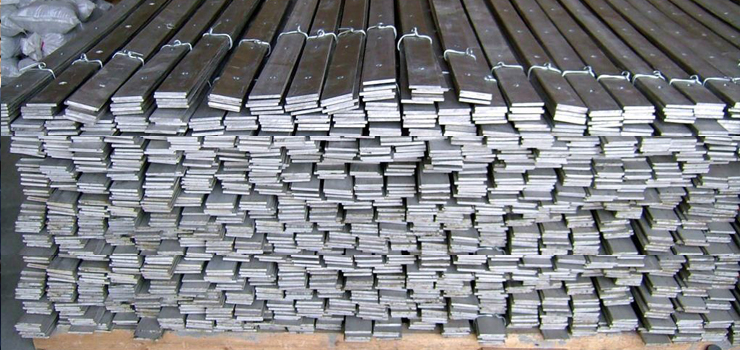
Liberty Ostrava, a major Czech Republic-based steel producer, has announced surcharges of Eur125/mt ($136.71/mt) on flat-rolled products and Eur175/mt on long and tubular products, citing increases in production costs related to the war in Ukraine.
The surcharges were announced March 10 by the company, part of the Liberty Steel group, in a note to customers. The surcharge for long and tubular products include for threaded bars and mining support products.
Liberty Ostrava highlighted the risk that some raw materials suppliers might declare force majeure on shipments as a result of Russia’s invasion of Ukraine, along with higher energy costs.
“Besides the energy cost increase, we start to face force majeure situation with regard to raw materials and suppliers, which we are trying to avert,” Liberty Ostrava said.
The integrated mill is understood to regularly purchase iron ore supplies from Ukraine, and is using pulverized coal injection coal as well as coking coals and met coke.
Russia is the largest supplier of PCI to Europe, with limited spot PCI coal availability currently at Czech and Polish coal mines, according to market sources.
Miners Metinvest and Ferrexpo are continuing to rail iron ore products to markets in Eastern and Central Europe, and their central Ukraine-based mining and processing operations are continuing.
Ferrexpo was reported as having issued force majeure notices on some seaborne contracts Feb. 25 due to disruption of logistics operations following Russia’s invasion of Ukraine Feb. 24.
Some railed iron ore shipments to the border were said to be at lower than typical rates based on rail service availability.
Liberty said commercial invoices would be revised “with immediate effect for material in production or pending shipment.”
A northern-European service center source confirmed receipt of the surcharges but hadn’t heard of new April offers, despite expecting new levels this week.
“I guess they will wait until it’s clear how they can settle the pending orders,” said the source.
Offers for March delivery for hot-rolled material were reported in Central Europe last at Eur875-Eur890/mt ex-works, with no further details.
In the South, a distributor source confirmed similar discussion around surcharges with large clients, at comparable levels of Eur100-Eur120/mt on flat products.
“There have been conversations about surcharges, the idea is to make increasing costs more transparent to end-users,” said the source. “I wouldn’t be surprised to see more surcharges across the market.”
— Benjamin Steven, Hector Forster
EU plate hits record highs on Ukraine war-caused supply chain constraints
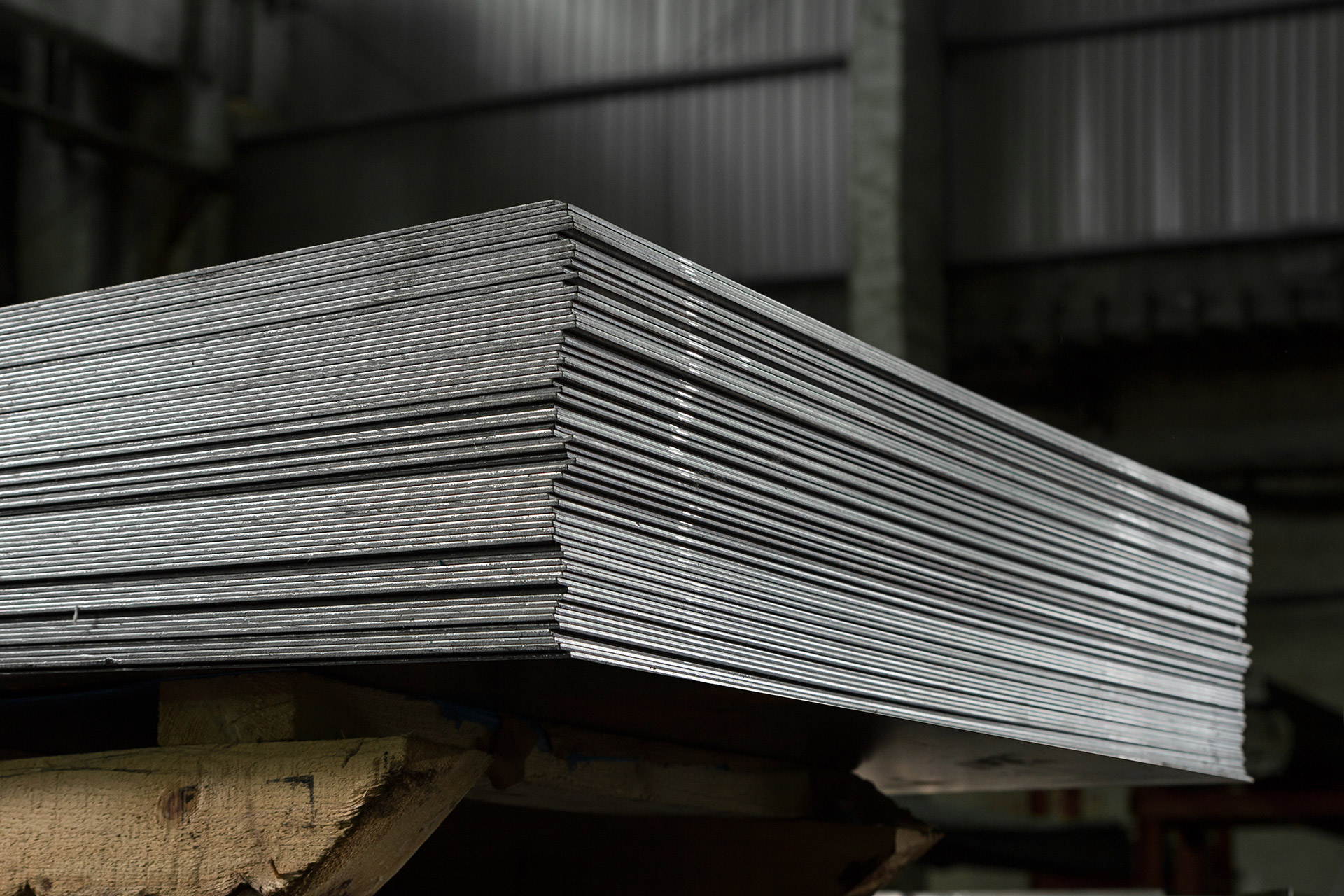
European plate prices saw sharp increases March 11 due to upstream supply illiquidity, largely due to the war in Ukraine, with buyers prioritizing guaranteed delivery over negotiations on price.
EU plate prices hit record levels again March 11, with the Platts assessments for Northern and Southern European plate rising Eur400 on the day.
With slab supply so tight given the EU market’s dependence on CIS area material, plate products were subjected to particular pressure following Russia’s invasion of Ukraine. Rising energy costs were also said to be a major factor.
“Heavy plate is the biggest focus for the market at the moment, followed by hot-rolled coil — everyone is desperate for new sources of supply,” said an Italian distributor source.
“It’s difficult to be in line with client expectations given the lack of necessary materials.”
The source described high acceptance rate on offers, with little negotiation on tradable levels: “I see no negotiation on price anymore, if material is guaranteed, then people will accept offers.”
An Italian mill source agreed, offering, “if you need to buy in this market, you will pay any price”.
In discussing alternative supply sources, market participants considered imports non-feasible.
“Short lead times are off the table, imports may be priced competitively but June delivery may be too late for required inventories,” said a mill source. “it’s a really desperate situation.”
A Nordic buyer said they were avoiding the plate market but reported concern that existing contracts could be cancelled.
“We haven’t seen a situation like this in 15 years,” the buyer said.
A German distributor was also worried about delivery of contracted material.
“Most mills are out of the market due to slab shortages, everyone has full orderbooks but there are significant doubts whether these orders will be fulfilled,” the distributor said.
Platts assessed North European plate at Eur1575/mt ex-works Ruhr March 11 and South European plate at Eur1500/mt ex-works Italy.
— Benjamin Steven