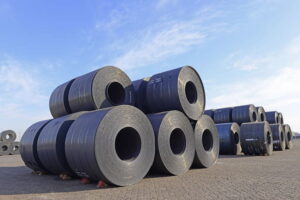
The risk of a progressive and irreversible weakening of European manufacturing is more tangible than ever. Coil service centres are unable to pass on announced coil price increases without further eroding their competitiveness, Italian trade association Assofermet warns in its recent market note obtained by Kallanish.
European steelmakers have embarked on a path of coil price increases, driven by elevated energy costs and supported by trade barriers to curb steel imports, despite the current complex market landscape. This is being met with serious concern by steel distributors and, above all, by downstream manufacturing.
“The gradual resumption of activity after the summer break is now complete, in an international context largely unchanged from the end of July. Steel demand continues to be impacted by geopolitical tensions, which, beyond supporting a climate of deep uncertainty, are keeping energy costs at extremely high levels,” the association states.
Assofermet has renewed its call to EU institutions to extend any trade and environmental barriers to downstream products and semi-finished goods across the supply chain. This, it argues, is necessary to ensure effective protection of the entire European manufacturing system, not just primary steel production.
Regarding the flat and long steel distribution sector, the summer months of July and August ended with an overall positive result compared to July-August 2025, despite a decline in volumes. Revenue growth was supported by the sudden increase in prices following the start of the Iran-US conflict. Revenues were also boosted by the entry into force of the new EU quota regime on 1 July, while volumes were impacted by summer seasonality and persistent weakness in downstream demand.
“The comparison with the same period in 2025 is nonetheless less negative than previous months’ outlook, pointing to a search for a new equilibrium, albeit still fragile,” the note states. July demand remained weak and distribution cautious, while prices recovered part of their earlier losses. August prices held broadly stable, as European producers, backed by well-filled order books and stronger import barriers, laid the ground for fresh price increases on the return from the summer break.
Long products remain the weakest segment in terms of volumes, impacted by stagnation in construction. The rising prices, however, are softening the contraction in terms of value.
Hot-rolled flat products recorded an increase in both volume and value compared to July-August 2025, with average prices improving, Assofermet concludes.
Author: Natalia Capra