

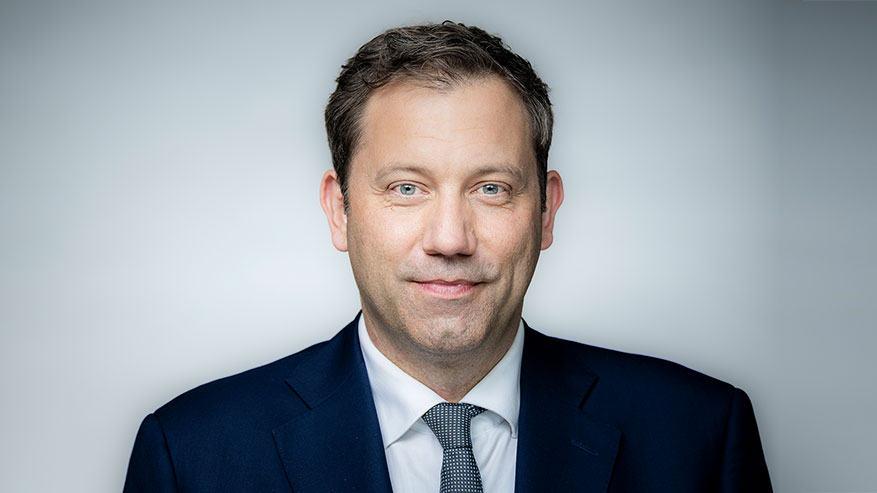
Speaking in Bitterfeld-Wolfen, Klingbeil said Germany could no longer rely solely on traditional free-trade principles while China strengthened its competitive position.
“They’re not playing by the rules,” Klingbeil, a co-leader of the Social Democrats and Germany’s vice chancellor, said. “Overcapacity, state subsidies, joint venture obligations – all these things.”
“We simply have to do more in this regard,” he added.
His comments come amid growing concerns over Europe’s industrial competitiveness. European policymakers have increasingly argued that stronger trade-defense measures and industrial support mechanisms may be necessary to counter competitive pressures from China.
In June, EU leaders tasked the European Commission with preparing further measures aimed at addressing the bloc’s trade imbalance with China.
In April, the European Steel Association (Eurofer) welcomed the EU’s new steel trade measure, describing it as an unprecedented response to record import levels and global overcapacity.
The EU’s latest steel trade measures, which entered into force on July 1, reduced tariff-free import quotas to 18.3 million tonnes and introduced a revised quota allocation system aimed at addressing global overcapacity and unfair trade practices, as previously reported by Fastmarkets. According to Eurofer, imports of semi-finished and finished steel products into Europe rose by 14% year on year in 2025 to 40 million tonnes, while EU crude steel production fell by 2.9% year on year to a record low of 125.8 million tonnes.
Klingbeil also pointed to China’s ability to produce cheaper green steel at a time when European producers are facing rising decarbonization costs and weak demand.
Growing support for European industrial preference
Klingbeil’s remarks reflect a broader shift in the debate over European industrial competitiveness, particularly in sectors such as steel and automotive manufacturing.
Over the past five years, imports from China have nearly doubled, rising from €3.9 billion to €7.3 billion, now accounting for a quarter of all EU automotive components imports, German industry association ArGeZ said, citing data from CLEPA, the European Association of Automotive Suppliers.
Combined with US trade measures, this has put European manufacturers at a disadvantage and increased the need for proportionate trade-defense measures such as a European preference scheme.
Earlier this August, ArGeZ backed the European Commission’s proposed Industrial Accelerator Act (IAA), arguing that the legislation could strengthen domestic manufacturing, accelerate decarbonization and expand European production capacity. The proposal would introduce “Made in Europe” requirements and low-carbon criteria in public procurement and support programs covering strategic industries, including steel and automotive manufacturing.
Implications for green steel investment
Industry groups increasingly argue that trade competitiveness and decarbonization can no longer be considered separately.
Eurofer warned that rising import pressure and global overcapacity are undermining the economic viability of European steelmaking at a time when producers are being asked to invest heavily in low-carbon technologies. According to the association, measures that support domestic steel production are also necessary to enable continued decarbonization efforts.
A study published by economists at the University of Mannheim in July concluded that lower production costs alone would not be sufficient to secure the success of climate-neutral steelmaking in Germany and Europe. The researchers argued that measures such as “Buy European” procurement policies, protective tariffs and public participation in strategically important steelmakers may be necessary to maintain industrial capacity and support domestic demand.
Similar concerns were highlighted in a PricewaterhouseCoopers (PwC) Germany study published in August.
PwC said the transformation of the European steel sector is stalling, with nearly half of announced green steel projects postponed, scaled back or halted amid high energy costs and uncertainty over hydrogen supply. At the same time, new low-emission steelmaking capacity is being built in the Gulf States and India, designed for exports to Europe and creating potential competition for European producers.
Fastmarkets previously reported that the consultancy identified energy costs, hydrogen availability and policy support as critical factors for Europe’s low-carbon steel competitiveness.
Fastmarkets defines green steel as material with combined Scope 1, 2 and 3 carbon emissions not exceeding 0.8 tonnes of CO2 per tonne of steel produced – where Scope 1 refers to direct emissions generated by an entity or its subsidiaries; Scope 2 refers to indirect emissions from energy used by an organization; and Scope 3 refers to indirect emissions beyond an organization’s control.
Market participants have told Fastmarkets that uncertainty over future demand remains one of the biggest barriers to investment in green steel production.
Fastmarkets’ weekly price assessment for green steel domestic, flat-rolled, differential to HRC index, exw Northern Europe, was €150-200 per tonne on August 20, unchanged week on week.
Author: Nia Radenkova

Vlada Novokreshchenova in Ukraine and Ivelina Nikolova in Bulgaria contributed to this report.