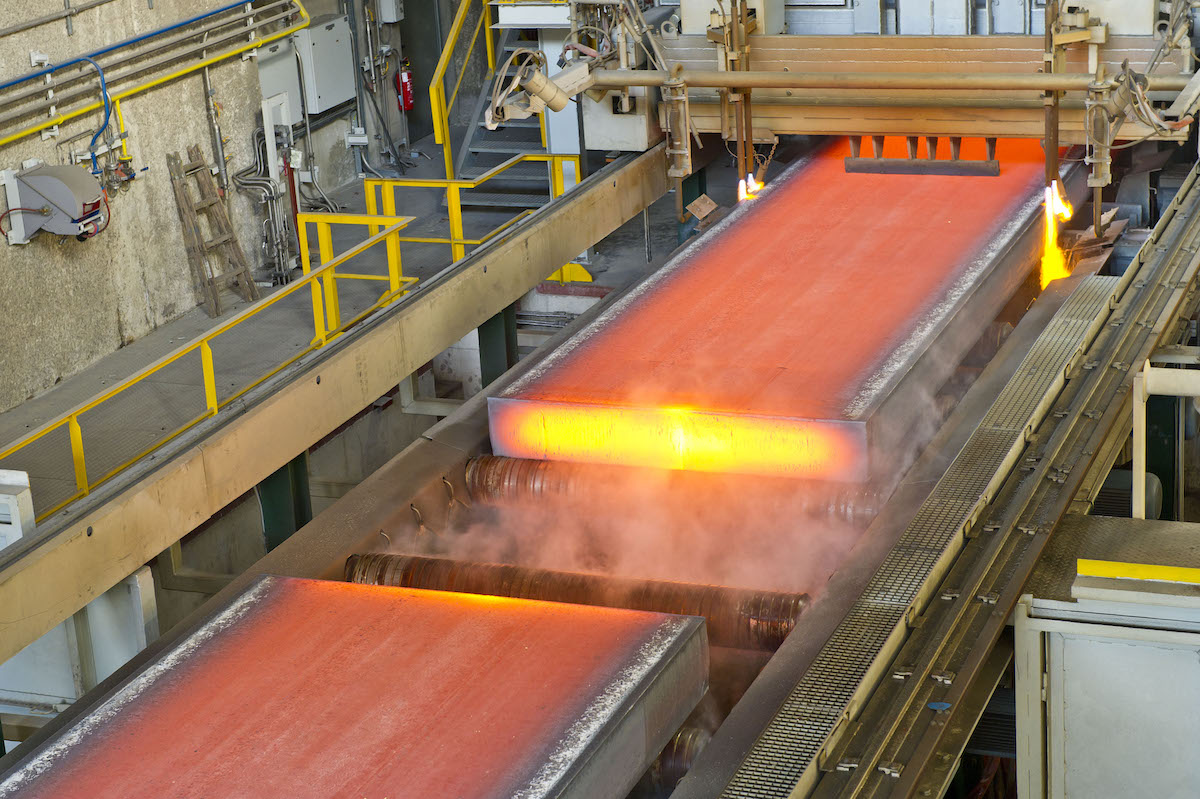
German Vice Chancellor Lars Klingbeil has urged immediate action to halt the import of Russian steel slab, emphasizing the need for stricter measures against Russia ahead of the upcoming Steel Summit on Nov. 6.
“During the steel dialogue with industry representatives, we will discuss the solutions we need now: lower energy prices, primarily through the industrial electricity price, and better protection for our domestic industry,” according to Klingbeil, who is also Germany’s finance minister.
“We must prioritize the use of locally produced steel in key sectors such as our infrastructure and the automotive industry. Furthermore, there must be a swift and complete end to all steel imports from Russia. Steel slabs produced in Russia and processed further in the EU are still exempt from sanctions,” he added, according to a statement shared by Germany’s Finance Ministry.
The European Commission didn’t immediately respond to a request for comment on the matter Nov. 3.
“Despite the EU’s comprehensive sanctions, Russian steel companies are still permitted to supply semi-finished products to the EU on a large scale, which has serious consequences for steel producers in Germany and across Europe,” German Steel Federation Director General Kerstin Maria Rippel said Nov. 3.
“Given the significant import crisis currently facing the European steel industry, this exception is utterly incomprehensible,” she said, adding that “this loophole must be closed, either through sanctions or effective EU tariffs on Russian slabs.”
“This would be legally possible, even without achieving unanimity among all member states. The German government must now take a clear stance in Brussels and exert decisive pressure,” she said.
In December 2023, the EU allowed imports of Russian steel slabs to continue under a phased reduction set to run until September 2028.
The decision, made in the bloc’s 12th package of sanctions in response to Russia’s invasion of Ukraine, allows a total quota of 10.9 million mt of Russian slab to be imported between September 2024 and September 2028, with annual decreases in the allowed volumes.
From Oct. 1, 2025, to Sept. 30, 2026, some 2.998 million mt of slab imports from Russia is to be allowed, of which around 500,000 mt has already been made, according to the European Commission website.
Platts, part of S&P Global Commodity Insights, assessed Black Sea slab at $420/mt FOB on Oct. 29, unchanged week on week.