An interview published by ECO highlights deep concern across Portugal’s metalworking and mechanical engineering industries regarding the European Commission’s proposed tightening of steel import measures. The sector — Portugal’s largest exporting industry, responsible for €24 billion in exports and over 250,000 jobs — warns that the new tariff regime risks triggering large-scale industrial delocation, loss of competitiveness, and structural damage to Europe’s manufacturing base.
According to ECO, the Commission’s proposal to halve tariff-free steel import quotas and double the out-of-quota duty from 25% to 50% is seen by industry leaders as a one-sided policy designed to protect EU steelmakers at the expense of downstream manufacturers.
“Europe is becoming a disadvantage for industry”
At a high-level event organised by ECO and AIMMAP, CEOs from leading Portuguese industrial groups described a rapidly deteriorating business environment.
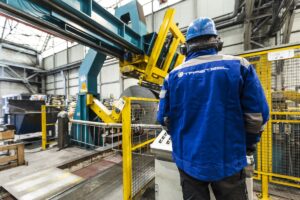
António Pedro Antunes (photo), CEO of Metalogalva (VigentGroup), warned that 70% of the company’s business is now at risk. The firm already shifted significant production to the United States in response to previous U.S. steel tariffs and fears it may now have to relocate further activities to remain competitive.
Companies report that steel import quotas from key origins are exhausted in the first quarter, making planning nearly impossible.
Downstream industry: high costs, no alternatives
Executives stressed that downstream manufacturers — which depend on competitively priced steel inputs — are becoming “reféns” (hostages) of rising EU steel prices and tightening trade defence rules. With energy prices still far higher in Europe than in competing regions, the sector argues that EU steelmakers have not improved competitiveness despite years of tariff protection.
Paulo Sousa, CEO of Colep Packaging, warned that the new measures could force companies to move production outside the EU simply to access affordable raw materials. Once relocated, these firms can export back into Europe without tariffs, undermining the purpose of the safeguard system.
“The industry will become trapped,” Sousa said. “If companies cannot buy competitive steel in Europe, they will have to relocate. Europe will lose jobs, investment and value creation.”
AIMMAP: “We have been warning for years — the wolf is at the door”
Rafael Campos Pereira, Executive Vice-President of AIMMAP, criticised the Commission for defending a sector that employs 300,000 people in Europe, at the risk of collapsing a downstream industry that employs 13 million across the EU and 250,000 in Portugal alone.
He warned that escalating tariffs, the arrival of CBAM costs, and a growing administrative burden could push many SMEs beyond their limits.
“We are compromising the future of manufacturing with unrealistic measures,” he said. “Most companies cannot relocate. If nothing is done, the damage will be enormous.”
A call for balanced policy — and urgent action
Portugal’s industry leaders call on both national authorities and Brussels to rethink the tariff strategy and adopt a full value-chain approach, aligning with concerns EUROMETAL has repeatedly raised at European level.
As Europe discusses reindustrialisation and strategic autonomy, industry representatives warn that policies must not force factories out of the continent.