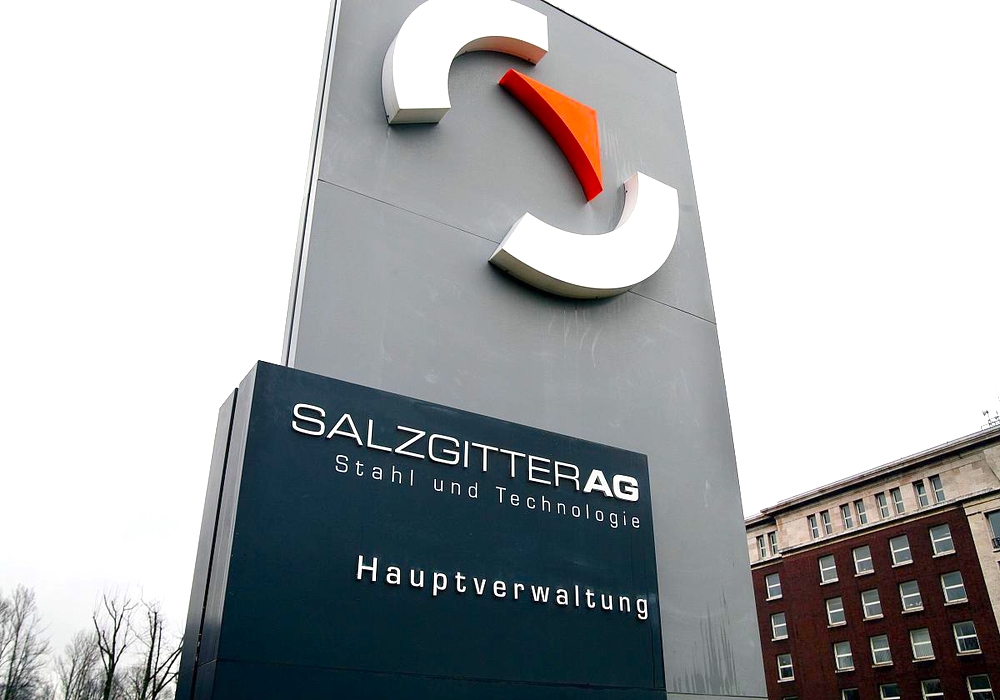
Germany’s second-largest steelmaker Salzgitter has delayed the implementation of it’s “SALCOS” decarbonization project amid poor market fundamentals, the company told Fastmarkets on Monday September 22.
Regulatory uncertainty and deteriorating economic conditions have led the company to revise the decarbonization strategy for it’s flagship site at Salzgitter in Lower Saxony.
“Since 2022, the economic and political-regulatory conditions have significantly deteriorated,” a company spokesperson told Fastmarkets.
“Consequently, on 18 September, [Salzgitter’s] supervisory board decided to postpone the second and third stages of the SALCOS project by approximately three years. We will therefore not discuss the next investments until 2028-2029, rather than in 2026 as previously planned,” the spokesperson added.
The company did confirm, however, that it will be moving forward with the first stage of the project – albeit to a delayed timetable.
“The construction of SALCOS stage 1 – including an electrolyzer, a direct reduction (DR) plant and an electric-arc furnace (EAF) – is under way. This will enable Salzgitter to reduce CO2 emissions by around 30%, [with] production is expected to begin in 2027,” the spokesperson told Fastmarkets.
Salzgitter is investing around €2.3 billion in the first stage of the project, with almost €1 billion of the total provided by the German federal government and the Lower Saxony state government.
The SALCOS project aims to fully convert the company’s flagship Salzgitter Flachstahl integrated steelworks to low-CO2 crude steel production.
The company said that as much as 95% of the annual CO2 emissions from its steelworks – around 8 million tonnes per year – will gradually be eliminated as a result of the SALCOS project.
Salzgitter Flachstahl currently has three blast furnaces (BFs) with a combined capacity of more than 4 million tpy of pig iron, accounting for around 90% of the group’s total CO2 emissions, the company said.
SALCOS project stages
Stage 1: Initial conversion (originally expected to be operational by end of 2025 – delayed to 2027)
DR plant to convert iron ore into sponge iron, replacing the traditional blast furnaces
EAF to melt the sponge iron, often incorporating scrap steel
100 MW electrolyzer to produce green hydrogen to power the DR process – initially may use natural gas
Goal: to produce “green steel” using hydrogen
Stage 2: Expansion of hydrogen Use (initially expected by 2030 – on hold)
Addition of further DR plants, further reducing use of conventional furnaces
Increased hydrogen production through expansion of the electrolyzer capacity to meet the rising demand for green hydrogen.
Goal: 50% reduction in overall CO2 emissions
Stage 3: Full Conversion (initially expected by end of 2033 – on hold)
Complete transition to hydrogen-based DR processes – replacing all conventional blast furnace operations
Entire steelmaking process will be based on hydrogen as the reducing agent.
Goal: Achieve more than 95% reduction in CO2 emissions across the entire production process
Economic-political background
Due to challenging market environment, several leading European steelmakers have recently had to rethink their decarbonization ambitions.
Leading European steelmaker ArcelorMittal recently scrapped plans to build DRI modules in Germany, despite also being provided with government funding. It is now only committed to build EAFs, it said, due to market fundamentals in Europe being unfavorable to green investments.
And in March, Germany’s largest steelmaker, thyssenkrupp, put a tender for a hydrogen-based green steel plant on hold due to elevated prices.
Sazgitter’s announcement about delaying the final investment decision on the later stages of the SALCOS project did not, therefore, come as a surprise, according to market participants.
“We are still awaiting the regulatory changes that politicians have promised for a long time, but which have yet to materialize,” the Salzgitter spokeperson told Fastmarkets, before outlining the steps required to support the decarbonization drive in Germany and across Europe: consistent trade protection measures across the EU; sustainably reduced energy costs and planning security guarantees in Germany; the acceleration of hydrogen market ramp-up; and the strengthening of demand for low-CO2 steel products through the establishment of lead markets and the introduction of local content requirements.
In March this year, the European Commission presented its Steel and Metals Action Plan to support the struggling industry, but it remains to be seen how the plan will be implemented and what results it will bring.
So far, the Commission has focuses on tightening trade policies to protect the local market from unfair imports and, in the third quarter of 2025 it is expected to introduce new, tighter, trade measures to replace current steel safeguard measures and to support the domestic steel sector.
In the fourth quarter of 2025, a final draft of the Carbon Border Adjustment Mechanism (CBAM) is expected to be published.
Europe’s steel sector remains at the heart of several regional economies in Europe, with about 500 production sites across 22 EU member states, the Commission said. According to EU data, the European steel sector contributes around €80 billion to the trading bloc’s gross domestic product (GDP), supporting more than 2.5 million jobs.
The EU steel industry reduced its capacity by 9 million tonnes per year in 2024, while also announcing 18,000 job cuts, according to European steel association Eurofer.
Crude steel production across Europe amounted to 136.30 million tonnes in 2022, down from 152.60 million tonnes in 2021, according to data from the World Steel Association, worldsteel – mainly due to massive output cuts being implemented by European mills in the third and fourth quarters of 2022 amid deteriorating demand and falling steel prices.
Steel output rebounded slightly to 129.50 million tonnes in 2024, compared with 126.30 million tonnes in 2023, according to worldsteel, but was still below the 159.4 million tonnes produced in 2019 – before the Covid pandemic.