


Unesid calls for protecting steel industry, value chain
Spanish steel association Unesid has urged the European Union to take unified action to secure competitive energy prices, strengthen trade control instruments, and introduce new financing options to ensure the steel sector’s viability.
The association was part of the Ministerial Conference on Steel, organised on Thursday by French industry and energy minister Marc Ferraci and his Italian counterpart, Adolfo Urso, to discuss the future of Europe’s steel industry, Kallanish notes. The Paris meeting received support from Poland, Luxembourg, Slovakia, Greece, Austria, Hungary, Romania, Belgium, and the European Commission.
During the meeting, Unesid president Bernardo Velázquez emphasised the need for a coordinated European response to safeguard the sustainability and competitiveness of the steel sector amid global challenges.
“To ensure the sector’s viability, European governments must work together to establish a commercial and regulatory framework that allows the steel industry to compete on equal terms in the global market,” Velázquez said.
Unesid highlighted key priorities, including accelerating anti-dumping proceedings by allocating more resources to the European Commission. It also stressed the importance of greater control of imports, saying the origin of steel products should be determined based on the “melt and pour” system, which guarantees reliable traceability and avoids the circumvention of trade measures.
Unesid confirmed its support for the Carbon Border Adjustment Mechanism (CBAM), while calling for a compensation mechanism to help European steel exporters offset additional costs from CBAM and the Emissions Trading System (ETS).
The association also stressed the importance of strictly monitoring CBAM to ensure that imported steel meets EU standards, preventing unfair competition and trade circumvention.
Todor Kirkov Bulgaria


Revista InfoAcero Febrero 2025
En el siguiente enlace pueden acceder a la edición de Febrero de nuestra revista INFOACERO
Destacamos a continuación algunos de sus contenidos:
- Opinión – D. Josep Arimany- Junta Directiva UAHE
- Nuevo Índice UAHE: Evolución precios de aprovisionamiento septiembre-diciembre 2024
- Siderurgia: Evolución sectores consumidores, consumo real y aparente de acero – Informe Eurofer (1er trimestre 2025)
- Artículo ASCEM: “Situación Actual del Acero”- D. Antonio Yago- Presidente ASCEM
- Programa SNF Iberia- Vilamoura (Portugal), 20 y 21 de Marzo 2025
- Colaboración: “Sueño o Realidad” – D. Agustín Barroso– Director RRHH HIEMESA


Spanish auto industry remains weak despite January recovery
The Spanish automotive sector increased both production and exports sequentially in January, Kallanish notes. Performance, however, remained weaker compared to the beginning of 2023.
“January began with the same downward trend that marked the end of 2024,” comments national automotive association Nacional de Fabricantes de Automóviles y Camiones (Anfac) president José López-Tafall. “While this is partly due to factory adjustments, including changes in work shifts and new model rollouts, we cannot overlook the overall decline in the sector at a critical moment for our industry.”
He emphasises the urgent need to stimulate demand, not just in Spain but across Europe, to safeguard competitiveness. “We must align all stakeholders, establish a short-term action plan, and develop a long-term sustainable strategy to ensure the industry’s competitiveness and drive innovation in electric vehicles, the only true growth driver for the sector,” he adds.
Production in January reached 168,076 units, compared with 139,203 vehicles in December. This volume, however, was down 27.2% on the same month in 2024. Of the total, 61.8% were gasoline and diesel-powered automobiles.
Spanish vehicle exports grew in December. Shipments were 145,170 units, up from 134,813 units in the previous month but 28% down compared to a year ago.
European markets had a 92.2% share in Spanish deliveries in January, 0.9 percentage points less on-month but 1 p.p. higher year-on-year, Anfac data show.
Todor Kirkov Bulgaria

Hydnum Steel joined as Associate Member of EUROMETAL
EUROMETAL is delighted to welcome Hydnum Steel as a new Associate Member company.
Located in Puertollano (Spain), Hydnum Steel is the first green steel plant on the Iberian Peninsula and one of the first to be built worldwide. Its CO₂-free process is based on the use of renewable energy and green hydrogen.
With a production capacity set to reach 2.8 million tons of flat steel annually, the plant will be fully digitalized and will be a pioneer in the regeneration and reuse of urban and industrial waste water, becoming a model of water sustainability.
Hydnum Steel has been declared a Priority Project by the Government of Castilla-La Mancha and recognized by the World Economic Forum as one of the five most innovative projects globally in the race to decarbonize steel production.
Discover the path to green steel > hydnumsteel.com

US tariffs unlikely to sharply impact Spain
The 25% tariff on exports to the US, announced by President Donald Trump, is not expected to significantly impact Spain, according to the Spanish Chamber of Commerce (CCE). This is because relative prices of steel and aluminium are not anticipated to change substantially, CCE explains in a note seen by Kallanish.
“Change in the current trade framework would negatively impact Spain’s productive sector in aggregate terms. If the 25% tariff on EU steel imports remains in place, it could lead to a 10.4% decline in the total value of Spanish exports on average,” the commerce chamber observes.
Spanish steel exports to the US totalled 264,809 tonnes in 2024, up 0.4% compared to 263,825t in 2023. Their value was $412.2 million, according to data issued by the US Census Bureau.
In October 2021, the EU and the US agreed to implement a tariff-rate quota (TRQ) system for steel trade, which is in force until March. Under this system, 3.3 million tonnes/year of steel can be exported by the EU duty free into the US. However, once this quota is exceeded, a 25% tariff is applied.
Todor Kirkov Bulgaria

Grupo Soledad enters steel industry with Aceros y Servicios acquisition
Spanish company Grupo Soledad (GS) has entered the steel sector with the acquisition of Aceros y Servicios (AyS), a Valencia-based special steel supplier and manufacturer of components for the railways, tooling, ceramics, and machinery sectors, Kallanish notes.
GS specialises in the retail distribution of tyres and spare parts for the automotive industry. Additionally, through its subsidiaries, the company manufactures components for the construction sector via Caucho Industrial Verdú (Alcoi). It also produces machinery for the recycling sector through Tallants Navarro.
“With this acquisition, the group is expanding its expertise in the special steels sector while also strengthening the production capacities of two of our companies, both of which have ambitious expansion plans in their respective markets,” Grupo Soledad states.
AyS is set to develop steel components for Alcoi, focusing on the railway infrastructure and construction sectors. These are both experiencing strong international demand due to the expansion of high-speed rail and the modernisation of conventional rail networks across Europe. Additionally, the company will manufacture machinery for ferrous recycling and industrial steel cutting blades for Tallants Navarro.
“Aceros y Servicios, alongside the new opportunities presented, will continue to create value for its customers. This will be achieved through optimisation processes in steel selection and application studies, areas in which the company has seen significant success in recent years,” Grupo Soledad adds.
Todor Kirkov Bulgaria

Taiichio&Wolf Projects wins “SME of the Year” award in Valencia
Taiichio&Wolf Projects, a company specializing in steel product supply chains and a proud member of EUROMETAL, has been named SME of the Year 2024 in Valencia. The award, organized by Banco Santander and the Valencia Chamber of Commerce in collaboration with the Spanish Chamber of Commerce and Levante-EMV, recognizes outstanding contributions from small and medium-sized enterprises to the Spanish economy.
At the award ceremony held at The Terminal Hub, Rafael López, CEO of Taiichio&Wolf Projects, highlighted the company’s innovative initiatives. “We work on renewable energy projects, primarily offshore wind. Currently, we are involved in a groundbreaking project that will develop two prototypes of floating solar platforms in Valencia. Additionally, we are collaborating with a Korean partner to develop pipelines for carbon capture and hydrogen,” López stated.
This recognition places Taiichio&Wolf Projects among the finalists competing for the National SME of the Year Award 2024, to be announced in Madrid during the first quarter of 2025.
The event also acknowledged other exemplary SMEs with special mentions in key categories. These included Internxt Universal Technologies for Innovation and Digitalization, Aranguren Comercial del Embalaje (Aranco) for Sustainability, Resuinsa Experiences for Internationalization, and Fongascal for Training and Employment.
Photo: Fernando Bustamante
Source: levante-emv.com
ArcelorMittal resumes Gijón steelworks, longs production
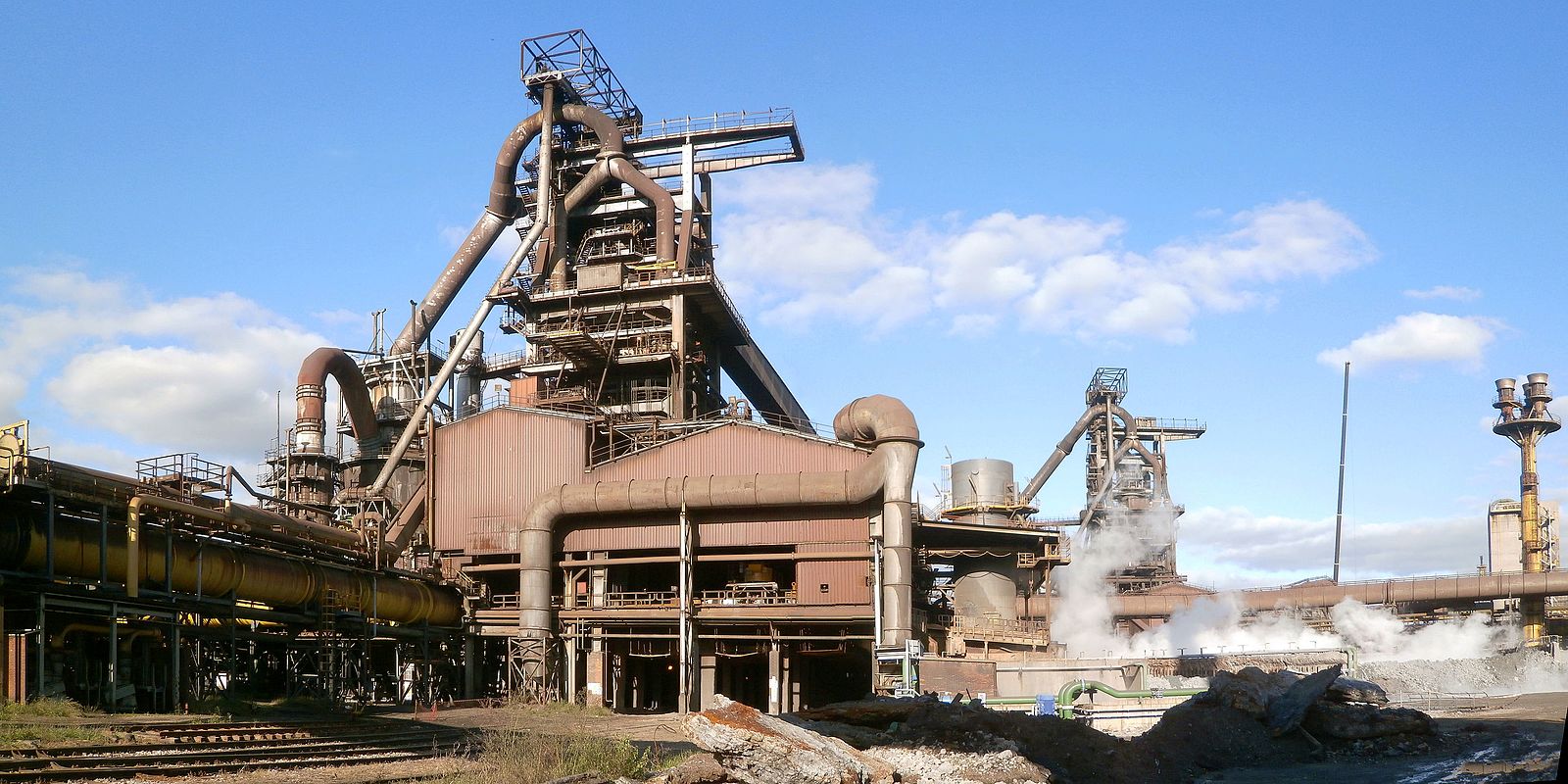
ArcelorMittal resumed operations at its Spanish steel mills on Tuesday, Kallanish notes. The facilities, including the Gijón steelworks and long steel production units, were temporarily halted in mid-December due to weak demand and increased competition from low-priced imports.
“All facilities are now operational,” an ArcelorMittal spokesperson confirms. No specific production or capacity utilisation rates have been disclosed. “We are continuously assessing market conditions and adapting to the ongoing challenges posed by low demand,” the spokesperson adds.
The temporary closure primarily affected the wire rod plant and rail mill division.
Last week, ArcelorMittal reached an agreement with Spain’s largest trade unions to implement a new Temporary Employment Regulation Scheme (ERTE) for 2025. This measure is designed to provide flexibility in addressing production adjustments or temporary stoppages, ensuring stability amid persistent uncertainty in steel demand.
Todor Kirkov Bulgaria

Sidenor tests new electric combustion technology
Spanish special steelmaker Sidenor says it is testing innovative technologies, such as the application of electric resistance heating in the preheating process of tundishes, to lower carbon footprint, Kallanish learns from the company.
This is part of the Citadel project, financed by the EU’s Horizon 2020 research and innovation programme, which promotes transformation towards a more sustainable and carbon-free steel industry.
Several of Sidenor’s gas-fired heating processes are currently the focus of the testing. The initiative is centred on the electrification of processes which traditionally depend on natural gas, such as tundish and ladle heating, which are critical in the production of liquid steel and have a great impact on the final quality of the product.
“We are working to optimise these processes by developing two key industrial tests, tundish heating using electric resistances and ladle heating using oxy-fuel combustion,” Sidenor comments. “These tests aim to evaluate the feasibility of substituting natural gas with cleaner energy sources, thus reducing carbon emissions and improving energy efficiency at crucial production phases.”
The use of O2, as a by-product of H2, is expected to increase production efficiency and reduce CO2 emissions by around 30%. The technology will enable the transition to hydrogen combustion in the near future.
Todor Kirkov Bulgaria

Hydnum and Euroports join forces for european steel logistics
Hydnum Steel, the first green steel plant in Spain, and Euroports, one of the leading port and logistics operators in Europe, have signed a Memorandum of Understanding (MoU) to develop integrated logistics solutions that will optimise the steel supply chain across the continent.
Under this agreement, both companies will work closely in the design and implementation of an efficient and sustainable logistics network, focused on improving the transportation, storage, and distribution of the steel coils that Hydnum Steel will produce at its Puertollano plant.
The collaboration also considers efficient and reliable logistics solutions for key steelmaking raw materials such as ferrous scrap, green metallics, and iron ore from various sources and different origins.
This partnership is based on Europort’s expertise in port infrastructure management and logistics services. For its part, Hydnum Steel requires a reliable logistics service for the import of iron ore and scrap metal, as well as the export of green steel coils.