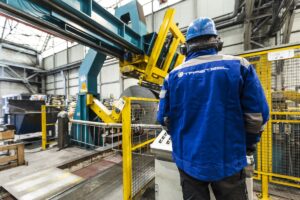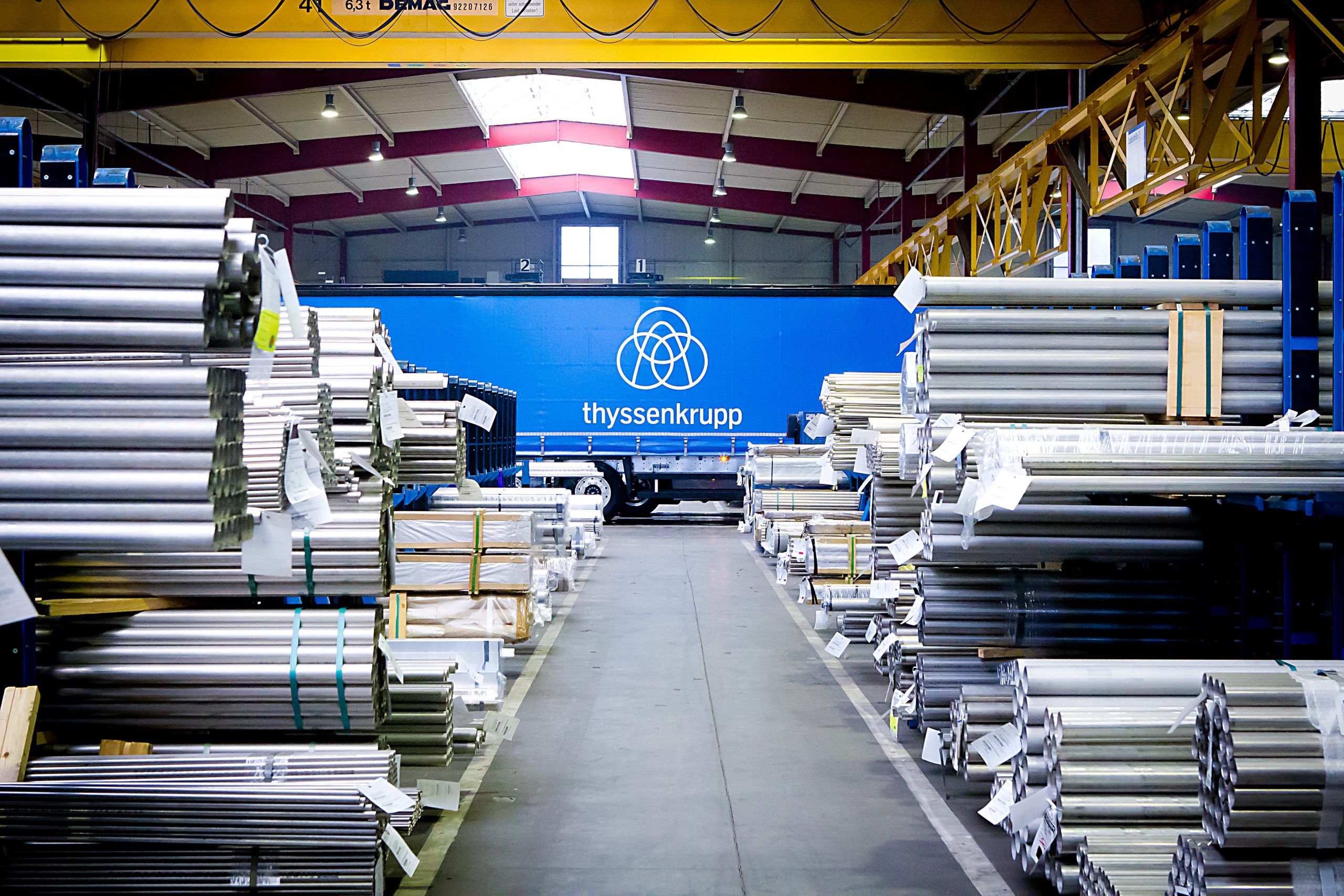
As part of its transformation towards climate-neutral steel production, thyssenkrupp Steel is upgrading the testing laboratory at its Duisburg-Schwelgern site to study iron ore feedstock for direct reduction.
The metallurgical laboratory in Schwelgern already has extensive testing capacity for traditional blast furnace feedstocks such as sinter, iron ore pellets, lump ore, and blast furnace coke. To meet the new requirements of hydrogen-based direct reduction, the existing laboratory is now being expanded, the company states.
While blast furnaces are characterised by CO-rich process gases and temperatures well above 1,000 degrees Celsius, the direct reduction process operates with hydrogen-rich gases at temperatures of around 1,000 degrees Celsius or lower.
The pellets and lump ore used must therefore be tested in accordance with ISO standards for direct reduction processes, tk Steel explains. The focus is on their stability under direct reduction conditions, Kallanish understands. Among other things, tests examine whether they tend to stick or agglomerate during reduction, how strongly they tend to break down during reduction, and how well they can be reduced.
The test atmosphere of the new test facilities is modelled on future operating conditions: while blast furnaces currently contain only about 2% hydrogen in the process gas, the direct reduction route is already being tested with around 45% hydrogen during natural gas operation, tk Steel notes.
The upgrade contract has been awarded to Heat & Power, which has already designed and built a pilot plant for sinter production at tk Steel. The contract has a value of €2.4 million ($2.8m).