

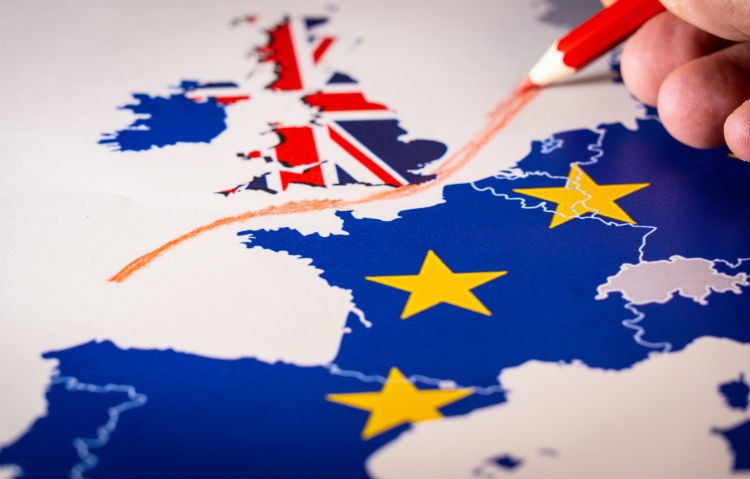
Talk of potential mutual exemptions between the UK and EU’s respective Carbon Border Adjustment Mechanism (CBAM) frameworks is creating a stir in Europe’s steel markets, but the regulatory reality may be much further away than market participants hope, Dow Jones Energy heard at this week’s UK Metals Expo in Birmingham.
The UK and EU have been negotiating a link between their respective Emissions Trading Systems ahead of the annual EU-UK summit 20 November, and a leaked draft of their joint statement confirms that a deal has already been reached.
As per the document, “[t]his would allow mutual recognition of EU and UK allowances and exempt EU and UK goods from respective Carbon Border Adjustment Mechanisms subject to respective laws and procedures that we plan to launch without delays.”
Media reports, and market speculation have taken this to mean that EU-UK trade flows could see backdated CBAM exemptions from 2026 for steel trade between the EU and UK markets. This was a sentiment commonly expressed at this week’s UK Metals Expo, as UK importers seek to escape engagement with CBAM’s costs and compliance burdens before they come due in 2028, and EU exporters assess their cost burdens on existing flows to the UK.
However, policy practicalities, as well as significant methodology gaps between the UK and EU CBAM frameworks, would seem to pour cold water on any expectations for exemptions in the near-term – the draft summit statement also makes no mention of backdated exemptions to January 2026, and confirms that additional legislative efforts will be required to formalise eventual exemptions.
Methodology Gaps
The UK’s CBAM framework radically simplifies the EU model, particularly in regard to the calculation metrics of default emissions values, and free allocation deductions. Without going too far into methodology specifics, both the EU and UK CBAM serve as ‘carbon leakage’ protection, imposing carbon costs on imported goods at customs to mirror escalating costs for domestic producers as their free emissions credits are incrementally withdrawn.
In an attempt to stay within World Trade Organisation (WTO) rules, these CBAMs should keep costs at the border as equal to ETS costs for domestic producers as possible, essentially granting the same liability deductions to international steelmakers as enjoyed by domestic producers.
Where the EU and UK systems differ is in how far this liability reduction is calculated: metaphorically, the EU system compels international exporters to take the EU’s ‘ETS exam’ to get full deductions, fully assessing their installations against the EU’s ETS-translated CBAM benchmarks to derive their actual free allocation entitlement as if producing within EU borders. The UK takes a simplified approach, instead averaging the ‘results’ of their own domestic ETS examinations, and then applying that average deduction to all international trading partners equally.
In practice, this means that CBAM liability deductions for the EU are capped at subtraction of the respective benchmark level, whereas the UK methodology applies a factor reduction that can eliminate a far higher proportion of its CBAM cost. As an example, Indonesian carbon hot-rolled coil (HRC) imported on default values would generate a top-end EU CBAM liability 22x that of the UK’s: mutual exemptions could thus create a highly attractive backdoor to the EU market, via the weaker UK CBAM.
It seems unlikely, therefore, that any mutual exemptions would be as automatic as some market participants assume, especially during an era of increasing market protectionism and domestic reindustrialisation, as pursued by both EU and UK policymakers.
Comments from UK treasury and HMRC representatives at the UK Metals Expo seem to support a longer timeframe, with government panelists suggesting that ETS linkage is just the starting point, and that any work on exemptions would come further down the line. CBAM, ETS, and verification experts consulted by Dow Jones Energy feel similarly, with some expecting that linkage itself may not even materialise until the next ETS phase in the 2030s.
CBAM development schedules for the EU and UK are also at odds: the EU has already presented a legislative proposal to extend CBAM to downstream products, to prevent import pressures from evading the steel value chain entirely via substitutive manufactured imports, whereas the UK has made no such commitment, and in fact government comments suggest significant capacity limits for policy work on CBAM beyond efforts to align the UK model to the EU with new country-specific default emissions values.
Even this alignment on default value methodologies risks complicating matters further. The UK has confirmed it will implement country-specific default values in its CBAM from 2029 (a departure from its established trade-weighted model), at the same time that the EU is considering moving away from its own country-specific default values to global averages.
This is motivated by legal scrutiny from the WTO, ECJ, and European Parliament, as well as steelmakers’ circumvention fears as non-blast furnace route origins – such as Egypt – are granted increasingly competitive default value listings. Global averages could equalise default value costs for a sufficiently high cost barrier to the EU market, though ‘melted and poured’ rules for CBAM origin determination could serve the same anti-circumvention function.
Some market participants suggest that the EU’s high export weighting to the UK, combined with UK Prime Minister Andy Burnham’s strong advocation for closer UK-EU ties could expedite work to remove these methodological and market barriers to CBAM exemptions, but they too do not expect this to result in anything immediate.
The draft EU-UK joint statement also references steel trade and protectionism directly, with the EU and UK to “cooperate closely to build on [steel quota allocations] together and explore further solutions”, particularly within the context of “defence industrial issues.” Wider cooperation provisions state that the EU and UK “commit, on the basis of reciprocity, to strive, wherever possible, to limit negative effects on one another in their measures impacting specific supply chains where it is in their mutual interest” again specifically referencing the steel, and steel-consuming sectors: “[w]e will notably work towards diversified and resilient steel and electric vehicles supply chains and critical technologies together.”
Mutual CBAM exemptions, when situated within these wider cooperation efforts on steel trade, do therefore seem likely – though not immediately, or with retroactive 2026 effect, as some market commentators have suggested.
Author: Benjamin Steven


