


EC sees trade retaliation risk as ‘key challenge’ to carbon border tax plan: EUROMETAL Webinar

The European Commission considers the risk of trade retaliation to be a key challenge to its proposed implementation by 2023 of a European Union carbon border adjustment mechanism (CBAM) for selected sectors including steel, even though the tax is aimed to be an “important element of climate diplomacy”, a Commission official said on a market webinar organized by European steel distributors’ association EUROMETAL Nov. 20.
Other challenges include the technicalities of calculating the carbon content of products, how to “balance the burden” between EU and non-EU companies and align the system with the EU Emissions Trading System, at the same time as ensuring the competitiveness of EU industry on global markets and contributing to the decarbonization of strategic sectors including steel, said David Boublil, EC director general, taxation and customs union.
“We should really respect World Trade Organisation rules and need to be aware of the risk of trade retaliation…the tax must be implemented in a way to strengthen global climate ambition…and encourage use of less carbon-intensive technologies in partner countries,” he said. However, if a tax is not introduced “EU products will be replaced by dirtier products from abroad,” he said, noting that the risk of carbon leakage (companies shifting production to locations where environmental regulations are more lenient) is increasing.
Plans to introduce CBAM have been announced under the auspices of the EU’s “Green Deal” growth strategy, which aims to address the challenge of the EU becoming carbon neutral by 2050. Already under discussion for ten years, the CBAM continues under consultation with trade, industry and a variety of entities both within and outside the EU. A proposal for the tax system – of which the steel industry may be one of the major beneficiaries – is to be made in Spring 2021, when a “green taxation event” will also take place, Boublil told the steel sector representatives attending the webinar.
Adoption of the mechanism is foreseen for June 2021, and it should be in place by 2023, Boublil said.
CBAM options under consideration include its implementation via a simple import tax, an extension of the ETS on imports, a notional ETS and a consumption tax, of an excise or VAT type, on both imported and domestic goods, that would reinforce carbon pricing, he said.
Options for defining the scope of emissions being embraced under the CBAM include direct and indirect production emissions; the complete value chain; differentiation between finished, intermediary and basic products and covering international transport of goods, Boublil said.
The idea of implementing the tax via an export rebate “is challenging from a World Trade Organisation perspective,” he said. Implementation via the distribution of free ETS allowances within the EU may also be problematic, Boubil indicated, adding that stakeholders have expressed some apprehension that the tax could increase the cost of business, lead to higher product prices and impact employment in the EU.
“The challenge is to design a measure that has the best possible economic and environmental impacts, the design is very important, what emissions are covered and how we account for the carbon,” the EC director said. The Commission will take a sectoral approach to the CBAM’s introduction and take full account of the ETS, which is to be revised, he said.
— Diana Kinch

EC likely to soften steel imports safeguards mid-2021: lawyer
The European Commission will “unavoidably” soften its European Union steel import safeguards when the current scheme expires on June 30, 2021, a well-known European steel sector lawyer told a market webinar organized by European steel distributors’ association EUROMETAL Nov. 20.
“The European Commission is making soft messages in favor of repealing the measures,” said Yuriy Rudyuk, partner in law firm Van Bael & Bellis. “A shift to softening of the measures is unavoidable but the outcome is so far unpredictable.”
What happens will also depend on the position of the administration of incoming US President Joe Biden, which could potentially bring a softening but not a dismantling of the US’ Section 232 import tax measures on steel, the lawyer said.
The EC introduced steel import safeguard curbs based on quota limits in July 2018, in response to US President Trump’s introduction in March 2018 of Section 232 import tariffs on imports of products including steel, which diverted third country steel to the traditionally-open EU market.
The EU safeguards system has been designed to last just three years. Rudyuk stressed that if it lasts longer than this, trading partners are likely to present compensation requests or retaliate.
However, EU steelmakers’ association Eurofer on Nov. 3 filed a formal request for initiation of a transparent review of the safeguards system and their extension beyond June 30, 2021.
The EC is typically viewed as an organization which serves to protect the interest of civil society and end-consumers, which may arguably have experienced price inflation as a result of the import curbs.
Alessandro Sciamarelli, Eurofer director of market analysis and economic studies, also speaking at the webinar, noted that steel import levels into the EU fell by 13% in 2019 from 2018 levels, reflecting the existence of the safeguard curbs, which helped to protect a depressed market.
While EU imports are expected to decline by a further 19% in 2020 in a market battered by coronavirus shutdowns, according to Eurofer’s latest forecast, these are still considered high, having reached a record 22.3% market share of the flat products market in Q2.
UK safeguards
The UK on Sept. 30 introduced its own steel import safeguards system, based on the methodology of the EU system, ahead of the end of its transition period to exit the EU on Dec. 31. Rudyik noted that the UK initiated on Oct. 10 a transitional review to determine whether the measure should be maintained on 19 product categories after June 30, 2021, when the current EU safeguards system will expire.
— Diana Kinch

Köhler replaces Hartmann as Saarland mills’ chief
SBQ maker Saarstahl and plate mill Dillinger Hütte are reshuffling top management. The chief executive of both companies and of their joint holding, SHS Stahl Holding Saar, Tim Hartmann, has stepped down from his position “…by mutual agreement,” SHS says.
He will be succeeded by Karl-Ulrich Köhler, who has previously been ceo of thyssenkrupp Steel, Tata Steel Europe, and most recently of steel processor company Rittal.
At a conference call on Friday morning, SHS supervisory board chairman Reinhard Störmer explained that the board and Hartmann took different views on the company’s future strategy. He noted the sides disagreed on the pace of the changes the company is undergoing. Upon inquiry, he noted that critical issues like CO2 reduction, partnerships and new markets had not worked out the way the board had expected.
“After two bad years we cannot face a third bad year, and we expect an acceleration of pace in the transition from Mr Köhler,” Kallanish heard Störmer say during the call.
One of the markets Saarstahl has entered in recent years is rail. Dillinger, which has been a major player in plate for oil & gas pipemaking, expects to play a role in renewable energy, Köhler said. This would be the case in transportation of hydrogen and towers for wind power plants, where Dillinger claims to be a world market leader.
Asked whether Dillinger is interested in bidding for the plate mill that has been put out to tender by thyssenkrupp, Köhler remained vague. In the remaining time of the tender until 31 December, “…everyone can reconsider their argumentation,” he said.

EU market eyes future trade clarity next June
The European steel market is awaiting more clarity on the future of trade by June 2021. At that time, it will be known if the European Commission (EC) will implement carbon border adjustment measures (CBAM) and further extend safeguard measures.
Experts discussed the topic at Friday’s EUROMETAL Steel Trade Day 2020 event attended by Kallanish.
David Boubil from the EC explained that authorities are now reviewing the results of the consultations on CBAM, which closed at the end of October. He noted that a proposal by the Commission on this topic should be coming in June 2021.
The EC is considering different options, but the overall goal is to ensure that the actions taken within Europe to tax CO2 emissions are also applied to goods imported from some key markets. Boubil stressed that the measure would not be a straight forward taxation, but more an extension of the existing carbon price system (ETS).
CBAM would be part of the overall “Green Steel” strategy of the EC, supported by further actions, including diplomacy. For that reason, it should also contain a system to calculate existing CO2 taxation measures in other parts of the world. This means it will take into account only the differential between CO2 measures in Europe and other parts of the world.
In addition to CBAM, by June 2021 it will also be clearer if existing safeguard measures will be maintained. Yuriy Rudyuk from Van Bael & Bellis noted that the European Commission is not particularly eager to keep them in place, in part to avoid further responses from commercial partners. Eurofer, on the other hand, is lobbying for the measures to be extended.
“The outcome of the negotiations is unpredictable, but it could be somewhere in the middle between the position of the EC and Eurofer,” Rudyuk said. He added, nevertheless, that a cancellation of safeguard measures would probably see a rise in anti-dumping investigations.
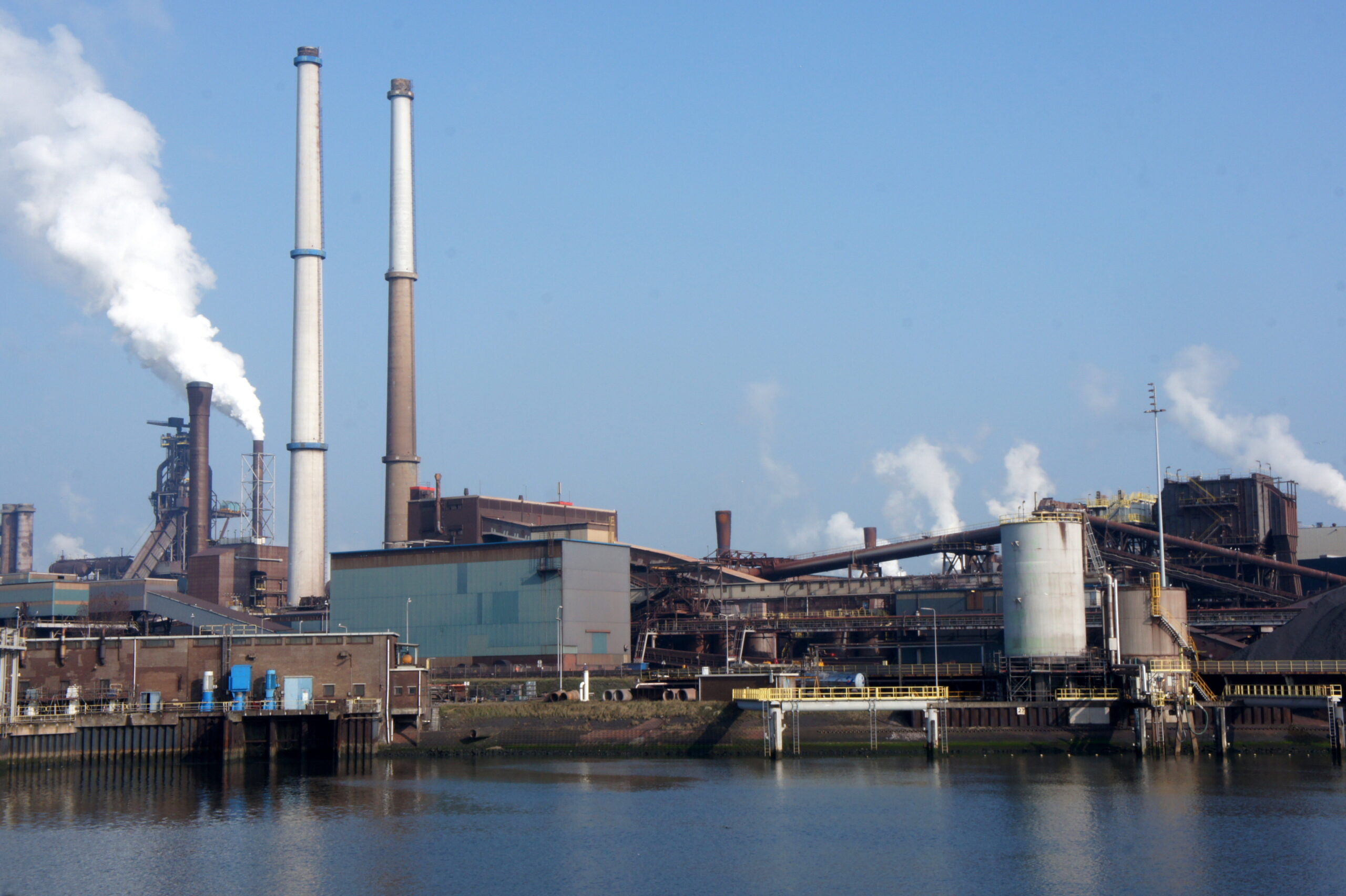
Carbon capture project to slash Tata IJmuiden emissions
Tata Steel plans to capture CO2 from its blast furnaces in IJmuiden, Netherlands, and transport it for storage in empty gas fields under the North Sea. The project would lead to a -30% reduction of CO2 from the steelmaking site.
It is part of Tata Steel’s sustainability strategy to become CO2 neutral by 2050. The company is now developing plans to obtain the necessary permits and hopes to launch the project from 2027, Kallanish notes.
The project would consist of two phases. Firstly, a new CO2 capture facility would be built at Tata Steel before the gas is then delivered to the pipeline network, called Athos. Athos is a collaboration between EBN, Gasunie, Port of Amsterdam and Tata Steel, which would manage the transport, reuse and storage of CO2 in the North Sea Canal area.
The capture of CO2 would offer the possibility in the second phase, in collaboration with other industries, to convert the remaining gases into usable raw materials. This could lead to the reduction of 4 million tonnes/year of CO2.
“We see this as the essential solution with which we contribute significantly to the required emission reduction by 2030,” says Annemarie Manger, Tata Steel’s Director of Sustainability, Health, Safety, Environment & Quality. “The potential of this is enormous. This technology is already being used in other countries and industries, but not yet in this form and size.”
“The capture of CO2 in the first phase is expected to result in a reduction of approximately three million tonnes of CO2 per year,” Manger observes. “That is the equivalent of us making 1.5 million tonnes of CO2-free steel every year.”
Tata Steel has awarded McDermott a pre front-end engineering design (FEED) contract for the project.
Over the longer-term, Tata Steel believes hydrogen will ultimately play a key role in the transition to sustainable steel production. However, this will not happen until it is available in large quantities and produced using renewable energy sources.

EUROMETAL: il Carbon Border Adjustment Mechanism verso il varo
Nella primavera 2021 la presentazione agli stakeholder, approvazione attesa per giugno.
Emissioni, dazi, overcapacity e settori utilizzatori. Sono stati questi i quattro topic che hanno caratterizzato la versione digitale dello Steel Trade Day 2020 di EUROMETAL.
Dopo i saluti del presidente di EUROMETAL Fernando Espada, ad aprire gli interventi è stato David Boublil (European Commission DG Taxation and Customs Union) che ha acceso i riflettori sullo stato di avanzamento dei lavori per il varo del Carbon Border Adjustment Mechanism.
Il funzionario europeo ha spiegato che nel contesto di evoluzione verso la neutralità climatica l’Unione europea ha sviluppato delle politiche di sviluppo
«Dopo l’adozione del Green deal nel dicembre 2019, abbiamo avviato due step di raccolta di impressioni, in primis con soggetti qualificati e poi in maniera pubblica. Una lunga raccolta di pareri e documenti che si è conclusa lo scorso 28 ottobre. Ora siamo nella fase in cui stiamo studiando il materiale inviato, e stiamo stendendo dei modelli che possano tener conto delle indicazioni più rilevanti».
La maggior parte delle osservazioni è arrivata dalle varie associazioni di categoria dell’unione e quasi esclusivamente dell’Ue. Entro la prossima primavera dovrebbe essere elaborato il modello di nuova tassazione verde che verrà sottoposto agli stakeholder per poi arrivare all’approvazione definitiva nel mese di giugno 2021 se non vi saranno particolari problemi.
Il funzionario Ue ha anche risposto alla domanda su come i prodotti Ue potranno restare competitivi nel mondo evidenziando come la provenienza del materiale da fonti estere verrà paragonato a quello dei produttori continentali e dovrà sottostare ai medesimi standard ambientali del made in Ue.
Il focus si è poi spostato sui temi del commercio internazionale con l’intervento di Yuriy Rudyuk dello studio Van Bael & Bellis che si è focalizzato sulle normative europee in vigore, con un’attenzione particolare al confronto sul rinnovo del sistema di salvaguardia alla sua scadenza naturale indicata per il 30 giugno 2021.
Il problema è che se la misura fosse applicata oltre il periodo transitorio di tre anni si andrebbe in violazione delle regole del WTO, e ci si potrebbe esporre a richieste di risarcimento da parte dei partner commerciali. Eurofer comunque vorrebbe una revisione trasparente della norma per evitare le violazioni. Ciò che secondo l’esperto potrebbe verificarsi è una sorta di via di mezzo, con un ammorbidimento della norma se vi saranno segnali di apertura anche dalla nuova amministrazione Usa.
Per quanto riguarda invece le indagini in corso il focus si è concentrato sul tema della Turchia e delle importazioni di HRFS di cui lo scorso 13 novembre è stata avviata la registrazione per valutare dazi retroattivi. Una pre-disclosure sull’indagine è attesa attorno al 23 dicembre 2020, per poi arrivare ad eventuali misure provvisorie entro il 14 gennaio 2021 e chiudere con misure definitive il 13 luglio 2021
Emanuele Norsa si è concentrato sul topic dell’overcapacity evidenziando come la Cina negli ultimi anni abbia almeno in parte regolato la propria crescita, un atteggiamento che invece non stanno facendo altri player asiatici come India e Indonesia in cui la costruzione di nuovi impianti è ancora lontana dalla crescita proporzionale dei mercati di riferimento.
Infine l’analista di Eurofer Alessandro Sciamarelli ha rimarcato come aveva fatto alcune settimane fa l’andamento dei settori utilizzatorti di acciai e come il secondo trimestre dell’anno sia stato il punto più basso della discesa, con l’attesa di un rimbalzo nel terzo trimestre e un nuovo appiattimento negli ultimi tre mesi del 2020. In generale il settore delle costruzioni si è confermato essere il più resiliente e quello che dovrebbe mantenere un andamento stabile anche per il prossimo anno con un rimbalzo del 5% che potrebbe anche essere rivisto al rialzo alla luce dei piani infrastrutturali che i fondi europei potrebbero innescare. Per l’auto il recupero sul 2020 è invece atteso del 18% per il 2021.

125 participants at EUROMETAL Steel Trade Webinar
EUROMETAL organized last Friday its Steel Trade Webinar on the subject “Facing the slide in global steel trade” in a year threatened by Covid-19 contamination.
This online event got over 150 registrations and was attended by 125 participants.
Mr David Boublil from European Commission DG Taxation and Customs Union started by exposing the status of consultation on EC planned Carbon Border Adjustment Mechanism (CBAM).
As usual at EUROMETAL Steel Trade events Mr Yuriy Rudyuk, Partner at Van Bael & Bellis, presented the EU measures affecting trade in steel: Anti-Circumvention investigation on HDG products from China, AD measures extended to several products imported from China, UK safeguard measures and the reaction of the EU in terms of adapting its own safeguard measures following 1 January 2021.
Mr Emanuele Norsa, Steel Editor at Kallanish Commodities, highlighted the overcapacity in the world steel industry and the Regional Comprehensive Economic Partnership (RCEP) free trade agreement between China and ASEAN countries and potential impacts for EU steel markets in coming years.
The event was concluded by a scope on the expected steel demand and the supply situation in 2021 with relevance of imports presented by Mr Alessandro Sciamarelli, Director of Market Analysis and Economic Studies at European Steel Association (Eurofer).
EUROMETAL intends to continue with this format of online conferences until the end of this pandemic.