

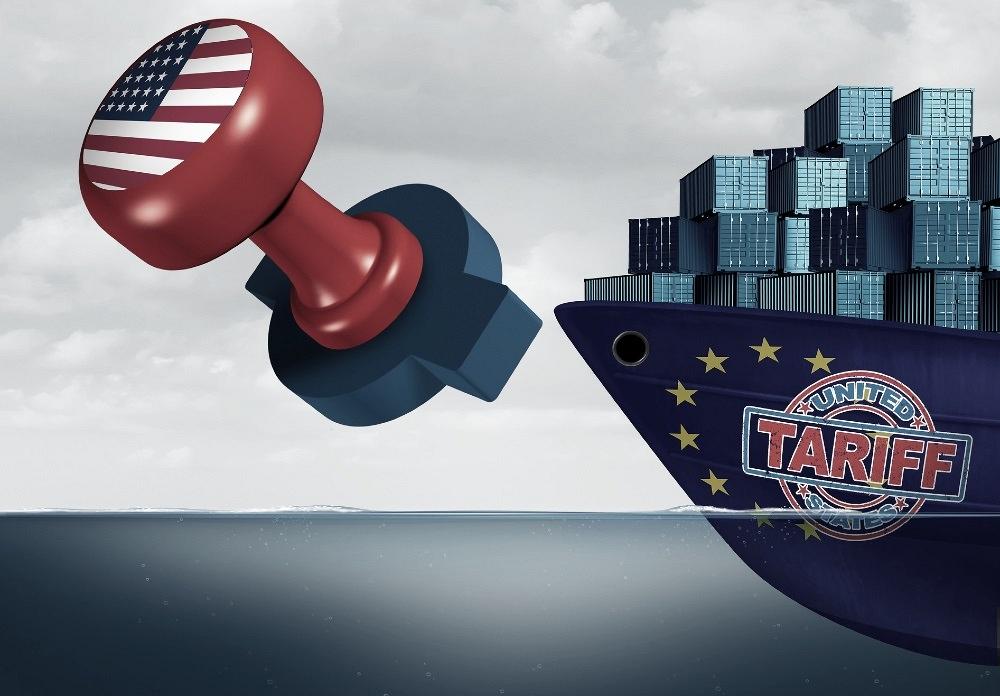
US, EU continue metals tariff negotiations at G7
United States Trade Representative Katherine Tai, European Commissioner for Trade Valdis Dombrovskis, and US Commerce Department Secretary Gina Raimondo met Oct. 22 to advance negotiations regarding the US Section 232 tariffs on steel and aluminum as the parties face an end-November deadline to reach a resolution.
Work on reaching an agreement continues, Dombrovskis said on Twitter following the meeting. The EU and US have agreed that a deal on steel and aluminum must benefit workers and producers on both sides, Tai said in a statement, also posted to Twitter.
The meeting comes as the G7 trade ministers gathered in London Oct. 22, with Raimondo joining the tariff discussion virtually.
In a joint statement following the G7 meeting, G7 trade ministers said the group affirmed the importance of the OECD’s Global Forum on Steel Excess Capacity to help address the issue of global steel excess capacity in a multilateral framework.
The GFSEC was established in late 2016 at the instruction of leaders from the G20 group of wealthiest nations. The forum aims to gather information and report on the evolution of steel supply and demand conditions, steel production capacity, and government policies that lead to global overcapacity, including subsidies.
“We will continue to support and work with the OECD to build on their excellent work undertaken to date, including a continued focus on the analysis of the incidence and magnitude of market-distorting practices and the impacts these may have on issues such as creating and maintaining overcapacity,” the G7 joint statement reads. “We will step up our efforts in countering these practices, through appropriate tools and levers, and to develop stronger international rules on practices such as market-distorting industrial subsidies and trade-distorting actions by state enterprises.”
The US and EU in May agreed not to escalate the dispute over the metals tariffs for six months in order to negotiate a settlement, with the truce set to end in November.
Former President Donald Trump applied a 25% import tariff on steel products and 10% tariff on aluminum in March 2018 using a national security justification under Section 232 of the Trade Expansion Act of 1962.
— Justine Coyne

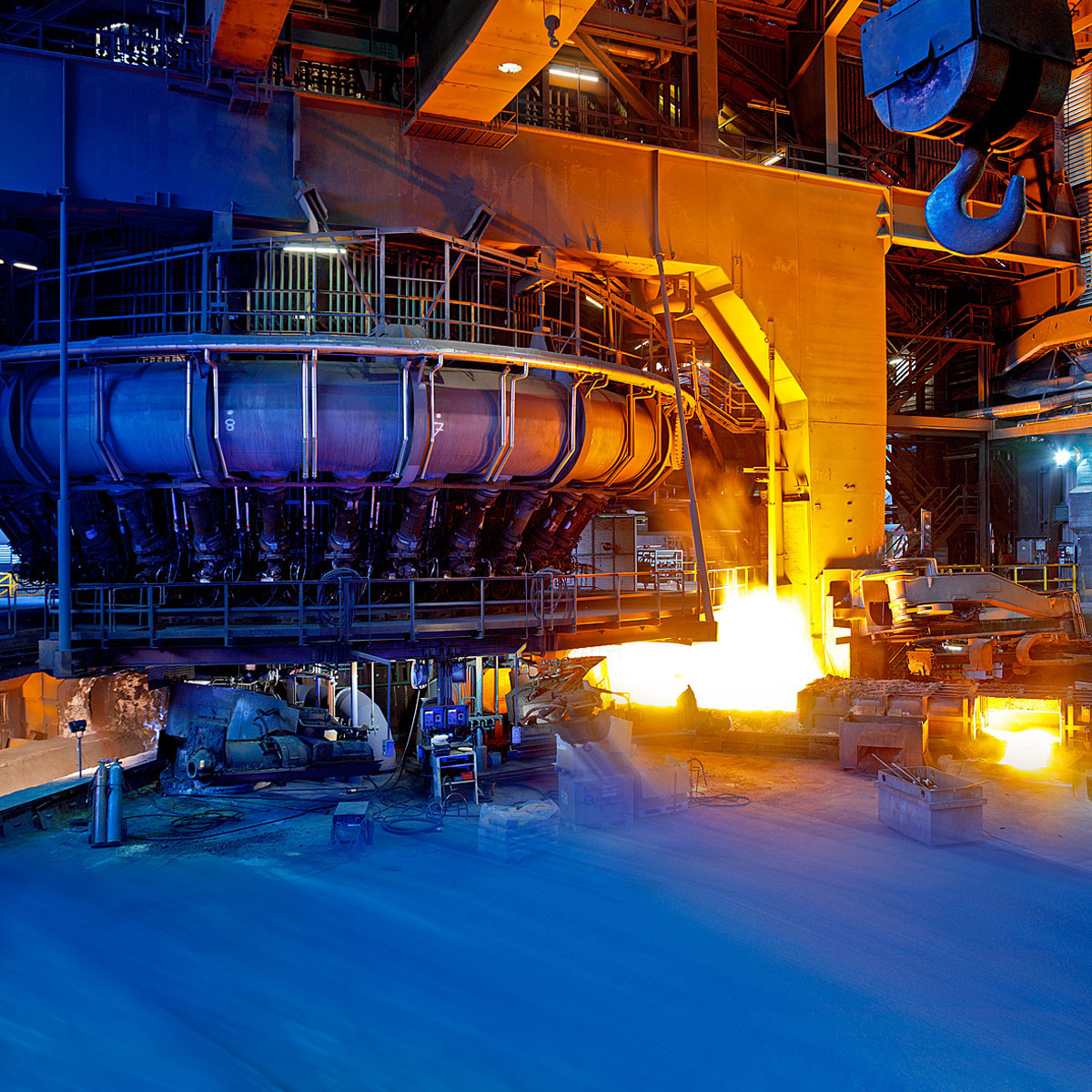
Voestalpine eyes resurging car production in 2022
The automotive sector, currently slowed down by a lack of semiconductor chips, will flourish again next year, believes voestalpine chief executive Herbert Eibensteiner.
“We are optimistic for next year, because at some point the vehicles have to be built,” he said on Thursday at the Gewinn, a finance industry trade fair in Vienna. Apart from the car sector, demand for voestalpine products is healthy in almost all customer segments, he is quoted as saying by Austria’s Industriemagazin. He is upbeat about the next two years, because of the catch-up effects that must and will occur, he said, citing international economic researchers.
While some raw material and energy prices are reaching record levels, counteracting effects are providing a balance, he noted, referring to the fall in iron ore prices versus the rise in coal prices.
The multitude of criteria affecting steel demand and prices is giving all players a hard time, and actually unnerves many customers, a manager at an Austrian service centre concurs.
A southern German coil buyer takes Eibensteiner’s optimism a step further, to a possibly critical point in time. “Once the chip supply gets going again, the conveyer belts might quickly restart at high speed,” and steel demand could see another leap upwards, he tells Kallanish.
Amid the unpredictable see-saw of variables, price offers vary widely, all players agree. While in the Benelux prices for hot rolled coil from northwest European mills are still seen above the historical threshold of €1,000/tonne ($1,164) ex-works, lower offers are reported from southern Germany and Austria.
Here, more influence on local prices is exerted by Eastern European mills with offers of as low as €850/t delivered. Prices for cold rolled coil as well as hot-dip galvanized coil from domestic sources do not go much beyond €1,150, if that. In the Benelux, however, these prices can reach towards or go above €1,200/t.
Christian Koehl Germany

EU coil buyers approach Blechexpo with mixed feelings
This week’s Blechexpo trade fair in Stuttgart, Germany, is traditionally an occasion during which contracts are agreed for coil supply for the coming years.
The market leader mill has signalled that its prices for the next half-year will be close to €200/tonne ($233) above those fetched during the last negotiating round in May, says a buyer of a German cold-roller company. He adds he is not yet sure if he will be striking a deal at the fair, as he believes that the downtrend on the spot market is continuing. He is convinced that “there will still be offers coming after the fair”.
The coming days will show to what extent current spot prices will be a guideline, and where they actually are. Some observers foresee a price resurgence or stabilisation, like a buyer of a southern German distributor who tells Kallanish of rising prices from Russia, which would have repercussions on EU players.
In fact, he finds that buyers have done well if they have struck a contract prior to the fair. This is quite contrary to the attitude of waiting-and-seeing that has prevailed among buyers since the summer, while mills kept pushing. “If you haven’t signed yet, you may pay €20-30 more for your deal at the Blechexpo than a couple of weeks earlier,” he believes.
Even if the higher import offers turn out to be temporary, some insiders believe, for other reasons, that there will be a stabilisation in the coming weeks, a Dutch manager says. “We expect that consumers and other buyers will soon have to go back into the market to replenish their stocks. This will improve demand at least to some extent,” he comments.
Christian Koehl Germany

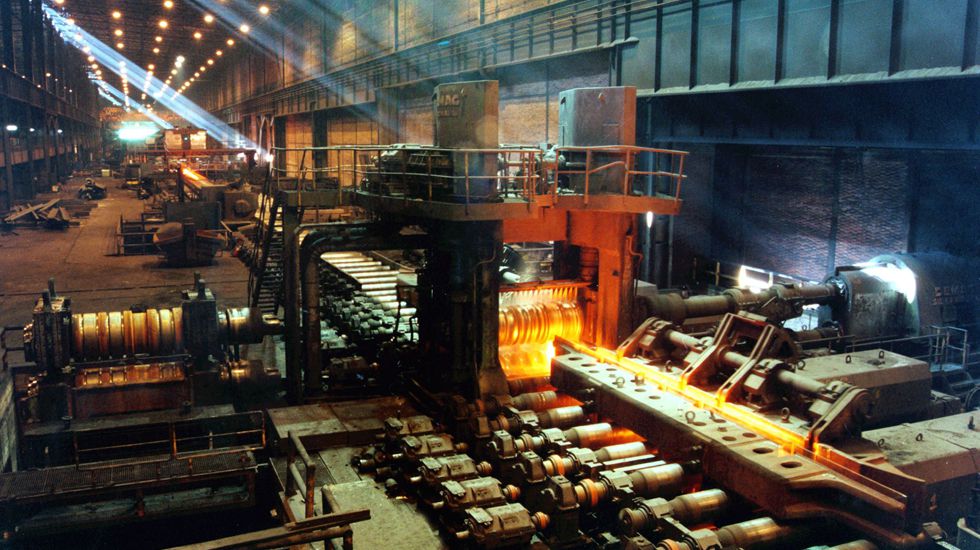
Magnesium shortage threatens European steel production: industry
The EU must take immediate action to secure magnesium supply, with stocks on course to run out by end-November, threatening production stoppages across various industries, including steel, European industry representatives warn.
The shortage is being caused by reduced supply of magnesium from China. Due to the Chinese government’s efforts to curb domestic power consumption, supply of magnesium originating there has either been halted or reduced drastically since September.
The EU sources 95% of its magnesium requirement from China, meaning the European aluminium, iron and steel producing and using industries, together with their raw materials suppliers are particularly impacted. This will have a knock-on effect on end-use sectors such as automotive, construction and packaging, says a cross-industry group including steelmakers’ association Eurofer.
The current Chinese supply shortfall has already resulted in record prices and worldwide distortions in the supply chain. Today’s remaining EU magnesium imports are trading at “extortionate prices” of about $10,000-14,000/tonne, up from some $2,000/t earlier this year. This “makes it almost impossible for European companies to produce or source magnesium-containing materials at a viable level,” the group says in a note sent to Kallanish.
“To that effect, our industries jointly call on the EU Commission and national governments to urgently work towards immediate actions with their Chinese counter parties to mitigate the short-term, critical shortage issue as well as the longer-term supply effects on European industries,” the note reads.
Annual global magnesium demand is 1.2 million tonnes, with 87% produced and 39% consumed by China. Europe and North America each consume around 19%. The iron and steel industry accounts for 16% of magnesium usage in Europe. Aluminium alloying has the highest share of 45%, followed by die casting with 33%.
Adam Smith Germany

Webinar sobre Transformación Digital – Kaltenbach & Lantek – 26 Octubre

Mañana tenemos el webinar sobre transformación digital, con Kaltenbach y Lantek, a las 12:00 horas.
Aquí les proporcionamos el enlace para que puedan conectarse; será esta vez a través de Teams, no es necesario que se instalen nada, sólo tienen que pinchar en el siguiente enlace.
Recordamos aquí la agenda de mañana:
12:00 a 13:00 horas
- Bienvenida
- “Impulsa tu almacén”- Kaltenbach Solutions– D. Valentin Kaltenbach
- Preguntas
- “Eficiencia y trazabilidad”- Lantek Sheet Metal Solutions– D. Javier Ortega
- Preguntas
- Despedida


Committed association work promotes digitalisation and strengthens the steel industry
In order to advance the digitalisation of the steel industry on a broad front, it is becoming increasingly necessary to break new ground together. Close cooperation with the excellently organised industry associations in Europe is an important step towards mastering the diverse current challenges. The regular open exchange of technical knowledge and practical know-how strengthens all companies, consolidates good relations at international level and secures the future of steel as a sustainable material.
Rising electricity costs, interrupted supply chains, lack of raw materials and a noticeable shortage of skilled workers are current problems that are not only weighing heavily on the steel industry. In addition, demands from politicians for C02 neutrality, e-mobility, sustainable construction and compliance with energy efficiency standards are increasing the pressure on companies. Difficulties in the supply of raw materials in particular have shown the importance of good international relations for German companies. Looking beyond one’s own nose is essential for survival.
Organisations such as EUROMETAL at European level, the Bundesverband Deutscher Stahlhandel BDS AG in Germany, the Swiss Steel and Building Technology Trade Association SSHV, ARGE-SMD in Austria or UAHE in Spain are working with great commitment to give steel the recognition it deserves on the basis of its properties. KALTENBACH.SOLUTIONS actively supports these and other associations and openly shares its own expertise in the field of IoT and AI-based performance management for the steel market with the industry. Numerous presentations at international congresses and free online workshops present new perspectives and digital solutions to decision-makers and implementers. The focus is on concrete costs and measurable benefits. Together, the aim is to strengthen companies and promote communication across national borders.
Current workshops and lectures at: https://www.kaltenbach-solutions.com/termine

Cargolux, lauréat du concours Construction Acier 2021 Luxembourg
À l’occasion du concours Construction Acier 2021 Luxembourg, le bâtiment qui abrite le siège social de Cargolux a été nommé lauréat par le jury.
Le centre belge d’information sur l’acier, les produits en acier et la construction métallique, Infosteel, organise tous les ans, alternativement au Luxembourg et en Belgique, un concours récompensant les bâtiments utilisant la construction en acier de manière remarquable. Pour cette édition 2021, c’est le quartier général de Cargolux à Sandweiler qui a été nommé lauréat par le jury. Ce projet a été réalisé par le bureau d’architecture AS+P Albert Speer + Partner et les ingénieurs-conseils du bureau AuCARRÉ.
Le nouveau quartier général de Cargolux se situe à côté de son hangar de maintenance et se compose de plusieurs ouvrages métalliques: un parking à multiples étages, une passerelle-cantine, un hall des simulateurs et un anneau de bureaux surplombant l’ensemble en générant de grands porte-à-faux (40,5m). Le jury a particulièrement salué dans ce projet l’utilisation de l’acier qui est poussée dans ses performances techniques et permet aux ingénieurs d’exprimer pleinement leur talent, notamment dans l’élaboration de l’anneau en acier massif.
Un prix spécial du jury et un prix du public
Outre le lauréat, le jury a également distingué par un prix spécial du jury le projet de réhabilitation du château de Koerich par Fabeck Architectes. Le jury a particulièrement apprécié l’approche honnête et tout en finesse réalisée par l’architecte avec la structure en acier qui est réversible, point important étant donné le contexte patrimonial.

Vue de l’intervention de Fabeck Architectes dans les ruines du château de Koerich. (Photo: Fabeck architectes)
18 projets au total avaient été introduits pour participer à cette 22e édition du concours. Quatre projets ont été sélectionnés par le jury pour participer à la phase finale du concours. C’est parmi ces quatre projets que le public a été invité à faire connaître sa préférence pour désigner le prix du public. Outre le siège de Cargolux et le château de Koerich, étaient également en lice le siège mondial de Ferrero, Casa Ferrero à Niederanven, et les bureaux de DSL à Steinsel.
Pour le prix du public, le vote a désigné Casa Ferrero comme lauréat parmi les 700 votes exprimés.
Vue du siège mondial de Ferrero, Casa Ferrero. (Photo: Ferrero)
Tous les projets participants seront publiés dans le magazine Infosteel qui sort le 1er décembre.


Let’s talk about the future 2021
| The 2021 event organized the 21 October by Tata Steel discussed the developments in steel markets during 2021 and what the implications might be in industry sectors. Experts highlighted the challenges and opportunities these recent market developments provide for the industry: In steel and its markets, what have been the biggest learnings from 2021? What should we now expect to see in the automotive industry, engineering and in construction over the short, medium and long term? Sustainability: Steel will play a key role in creating a more sustainable society. Will price trends facilitate the industry to make the necessary investments to address the carbon challenge? Digitalisation: Processes are becoming automated creating time for value added activities. Will this mean a more efficient supply chain and how will doing business be made easier? Technology: We will focus specifically on the EV battery segment, gigafactory growth and the opportunities and challenges this might present industry. The event had over 200 guests joining from around the world with wide representation from a broad range of steel-using industries. All of the event is available to watch now on the Tata Steel YouTube page in the Let’s talk about the future playlist |