


UK needs CBAM, scrap export curbs for effective steel decarbonization: think tanks
The UK steel industry could boost its decarbonisation drive by introducing its own carbon border adjustment mechanism – preferably aligned with the CBAM being elaborated in the European Union – and curbing ferrous scrap exports, two independent UK think tanks said in separate reports published July 11.
GreenAlliance, a think tank composed of specialists from Lund University, University of Leeds and University College London, with research supported by Liberty Steel Group, proposes in its report “Building the future: a faster route to clean steel” that the UK should adopt its own CBAM or product standards for imported steel, to prevent UK producers being undercut by cheap imported steel and to help ensure that imports are low-emission.
The UK steel industry produces 7.2 million mt/year of crude steel, around 70% of the UK’s annual requirement of 10.5 million mt, according to steelmakers’ association UK Steel.
“Carbon pricing alone will not deliver industrial decarbonisation in steel or any other sector,” GreenAlliance said in its report. “A CBAM would place a carbon price tariff on goods imported to the UK, ensuring a level playing field for domestic and imported steel goods. Import product standards would do the same by specifying the maximum embedded emissions allowable for steel products, thus restricting the import of steel produced with high carbon processes,” it claimed.
As both of these approaches limit the risk of carbon leakage, they would allow free allocations in the UK Emissions Trading System to be removed much more rapidly than would otherwise be feasible without hindering domestic competitiveness, GreenAlliance maintains. If revenues from the UK ETS and CBAM were routinely fed back into support for industrial decarbonization, this would help to speed up the transition, it claims.
Blue Bright, another thinktank with research also supported by Liberty Steel Group, recommends introduction of a CBAM by or before 2026 while phasing out free allocation from the UK ETS for sectors covered by the CBAM.
“The UK ETS could play an important role in supporting commercial clean steel production, but existing provisions for free allocation undermine the carbon price signal for Energy Intensive Industries,” it said in its “A carbonless crucible? Forging a UK clean steel industry” report. “We therefore urge the current Government to establish a UK CBAM linked to the UK ETS.”
Scrap export limits
Both reports also call for a curb on the UK’s steel scrap exports to support decarbonization domestically. The country is one of the largest exporters worldwide, exporting much of the more than 11 million mt/year scrap that it generates, much of which is poor quality in need of further processing.
Incentives are needed for the domestic retention of scrap steel to ensure a higher quality scrap supply for domestic producers and enable a lower carbon, more circular UK steel industry, better protected against global supply chain shocks, the GreenAlliance report says.
“Rapidly shifting more UK steelmaking towards electric production, using scrap steel and electric arc furnaces, would offer guaranteed emissions reductions in the short term. Expanding EAFs would also allow the UK to maintain a level of ore-based production in future, based on the hydrogen direct reduction process,” it continued.
According to GreenAlliance, the UK is better placed than most countries to expand EAF steel production as it produces more scrap each year than virgin steel. “With the right incentives and standards to encourage higher quality scrap processing and a domestic scrap market, a more resilient and resource efficient steel sector could be created,” it said.
The Blue Bright report recommends enabling access to suitable raw materials for decarbonization, particularly scrap steel. It notes that every ton of scrap steel recycled back into crude steel in an EAF reduces emissions by up to 90% compared to conventional blast furnace steelmaking from iron ore.
“However, a balance does need to be struck between reducing exports of scrap that might otherwise be recycled in the UK and maintaining the basic value of scrap so as not to jeopardise investment in scrap collection and processing infrastructure,” it said.
July monthly contracts in the UK domestic scrap market settled upwards on the month for the third consecutive month across the grades as strong international demand for premium grades supported increases, sources said.
Platts’ assessment of 3B shredded scrap was GBP327.50/mt ($389.36) delivered to the mill on July 9, up on the month from GBP305/mt delivered in June.
UK yards selling shredded material sold for containerized export were heard to target as high as GBP 340/mt EXW yard, with sources citing a quality differential between domestic and export material.
Blue Bright recommends that a cap is introduced on the total weight of scrap metal exports – reducing over time – with the intention of at least halving scrap exports by 2030. The UK has recently exported more than 8 million mt/year of scrap.
GreenAlliance recommends adoption of a joint government-industry target of at least 85% reduction in total UK steelmaking emissions by 2035 (relative to 2019 levels). This is aligned with the Climate Change Committee’s recommendation for near zero ore-based steelmaking by 2035, and could be achieved using a combination of electrification and hydrogen direct reduction processes, it said. Domestic scrap usage would also need to be more than doubled from 2.6 million mt/year at present to 6.8 million mt/year, it said.
— Diana Kinch


Flat products steelmaker HBIS Serbia to halt one of two blast furnaces in unfavorable market
Belgrade-based steel mill HBIS Serbia announced July 11 that unfavorable conditions in the global market have prompted the company to shut down one of its two blast furnaces.
“Preparations are underway at HBIS Serbia for the shutting down of blast furnace number one. The reason for this decision is the current situation in the global market that has resulted in reduced demand for steel,” the company said in an emailed statement July 11.
Blast furnace no. 1, with a maximum capacity of 900,000 mt, is expected to stop production by the end of this month, reported Serbia’s state news agency Tanjug on July 11.
This is the second time HBIS Serbia has announced the temporary shuttering of this blast furnace since 2020. The furnace was previously restarted in Aug. 2021 after HBIS Serbia shut it down in July 2020 because of unfavorable market conditions caused by the coronavirus pandemic.
HBIS Serbia, owned by China’s HBIS Group, was set up in 2016 after the Chinese group purchased physical assets of the then bankrupt steelworks in the eastern Serbian town of Smederevo. The plant in Smederevo produces iron at two blast furnaces, then converts blast furnace iron to crude steel at a three-furnace converter shop and continuous casting complex. Steel processing includes a hot strip mill, sheet cold reduction mill, annealing and tempering units.
HBIS Serbia currently employs more than 5,000 and has a capacity to process 2.2 million mt/year of flat rolled steel products in coils and sheets, including hot-rolled and cold-rolled products, as well as tinplate products.
“We have adapted our business operations to the current situation. When the market conditions permit, the blast furnace will be restarted,” the company said in its emailed statement.
HBIS Serbia with exports worth Eur234.7 million ($237.1 million) was the second largest exporter in Serbia in Q1, according to a presentation from the Serbian finance ministry. The top three largest exporters in the first quarter were mining companies.
The largest exporter was Brestovac-based Serbia Zijin Mining with exports worth Eur276.8 million, while the third largest exporter was Serbia Zijin Bor Copper with exports worth Eur210.0 million.
Following the EU’s introduction of import bans on steel from Belarus and Russia, quotas previously assigned to these two countries were reallocated to other exporting countries on a proportional basis, including Serbia, the EU’s Directorate-General for Trade said in a March statement.
Serbia’s export quotas for hot rolled sheets and strips to the EU were increased from 117,034 mt in Q1 to 151,443 mt in Q2, according to Commission Implementing Regulation (EU) 2022/434 from Mar. 15. The EU quota for Serbia for the current quarter amounts to 157,700 mt.
Several coilmakers at reduced capacity
Due to weak flat steel demand most European coil producers have been operating at reduced capacity over the past couple of months. They have also been planning longer summer maintenance periods and some have confirmed blast furnace stoppages. These measures have been taken to balance out supplies with low demand and to support domestic prices.
Automotive manufacturers have been consuming less steel than last year and compared to usual rates because components shortages have hit car production. Other end-users, including in the white goods segment, have also been reported to be demanding less steel. Distributors have sufficient inventories of coil and, therefore, have been reluctant to book more material in a falling market.
Steelmakers ArcelorMittal in Dunkirk, France, and Acciaierie d’Italia have recently announced plans to stop one blast furnace each. ArcelorMittal Bremen has introduced short-time work. Italy’s Arvedi plans to fully stop its Cremona mill for the month of August. Several Northern European producers were reported to be temporarily idling their galvanizing lines in July-August.
One Central European steelmaker has started to offer slab in the spot market to reduce output of finished steel.
These measures, combined with some recovery of import prices and a need on the part of European buyers to restock for September, have impacted prices, halting the downwards trend from early July. Market participants believe that prices have reached bottom and that restocking will start by the end of this month.
Platts assessed HRC in Northern Europe at Eur850/mt ex-works Ruhr July 8, unchanged day on day, but down by Eur610/mt from March 24 when prices reached their peak, according to S&P Global Commodity Insights data.
— Maria Tanatar, Vladimir Pekic

EU HRC prices stabilize supported by lower output, slow demand recovery
Domestic prices for hot-rolled coil in Europe were stable July 11, supported by production cuts and higher interest from buyers for new deals.
Platts assessed HRC in Northern Europe at Eur850/mt ex-works Ruhr July 11, unchanged day on day, according to S&P Global Commodity Insights data.
Two distributor sources reported a tradable value at Eur850/mt ex-works Ruhr. A trader source reported tradable values at Eur850-870/mt ex-works Ruhr.
A steelmaker source reported tradable values at Eur850-860/mt ex-works Ruhr. Another producer estimated a tradable value at Eur850/mt ex-works Ruhr and reported a few deals for minor tonnages settled at that price.
Demand from end consumers remained below usual rates, sources said. The automotive industry has been showing lower steel consumption due to reduced car output caused by a components shortage.
Some European steelmakers, including HBIS Serbia, Acciaierie d’Italia and ArcelorMittal Dunkirk in France, have planned blast furnace stoppages in July-August to balance supply and demand. Italian electric-arc furnace-based producer Arvedi also plans to fully stop its Cremona mill for the month of August.
Other steelmakers were reported to operate at minimum production rates and plan longer summer maintenances.
Distributors have sufficient inventories, but they were expected to restock for September by the end of July, supporting domestic prices.
“Market is a bit more positive today, prices have not moved up yet, buyers still have unrealistic expectations,” a producer said. “But at least everyone realized that price decline stopped. Restocking, however, has not started yet.”
Offers of HRC from Central European mills have been reported at Eur820-830/mt ex-works.
HRC in Southern Europe was assessed at Eur770/mt ex-works Italy July 11, also unchanged day on day.
Italian mills have been offering HRC at Eur800/mt ex-works and tradable value has been reported at Eur760-770/mt ex-works Italy.
— Maria Tanatar

Low-carbon steelmaking boosts long-term competitiveness, carries risks: Fitch
The low-carbon steel production aimed at by most steel producers globally will be positive for the longer-term competitiveness of these companies. However, decarbonisation carries risks due to uncertainty regarding technologies, regulatory frameworks and funding, says Fitch Ratings.
The impact on operations will be limited in the next 3-4 years, as the technological shift will come after 2030.
Steelmakers will likely need to rely on governments’ participation in the form of direct funding and adjustment of regulatory frameworks to accomplish the green transition. This is because the steel industry is cyclical and volatile, and producers’ cash flows materially fluctuate during the economic cycle, Fitch says.
“In normalised conditions steel producers’ margins are relatively low. For example, in Europe median Ebitda margins have historically been around 3%. We also anticipate that the steel market will normalise from recent peaks over the next two to three years, returning profitability to normal,” the credit rating agency observes in a report seen by Kallanish.
“However, part of the investments assigned for carbon transformation may be viewed as part of a normal modernisation capex cycle when, for example, old blast furnaces are replaced by new ones or more likely by EAF-DRI facilities,” it adds.
The estimated 10-50% additional cost to produce green steel may severely affect producers’ margins. “However, we expect costs to continue to be reduced due to continuous operational improvements. In addition, a shift to new facilities will reduce maintenance costs. We expect that green steel will also be priced at a premium to carbon steel, mitigating cost pressures,” Fitch says.
The spike in energy prices will support the viability of decarbonisation and accelerate the transition to low-carbon production.
US steelmakers are better positioned to absorb the pressure decarbonisation investments put on leverage given their high reliance on scrap or DRI-based EAFs as their current production route.
“The need to decarbonise will be increased by rising carbon costs or the introduction of carbon costs across the globe, and high energy costs. Therefore, a shift to renewables and emissions reduction will also be a necessity to underpin longer-term competitiveness and achieve more sustainable positions on cost curves in the long-term,” Fitch concludes.
Adam Smith Poland

Italian car output jumps in May
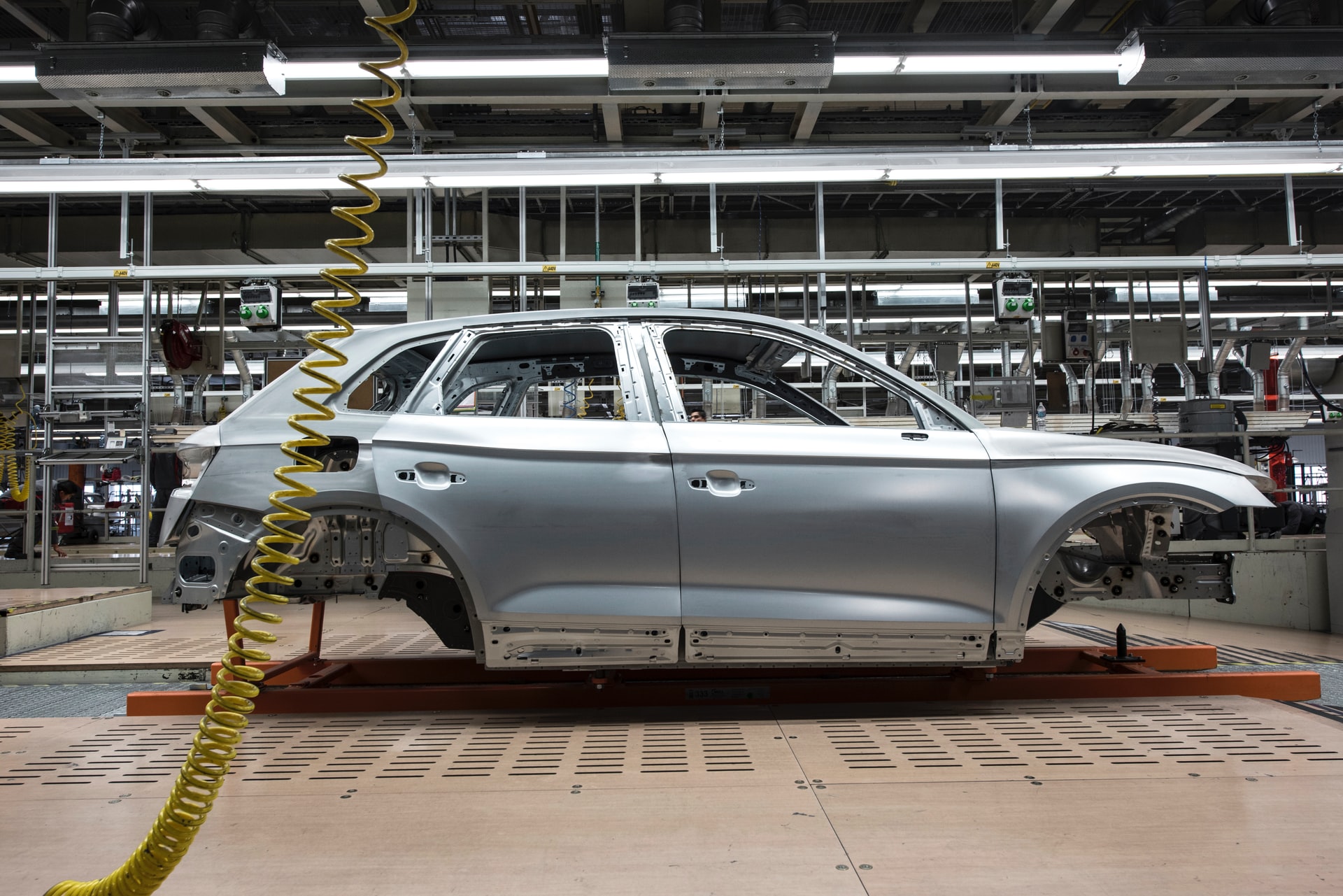
Italian passenger car output increased year-on-year in May following a first-quarter decline and an uptick in April, Kallanish notes from local carmakers’ association Associazione Nazionale Filiera Industria Automobilistica (Anfia) preliminary data.
Production of passenger cars stood at 49,177 units in May, a remarkable increase of 22.4% compared to May 2021. However, output fell by 1.6% on-year over the first five months of the year to 209,111 units, Anfia says.
January-April passenger car production had stood at 160,746 units against 173,117 in January-April 2021.
In comparison, Spanish car output increased by 1% to 159,608 cars in May and fell by 9% to 744,227 in the first five months of the year. In Germany, January-May output slid 6% y-o-y to 1,388,800 units, while January-June output fell 3% y-o-y to 1,685,800 units. It increased by 19% in June alone to 302,500 cars. UK car production in January-May declined by some 23.2% to 330,185 units, but hiked 13% in May to 62,284 cars, Anfia reveals.
Italian passenger car output decreased by 2.1% y-o-y in full-year 2021 to 442,432 units. It stood at 451,718 units in 2020 versus 542,472 units in 2019.
Italy has 23 car production plants. By comparison, Spain has 17 plants, France 31 and Germany 42.
Natalia Capra France
German bender Klocke & Lingemann expands
Rebar distribution and bending house Klocke & Lingemann Stahlhandel has moved to a bigger location in Stadthagen in Germany’s Westphalia region.
The house is part of the larger Klocke & Lingemann group, which operates stores for hardware and sanitary equipment at three sites. It was previously located in the centre of Stadthagen, and was now moved to the outskirts.
“We are now located along a busy road with commercial traffic, and in the first weeks have registered a massive increase of business, which we expect to continue,” manager Lars Struckmeier tells Kallanish. With more than 2,000 tonnes of storage capacity, the house is now more than twice the size of its former location. It expanded staff from 10 to 16.
Construction work began in May 2021, and one year later was completed to the point that most operations could be moved over. There were interruptions in the construction, and the effect of the enormous surge of material costs prevented the completion in December, as planned originally. The company invested over €3 million ($3m) in the construction and the relocation.
Further expansion could be possible. The house handles around 2,700 tonnes of straight and coiled rebar and wire mesh per year.
Christian Koehl Germany

SSC 247TailorSteel plans second site in Netherlands
Service centre group 247TailorSteel will expand further in the Netherlands with a second production location, in Oud Gastel, near Roosendaal.
The plant will be set up in an existing building located in the industrial zone there. The premises will first be renovated to bring it in line with the concept of 247TailorSteel, the company notes. Renovation activities have already started and the location is expected to be operational in the first quarter of 2023. The 25,000m2 plant will eventually employ 270 people.
The machinery will include 16 laser cutting machines, ten tube lasers and 12 bending machines. Internal logistical processes are performed by AGVs (automated guided vehicles), which automatically transport metal sheets and tubes to the support arm of laser cutting machines. In addition, solar panels have been installed on the roof of the factory. It will be the largest production location of 247TailorSteel so far.
Only in June, the company announced the establishment of its first site in Belgium (see Kallanish passim). So far, at sites in Germany and the Netherlands, the company operates more than 50 laser-cutting machines and more than 30 bending machines on a total floor area of 115,000m2. Plans are also being made for a factory in Austria and another in Germany. A total of ten production sites should be in operation by 2025, the company says.
Christian Koehl Germany
Italian production stoppages hamper raw material sales: Assofermet
This month’s significant fall in Italian scrap prices, in the range of €100-130/tonne ($101-131) compared to June, is causing a heavy slowdown in scrap collection. Most mills will idle production already in July to address the issue of overcapacity, Italian steel trade association Assofermet says in its monthly market note received by Kallanish.
While scrap stockpiles are increasing at collection hubs, the heavy price decline is causing disruption in the supply of demolition grades such as E3 and E1. Selling costs have become too low to allow merchants to buy, transport and process these scrap types. By June, Italian scrap prices had lost the gains they made from earlier in the year.
The production stoppages announced for July and in some cases already implemented will not allow for a price trend change this month. The local scrap scene is “negative and rather risky”, the note states, and adds that French and German prices are also seen declining.
June also brought a steep reduction in pig iron prices in Italy. For July, “the concerning news affecting pig iron sales is the prolonged stoppages announced and already implemented by many steelmakers that have practically cancelled any interest to buy pig iron and HBI,” Assofermet observes.
Ferroalloy prices also continue to decline, in line with other raw materials, to levels sometimes below production costs. With production stoppages set to last 6-7 weeks, the association forecasts the Italian market to remain particularly quiet in the coming weeks. European pig iron, scrap and HBI demand is also seen particularly weak due to the downturn in finished products markets.
Natalia Capra France

Iron ore hits 2022 low
Seaborne iron ore prices fell slightly on Monday, as a plunge in Chinese steel futures hit sentiment. Values thus continued their decline from last week and hit a 2022-low on Monday.
The Kallanish KORE 62% Fe index lost $0.57/t to $112.32/dry metric tonne cfr Qingdao. The Kallanish KORE 65% Fe index was $0.59/t lower to $125.96/dmt cfr, but the KORE 58% Fe index rose $0.14/t to $101.36/dmt cfr.
On the Dalian Commodity Exchange, September iron ore settled down CNY 22/t ($3.28/t) at CNY 744/t, while on the Singapore Exchange August 62% Fe futures settled down $2.89/t at $110.02/t. The same contract for 65% Fe and 58% Fe futures settled $2.91/t lower at $123.30/t, and lost $0.16/t at $101.32/t respectively.
Scrap and billet prices both slumped on the weak market. Grade 6mm+ heavy scrap delivered to mills in the Yangtze River Delta lost CNY 62/t to CNY 3,144/t. Tangshan billet declined CNY 100/t over the weekend and decreased CNY 60/t on Monday to CNY 3,760/t.
The iron ore market has temporarily lost demand support, and many Chinese steel mills continue to expand overhaul plans. But pressure on the supply side keeps rising. SMM data show that a total of 11.81 million tonnes of iron ore arrived at Chinese ports during 4-11 July, an increase of 0.97mt from a week ago and a lift of 1.77mt from the same period last year.
BHP’s first shipment of yuan-based spot trade iron ore to dock at Rizhao Port berthed on 10 July, marking the official start of BHP’s port-side RMB iron ore trade. The miner expects to develop both USD trade and RMB trade in China to improve iron ore sales.
Kallanish Asia