


Esmark submits offer to acquire US Steel
Esmark, a privately held company with operations in the industrial and commodity sectors, announced Aug. 14 a voluntary public cash and exchange offer for all the outstanding shares in US Steel at a value of $35/share.
The offer from Esmark comes a day after US Steel said it would initiate a formal review process to “evaluate strategic alternatives for the company,” including the sale of the full company or some of its assets as it had received multiple unsolicited bids for all or portions of the company.
Following US Steel’s announcement, rival steelmaker, Cleveland-Cliffs said it submitted an offer in late July to acquire all of US Steel in a cash and stock deal, however, the offer was rejected by US Steel’s board on Aug. 13.
Esmark, based in the Pittsburgh area, said its initial offer period runs from Aug. 14 through Nov. 30 and may be extended. Completion of the offer is expected in the fourth quarter of 2023, subject to regulatory and antitrust clearances, it said.
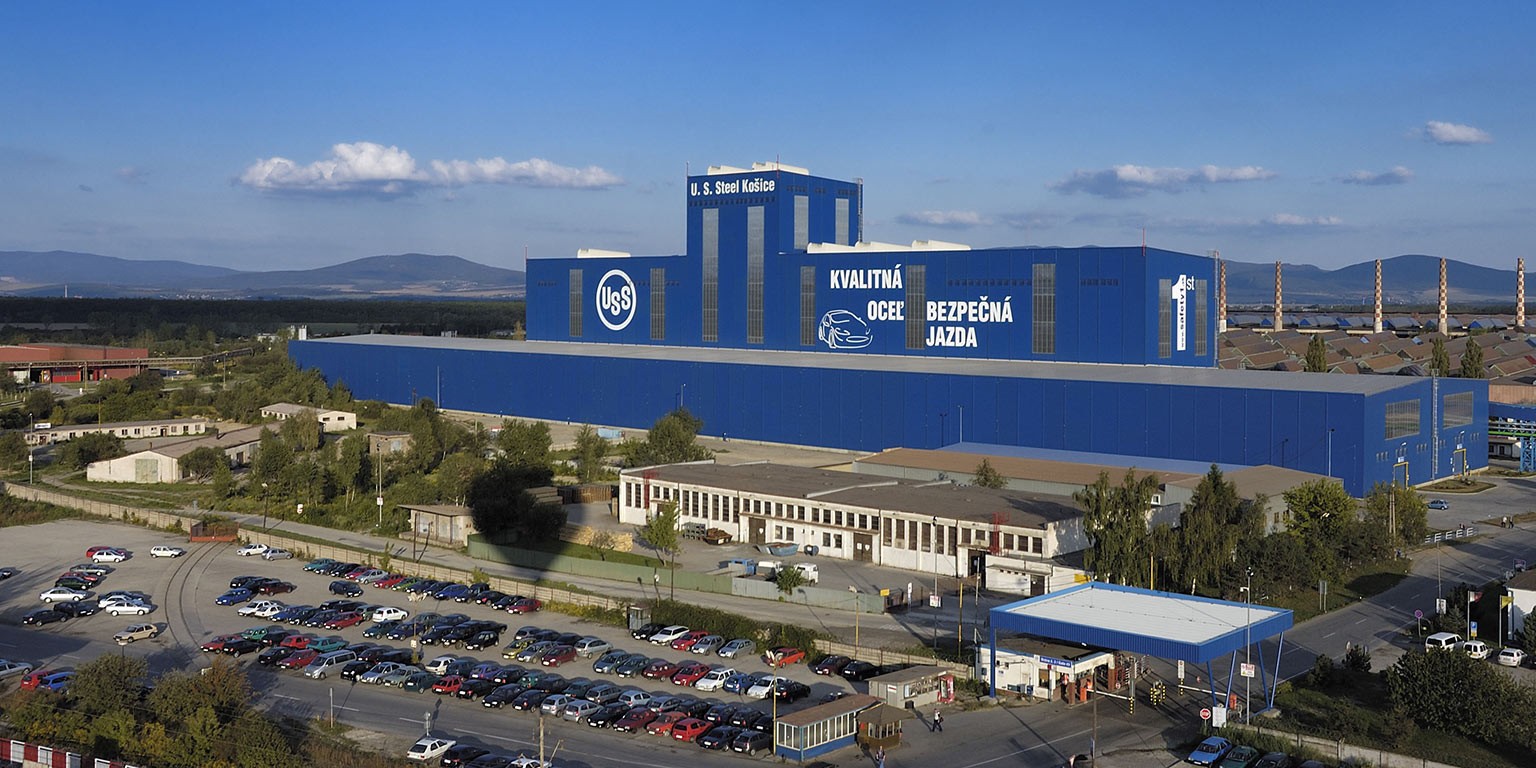
Prior to founding the current Esmark, CEO James Bouchard previously worked for US Steel, formerly serving as vice president, commercial, for US Steel Europe. Bouchard led the company’s European commercial operations following the acquisition of its Kosice, Slovakia, mill.
Esmark Steel Group, a subsidiary of Esmark Inc, is a processor and distributor of value-added flat-rolled steel and is the third-largest US producer of tin plate steel. In addition to steel services, it has operations in oil and gas exploration, aviation, real estate, professional services and technology.
Author Justine Coyne

Germany’s Saarland steel sector to use 200,000 mt/year green hydrogen
Green steel production in Germany’s Saarland state could require up to 200,000 mt/year of renewable hydrogen, the head of Saarland’s hydrogen agency Bettina Hübschen told S&P Global Commodity Insights in a recent interview.
The steel industry in Saarland could account for 150,000-200,000 mt/year of hydrogen, while a further 100,000 mt/year of demand could come from other industry, Hübschen said.
“A lot of companies are now considering switching their production from gas-based heating or from gas-based other processes to either electrification or hydrogen,” Hübschen said. Depending on technological constraints, the switch to hydrogen “is a much smaller investment, because they just need to exchange the burner technology and not the whole furnace.”
Saarland offers a case study of how the steel sector is moving to decarbonize operations, integrating with renewables, gas networks and other potential hydrogen users.
The state is home to Saarstahl and Dillinger steel plants, both owned by holding company Stahl-Holding-Saar (SHS).
SHS is Germany’s fourth-largest steel producer by volume, with annual output of 5 million mt, according to a company presentation.
SHS is planning a 2.5 million mt/year direct-reduced iron plant at Dillinger, which would use large volumes of hydrogen, Hübschen said.
SHS’s production is based on traditional blast furnace technology, although the company has said that by 2030 it wants to produce 3.5 million mt — around 70% of its total output — with lower emissions.
The Saarland Hydrogen Agency was established in May as a state subsidiary, and Hübschen is building a team to develop and implement the state’s hydrogen strategy, starting with a local demand analysis.
The focus is to develop hydrogen projects along the value chain, with infrastructure to connect supply and demand nationally and across borders, and steel plants will be the major offtaker for renewable hydrogen in the region, Hübschen said.
“They have their targets they need to fulfill, and they need to be climate neutral by 2045, and they need to have a certain reduction by 2030 already,” she said. “They can only do it by either cutting production or by switching to hydrogen.”
Coal history
The region in the southwest of Germany, bordering France, is home to a number of coal-fired power plants, and shares existing gas pipeline infrastructure across the border.
Hübschen said the former coal plants made good sites to develop for clean hydrogen production, with high-capacity power grid connections, designation as industrial sites and access to water.
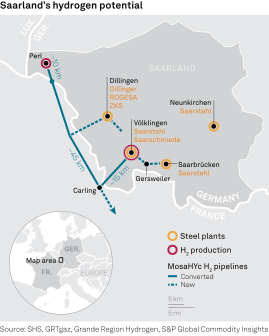
Several gas transmission operators are working on a planned 100-km hydrogen pipeline network, comprising around 70 km of repurposed gas pipes and 30 km of new hydrogen pipelines, to connect the Saar region with France’s Grand Est and Luxembourg.
The MosaHYc (Moselle Saar Hydrogen Conversion) pipeline will transport up to 20,000 cu m/hour (60 MW) of pure hydrogen, connecting regional clean hydrogen production with industrial offtakers in the area, converting pipelines to link the German towns of Perl and Voelklingen with Carling and Bouzonville in France.
Several hydrogen projects in Saarland have applied for state aid under the EU’s Important Projects of Common European Interest scheme, including SHS’s H2SYNgas project, STEAG’s HydroHub Fenne electrolyzers and the TraficHdeux transport infrastructure project.
Hydrogen supplies
Meanwhile, French green hydrogen production company Lhyfe is to develop a 70-MW renewable hydrogen plant in Perl, producing up to 30 mt/d to be delivered into MosaHYc.
However, Hübschen acknowledged that the region would have to import substantial volumes of hydrogen to decarbonize industry while electrolytic hydrogen production ramped up in the coming years.
Local hydrogen supplies from 10-50-MW electrolyzers backed by solar and onshore wind power would play a “niche” but important role, as it would take time to build large-scale supply infrastructure, she added.
Hydrogen supplies are expected to come online around 2027-30, with the price paid highly dependent on the structure of contracts to be negotiated, she added.
Steel decarbonization
Hydrogen is used to convert iron oxide into metallic iron, replacing natural gas in the DRI process. Blast furnaces, by contrast, use mainly met coke and other coal-based fuels to convert iron ore. Metallic iron products are then processed into steel.
SHS plans to decarbonize progressively by 2045, commissioning its Dillingen DRI plant by 2030 and using two electric arc furnaces in Voelklingen and Dillingen with around 3.5 million mt/year crude steel capacity, and closing one blast furnace, with CO2 emissions reductions of around 55%. Hydrogen demand in this phase could be 55,000 mt/year.
The company plans to commission a third EAF by 2045 at the latest, with capacity of around 1.2 million mt/year of crude steel.
Hübschen said the upfront investment costs for steel plants to switch to DRI and EAF processes were high, in the region of Eur1 billion ($1.1 billion) for a DRI plant, plus there was a large cost arising from hydrogen purchases.
“They need to invest billions of euros to be hydrogen ready and then to pay a high price for the hydrogen,” she said.
Platts, part of S&P Global Commodity Insights, assessed the cost of producing renewable hydrogen via alkaline electrolysis in Europe at Eur5.91/kg ($6.46/kg) Aug. 14 (Netherlands, including capex), based on month-ahead power prices. Proton exchange membrane electrolysis production was assessed at Eur6.96/kg, while blue hydrogen production by steam methane reforming (including carbon, CCS and capex) was Eur2.95/kg.
Hübschen noted blue hydrogen could be an option for Germany, and while French nuclear-powered hydrogen production would not be acceptable to German steel producers, nuclear electricity generation could power German EAFs.
Platts assessed Northwest European hot-rolled coil carbon-accounted steel at Eur735/mt ($803/mt) ex-works Ruhr, down from a peak of Eur885/mt at the start of July. The Platts European carbon-accounted assessment is for HRC with a maximum of 2.1 mt of carbon emissions through steel production and from the supply and processing of feedstocks, covering Scopes 1, 2 and 3.
Author James Burgess
US Steel rejects Cleveland-Cliffs’ $7.3 billion bid


European HRC market quiet amid seasonal closures
Fastmarkets calculated the daily steel HRC index, domestic, exw Northern Europe at €644.58 ($705.43) per tonne on Monday, unchanged from Friday August 11.
The Northern Europe index was down by €1.25 per tonne week on week and down by €27.67 per tonne month on month.
Seasonal effects and weak demand resulted in a flat market, sources said.
In the week to August 11, most buyers’ estimates of a tradable price were in the region of €620-650 per tonne ex-works.
Fastmarkets’ calculation of the daily steel HRC index, domestic, exw Italy was €633.68 per tonne on Monday, also unchanged from Friday.
The Italy index was down by €2.57 per tonne week on week on Thursday, and down by €21.32 per tonne month on month.
In the week to August 11, buyers’ estimates of workable prices for HRC for delivery in September-October were reported at €630-640 per tonne ex-works.
No fresh import offers were reported on August 14.
Published by: India-Inés Levy

LKAB deliveries drop, foresees increased costs, operational disruptions
Iron ore prices remain at high levels despite their decrease in the first half of 2023, but uncertainty remains over global economic development, says LKAB. The miner is seeing a general increase in costs of energy, inputs, materials and services, while works on the Ore Railway during summer could continue to limit production and delivery capacity.
LKAB’s iron ore deliveries fell 6% on-year in the second quarter to 5.8 million tonnes, with an 81% proportion of pellet versus 82% a year earlier, Kallanish notes.
Iron ore production was down 7% to 5.3mt, affected by scheduled maintenance shutdowns, production disruptions and a shortage of crushed ore in Kiruna.
The average global spot price for iron ore products in Q2 was lower than in the same period last year, at $111/tonne versus $138/t a year earlier. This was also down $14/t on Q1. Quoted pellet premiums for the quarter were $30/t lower on-year.
Net sales plummeted 24% in Q2 to SEK 9.35 billion ($862.6 million) and net income was down 28% to SEK 3.05 billion. Earnings were impacted by lower prices for highly upgraded iron ore products and lower delivery volumes. They were also affected by higher prices for energy and other inputs, which accounted for 25% of increased costs, as well as lengthy scheduled maintenance shutdowns, measures to secure production capacity and increased exploration.
Production in Kiruna was limited by difficulties in transporting crushed ore from other mines. During the summer, extensive maintenance work was also carried out on the Ore Railway, further reducing transport capacity. Mining in Svappavaara, therefore, had to be curtailed during the summer.
The tribunal at the European Court of Justice has meanwhile delivered its judgment in the case concerning LKAB’s exclusion from the benchmark for sintered ore in the Emissions Trading System (ETS). The Court found that the European Commission was not in error in rejecting LKAB’s inclusion in the benchmark, according to the provisions of the ETS directive that were applicable at the time. LKAB is analysing the verdict and considering whether there are grounds for appeal, the miner concludes.
Adam Smith Poland


ArcelorMittal Poland eyes two BF operation following restart
ArcelorMittal Poland (AMP) has completed the revamp of its Dabrowa Gornicza plant’s blast furnace no.2 and blown the unit in, the firm says.
The work, which began at the end of March, included the replacement of the furnace hearth refractory lining as well as the construction of a new cooling system and modern gas treatment plant. It will result in the reduction of 45,000 tonnes/year of CO2 emissions. Moreover, electricity consumption has been lowered nearly 400 MWh per year and over 18,000t of dust are recycled and reused in the steelmaking process.
The firm tells Kallanish it now plans to operate both blast furnaces at Dabrowa Gornicza and has no intention of idling either one. BF3 was restarted in January, following its idling last September due to weak demand, in preparation for the shutdown of BF2 for revamping, which cost PLN 720 million ($167m).
AMP saw crude steel production fall 15% on-year in 2022 to 3.4 million tonnes, thereby dropping below 2020-pandemic output of 3.9mt.
Adam Smith Poland
Liberty Steel to idle Dunaferr blast furnace
Liberty Steel is idling the remaining working blast furnace – no.2 – at Dunaferr because production costs are not economically feasible amid the current low steel prices, informed sources tell Kallanish.
The global steelmaking group acquired the insolvent Hungarian steelworks in an auction last month (see Kallanish passim).
In a letter to Dunaferr employees last week, management wrote: “The mill has been saved, but it should be put in order, to be prepared for a sustainable and green future to provide working places for those working at the mill. We are now working on the plan to switch to the production of GREENSTEEL, and as soon as approval from EU authorities is given, the work can begin.”
The letter also says Liberty will continue to pay the salaries of employees, while it develops retraining programmes, according to its legal obligations. The furnace shutdown is expected to last three months.
Liberty declined to comment.
BF2 was restarted in February after being idled last year amid Dunaferr’s well-publicised financial troubles.
According to reports last month following Liberty’s Dunaferr acquisition, investment exceeding $100 million will be required to regain the steelworks’ environmental protection permits necessary for operation.
In 2020, the last year for which Dunaferr published production data, it recorded crude steel production of 1.18 million tonnes, despite widely reported operational problems in the second half of the year. This was down 19% on-year. The firm’s BF1 remains idle since last summer.
Adam Smith Poland
Salzgitter expects safeguard non-renewal, Section 232 reapplication risk
“It will then be possible to import steel products into the EU market from July 1, 2024 onward without any restrictions by tariff quotas, which will likely drive up import volumes,” the steelmaker said in last week’s second-quarter earnings report.
EU steelmakers have in recent months voiced fears over the potential expiration of safeguard measures in mid-2024, with the EU’s Carbon Border Adjustment Mechanism (CBAM) due to come into full force only on 1 January 2026. This would leave an 18-month gap that would see the EU’s market unprotected, Kallanish notes.
According to WTO rules. safeguard measures can be implemented for a maximum of eight years and then must be rescinded for the same duration as they were applied before they can be re-applied.
Their renewal is likely to depend much on whether the EU and US can agree a steel trade pact, the Global Sustainable Steel Agreement (GSSA), which is currently under negotiation. If no deal is agreed by the October deadline, the US could reapply Section 232 duties on EU steel. “The various negotiation positions are currently still very far apart, which makes arriving at a consensus by October 2023 difficult. The loss of preferential market access to the US would considerably hamper exports again,” Salzgitter says.
As for the EU’s sanctions on Russian steel, importing steel products of Russian origin processed in non-EU countries will be prohibited as from October 2023; importing semi-finished products will no longer be possible starting with October 2024.
“Risks arise from the new sanctions to the extent that the long transition periods through to autumn 2024 continue to facilitate Russian steel imports that are frequently offered at prices significantly below the customary market price level. Owing to the complexity of the directive and the difficulty in its implementation, this risk continues to prevail and may lead to distortions in the market on the back of low prices for Russian steel products,” Salzgitter observes.
The German steelmaker saw shipments drop 3% on-year in the second quarter to 1.32 million tonnes.
Adam Smith Poland