


Commission adopts detailed reporting rules for the CBAM’s transitional phase
On 17 August 2023, the European Commission adopted the rules governing the implementation of the Carbon Border Adjustment Mechanism (CBAM) during its transitional phase, which starts on 1 October 2023 and runs until the end of 2025.
The Implementing Regulation details the transitional reporting obligations for EU importers of CBAM goods, as well as the transitional methodology for calculating embedded emissions released during the production process of CBAM goods.
In the CBAM’s transitional phase, traders will only have to report on the emissions embedded in their imports subject to the mechanism without paying any financial adjustment. This will give adequate time for businesses to prepare in a predictable manner, while also allowing for the definitive methodology to be fine-tuned by 2026.
To help both importers and third country producers, the Commission also published today guidance for EU importers and non-EU installations on the practical implementation of the new rules. At the same time, dedicated IT tools to help importers perform and report these calculations are currently being developed, as well as training materials, webinars and tutorials to support businesses when the transitional mechanism begins. While importers will be asked to collect fourth quarter data as of 1 October 2023, their first report will only have to be submitted by 31 January 2024.
Ahead of its adoption by the Commission, the Implementing Regulation was subject to a public consultation and was subsequently approved by the CBAM Committee, composed of representatives from EU Member States. One of the central pillars of the EU’s ambitious Fit for 55 Agenda, CBAM is the EU’s landmark tool to fight carbon leakage. Carbon leakage occurs when companies based in the EU move carbon-intensive production abroad to take advantage of lower standards, or when EU products are replaced by more carbon-intensive imports, which in turn undermines our climate action.
For more information
Guidance and resources for EU importers and non-EU producers of CBAM goods
Further information on the CBAM can be found here.

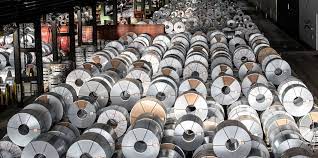
Salzgitter Flachstahl’s major blast furnace to be offline for 100 days for reline
Flachstahl in Salzgitter, Lower Saxony, already suspended unit A, one of its three BFs, earlier this month. The furnace, one of the oldest and biggest furnaces at Salzgitter Flachstahl, was commissioned in 1977 and has an annual capacity of 2 million mt/year of pig iron.
The tapping of the furnace sow — when the remaining pig iron was drained from the blast furnace — marked an initial step in the reconstruction project, in which Salzgitter is investing over Eur100 million ($110 million).
During the 100-day overhaul, the furnace’s refractory lining will be renewed and the process and control technology modernized.
Supply of primary materials to the company’s internal processing plants and to sister companies during the BF A downtime has been secured with a good stock of slabs, according to Salzgitter.
The steelmaker said it was adopting an approach of investing in its existing operations at the same time as undertaking construction for its new production process known as Salzgitter Low CO2 Steelmaking, or SALCOS. The company plans an incremental transformation to low-CO2 steel production by 2033, it said in the Aug. 16 statement.
“We are gradually abandoning the blast furnace route and have already started to install new aggregates such as the direct reduction plants and the electric arc furnaces,” Gerd Baresch, Managing Director for Technology at Salzgitter Flachstahl, said in the statement, adding that the company planned to decommission one of its blast furnaces by 2026.

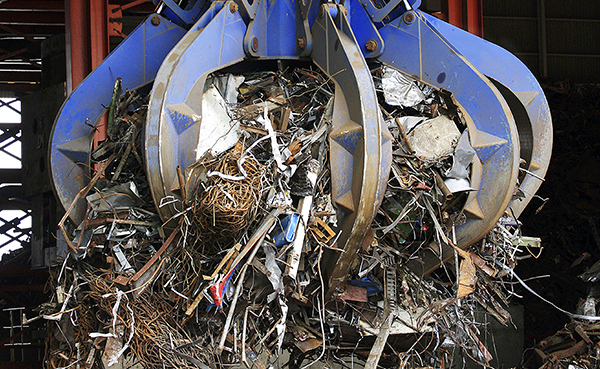
Turkish steel producer Toscelik to build zinc recycling plant
The plant will be built in Osmaniye, Southeastern Turkey, where EAF-based steel producer Toscelik — a subsidiary of Tosyali Holding, one of Turkey’s largest steel producers — is located.
The facility, designed to produce zinc using recycled EAF dust, will contribute to the protection of the environment and will provide added value to the Turkish economy, the company said.
The facility is targeted to be functional within 24 months.
Toscelik has a total steel production capacity of 2 million mt/year.
Slow demand both in the domestic and export markets have been pressuring Turkish mills’ steel pricing in recent months.
Platts last assessed the Turkish HRC steel price at $660/mt ex-works Aug. 11, stable on the week but $20/mt lower than the beginning of July, according to S&P Global Commodity Insights data.

US HBI exports increase amid stronger European demand
US exports of hot-briquetted iron have ramped up over the summer months as European steelmakers seek out lower-carbon feedstocks as new regulations come into effect, according to S&P Global Commodities at Sea.
The US exported 174,038 mt of HBI in the June-July period, compared to 120,981 mt over April-May and an increase of 63% from 74,419 mt in June-July 2022, according to CAS.
The destinations of these shipments have also shifted as all US HBI export cargoes went to Mexico in April-May, but were targeting Spain, France and Belgium as well as Mexico and Turkey in June-July.
“There has been a lot of HBI leaving Texas in July,” a Midwest trader said. “Markets are functioning as they should and are finding a better price on an FOB basis for export, because in Europe there is higher demand from emissions targets. Otherwise, there is no reason it would have to leave the US.”
According to CAS, all US export cargoes of HBI since 2017 have originated from the 2 million mt/yr production facility in Corpus Christi, Texas, which was opened by Austria-based steelmaker Voestalpine in Oct. 2016. Luxembourg-based steelmaker Arcelormittal acquired an 80% stake in the plant July 2022.
ArcelorMittal is the world’s second-largest steel producer with mill operations in Spain, France and Belgium, as well as Mexico and the US in Calvert, Alabama.
The EU’s Carbon Border Adjustment Mechanism will enter into a transitional phase from Oct. 1, from which point carbon-intensive industries such as steelmaking will be required to report a carbon accounting for imported products. From Jan. 1, 2026, EU mills will be required to pay for carbon offsets in the form of auctioned CBAM certificates.
Author Greg Holt

European HRC producers mull higher prices after summer holidays, buyers skeptical due to lackluster demand
Trading was slow across Europe, which was typical for August.
Some suppliers in Northern Europe were still active, however, offering September-rolling HRC at quite aggressive prices, which indicated gaps in their order books, market sources suggested.
Notably, one integrated mill in the region was heard selling HRC at €630-650 ($688-710) per tonne ex-works.
Other integrated producers were largely inactive for various reasons, including scheduled summer maintenance work or technical issues.
For example, Salzgitter, one of the leading producers in the region, planned to idle its blast furnace (BF) A, with capacity for 2 million tonnes per year, for relining during the week started August 14.
The effect of this on the market, however, was expected to be limited because production lost from the planned relining of BF A would be compensated through the stockpiling of slab delivered from other companies in the group, as well as by restarting the 800,000-tpy BF C, idle since 2019.
Buyers estimated tradeable prices for HRC in Northern Europe to be no higher than €630-640 per tonne ex-works.
Fastmarkets calculated the daily steel hot-rolled coil index, domestic, exw Northern Europe, at €637.08 ($695.51) per tonne on Wednesday, down by €7.50 per tonne from €644.58 the previous day.
The Northern Europe index was also down by €7.50 per tonne week on week and down by €35.17 per tonne month on month.
Market sources said that, starting from September, producers would be back in the market with higher offers, expecting apparent steel demand to support a rebound in HRC prices.
“Already [this week], some stockholders and distributors claim that their levels of inventory are below normal,” a trading source in the region said.
At the same time, the prospects for consumption by end-users were quite dull for the rest of the year, for most key steel-consuming industries, with the exception of the automotive sector. Market sources suggested, therefore, that even if there were a price rebound in September, it might only be short-lived.
Fastmarkets’ calculation of the daily steel hot-rolled coil index, domestic, exw Italy, was €632.50 per tonne on Wednesday, down only by €1.18 per tonne from €633.68 on Tuesday.
The Italy index was also down by €1.18 per tonne week on week, and down by €22.50 per tonne month on month.
The Italian market was similarly quiet, with most local suppliers seen to be out of the market and expected to come back with fresh offers late in August or early in September.
Buyers estimated tradeable values in the country at €620-640 per tonne ex-works.
But several sources told Fastmarkets that Italian mills also planned to push HRC offers higher after the summer holidays, with targets heard at €700 per tonne ex-works.
Buyer sources pointed that this was a “typical” tactic used by mills, and doubted that the desired price rise could be achieved fully, given the slow rate of consumption.
Market sources said, however, that expected restocking activity could help mills to gain an increase of some €15-20 per tonne.
Published by: Julia Bolotova


US transport agency waives certain domestic procurement requirements
The US Department of Transportation has issued a waiver to the domestic preference guidelines outlined by the Build America Buy America law, which may be applied to steel and iron construction material inputs.
The department indicates that this decision was made in favour of the public’s interest, and to help clarify the requirements necessary to qualify for federal funding allocated by the Bipartisan Infrastructure Law
Steel products, along with other manufactured construction materials, utilised in federal infrastructure projects may qualify for a waiver if the total value of the non-compliant product (i.e. steel) is less than $1 million, or 5% of total applicable costs for the project. Additionally, Kallanish understands that waivers may be issued for construction materials if the total financial assistance being provided for the project is below $500,000.
According to the department, the issuance of a waiver for low-cost materials and/or smaller grants helps maximise the amount of domestic content being utilised in federally funded construction projects. The agency argues that the low-cost waiver allows for recipients to more efficiently allocate the limited resources being granted, and that the small grant waiver allows for a focus on higher-value projects that will make a more significant impact on the domestic economy.
Zach Johnson USA


German government pledges ArcelorMittal decarbonisation funding
The German government has pledged €2.5 billion ($2.73 billion) in funding to decarbonise steelmaking at ArcelorMittal’s Bremen and Eisenhüttenstadt plants, as soon as funding approval is provided by Brussels.
The Federal Ministry of Economics and Climate Protection intends to support ArcelorMittal’s DRIBE project to transition to production using green hydrogen-based direct reduced iron feedstock initially produced at Bremen. ArcelorMittal submitted an application to the Brussels authorities for financial support in 2021.
“The early start of the measures we have requested sends an important signal: ArcelorMittal is ready to go down the path of decarbonisation,” ArcelorMittal Germany chief executive Reiner Blaschek says in a note seen by Kallanish.
“At our plants in Bremen and Eisenhüttenstadt, we are now taking concrete next steps to prepare for the construction of the plants, as far as this is possible before the EU funding commitment. This will help us to achieve the change in the way of production – which requires a complete change of technology. As soon as all approvals have been received and the conditions are right, we can prepare the next stage and hopefully start implementation quickly,” he adds.
ArcelorMittal announced in 2021 its plan to transition to DRI-EAF steelmaking at its German mills and produce up to 3.5 million tonnes/year of steel with significantly fewer CO2 emissions (see Kallanish passim). In Germany, ArcelorMittal’s largest market in Europe, the steelmaker saw revenue fall 13% on-year in the first half of 2023 to $3.7 billion amid a weak economic environment.
Adam Smith Poland

EU starts Taiwan, Turkey, Vietnam stainless CRC registration
The European Commission has initiated an investigation to examine the potential circumvention of anti-dumping measures placed on imports of stainless steel cold-rolled (SSCR) flat products from Indonesia. This would be done through imports of the same products from Taiwan, Turkey, and Vietnam.
The new regulation mandates that imports of SSCR flat products consigned from Taiwan, Turkey, and Vietnam, whether declared as originating from these countries or not, be subjected to registration during the next nine months, Kallanish notes.
The EU has raised suspicions that Taiwan, Turkey, and Vietnam are importing stainless steel slab or hot-rolled flat products from Indonesia with the intent of converting them into cold-rolled stainless steel, which is subsequently exported to the EU. This suspicion arises due to a noticeable increase in imports into the EU from these three countries since the initiation of the anti-dumping investigations.
The total value of Indonesian-origin components in the finished product exceeds 60%, while the value added during processing in Taiwan, Turkey, and Vietnam remains below 25% of the manufacturing cost.
The practices appear to undermine the intended effects of the existing anti-dumping measures, impacting both quantities and prices of SSCR steel in the EU, according to the Commission.
The Commission has thus commenced an inquiry into potential circumvention of anti-dumping measures pertaining to flat-rolled products of stainless steel, classified under CN codes 7219 31 00, 7219 32 10, 7219 32 90, 7219 33 10, 7219 33 90, 7219 34 10, 7219 34 90, 7219 35 10, 7219 35 90, 7219 90 20, 7219 90 80, 7220 20 21, 7220 20 29, 7220 20 41, 7220 20 49, 7220 20 81, 7220 20 89, 7220 90 20, and 7220 90 80. These products are already subjected to measures when originating in Indonesia.
In the current investigation, the product remains the same, but the focus shifts to consignments from Taiwan, Turkey, or Vietnam, regardless of whether they are declared to originate from these countries or not.
Running parallel to the investigation, the Commission has also initiated a probe into the potential evasion of countervailing measures. This pertains to the same product and origins.
Elina Virchenko UAE

Knauf Interfer bezieht ab 2023 grünen Stahl
Die Knauf Interfer Cold Rolling GmbH und die thyssenkrupp Hohenlimburg GmbH haben am 10.08.2023 ein Memorandum of Understanding über den Bezug von CO2-reduzierten Stählen unterzeichnet. Geplant ist ab 2023 im ersten Schritt die Belieferung des Kaltwalzwerks der Knauf Interfer Gruppe mit Stählen, die durch den Einsatz von aufbereiteten Schrotten einen deutlich geringeren CO2-Fußabdruck aufweisen (bluemintÒ recycled).
Ab Ende 2026 wird Knauf Interfer darüber hinaus Stähle der Produktfamilie bluemintÒ Steel beziehen, die nach dem Direktreduktionsverfahren mithilfe von grünem Wasserstoff produziert werden (DRA/SAF).
bluemintÒ recycled reduziert die CO2-Emissionen im Vergleich zu konventionellem Warmband im Schnitt über alle Güten und Abmessungen um ca. 60%. Knauf Interfer ermöglicht dies eine produktspezifische Anrechnung der CO2-Emissionen in der Kategorie Scope 3.
Über den Bezug und die Bearbeitung von grünen Stahlprodukten setzt die Business Unit Steel, zu der die Knauf Interfer Cold Rolling GmbH gehört, dazu unter anderem auf eine effiziente, trimodale Logistik und kurze Lieferwege dank günstig gelegener Standorte.
Domenico Marino, COO im Vorstand der Knauf Interfer SE, sagt:
„Über Stahlbezugsvereinbarungen können wir die Lieferketten unserer Kunden mit Green Steel absichern. In diesem dynamisch wachsenden Segment kann sich Knauf Interfer auch dank der engen Partnerschaft mit thyssenkrupp Hohenlimburg durch maßgeschneiderte Lösungen, Material- und Beratungskompetenz positionieren.“
André Matusczyk, CEO der thyssenkrupp Hohenlimburg GmbH, ergänzt:
„Die heute unterzeichnete Vereinbarung markiert einen weiteren Meilenstein auf dem Weg zum „grünen Stahl“ und zeigt das gemeinsame Bekenntnis zu mehr Nachhaltigkeit und Klimaschutz.“
Quelle: Knauf Interfer & home-of-steel.de