


SSAB upgrades CR mill in Finland
SSAB has tasked Primetals with the next stage of upgrading stand No.1 at SSAB’s four-stand tandem cold rolling mill in Hämeenlinna, Finland.
One year ago, Primetals implemented mill stand drives for the stand No.1, During phases 1 and 2, it upgraded the drive system, including transformers, drive, and motor. In phases 3 and 4, the transformers, drives, and motors of the remaining mill stands will be modernised in a similar way to phases 1 and 2, Kallanish learns from the technology supplier.
In phase 5, an obsolete motor will be refurbished, allowing it to be used as a replacement for the other already modernised motors. The objective of the extensive upgrade is to secure the supply of spare parts for the mill stand drives well into the future. Moreover, the availability of the tandem cold rolling mill will be increased, Primetals explains.
The four-stand tandem cold rolling mill produces coil ranging from 660-1,575mm wide and 0.35-3.1mm thick. The mill, among other things, makes ultra high-strength steel products, mainly for the automotive industry, which provide greater impact protection in cars while reducing weight.
As SSAB is transforming its mills in Luleå and Raahe into mini-mills with electric arc furnaces, Hämeenlinna will be further developed in line with the new production processes, SSAB says in its latest annual report.
Christian Koehl Germany

German alliance builds electric DRI smelter test facility
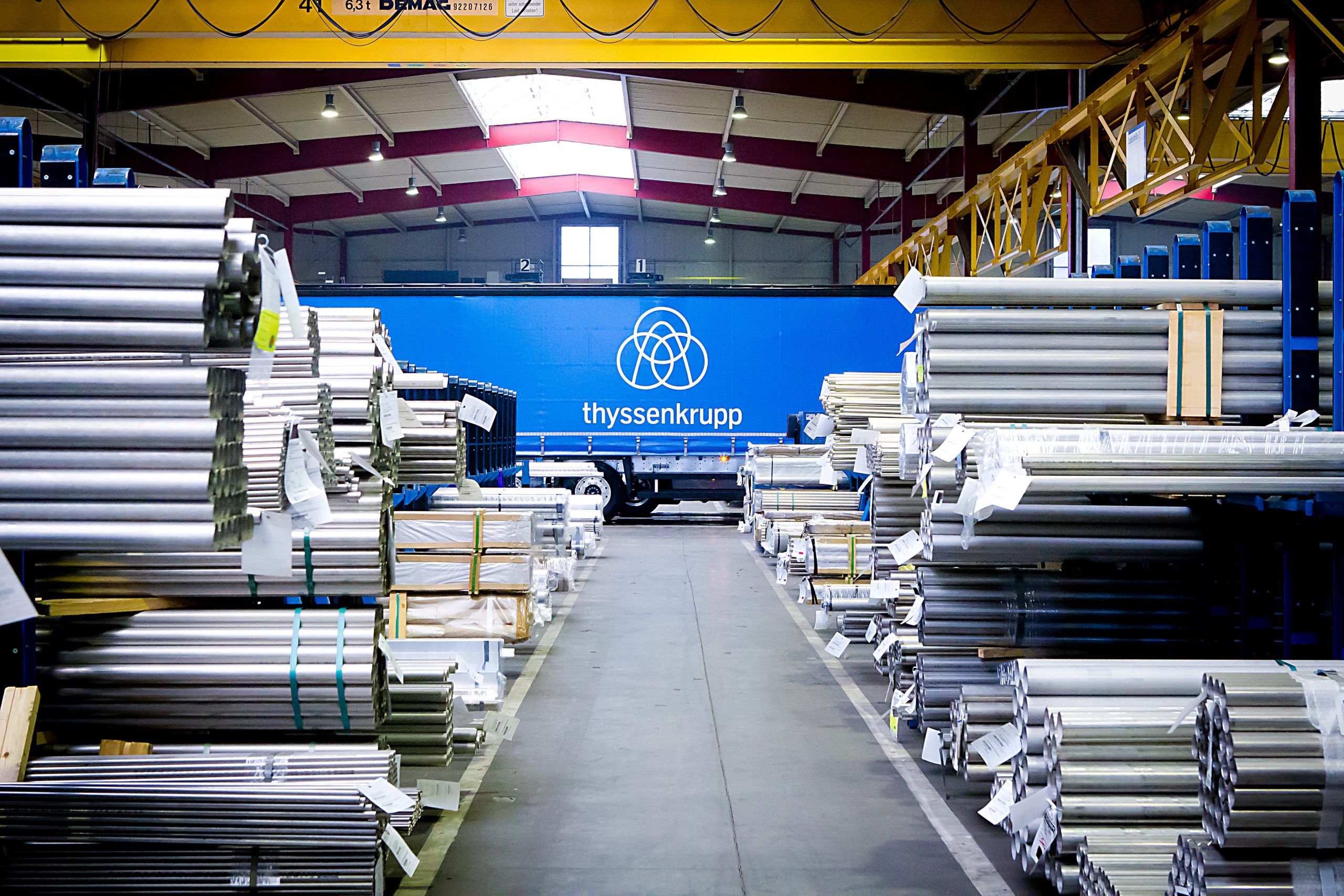
Thyssenkrupp Steel has commissioned Grenzebach Maschinenbau with the engineering, construction, and commissioning of a direct reduced iron electric smelter test facility at its Duisburg site, Kallanish hears from the steelmaker.
The smelter is part of the research on the carbon-neutral transformation strategy at the site, which also involves the German Iron and Steel Institute (VDEh)’s subunit, Institute for Applied Research (BFI). The project aims to show how sponge iron from direct reduction plants can be liquefied in an innovative smelter to produce electric hot metal, tk Steel explains. The contract is worth around €7.5 million ($8.1m), of which the North Rhine-Westphalia state economy ministry will fund 65% and tk Steel 35%.
BFI will test different feedstocks, such as direct reduced iron, alternative carbonaceous products and recycled materials, for hot metal production. The first trial campaigns are scheduled to start at the beginning of 2026. The demonstration-scale smelter with a capacity of 100 kg/hour of DRI is adapted to the DRI test facility.
Last week, thyssenkrupp and BFI chose TS Elino to supply the DRI test facility (see Kallanish passim). The two units will collaborate to focus research on hydrogen-based direct reduction technology.
“Hydrogen-based direct reduction in combination with melters is an innovative approach that thyssenkrupp Steel is implementing on a large industrial scale for the first time,” comments chief technology officer Arnd Köfler. “The experimental melter and the direct reduction test facility … will enable us to use different charge materials flexibly, and to find answers to the fundamental technological questions surrounding the transformation of steelmaking.”
Christian Koehl Germany

Stahl Gerlafingen ponders closure of production line
In a statement sent to Kallanish upon request, the company bemoans a de-facto export ban by the EU since mid-2023 and also criticises the EU for financial support measures it grants to EU mills. “Our exports of merchant bar, which in the past generated good revenue and margins, have been effectively banned by the EU, regardless of the free trade agreement between Switzerland and the EU,” the statement reads.
It also cites high costs for power in Switzerland, highlighting the particularly high grid fees, which have contributed to pushing the company into the red. Stahl Gerlafingen’s main product is actually rebar, which comprises more than two thirds of its annual output of up to 700,000 tonnes, but this product is not mentioned in the statement.
The management, headed by Alain Creteur, is now pondering the closure of one rolling line, and is talking to local policy-makers to jointly find a solution. “From a commercial point of view, a closure of one line is unavoidable, but it would also mean the loss of many jobs,” he says.
Policy-makers on the regional and national level are currently in discussion to find a solution, so the company has postponed its closure decision, in agreement with the Beltrame family. It notes that the melt shop and other main facilities would not be affected by such a decision.
Last weekend, local newspapers cited Swiss economy minister Guy Parmelin as saying that the government is in “intense” talks over Stahl Gerlafingen. However, he also noted that he does not consider the steel industry in Switzerland to be “systemically relevant”, contrary to Stahl Gerlafingen’s claim.
Christian Koehl Germany

ArcelorMittal expands Magnelis production in Spain
ArcelorMittal says it will expand coated steel production after concluding the upgrade of galvanizing line No.1 at its Avilés plant in Spain, Kallanish learns from the company.
The project included enabling the line for production of “Magnelis”, the firm’s product with an anti-corrosion metallic coating. The plant has been producing this at galvanizing line No.2 since 2017.
“We began large-scale production at line No.1, after several months of work to adapt the facility and an important series of tests to validate the product,” the company says. “The investment places the Avilés plant as one of the Group’s main Magnelis manufacturing units.”
The new corrosion resistance steel products, whose characteristic is a composition coating with a higher content of aluminium and magnesium, come in 2-3.5mm thicknesses, something that was not feasible at line No.2.
ArcelorMittal plans to double the volume of Magnelis produced in Asturias. Since its inauguration in 2017, the No.2 line’s cumulative output has exceeded 500,000 tonnes.
ArcelorMittal thus expects to meet most demand for Magnelis in the Iberian market. This specific product is mainly supplied to the solar energy sector for the construction of photovoltaic park infrastructure. Magnelis offers a substantially lower environmental impact than that of alternative materials, ArcelorMittal claims.
Todor Kirkov Bulgaria

Southern European apparent longs demand to resurface: mills
Apparent demand for long products is seen recovering slightly in the second quarter in southern European countries such as Portugal, Italy, Spain and Greece, while real demand should remain depressed, mill sources believe.
Apparent demand for wire rod, merchant bar, rebar and sections is seen resurfacing a few weeks after Easter, given international scrap prices have stopped dropping. Sources who spoke to Kallanish believe scrap values will stabilise in the coming weeks, supported by low availability and strong EU and international demand.
The European longs market is being impacted by lower consumption from the construction sector. However, southern EU countries are performing better than northern Europe, with better shipments in Q1 2024 compared to Q3 and Q4 2023. Rebar sales are particularly weak in France and Germany where the construction sector has suffered a strong setback. Sales are also better in eastern European countries such as Poland, as well as the UK.
Rebar prices in northern and eastern Europe are at €610-630/tonne ($662-684) delivered, depending on tonnage, sources suggest. All markets are seen remaining quiet this month, with customers shunning sales until after Easter.
In Q1, merchant bar and sections have suffered low apparent and real demand, but some orders are now resurfacing. Most buyers in Europe restocked in November and December last year and have been destocking ever since.
Merchant bar is the worst-performing product for sales at present, sources point out. Prices in northern Europe have fallen from over €700/t delivered to an average of €650/t delivered. The merchant bar stagnation is seen continuing in Q2, albeit with brief spells of slightly better demand.
Apparent demand for sections should resurface after a long period of destocking, bringing some price stability, but woes over consumption continue. Wire rod may also see renewed demand in April, with fewer imports expected amid depleting stocks. Its prices are at some €630-650/t delivered in Europe.
Rebar prices are forecast to see some stability in southern Europe in the coming quarter, but the German and French markets will continue to suffer.
Natalia Capra France