


Demand growth sluggish; costs, overcapacity hit industry: OECD
Global steel demand growth will continue to be very sluggish in 2024-25 amid deteriorating market conditions, says the OECD Steel Committee. Steel firms need to absorb higher costs while facing weak demand and surging imports due to global excess capacity.
Demand for steel fell by 3.3% in 2022 and recovered by only half this amount in 2023 as higher interest rates worldwide continue to depress construction activity and investment. High and persistent inflation is meanwhile reducing spending on steel-intensive durable goods and has led to higher raw material costs for steel firms since June 2023, the committee noted following its 95th session in late March.
World crude steelmaking capacity in 2023 is now estimated at 2.439 billion tonnes, exceeding production by 552 million tonnes. Around 23mt of potential new capacity growth in ASEAN during 2024-26 is through cross-border investments or joint venture investments.
China has made significant progress in limiting domestic crude steelmaking capacity growth. “Still, in addition to growing Chinese investment in Southeast Asia, there is growing concern that substantial financial incentives in China, such as tax benefits, grants, and research funding, are encouraging the capacity of higher value-added steel products. This implies that excess steel production capacity is ‘moving up the value chain’, seen in the recent shift in the composition of exports of Chinese steel and steel-using downstream products over the last years,” committee chair Ulf Zumkley says in a note seen by Kallanish.
A new committee study shows that the use of subsidies per unit of steel producing capacity in the form of cash grants has increased fivefold in non-OECD economies that are not members of the Steel Committee from 2005 to 2021. Subsidies in the form of below-market financing – soft loans – have doubled. Each $1 million of subsidies through grants is associated with capacity increases of about 7-11 million tonnes in the non-OECD area.
Steel trade dynamics underwent significant changes in 2023, marked by a 40% increase in China’s steel exports compared to the previous year, while Southeast Asian exports also grew amid capacity increasing faster than demand. This could lead to more widespread usage of trade defence instruments.
Adam Smith Poland

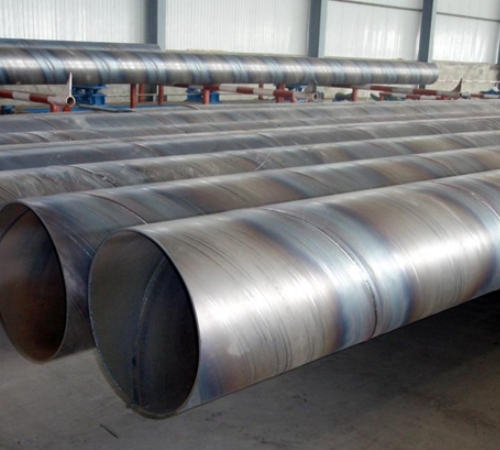
Italian welded tube prices to increase
Some Italian welded tube re-rollers will increase prices starting this week. Sources from hot rolled coil mills, re-rollers and distributors are registering a price floor for domestic and imported HRC, with expectations of some mild increases for European coil and derivatives.
The unsustainable price of tubular products is causing margin pressure for all southern European re-rollers. An Italian tube maker sees production costs increasing in 2024, worsened by the several production stoppages implemented this year to balance demand and supply.
Some tube demand improvement is being reported in Italy. Last week’s activity was slightly higher than usual and positive signs are coming from those end-users who have suffered a strong order contraction in recent months, Kallanish hears.
A re-roller confirms he is starting to decrease discounts by a couple of points this week. Although the fragile market conditions persist, a gradual increase made of “small steps” is achievable in the coming weeks. Until last week, discounts in Italy stood at 38-39 points.
European HRC levels are expected to recover by €10-20/tonne ($10.8-21.6) in contracts in the coming weeks. Steelmakers say they cannot sustain the average level of €650/t base delivered and will try to push up values towards the level of €680/t.
Natalia Capra France

French rebar flattens in quiet market
French rebar prices are flat compared to the end of last month after values decreased in March by some €10/tonne ($10.8) on average. Sources in the market are reporting quiet activity and back-to-back sales, with no change from previous weeks, Kallanish hears.
The first ten days of March were “acceptable” in terms of domestic sales, distributors say. However, since mid-March, consumption has fallen again and sales are low. Construction firms continue to buy only small tonnages each week and report limited visibility. Continued uncertainty and quiet activity, particularly last week after Easter, are impacting turnover throughout the value chain.
French rebar values are hovering at €620/t delivered on average, sources suggest.
The domestic construction sector is officially going through a recession, as confirmed recently by national construction federation Fédération Française du Bâtiment (FFB). New construction fell by 23% year-on-year over the three months ending January 2024.
Activity in some sectors of the industry fell more steeply, such as construction of individual houses which declined by as much as 41% between January 2023 and January 2024. The crisis involves all building segments including non-residential (see Kallanish 20 March).
Natalia Capra France

EU stainless coil prices rise
European contract prices for stainless cold rolled coil are increasing following the hikes implemented by steelmakers last month, sources tell Kallanish.
Over recent weeks, the steelmakers in operation have gathered orders that could not be placed with Acerinox or Outokumpu due to strikes impacting both plants for very different reasons. The long absence from the market of these two producers has balanced demand and supply.
Mills in Europe are now selling at €2,650/tonne ($2,871) delivered on average for CRC, with lead times lengthening into June and July. Italian contract prices are also increasing but lagging behind compared to other EU countries. Until last week, domestic stainless CRC stood at €2,530-2,550/t on average for July lead times, with asking prices at €2,600/t base delivered.
Contracts in Italy are however expected to increase on lower availability and better demand. Domestic hot rolled coil is being sold at between €2,300-2,370/t delivered due to the presence of cheaper import offers from Asia. Prices of both coils and sheets in Europe may continue to rise. Two European producers are currently not quoting for coil.
The stainless flat steel market is generally improving because coil offers are limited. Downstream sheet demand seems to have somewhat resurfaced, service centres in northern and southern Europe say, after 18-20 months of depressed consumption. According to two sources, the current improved activity should last until the summer.
Sheet prices are at €2,700-2,750/t ex-works in Europe, depending on country. The lowest point of the range has been registered in Italy, which remains the sick man of Europe.
A fire broke out at Acerinox’s plant in Los Barrios, Cádiz on 2 April, which the company says was started intentionally. The fire occurred at the company’s paper warehouse and firefighters put it out immediately, preventing serious damage to the plant. The workers’ strike there continues.
Natalia Capra France

Polish rebar, wire rod prices continue to decrease amid slow trading
Rebar
Polish mills offered April-production rebar at 2,700 zloty ($682) per tonne CPT, which nets back to about 2,670 zloty per tonne ex-works, sources told Fastmarkets.
For volumes bigger than 500 tonnes, mills were willing to grant a discount of 20-30 zloty per tonne.
These levels were lower compared with the previous week when rebar was offered at 2,700-2,740 zloty per tonne CPT, which is equivalent to 2,680-2,710 zloty per tonne ex-works.
Market participants estimated tradeable market levels at 2,700 zloty per tonne CPT for small tonnages, which nets back to about 2,670 zloty per tonne CPT.
The workable market level for volumes larger than 500 tonnes was 2,670-2,680 zloty per tonne CPT, which equates to 2,650-2,660 zloty per tonne ex-works, according to market participants.
But lower prices failed to spur trading and no major deals were heard in the market, .
Fastmarkets’ weekly price assessment for steel reinforcing bar (rebar), domestic, exw Poland was 2,650-2,670 zloty per tonne on Friday, down by 30-40 zloty per tonne from 2,680-2,710 zloty per tonne on March 28.
“Consumption is not that bad, but customers are still receiving the material they have already ordered. Once [the ordered volumes] are delivered, they will start buying again,” a producer source told Fastmarkets.
According to a consumer source, the Polish rebar market was quiet in the first week after Easter, but more deals are expected in the coming week.
Buyers shared mixed views about the rebar market’s development in the near future.
“Demand for unprocessed rebar is bad; [it] seems that prices will have to go down further,” a distributor source told Fastmarkets.
“On the other hand, the cut-and-bend sector is doing well, so maybe Polish mills will not be eager to continue with decreases,” the distributor added.
According to a second distributor source, demand from the cut-and-bend sector is not the same in all regions of Poland, and from their perspective, it was poor this week and the previous week.
They added that cut-and-bend companies had bought some volumes in recent weeks due to dropping prices and the fact that they had foreseen higher prices for the material in their budgets. The second distributor source was also pessimistic about demand from the construction sector in the next two months.
The direction of Polish rebar prices will be clearer next week when most new scrap contracts for the month will be signed, the second distributor source added.
Strong competition from imports also continued to put pressure on the domestic rebar market in Poland. Offers of the material from Germany were heard at €615-620 ($667-673) per tonne delivered. Offers of rebar from Hungary and Italy were heard at €615 per tonne delivered.
Wire rod
Polish mills continued offering drawing-quality wire rod in the range of 2,850-3,000 zloty per tonne CPT in the week to Friday, sources told Fastmarkets.
These offers were unchanged from price levels last week when Polish wire rod producers cut their official offers to stimulate buying.
But demand remained low with no restocking, a third distributor source told Fastmarkets.
Bids were heard at 2,800 zloty per tonne CPT.
Sources indicated tradeable market levels in the range of 2,800-2,900 zloty per tonne CPT but no major deals were heard in the market.
Fastmarkets’ price assessment for steel wire rod (drawing quality), domestic, delivered Poland was 2,800-2,900 zloty per tonne on Friday, widening downward by 50 zloty per tonne from 2,850-2,900 zloty per tonne on March 28.
According to market participants, some restocking could be expected during the Tube and Wire trade fair in Düsseldorf, Germany, on April 15-19.
Import offers of drawing-quality wire rod from Italy were heard at €650-670 per tonne CPT.
Offers of mesh-grade material from Italy, Moldova and Ukraine were heard at €630 per tonne CPT.
Published by: Darina Kahramanova


HRC buyers in Europe hold back from trading; rock bottom said to be near
HRC buyers across Europe maintained a hand-to-mouth approach to bookings, shunning large-tonnage purchases, Fastmarkets heard.
“Mills have short order books and quick lead times, therefore buyers can 100% live hand-to-mouth with such levels of end-user demand,” one buyer source said.
Demand from key steel-using sectors has dropped by around 15-20% year on year and this has affected purchases, several sources said.
Buyer ideas of achievable HRC prices in Northern Europe were mainly reported at €650-660 ($705-716) per tonne ex-works.
Northern European suppliers kept offers at €660-680 per tonne ex-works, with lower prices available for big tonnages, according to sources. Lead times were heard to be around six to eight weeks.
“Of course, producers can give a discount if you put a decent tonnage on the table. But these days, trading is almost zero,” a distributor in Germany told Fastmarkets.
“Mills are hungry for orders, but at the same time, [they are] not prepared to give in to extremely low prices due to production costs,” a trader in the Benelux area said.
Fastmarkets calculated its daily steel HRC index domestic, exw Northern Europe at €657.08 ($712.91) per tonne on Friday, down by €3.13 per tonne from €660.21 per tonne on Thursday.
The index was down by €6.67 per tonne week on week and by €57.17 per tonne month on month.
Despite talk of potential output cuts, producers have refrained from making official announcements so far, Fastmarkets understands.
“Output cuts were needed a month or two ago, so we could see the effects in the second quarter,” a steel service center source said.
In Southern Europe, Fastmarkets’ daily steel HRC index domestic, exw Italy was calculated at €635.83 per tonne on Friday, down by €0.84 per tonne from €636.67 per tonne on Thursday.
The index was down by €9.17 per tonne week on week and by €57.14 per tonne month on month.
HRC offers in Italy were mainly heard at €650-660 per tonne delivered, which is equivalent to €640-650 per tonne ex-works.
May lead times were reportedly still available from a local supplier, market sources said.
“All prices are only theoretical numbers, since there is no trading at all,” a buyer in Italy told Fastmarkets.
In the past week, sources reported slightly better trading downstream, with end-users said to be seeking tonnages, but prices remained weak due to oversupply.
In the secondary market, 4mm HR sheet was heard traded at no higher than €730-750 per tonne CPT, with some steel service centers reported to be offering as low as €720 per tonne CPT.
“Margins are squeezed at distributors; there is tough competition [in downstream markets],” a distributor in Italy said.
June-shipment HRC offers from Vietnam and Japan were generally around €570-580 per tonne CFR, but buying interest has remained low, Fastmarkets heard.
“Import prices from Asia would be already for HRC [cleared by EU customs in October] – price should be lower for such long lead times,” a trader in Italy said.
From Turkey, offers of June-shipment coil were heard at €600-605 per tonne CFR, including the anti-dumping duty.
Published by: Julia Bolotova

Resourex’s trading tool presents “RX Cold Rolled Coil GER”
The current chart “RX Cold Rolled Coil GER” by RESOUREX® reflects the absolute prices in €/ton for cold rolled carbon steel coils on the German market. This indicator provides an insight into the development of prices for cold rolled coils used in a variety of industries, based on RESOUREX´s trading tool.
The chart shows a clear progression that provides important information for companies and analysts to make informed decisions. With this new chart, the price development over a certain period of time can be tracked and possible trends can be identified.

RESOUREX® invite you to use the new chart “RX Cold Rolled Coil GER”, among others, to get a more detailed insight into the price development for cold rolled carbon steel coils in Germany and to make informed business decisions.
The snapshot presented serves as a gateway to a deeper level of market-relevant information.