Import suppliers dominate European CRC market with much cheaper offers
CRC
The CRC market was dominated by much cheaper imports and European mills trimmed their CRC output in favor of producing the more value-added HDG, industry sources told Fastmarkets.
“About 90% of CRC supply comes from imports now. Some [European] mills are not even offering CRC,” a buyer in Italy said.
Only one supplier was heard to be active in Italy, offering CRC around €740 ($804) per tonne delivered (around €725-730 per tonne ex-works), with July-August delivery available.
Buyer estimates of tradeable values were heard around €710-720 per tonne ex-works.
“European suppliers are only competitive if the buyer needs prompt shipment, special gauges, grades etc,” a second buyer in Italy told Fastmarkets. “Some suppliers [in Southern Europe] are quite well booked for CRC, offering quick delivery, but in general imports dominate the market.”
“CRC production is expensive in Europe; annealing is very energy-intensive so mills can’t go below costs,” a third buyer said.
Fastmarkets’ price assessment for steel CRC domestic, ex-works Southern Europe was €720-725 per tonne on Wednesday, up marginally by €5 per tonne from €715-720 per tonne on May 22.
Import CRC offers were reported at much lower levels.
Offers from India for August-shipment CRC to Southern Europe were heard at €695 per tonne CFR.
Offers from Japan and South Korea were heard at €660-675 per tonne CFR to Southern Europe for July-August-shipment CRC.
A transaction for CRC from South Korea was reported at €660 per tonne CFR during the assessment week.
“[Prices for imported CRC] are much lower; there is no chance for European mills to match those. For HDG, it is a bit less tense because overseas mills cannot supply the full range [of HDG] required by buyers in Europe,” a buyer in Italy told Fastmarkets.
HDG
Fastmarkets’ price assessment for steel hot-dipped galvanized coil domestic, ex-works Southern Europe was €740-750 per tonne on Wednesday, unchanged over the past week.
Offers from suppliers in Southern Europe were reported at €750-770 per tonne delivered (€740-760 per tonne ex-works) during the week, while buyers’ estimations of achievable prices were heard at €730-740 per tonne ex-works.
In the HDG market, trading was also slow, mainly due to limited demand from end-use sectors.
In such conditions, buyers avoided stockpiling and were mainly doing hand-to-mouth bookings.
Cheaper imports options were also available for HDG coil, but the impact of cheaper imports was not as significant as for CRC, Fastmarkets heard.
“Import HDG suppliers cannot supply the full range of grades and dimensions required by European buyers, so HDG is largely being procured in Europe,” a buyer in Southern Europe said.
Offers from Vietnamese suppliers of 0.5mm HDG with Z100-120 coating for August shipment were reported around $830 per tonne CFR to Southern Europe during the assessment week.
Published by: Julia Bolotova

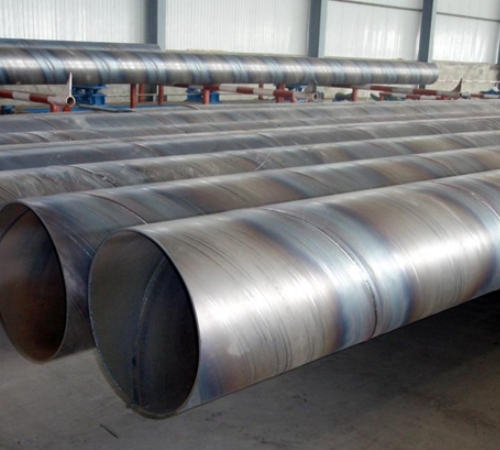
Polish seamless pipemaker faces liquidation
Poland’s Alchemia plans to liquidate its seamless pipemaking unit Walcownia Rur Andrzej (WRA). The decision was made because of WRA’s inability to compete on the market due to outdated production technology and the high cost of keeping the business running, informs Alchemia’s parent company, Boryszew.
Increased expenditure for maintenance and modernising production technology is “unjustified in technological and economic terms”, Boryszew says in a note seen by Kallanish. Liquidation of the unit will bring higher economic benefits than maintaining production, it adds.
Zawadzkie-based WRA’s revenue in 2023 was PLN 183 million ($46.5m), down 35% on-year. The firm has a 70,000 tonnes/year capacity of seamless pipe.
Its 435 workers all face being laid off. The Silesia-Opole division of the Solidarnosc trade union plans a picket line at WRA in protest of the liquidation on 4 June.
Unions have criticised management’s decision to inform them of the liquidation only 15 minutes prior to communicating the news to workers. The pipe mill is being liquidated not only because of punitive climate policy, but also because the owner failed to invest sufficiently in the production lines, unions point out.
Adam Smith Poland


Germany passes bill to accelerate H2 permitting, deployment
The German government passed on Wednesday the Hydrogen Acceleration Act to create the legal framework for the rapid development and expansion of hydrogen infrastructure.
The bill aims to speed up, simplify and digitise planning, approval and procurement procedures. That means the federal cabinet is working to “remove obstacles” to projects that produce, store or import hydrogen, explains economy and climate protection minister Robert Habeck.
“An efficient hydrogen infrastructure is of crucial importance for the decarbonisation of industry; hydrogen pipelines will be the lifeblood of industrial centres,” he adds in a note seen by Kallanish. “Time is running out. So that electrolysers or import terminals can go into operation as quickly as possible, we need leaner and, above all, faster planning and approval procedures.”
As part of the draft law, regulatory requirements will be reduced; legal cases challenging projects and environmental impact assessments will be shortened.
For example, permitting for electrolysers is to be simplified, while for smaller devices – up to 5 megawatts – it will be eliminated. Large-scale electrolysers that run primarily on renewable power by the end of 2029 will benefit from “overriding public interest” status, provided there are no concerns about public water supply. Infrastructure projects will also benefit from the approach, which was widely used to expand renewables in the country. This means authorities will prioritise these projects in the approval process.
The law is scheduled to come into force at the end of 2024, helping Germany to make progress on its target of having at least 10 gigawatts of electrolysis capacity in 2030.
As part of the BMWK industry package, the cabinet also passed the Carbon Dioxide Storage Act, which will focus on the use of carbon capture and storage (CCS) and carbon capture and usage (CCU) technologies.
Habeck says the act is an important “building block for the competitiveness of our industrial location”. It will enable both onshore and offshore storage of CO2. The next step is to finalise the details of the carbon management strategy.

Coil prices to recover slightly: Marcegaglia
International coil prices may increase slightly towards the end of the second quarter or beginning of Q3, Marcegaglia chairman Antonio Marcegaglia told Kallanish on the sidelines of the Danieli “Innovaction” event in Udine on Wednesday.
“Final demand for coils at an international level is rather static. Some consumption rebound is expected but I believe it will be more of a technical restocking thanks to some improved confidence in the relative price stability,” he noted.
“At an international level, the price has slightly improved [versus recent weeks]. The spread [between Asia-origin hot rolled coil import prices and] European levels has been reduced and there is no reason why prices should decrease further. Instead, it is plausible that values might in fact slightly increase,” Marcegaglia added.
The hike would be driven by the quick exhaustion of EU safeguard quotas, long lead times and the uncertainty related to the quota renewal, which is pushing deliveries of Asia-origin material imported into Europe towards September and October.
“It is plausible that this situation may cause some limited material availability on the European market. Despite the rather calm final demand, low stocks and lower imported material availability are the reasons for a possible consumption recovery, accompanied, I think, also by a slight price rebound,” Marcegaglia continued.
“On a smaller scale, we have seen this happening in the stainless steel [coil] segment owing to a situation of low imports, coupled with a strong reduction of European availability caused by the Acerinox and Outokumpu production slowdown,” he added.
Given the low consumption, this shortage was initially underestimated, but it caused prices of stainless coil, as well as its derivatives, to increase significantly. Marcegaglia sees a similar situation happening for carbon steel coil, although the price increases should be more moderate. Coil import prices from the Far East are now mostly stable, with a rebound registered of €20-30/tonne ($21-32) compared to the lowest levels seen in recent weeks, but import offers lack attractiveness.
Cold rolled and hot-dipped galvanised coil are both seeing weak trading. The spread between HRC and CRC/HDG prices should be wider than current levels. Stocks through the value chain are however low.
“The perception of the low stocks is not that clear. The visibility on the final consumption is short, also for service centres, and the general perception is that the order book weakness is compatible with the low stocks,” Marcegaglia observed. However, “we are going towards a favourable season. May was hampered by a series of holidays. Some activity should move in June”. In June and July, the market should see some recovery of apparent demand.
Downstream, the tube and sheet markets are suffering from weak prices and volumes due to uncertainty, but stocks also remain low, particularly for sheet. Demand is generally stable for welded tube depending on the end-user sector. “Overall volumes at the end of each month are not dramatically low but they are built slowly and with great cautiousness,” Marcegaglia noted.
Last year, Marcegaglia posted €7.8 billion ($8.4 billion) in revenue, slightly down from 2022 due to lower pricing, despite increased shipments. The decline was also driven by the consolidation of Outokumpu’s long products acquisition in 2023.
Kallanish assesses Asia-origin HRC transactions at €590-600/t cfr Europe on average, while Turkey is at €10-15/t higher duty paid. European HRC prices are at €630-640/t base delivered or ex-works, depending on the country.
Natalia Capra France

Activity remains weak in EU HRC market, with some mills giving discounts
Trading activity in the European hot-rolled coil market remained slow May 29, while the majority of steelmakers have held offers stable, though some were ready to give discounts for coil with higher added value.
“Transactional volumes are limited,” a service center source said. “The buyers are just filling the gaps in their stocks when absolutely needed.”
According to a mill source, “European distributors have been avoiding booking of larger volumes as they remained uncertain of the price trend and demand.”
Platts assessed domestic prices for hot-rolled coil in Northwest Europe up by Eur5/mt on the day to Eur630/mt ex-works Ruhr May 29.
Deals for smaller lots have been heard at Eur630/mt ex-works Ruhr and tradable values at Eur630-640/mt ex-works Ruhr.
Offers have been reported at Eur650-660/mt delivered Germany, and for commodity grades the price is equivalent to Eur630-640/mt ex-works Ruhr. A German mill, however, has been offering HRC with higher added value, therefore with higher premiums, at the same prices on delivered basis, making it the equivalent of Eur615-620/mt ex-works Ruhr.
The market mood has been slightly better in the South Europe compared to Germany due to reduced domestic supply caused by stoppages at Acciaierie d’Italia, sources said.
Platts assessed domestic prices for hot-rolled coil in South Europe stable on the day at Eur625/mt ex-works Italy May 29.
Offers have been heard at Eur635/mt ex-works Italy, and buyers’ tradable values were not accepted by mills at Eur615-625/mt ex-works Italy.
Interest in imported material from Asia has been low due to long lead times, sources said.
“Offers from Asia are out of question due to long lead times — the material would be custom cleared in the fourth quarter, and we still do not know what would be the changes in the safeguard measures,” another service center said. “European mills understand that the buyers will have to turn to them for volumes and avoid moving prices down.”
Offers of HRC from Egypt and from Turkey, including antidumping duties, were at Eur610-615/mt CIF Italy.


EC implements 15pc cap on HRC other countries quota
The European Commission is implementing a 15pc cap on any individual country selling hot-rolled coil into the quarterly other countries quota of its steel safeguard.
This effectively caps any country selling into the other countries at 141,849t/quarter for the rest of this year: the other countries quota for July-September and October-December will be 945,664t.
If no grace period is granted, sources suggest this could lead to significant duties being incurred on 1 July, as many countries will have more than 15pc of the other countries volume in transit to the EU.
The commission decided against any other individual country quotas on HRC, the notification said.
The commission has been carrying out its review of the steel safeguard for months now. Market sources had anticipated Vietnam would get its own quota, while in recent months there have been suggestions Japan actively asked for its own quota.
The liberalisation rate has also been reduced from 4pc to 1pc.
The commission also notified the WTO the safeguard would be extended for two years, meaning there will be a brief six-month overlap between the safeguard and the imposition of the financial component of the carbon border adjustment mechanism (CBAM).
“The commission also established the surge of imports from certain new origins was related to growing overcapacity in certain regions as well as to the significant pressure exerted by a strong increase in Chinese exports to certain markets,” it said in the notification. China has been exporting record volumes of HRC this year, with significant tonnage going into nearby markets, such as Vietnam.
The changes to the safeguard are subject to approval by member states, and the commission will hold consultations from 29 May until June 10 on the proposal.