


Signs of improvement for ailing UK steel market
Economic and political developments in the United Kingdom may have provided a timely boost to the country’s steel market, according to MEPS research respondents.
Heading into the manufacturing sector’s traditional summer holiday period, respondents to July’s research for MEPS International’s European Steel Review reiterated that trading conditions had been challenging in the first seven months of the year. Elevated interest rates – imposed by the Bank of England to combat inflationary pressures – and the previous uncertainty about the timing of the political election were contributory factors.
Demand in the majority of steel-using sectors has been below expectations in the period to the end of July. Investment in public and private projects has slowed. Many high-profile investments, including the HS2 rail scheme, were downgraded. Others were cancelled entirely.
Cause for optimism?
However, steel market participants were given cause for optimism, ahead and during the traditional summer break.
At the start of August, the Bank of England reduced interest rates for the first time since the start of the Covid pandemic. The 0.25 percentage point cut – the same as that implemented by the European Central Bank in June – gives the impression that the UK’s economy may be improving.
Persistently lower inflation rates could pave the way for further rate cuts later in the year. Steel buyers may begin to have greater confidence in their procurement and investment decisions due to reductions in the cost of finance. A sharp decline is not projected, nevertheless.
Recent political developments have also added a degree of certainty. Trade association, UK Steel, welcomed the Labour Party’s commitment to spend GBP2.5 billion on steel as part of a National Wealth Fund (NWF) plan. Significant investment is being made to upgrade ports, build new gigafactories, accelerate carbon capture and support green hydrogen production.
The new Labour government is pledging to prioritise economic growth. Key measures to stimulate activity include a focus on renewable energy, particularly offshore wind projects. Ambitious plans were also announced for solar power.
Renewable energy projects require large amounts of steel. Data published by S&P Global predicts that UK steel demand may increase by 26.6 million tonnes by 2030 as a consequence of wind turbine production alone.
UK Steel insists that any new public and private infrastructure projects should use locally sourced steel, and in turn, that further government financial support be provided to domestic steelmakers.
Participants in the UK steel sector’s long product market may view the Labour government’s manifesto proposals with mixed feelings, however.
While new house building targets should present opportunities, planned rail infrastructure and the building of new hospitals – initially put forward by the previous Conservative government – are not seemingly included in the government’s future proposals.
Near-term price recovery may be short-lived
Market sentiment is improving in the UK’s manufacturing sector. The UK Manufacturing Purchasing Managers’ Index (PMI) increased to 52.1 last month. The Construction PMI rose to 55.3, meanwhile, its highest level since May 2022. A score above 50 indicates growth. The PMIs’ growth is bucking the global trend.
MEPS predicts that flat and long product prices will rise in the UK, in the near term. An extension of mill delivery lead times – because of planned summer stoppages for maintenance – and an expected increase in restocking activity, following the holidays, will support steel manufacturers pricing ambitions.
However, UK steel manufacturers remain uncertain about the potential for price rises and increased demand for the remainder of the year. MEPS expects that any recovery in prices will be short-lived with the seasonally slow fourth quarter fast approaching.


EU coil mills try for fourth-quarter increase
The major integrated coil mills in northwestern Europe are attempting higher prices for deliveries as of October, market participants tell Kallanish.
Some mills are now targeting offers of €660/tonne ($721) ex-works for hot rolled coil. The price point appears fair, as it means a customarily cautious €30 hike over the €630/t that mills have been able to achieve at best in summer so far.
The new offer price would be valid immediately, as orders now would mean rolling and delivery in October, according to a service centre manager.
Mill sources had told Kallanish in June that any price increase attempt in summer would be hopeless, but that a hike will be necessary come September. The new offers have come sooner than expected, probably to cover all deliveries in the fourth quarter.
A manager at a German cold-roller company, who only buys on long-term contracts, has heard of the offer increase and finds it reasonable. “Of course, going for €100 more or so is absolutely out of the question. So, mills are testing the willingness of buyers modestly,” he notes. He believes mills are banking on lower pressure from imports after the latest safeguard adjustments and EU HRC anti-dumping duty probe initiation.
For some two months, HRC prices from major mills were locked at around €620/t, rarely more. Lower transactions were heard quite often, which appears logical, as lulled activity normally forces sellers to make further price concessions. The value of €615/t was heard frequently over recent weeks. A low was reported from the Netherlands at €605/t, but sources doubt this is a representative sustained value.
Christian Koehl Germany


European HRC market remains quiet amid holidays; slow demand clouds expectations
Trading has paused in the European HRC market amid due to the summer vacation, with both buyers and sellers remaining on sidelines.
“The market is on a stand-by mode. There will be no real changes until the end of August, early September, when everyone is back,” a buyer source said.
Firm offers were rare in the past couple of weeks.
One supplier in Northern Europe was reportedly aiming for €650-660 ($710-721) per tonne ex-works for October-delivery HRC.
This was above indications of tradeable levels from buyers, however, which came in at €600-620 per tonne ex-works.
Sources suggested that restocking in September might provide some limited support to domestic HRC prices, but subdued real demand would not allow for a strong rebound.
“Apparently, we will see some restocking after summer holidays, and buyers will likely try to source more [HRC] domestically, considering all trade restriction we have in place. But restocking alone is not enough for a sustainable [HRC] price recovery,” a second buyer said.
As a result, Fastmarkets calculated its daily steel hot-rolled coil index domestic, exw Northern Europe at €616.25 per tonne on Tuesday, down by €3.75 per tonne from €620.00 per tonne on Monday August 12.
The index was down by €3.75 per tonne week on week and by €15.88 per tonne month on month.
In Southern Europe, meanwhile, Fastmarkets’ corresponding daily steel hot-rolled coil index domestic, exw Italy was €615.00 per tonne on Tuesday, down by €2.50 per tonne from €617.50 per tonne on the previous day.
The index was down by €5.00 per tonne week on week and by €11.00 per tonne month on month.
The Italian market was also quiet because of the holidays.
Buyers estimated workable prices at €600-620 per tonne ex-works. No firm offers were reported on Tuesday.
“Mills have begun maintenance period. New [HRC] offers will be announced in a couple of weeks,” a third buyer in Europe said.
The market for imported coil was also largely quiet after news about the European Commission’s anti-dumping (AD) probe against HRC from Vietnam, India, Japan and Egypt emerged last week.
A buyer source said offers from Vietnam and India ranged €560-575 per tonne CFR.
Several sources said there was an offer from a Japanese supplier at €580 per tonne CFR to Southern Europe for October-shipment HRC.
Sources reported that several suppliers from the four countries affected by the probe said they would continue to offer HRC to Europe until the results of the investigation are announced.
October-shipment HRC from Turkish mills was offered at €570-590 per tonne CFR, including duty.

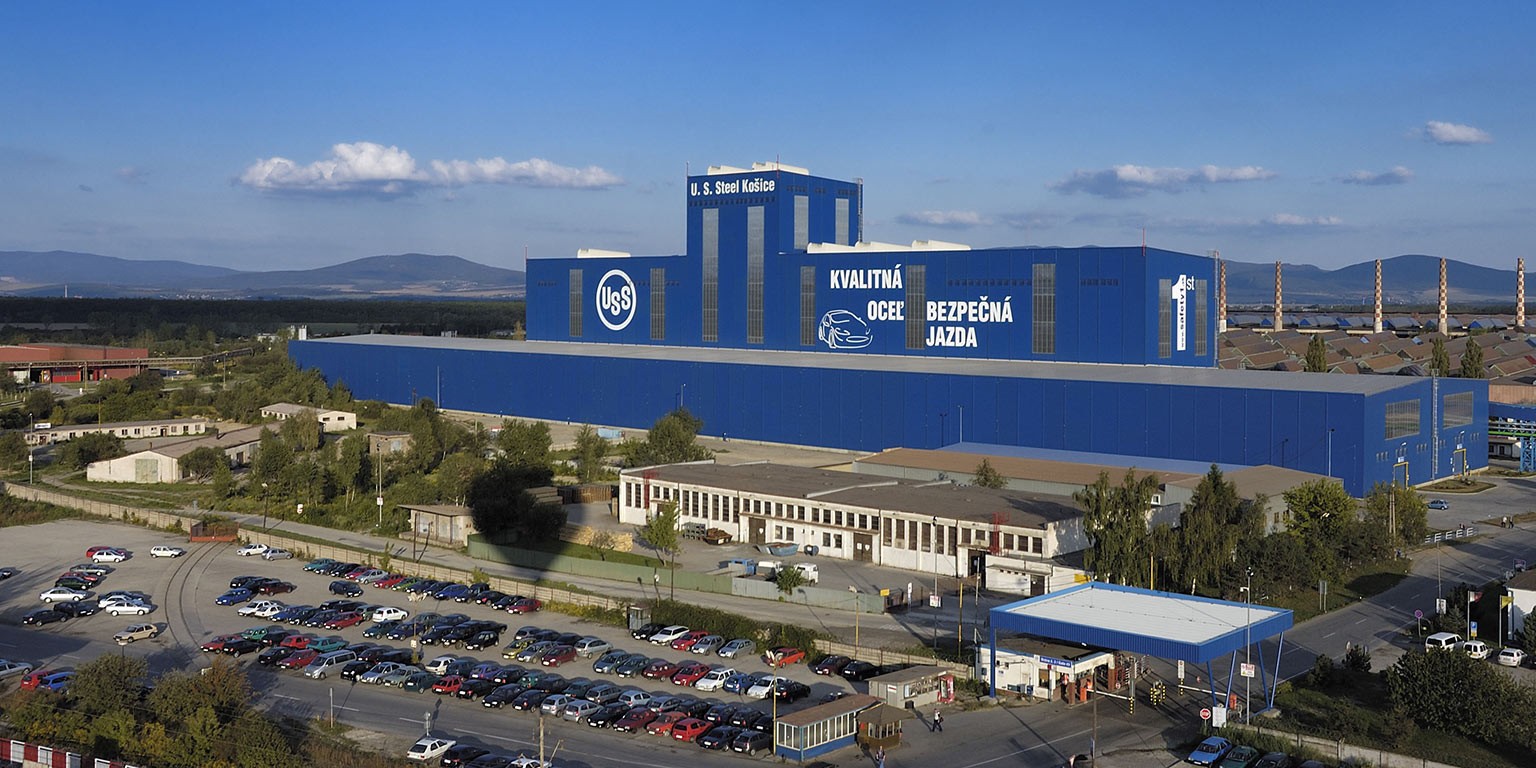
US Steel for sale, one year on: a look-back at the $15 bln saga of the acquisition of an American icon
Rather, a press release on August 13, 2023, stated the steelmaker had set forth a process to “evaluate strategic alternatives” after “receiving multiple unsolicited proposals.”
On the same day, it emerged that Cleveland-Cliffs, the only other integrated steelmaker in the country, was one such suitor, and that US Steel had rejected a $7.8 billion cash and stock acquisition offer from its rival.
The tale should have ended when Japan’s Nippon Steel emerged the victor in the ensuing bidding war, with an announcement on December 18, 2023, that Nippon would acquire the Pittsburgh-based steelmaker in an all-cash buy of $14.1 billion plus the assumption of $800 million in debt. This would have created one of the world’s largest steelmakers, producing 86 million tonnes per year; and with a goal of 100 million tpy.
But the only story with more twists than US Steel’s acquisition is the US presidential elections race. And the way things stand, it is unlikely the near $15 billion saga will find a resolution before the country elects its next president.
Currently, the deal faces the opposition of incumbent president Joe Biden, former president Donald Trump, politicians from both sides of the aisle, and most importantly, the influential United (USW) labor union, which had thrown its weight behind Cleveland-Cliffs during the bidding process.
“It has been a political roller coaster for the proposed acquisition,” Fastmarkets steel analyst Felix Bello said. “However, the synergies and financial fundamentals are still sound, and more so now that the proposal has been intensely scrutinized.”
Bello noted that in early May, a new closing date was announced for the proposed deal, “likely to lighten the political exposure and to let the idea simmer with those opposed.”
“That would be three months later than the original September date, but still in 2024,” Bello said, and listed his reasons for a positive outcome.
“It has a chance for a few reasons: new presidential and vice president Democratic candidates that will likely focus on positive scenarios after the acquisition,” Bello said, referring to the last-minute replacement in the lineup for the 2024 presidential election after Biden dropped out of the presidential race on July 21 and endorsed current vice president Kamala Harris as the new nominee of the Democratic Party.
Since then, Harris’s choice of Minnesota governor Tim Walz as her running mate was endorsed by the USW.
“Vice president Harris couldn’t have chosen a stronger champion of workers to be her running mate, and the USW applauds her decision,” USW International president David McCall said on August 6, the same day Walz was certified as the Democratic Party’s vice-president nominee.
Bello also drew attention to Cleveland-Cliffs snapping up Canadian steelmaker Stelco for $2.5 billion, the cash and stock transaction announced on July 15, as one of the factors favoring the closing of the Nippon-US Steel deal.
“Cleveland Cliffs committed to acquire Canada’s Stelco last month for $2.5 billion, within its budget and capturing synergies that contribute to further rationalizing and restructuring the industry in North America,” Bello said.
The most important factor supporting the Nippon deal, is that “at stake is the future competitiveness of downstream industries going head-to-head against the best the world has to offer, and to head that Nippon Steel is the best suitor US Steel has,” Bello said.
“Nippon Steel’s $14.9 billion all-cash offer is by far a better offer than that of Cleveland Cliff’s $7.8 billion,” Bello said.
“In addition to the all-cash offer, Nippon will also invest $1.4 billion and honor the USW agreement currently in place,” Bello said, referring to the announcement the Japanese company made in its second-quarter earnings on August 1 that it will invest an additional $1.4 billion in capital expenditures into facilities covered by the current basic labor agreement with the USW, above the existing commitment of $1 billion, and bringing the total capex to $2.4 billion.
“It goes without saying that a Nippon Steel acquisition will also include technology transfer and more competitive access to the most profitable markets,” Bello said.
“It is also difficult on a political/national security basis to make a case against the transaction,” Bello added, addressing the line of criticism taken by some politicians against the deal.
“Japan is a staunch ally of the US, both politically and economically and physically, in the US and in Japan – just look at a roster and magnitude of domestic automakers,” Bello said.
Other market pundits hold less optimistic views, among them Samir Kapadia, principal and chief operating officer at the Vogel Group, a bipartisan government affairs and consulting firm based in Washington DC.
“I think there’s a near zero chance that the deal gets done this year,” Kapadia told Fastmarkets.
“Nippon Steel grossly miscalculated the domestic politics around the transaction and have hit a complete reset button to recalibrate their position,” Kapadia said. “It would make no sense to push it forward this year, prior to the presidential election.”
“Even if we see a change in power in the White House, this deal is fraught with major challenges,” Kapadia added.
The timeline
The news breaks in August 2023
Market participants were abuzz on August 14, 2023, the day after the news broke that Cleveland-Cliffs was trying to acquire US Steel, and that the latter had rejected its offer because “US Steel was unable to properly evaluate the proposal because Cleveland-Cliffs refused to engage in the necessary and customary process to assess valuation and certainty unless US Steel agreed to the economic terms of the proposal in advance.”
One of the dominant views expressed by steel market sources was that spot prices would go up if the two integrated producers were to combine.
The impact would be felt most keenly in the automotive sector, the sources said, noting that Cleveland-Cliffs and US Steel may represent as much as 80% of the market for automotive steel.
Also, the consolidation of the two integrated producers would give the combined entity a 100% monopoly in the non-grain oriented electrical steel (NOES) market.
USW throws its weight behind Cliffs bid
The United Steelworkers union (USW) told US Steel on August 17, 2023, that it has transferred to Cleveland-Cliffs its “right to bid” provisions.
Before that, the USW had affirmed in a letter on August 3 – that was later shared by Cleveland-Cliffs – that it supported the proposed acquisition, would not exercise its right of a counteroffer and would not endorse anyone other than Cleveland-Cliffs for such a transaction.
In response to that, Pennsylvania-based industrial conglomerate Esmark – which had placed an $7.8-billion all-cash bid for US Steel on August 14 – said on August 23 it was withdrawing from the process to “respect” the USW support for a Cleveland-Cliff’s acquisition.
There were also anonymous reports on August 16 that Luxembourg-based ArcelorMittal SA was considering a bid for US Steel.
Increasing acrimony between US Steel and Cleveland-Cliffs; auto group opposes Cliffs bid
August remained a busy news month, with almost daily developments emerging from the very public pursuit of US Steel by its Cleveland, Ohio-based rival.
US Steel published a letter on August 22 noting that its existing basic labor agreement “does not grant the USW, or any party it assigns its rights to, the right to prevent a potential transaction – with any party – that our board decides is in the best interest of our stockholders.”
This was disclosed by US Steel in a filing with the US Securities and Exchange Commission (SEC) on August 22.
On the same day, Cleveland-Cliffs demanded that US Steel reveal its potential buyers, in a filing with the SEC.
In response, US Steel said on August 29 it has entered into confidentiality agreements with “numerous third parties” and is “starting to share” due diligence information under those pacts, the company said in a filing with the SEC, but declined to disclose the name of those bidders.
In fact, the full process of the sale would not become public till much later, in an SEC filing that US Steel made on January 24. It revealed that Cleveland-Cliffs was one of the five entities that sent US Steel an indication of interest during its strategic alternatives review process.
The concerns surrounding an outsized impact of Cliffs acquiring US Steel was laid bare in a letter filed on October 31 by an automotive industry group, citing increased costs.
The Alliance for Automotive Innovation addressed US antitrust lawmakers in the letter, stating that: “If permitted to proceed, this transaction could have negative implications for the auto industry and increase costs for average drivers.”
Nippon Steel emerges the winner of a “historic deal”
US Steel executed a merger agreement with Japan’s Nippon Steel on December 18, with Nippon agreeing to pay $55 per share for the steelmaker – a 40% premium on the closing price for US Steel shares on December 15.
The pro forma company will be the third-largest global steelmaker, with a combined production capacity of 86 million tpy, including 15 million-16 million tpy in the United States.
David Burritt, US Steel’s chief executive officer, and Takahiro Mori, Nippon Steel’s executive vice president, said during a conference call on December 18 that, under Japanese ownership, US Steel’s brand name and assets would remain protected, while the company would benefit from Nippon Steel’s technological expertise, especially in the automotive and electrical steel segments.
After Cleveland-Cliffs, US Steel is the second steelmaker in the United States to produce non-oriented electrical steel, which is aimed at the electric-vehicle industry.
Lourenco Goncalves, chairman, president and CEO of Cleveland-Cliffs, congratulated US Steel on the news on December 18, while the USW slammed the announcement, saying it was caught unawares in a statement released the same day.
Political backlash
US senators and representatives from both sides of the aisle opposed the deal almost immediately, citing concerns around the national security implications of selling a US manufacturer for the defense and infrastructure industries to a foreign entity.
A letter written on December 19 by three lawmakers from US Steel’s home state of Pennsylvania begged Treasury Secretary Janet Yellen to block the deal.
The Biden administration pledged “serious scrutiny” of the tentative deal in a statement released on December 21 by National Economic Advisor Lael Brainard.
US Steel said in a statement sent to Fastmarkets that it notified the Biden administration on the day the acquisition was announced that it would voluntarily file for review.
The pushback came from former president Trump as well, who said on January 31 he would block Nippon Steel’s deal to buy US Steel “instantaneously” if he wins the November election.
Following this, President Biden cemented his opposition to the deal as well, stating on March 14 it was “vital for it [US Steel] to remain an American steel company that is domestically owned and operated.”
The USW labor union welcomed the president’s statement. “We’re grateful for his unfailing support and his ongoing commitment to advancing the interests of working families and their communities,” David McCall, international president of the USW, said on March 14.
“Allowing one of our nation’s largest steel manufacturers to be purchased by a foreign-owned corporation leaves us vulnerable when it comes to meeting both our defense and critical infrastructure needs,” McCall said.
Realizing the uphill battle it is facing, Nippon Steel retained a team of nearly a dozen lobbyists from Akin Gump Strauss Hauer & Feld – including two former members of Congress.
Nippon Steel president Eiji Hashimoto and executive vice president Takahiro Mori stated their commitment to preserving American jobs and investing in US Steel’s blast furnaces in an op-ed published in The Wall Street Journal on January 22.
Additionally, Nippon Steel said on March 15 that its acquisition of US Steel would boost American supply chains and economic defenses against China.
“Through increased financial investment and the contribution of our advanced technologies to US Steel, Nippon Steel will advance American priorities by driving greater quality and competitiveness for customers in the critical industries that rely on American steel while strengthening American supply chains and economic defenses against China,” Nippon Steel said. “No other US steel company on its own can meet this challenge while also meeting antitrust requirements.”
USW signs NDA with Nippon; USS shareholders vote in favor of deal
The USW’s vocal opposition emerged as a major hurdle for the deal completion, with the labor union noting on January 29 that Nippon Steel Corporation (NSC) will transfer its obligations to a holding company called Nippon Steel North America (NSNA).
“This means that NSC would not assume our labor, pension, retiree insurance and other agreements itself. Instead NSNA would acquire the business and take responsibility for our contracts,” the USW said on January 29.
However, the USW union has signed a non-disclosure agreement (NDA) with Nippon Steel, the union told Fastmarkets on February 26, adding that the NDA was a not crucial development in their negotiations.
The USW said on March 7 that a meeting with Nippon Steel “yielded no progress” and that the company has still not earned the union’s trust.
Despite continued opposition from the USW, pending antitrust and national security regulatory reviews, and widespread political backlash, US Steel shareholders overwhelmingly voted in favor of Nippon Steel Corp’s $14.1 billion takeover offer on April 12.
Goncalves gloats as deal faces opposition; US Steel board claps back
The top executive of US Steel’s former suitor Cleveland Cliffs fired several missives at the proposed deal over April and May.
“It still baffles me to this day that… individuals representing Nippon Steel… felt that they could do this without union support,” Lourenco Goncalves said in his company’s earnings call on April 23. “You just cannot do it without a USW-represented workforce.”
After this, Goncalves also said that Nippon Steel’s pursuit of US Steel has “zero chance” of winning government approval. Goncalves made these comments at a press conference at the American Iron and Steel Institute (AISI) general meeting in Washington on May 14.
The USW rejected fresh assurances that Nippon Steel sent in a letter on May 17 to abide by the terms of the current labor contract with US Steel, a move the union called a “backward step.”
The assurances did not address the union’s concern that agreements are being made with Nippon Steel USA, not with Nippon Steel in Japan, and therefore would not be legally binding on the parent company, the labor union said.
US Steel’s board of directors released a letter on May 21 to “correct the record.”
“We have found ourselves in the midst of a long-running misinformation campaign targeting our company, our investors, our employees and our business partners. For that reason, we must correct the record,” the letter said.
“While Cleveland-Cliffs is pushing false rumors to influence the market into believing we are working to unwind the transaction, nothing could be further from the truth,” the board said in the letter.
Goncalves responded to the letter on the same day, characterizing the Nippon-US Steel acquisition as an “uncloseable deal.”
“At Cleveland-Cliffs, we only deal with transparency,” Goncalves said on May 21. “It is unfortunate that the US Steel Board of Directors is just now realizing that it announced an un-closeable deal and is trying to blame Cliffs for its terrible decision-making.”
Department of Justice antitrust review
Nippon Steel said on May 2 it is pushing back its acquisition of US Steel to the second half of 2024 – compared with earlier estimates it would close in the second or third quarter – following a request for additional information and documents from the US Department of Justice (DOJ). The request is in connection with the DOJ’s review of the acquisition.
“Following receipt of the second request and following careful deliberation with respect to the regulatory processes, Nippon Steel revises the estimated date of closing of the transaction,” Nippon Steel said.
On the same day, US Steel said it is continuing to make “progress” toward clearing regulatory scrutiny from the DOJ in its heightened antitrust review of Nippon Steel’s bid to acquire the 123-year-old company.
However, it was announced on May 30 that US Steel and Japan’s Nippon Steel have received all regulatory approvals outside the United States for the proposed acquisition of the legacy American steelmaker.
“Steel mined, melted and made in the USA, baby… Red, White and Blue!”
David Burritt, president and chief executive officer of US Steel defended the proposed deal at an industry event in June, tackling each of the points raised by detractors.
“It is steel mined, melted and made in the USA, baby… Red, White and Blue!” Burritt told delegates at the Global Steel Dynamics Forum in New York City on June 18, noting that “in our future events, we will say the Pledge of Allegiance and sing the Star-Spangled Banner – we did it with Nippon Steel recently.”
Additionally, conservative thinktanks came out in defense of the proposed deal, with the Committee to Unleash Prosperity noting in a July thought piece the widespread opposition to the deal is unwarranted.
The Heritage Foundation noted in a similar thought-piece in April that US Steel is not the prize it once was, and that blocking the deal is denying it a chance to return to greatness.
“…Once a crown jewel of American industry, US Steel in recent decades has shuttered factories, sold others, and exited segments of the industry,” the foundation wrote. “Today’s market cap of just $9.42 billion is less than 1/100th of its size in 1901 as a proportion of the overall economy. US Steel is now the 648th largest American company, a stark contrast to seventh – where it would be had it maintained its size relative to GDP since 1901.”
Nippon promises additional $1.4 billion in capex; USW remains unmoved
Nippon Steel said it will invest an additional $1.4 billion in capital expenditures into facilities covered by the current basic labor agreement (BLA) with the USW, above the existing commitment of $1 billion.
The facilities to receive the additional investment through 2026 include Gary Works, Mon Valley, Granite City, Nippon Steel said on August 1.
On the same day US Steel said in its second-quarter earnings presentation that Nippon Steel North America’s headquarters will relocate to Pittsburgh from its existing US headquarters in Houston, Texas.
These assurances seemingly fell on deaf ears as the USW lambasted the two companies as continuing “their high-priced public relations campaign as they seek to sell out domestic workers, retirees and communities.”
In a press statement released on Monday August 12, the USW said that “Nippon still has not provided any true guarantees that our jobs, wages or benefits will be protected beyond the expiration of our current agreements in 2026, and our national security and critical supply chains remain vulnerable under the terms of the current deal.”
In an accompanying video, USW international president David McCall said on Monday that “our collective bargaining agreement says that any company that’s going to purchase our plants, or the company, has to be the ultimate parent that signs that contract.”
“Under this transaction, it’s not Nippon Steel that is signing the contract, it’s Nippon Steel North America, a subsidiary,” McCall said. “And the way they have structured this deal, US Steel will be a subsidiary of Nippon Steel North America.”
US Steel and the USW have set a date of August 15 to arbitrate grievances the union filed in January.