

Outokumpu improves stainless steel production in Europe
The European steel producer Outokumpu’s performance in the second quarter was relatively satisfactory, and the profitability improved from the first quarter. However, the company still has concerns about problems in the European business area.
The chief executive officer (CEO) said that to generate profits in a difficult operating environment, they must step up efforts to improve their cost competitiveness in Europe, particularly in commodity stainless steel production. The company aims to achieve further cost savings and optimize commodity stainless steel production in Finland and Germany.
The CEO pointed out that the factory in Tornio, Finland, has Europe’s most cost-effective and highest output. They intend to leverage Nordic clean energy and competitive energy prices.


European HRC prices remain stable amid muted activity due to holidays
“Uncertainty is ruling the market,” a service center source said. “We will see in the next week how the market reacts.”
Furthermore, market participants remained uncertain whether the end of holidays, particularly in Southern Europe, will cause any significant changes to the market.
“The problem in the South is that most mills are on holidays, so not very active,” the same service center source said. “I don’t expect something to happen by next week.”
Mills are still struggling to fill orderbooks amid constant excess supply and low demand, with the automotive sector continuing to buy from service centers.
Market sources had a negative outlook on green steel in the next few years. The current asking prices for premiums have been deemed too high for the market, sources said.
“It remains crazy to have to pay a premium [for green steel],” the same service center source said.
Platts assessed Northwest European HRC at Eur605/mt ex-works Ruhr on Aug. 19, stable on the day.
Tradable values were reported at Eur595-600/mt and Eur620/mt delivered Germany.
Meanwhile, Platts assessed domestic HRC prices in Southern Europe at Eur600/mt EXW Italy on Aug. 19, stable on the day.
Geraint Moody | Devbrat Saha


Thyssenkrupp to cooperate with BlueScope on low-carbon steel research
The focus of the joint research will be on smelting units and direct-reduced iron (DRI) plants, it added.
The cooperation between the two companies will continue for four years, intended to enhance the understanding of smelting technologies and to optimize the management of Thyssenkrupp’s new DRI complex in Duisburg, now under construction.
BlueScope Steel has already gained experience in these technologies by operating smelters in New Zealand using DRI made from iron sand, Thyssenkrupp said.
Thyssenkrupp already had plans to replace one of the four blast furnaces at its Duisburg site with a DRI plant and two downstream smelters in 2027, a company spokesperson told Fastmarkets. This would allow the company to make its first steps toward carbon-neutral steel production, Thyssenkrupp added.
The other three BFs will gradually be replaced with climate-friendly alternative technologies by 2045, the spokesperson told Fastmarkets.
The new plant will have capacity for 2.5 million tonnes per year of DRI. The company also planned to be able to produce around 5 million tpy of low-carbon steel by 2030.
Thyssenkrupp has obtained €2 billion ($2.2 billion) in German state funding for its green steel transformation project.
The DRI module at Duisburg will be powered by green hydrogen, which is seen as a strategic renewable fuel in Europe.
According to the hydrogen import strategy approved by the country’s Federal Cabinet at the end of July, demand for hydrogen and hydrogen derivatives in Germany will amount to 95-130TWh in 2030.
“In the smelters, DRI and aggregates are melted to form hot metal,” Thyssenkrupp said. It added that two identical smelters, each electrically powered and with capacity for 100MW, were being built to process the 2.5 million tpy of DRI output.
Thyssenkrupp added that, ideally, renewable electricity would be used to power the smelters.
“The smelters offer numerous advantages in an integrated metallurgical network,” Thyssenkrupp said. “They enable the production of equivalent ‘electric furnace iron’ while all other process stages, including the steel mill, remain in place, and [further] investments in plants and equipment are minimized.”
The company added that, by retaining all processes from the steel mill stage onward, Thyssenkrupp would continue to provide its customers with “the entire range of steel grades in the usual high quality.”
According to the company, the use of a smelter offers a flexible raw material basis, since DR pellets can also be used in the DR plant.
Another advantage of this technology was that the molten slag could be processed further and used in the cement industry, thus contributing to recycling management.
Demand for green steel remains slow in Europe
Demand for flat green steel was still sporadic in Europe. This was a result of both seasonal factors and relatively low green steel uptake across supply chains, industry sources have told Fastmarkets.
During the assessment week ended August 15, offers of green steel with Scope 1, 2 and upstream Scope 3 carbon emissions of less than 0.8 tonnes per tonne of steel were reported at €200-350 ($221-386) per tonne from European suppliers, stable week on week.
But due to the slow demand, producers were apt to give discounts. As a result, a booking of flat steel with carbon emission content of around 0.6-0.8 tonne per tonne of steel was reported at €170-200 per tonne in late July/early August.
Fastmarkets’ latest weekly assessment of the green steel domestic, flat-rolled, differential to HRC index, exw Northern Europe, was €170-200 per tonne on August 15, narrowing downward from €170-250 per tonne seven days earlier.


European Commission discloses draft duties on China-made battery electric vehicle imports
The European Commission (EC) unveiled on Tuesday its draft decision on definitive countervailing duties on battery electric vehicle (BEV) imports from China, Kallanish reports.
Carmakers received the proposed additional tariffs they will be subject to, and now have 10 days to provide comments. Interested parties can also request hearings with the EC “as soon as possible.”
The decision follows an anti-subsidy investigation officially started on 4 October 2023. Temporary duties, on top of the existing 10% import tariff, entered into force on 5 July 2024. If approved in an upcoming vote by member states, definitive countervailing duties will be imposed on 5 November for a five-year period.
Based on “substantiated comments” received from carmakers on the provisional measures, the EC has slightly adjusted the proposed rates downwards. They range from 17% to 36.3%, instead of the original maximum rate of 38.1%.
However, US EV maker Tesla has received a much lower rate than peers. This “individual duty rate” of 9% was granted as an exporter from China. This means Tesla’s BEV models shipped from its Shanghai gigafactory will only be subject to a total of 19% import duties “at this stage.”
In comparison, BYD vehicles are subject to 27%. Other cooperating companies, which the EC has not publicly disclosed, will face total tariffs of 31.3%. “Non-cooperating” companies such as SAIC, the parent company of MG Motors, are facing the harshest combined rate of 46.3%.
China Chamber of Commerce to the EU (CCCEU) expressed its “strong dissatisfaction and firm opposition to the EC’s protectionist approach.” The group argues the development of the European EV industry, along with the EC’s own report, “shows that there is no sufficient evidence to demonstrate that China’s BEVs cause substantial material injury in the EU market.”
“The EC’s unfair use of trade tools to hinder free trade in electric vehicles, along with this protectionist approach, will ultimately weaken the resilience of the European electric vehicle industry, disrupt the level playing field, and undermine the EU’s own green transition,” it adds.
The move will also exacerbate trade tensions between China and the EU, but the EC doesn’t see it impacting the ongoing procedures in the World Trade Organisation (WTO). Beijing says the EU has not followed WTO trade rules and has initiated a dispute consultation.

European distributors lose volume in 2020s
Geopolitical tensions, trade disputes and steel trade measures have disrupted formerly well consolidated supply channels, at the cost of stockholding distributors and service centres (SSCs), European distributors’ federation EUROMETAL says in a recent research paper.
The EU steel distribution sector has experienced a marked contraction, with business volumes decreasing from 77 million tonnes in 2021 to 62mt in 2023. The downturn was particularly pronounced in the Multi-Product & Proximity Steel Stockholding Distribution segment, which saw a reduction from 47mt in 2021 to 37mt in 2023. Service centres’ supply volume in 2023 was 25mt.
EUROMETAL assesses the overall European steel supply potential – what it calls the typical steel distribution product portfolio market – at 116mt in 2023. This compares with 117mt in the 2020 pandemic year, 138mt in 2021 and 121mt in 2022. However, of this total, nearly half is served by mills, with 54mt supplied from mills directly to end users in 2023.
The decline in recent years is attributed to a combination of factors, like the economic downturn, supply chain disruptions affecting production and consumption patterns, geopolitical tensions and trade disputes, EUROMETAL notes. However, “steel distribution remains a vital component of the supply chain, as it offers essential services such as stockholding, processing, and value-added solutions to customers,” the association affirms to Kallanish.
Looking at the typical product groups, EUROMETAL notes that service centres continue to be a major player, accounting for 44% or 21.9mt of strip product supplies to the general industry, automotive, and construction sectors. The end-user quarto plate market saw 3.8mt supplied by stockholders and SSCs, with 4.1mt sold directly by mills to end-user segments.
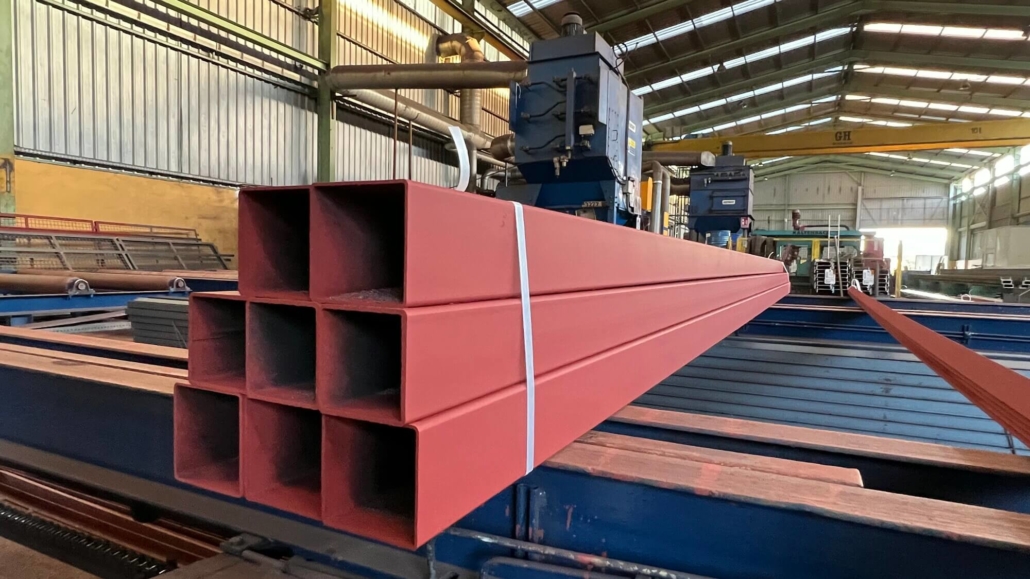
For long steel products, distributors maintain a dominant share of 75% (22.8mt) in supplying to end users, while direct mill sales to end users accounted for only 7.5mt. The market for tubular steel products, totalling 10.6mt in 2023, was equally supplied by EU steel distributors and direct mill sales, each accounting for 5.3mt.
Christian Koehl Germany