


Downtrend persists in European HRC market; production cuts seen unlikely
Fastmarkets calculated its daily steel HRC index domestic, exw Northern Europe at €560.00 ($623.93) per tonne on Wednesday, down by €5.00 per tonne from €565.00 per tonne on September 17 and its lowest level since November 2020.
The index was down by €17.50 per tonne week on week and by €52.50 per tonne month on month.
In Northern Europe, offers for HRC with October lead times were reported at €560-580 per tonne ex-works, depending on the mill, sources said.
Buyers estimated the workable level at €540-560 per tonne ex-works.
“For 1,000-2,000 tonnes it is possible to get €540 per tonne [delivered or ex-works], but such deals are rare in the spot market,” a buyer in Germany told Fastmarkets.
“[Any drop in] raw materials prices immediately gives way for [HRC] prices to be lowered as well,” a mill source said. “All producers are hunting for volume and are prepared to accept very bad margins.”
But buyers largely preferred to hold back in the declining market on Wednesday, sources said, given the poor order intake from end users and the short lead times available from European suppliers.
“Price is not the problem,” a second buyer source said. “There is [just] no demand.”
“If you ask the stock-keeping companies about the stock level, all of them are telling you that the level is [below] average. [Yet] still they don’t feel need to replenish inventories. And I am afraid that demand will stay low at least till and of this year,” the source added.
In Southern Europe, Fastmarkets calculated its corresponding daily steel HRC index domestic, exw Italy at €560.00 per tonne on Wednesday, down by €5.00 per tonne from €565.00 per tonne on September 17.
The Italian index was down by €11.25 per tonne week on week and by €52.50 per tonne month on month.
One Italian supplier was heard offering HRC at €580-590 per tonne delivered, which nets back to €570-580 per tonne ex-works.
Buyers, meanwhile, estimated the tradable value at €550-560 per tonne ex-works and one source reported a large-sized transaction at €560 per tonne delivered (€550 per tonne ex-works).
HRC was on offer to Italy from Asia and Turkey for late-October-November shipment at €540-550 per tonne CFR.
Vietnam-origin coil was on offer at €525-530 per tonne CFR to Antwerp, according to a source.
But buying interest in overseas material was limited by trade restrictions, including safeguard measures and anti-dumping investigations into suppliers from Vietnam, Taiwan, Egypt and Japan.
Published by: Julia Bolotova


The EU Flat Steel Market retrospective: GMK Center
There are no prospects for increasing steel production in the EU, as there is pressure from cheap imports on the one hand and a difficult economic situation on the other, which negatively affects consumption,’ comments Stanislav Zinchenko, CEO of GMK Center.
Production
From 2010 to 2023, the flat steel market in the European Union underwent significant changes. After the economic crisis of 2008-2009, EU flat products production recovered and fluctuated between 87 and 97 million tonnes until 2019. However, the COVID-19 pandemic in 2020 and the structural economic crisis led to a significant decline in production. The recovery began in 2021, but production volumes fluctuated in 2022-2023 due to rising energy prices. In particular, flat products totalled 74.7 million tonnes in 2020, 84.5 million tonnes – in 2021, 74.8 million tonnes – in 2022 and 71.3 million tonnes – in 2023.

Consumption
Consumption of flat products in the EU was largely dependent on industrial and construction activity. Between 2010 and 2019, demand grew steadily, supported by investments in infrastructure projects and the automotive industry. The pandemic led to a decline in demand in 2020, but consumption began to recover in 2021, albeit at slightly lower levels. High energy prices and economic instability in 2022-2023 also contributed to the decline in consumption, although consumption in 2023 was higher than in 2022 – 80.7 million tonnes and 78.6 million tonnes, respectively.
Exports
Exports of flat products from the EU have traditionally been significant, especially to the Middle East, North Africa and Southeast Asia. Exports grew and were high in 2010-2019, but trade wars and the introduction of duties in 2018-2019 led to a decline in exports. The pandemic also had a negative impact on exports in 2020-2021, but in 2022-2023 there was a slight recovery in demand for European steel, which resulted in some stabilization of exports. Increased competition in the global market and the costly green transformation in the EU are worsening the outlook for European steel exports.
Imports
Imports of flat products to the EU fluctuated significantly between 2010 and 2023, with imports growing in 2010-2018 as low-cost steel from China and other Asian countries flooded European markets. In 2019, the EU introduced safeguard duties on imports, which slightly reduced imports. The pandemic also contributed to the decline in imports, but in 2021, imports rose sharply to a record high of 23.9 million tonnes, gradually slowing down in 2022-2023.
Thus, the share of imports in consumption is gradually increasing amid declining domestic production. Local producers are losing out to imports. The European authorities are trying to combat the supply of cheap imported products by introducing various restrictions like duties or quotas, but this is not yet enough to protect the domestic market. In 2021-2023, the share of imports in domestic consumption of flat products is expected to reach 25-26%, up from 14% in 2010.
Conclusion
The EU flat steel market has undergone many changes in 2010-2023, driven by economic crises, the pandemic and geopolitical factors. Despite all the challenges, European producers continue to adapt to the new environment. At the same time, it is difficult for them to compete with steel companies from other countries, given different approaches to environmental regulation and different levels of access to key raw materials.


Germany plans to decarbonize one-third of domestic steel capacity by 2030
During Germany’s National Steel Summit held in Duisburg, politicians and industrial associations have spoken in favor of the preservation and green transition of the domestic steel industry and have listed the needs of the sector, according to media reports.
Robert Habeck, German federal minister for economic affairs and climate action, stated that Germany and the EU are spearheading the decarbonization of the steel industry. “In Germany, we will convert around one-third of German crude steel capacity by 2030 and, in doing so, produce around 12 million mt of carbon-free steel,” Mr. Habeck added.
As stated in local German media reports on the summit, steel production is the foundation of many sectors such as automotive and mechanical engineering and their transformation, though it is very energy-intensive and accounts for seven percent of Germany’s total greenhouse gas emissions. New technologies and the use of renewable or green energies such as hydrogen are needed.
The German government has been allocating billions of euros for large-scale renewable energy plants, but the domestic steel industry is facing the risk of a weak economy and high energy prices, and cheap imports mainly from Asia. Therefore, IG Metall, one of the largest metalworkers’ unions in Germany, has urged politicians to create a reliable investment environment and to ensure competitive prices for electricity.
Gunnar Groebler, president of the German Steel Federation, stated that Germany needs to establish green markets, to keep energy prices in check and to create effective protection against unfair competition in order to support the industry, which is under pressure.
Additionally, other unions pointed out that a competitive domestic steel industry is essential for industrial value chains, prosperity, employment and a green transformation in Germany and Europe.


EU car registrations up 1,4% year on year, August down 18,3%
In August this year, new passenger car registrations in the EU decreased by 18.3 percent year on year to 643,637 units, according to the European association of car manufacturers ACEA.
In the given month, all four major markets, namely Germany. (-27.8%), France (-24.3%), Italy. (-13.4%) and Spain (-6.5%) posted declines.
In the first eight months of this year, new car registrations grew by 1.4 percent year on year to 7.2 million units.
Spain (+4.5%) and Italy (+3.8%) showed positive but modest performances. On the other hand, the French and the German markets saw their results stagnate (-0.5% and -0.3% respectively).

Euro area construction output unchanged in July from June
According to first estimates released by Eurostat, the Statistical Office of the European Union, in July this year the seasonally-adjusted production of the construction sector in the European Union member states (EU-27) increased by 0.2 percent compared to June and went down by 2.4 percent compared to the same month of 2023. In June, production in the construction sector had increased by 0.3 percent month on month.
In the euro area, the seasonally-adjusted production of the construction sector in June remained stable month on month and fell by 2.2 percent year on year. In June, production had decreased by 2.2 percent month on month.
Building construction in the EU-27 in July moved down by 0.2 percent month on month and by 4.6 percent year on year, while civil engineering output in the region went down 0.7 percent month on month and by 0.4 percent year on year. In the euro area, building construction was down 0.8 percent compared to the previous month and by 3.5 percent year on year, while civil engineering output in the region remained stable month on month and increased by 0.2 percent year on year.
As compared to June, construction output in July increased by 7.7 percent in Belgium, by 6.8 percent in Czechia, and by 3.2 percent in Slovenia, while it decreased by 2.2 percent in France, by 1.6 percent in Slovakia and by 1.3 percent in the Netherlands.
As compared to July 2023, construction output in July this year increased by 2.5 percent in both Bulgaria and Spain, by 2.0 percent in Czechia and by 1.7 percent in Portugal, while it decreased by 12.0 percent in Slovenia, by 7.8 percent in the Netherlands and by 7.5 percent in Sweden.

Service centers are de-stocking, not restocking
Domestic prices for European hot-rolled coil remained flat Sept. 18, as buyers focused on de-stocking material, and a largely pessimistic mood prevailed in the market.
“Service centers are de-stocking, not restocking,” a Germany-based mill source said. “There are very low volumes in the market, and all mills are suffering.”
Inventory levels in the market are running high, and macroeconomic conditions are worsening, leading to bankruptcies and a weak domestic market, sources said.
“Economy is not doing that well,” a Netherlands-based service-center source said. “There are a lot of bankruptcies in [the] Netherlands. The automotive sector is weak and customers are canceling orders. Germany is in recession due to automotive, construction sectors.”
Domestic European mills are in a dilemma, sources said, about whether to pursue market share by lowering offer levels, risk losing money by keeping prices firm, or reducing output and losing CO2 emissions allowances for next year.
“European mills are in a dilemma because if they don’t follow lower prices, they will lose market share,” the source said. “If they follow prices, they will lose money but have CO2 emissions allowances for next year. If they reduce production, they will lose this allowance, but maintain price level. I think eventually they will fire employees to minimize losses.”
Platts assessed Northwest European HRC stable on the day at Eur555/mt ex-works Ruhr Sept. 18. Offers were reported in the range of Eur550-580/mt ex-works Ruhr, from a buy-side source.
Platts assessed domestic HRC prices in Southern Europe also stable on the day at Eur555/mt EXW Italy, with offers reported at Eur580-570/mt EXW Italy.
Interest in imported HRC remains weak due to concerns around longer lead times and risks of safeguard duties. However, sources also noted that the safeguard measures have allowed other countries not subject to the measures to come in with competitive import offers.
“The quota cap system has allowed new countries such as Australia and Saudi Arabia to come to Europe,” the service-center source said.
Platts assessed imported HRC in Northwest Europe stable on the day at Eur545/mt CIF Antwerp.
Meanwhile, Platts assessed imported HRC in Southern Europe also stable on the day at Eur540/mt CIF Italy.


US proceeds with Section 301 tariffs
The US has announced it will go ahead with Section 301 tariffs on a number of commodity imports from China, including steel, aluminum, lithium-ion batteries, graphite and other critical minerals, the Office of the United States Trade Representative said in a Sept. 13 statement.
The USTR has set the tariffs at 25% on a range of commodities including steel, aluminum, lithium-ion batteries for electric vehicles, ores and concentrates of manganese, cobalt, chromium and tungsten; tungsten oxides, tungstates, carbides and powders; unwrought tantalum, chromium and indium including their powders: ferronickel, ferroniobium (max. 0.02% P or S, max 0.4% Si); and tin alloys, among others, with the tariffs to come into effect on or before Sept. 27, 2024.
US Commerce uncovers no dumping of French plate
In tariff developments, the US Commerce Department determined that certain carbon and alloy steel plate from France was not sold in the US at less than normal value during a period of review. As a result, Dillinger France was assigned a final weighted-average dumping margin of zero.
US finds China evaded tariffs on steel pins
US Commerce found that imports of unthreaded pins of alloy steel from China circumvented existing US antidumping and countervailing duty orders on Chinese carbon and alloy steel threaded rod. As a result, Commerce will require importers of Chinese unthreaded pins of alloy steel to certify that such pins will not be further processes into the subject alloy steel threaded rod.
EU body seeks clean deal
European steel industry association Eurofer has called for a radical “Clean Industrial Deal” in the EU, amid what it terms the “existential risk” currently facing the steel and manufacturing sectors. Eurofer Director General Axel Eggert highlighted, in particular, the rapid decline in the EU’s steel production to a record low of 126 million metric tons in 2023, significantly below the decade average of 150 MMt, adding that this downturn threatens not only steelmakers but also key industries like the automotive and renewable energy sectors.
Chinese carbon trading due in 2025
China’s aluminum, steel and cement sectors will officially start trading of compliance emission allowances in its national carbon market in 2025 to pay for their emissions incurred in 2024, the country’s Ministry of Ecology and Environment said in an action plan Sept. 9. China’s national compliance carbon market is the world’s largest national compliance market by emission volume covered. Currently, China’s national compliance market only covers power generation companies that have annual direct emission volume above 26,000 metric tons of CO2 equivalent. These generation utilities accounted for 5.1 billion tCO2e, or 40% of the country’s total carbon emissions.
India extends tariffs on pipes, tubes
India has extended countervailing duties on the imports of welded stainless-steel pipes and tubes from China and Vietnam to boost the domestic industry, the Ministry of Finance said in a notification dated Sept. 10. The five-year extension of an about 12% duty on imports from Vietnam and around 30% duty on inflows from China follows an earlier notification from Sept. 17, 2019. The duties aim to curb the unfair advantage enjoyed by exporters from China and Vietnam due to government subsidies.
Indian steel minister supports duty on Chinese imports
Indian Steel Minister H D Kumaraswamy said Sept. 4 he will help to increase the duty on Chinese steel imports from the current 7.5% to 10%-12% to protect the domestic steel industry. “Whatever the problems in this growth of our steel industry, and about the China issue, I can understand, and I promise you […] that I will try to convince our Prime Minister and our Finance Ministry to look after it, from the 7.5% tax to 10%-12% tax [against Chinese steel imports],” Kumaraswamy said during the Indian Steel Association’s (ISA) Steel Conclave.
South Korea probes Chinese stainless steel plate
South Korea has started an antidumping investigation on stainless steel plate imported from China, a notice from the Korea Trade Commission showed Sept. 6. The plates in question have a width of 600 mm or more and a thickness of 4.75 mm or more and fall under the harmonized tariff schedule of Korea (HSK) codes 7219211010, 7219211090, 7219219000, 7219221010, 7219221090 and 7219229000. The probe resulted from an application made by South Korean stainless steel plate manufacturer DKC Co Ltd June 28, which alleged the Chinese steel products had cause material injury to the domestic sector.
Japan mulls emissions trading system by December
The Japanese government is set to launch a series of working group discussions to consider basic frameworks by around December for the country’s second phase of emissions trading system, which will be introduced from fiscal year 2026-27 (April-March). The first working group discussions will include hearings from the Japan Iron and Steel Federation, the Petroleum Association of Japan, the Japan Chemical Industry Association and the Federation of Electric Power Companies.
Australia reviews rebar tariffs on South Korea, Spain
Australia has begun a review on antidumping duties imposed on steel reinforcing bar from South Korea and Spain ahead of their expiry, the Anti-Dumping Commission said. The current tariffs are scheduled to expire on Nov. 19, 2025, after they were extended by five years on Nov. 19, 2020. The tariffs stand at 3.9% and 4% for South Korea and 8.2% for Spain, excluding steelmaker Nervacero SA.
Countries accelerate EU HRC allocation, Turkey critical
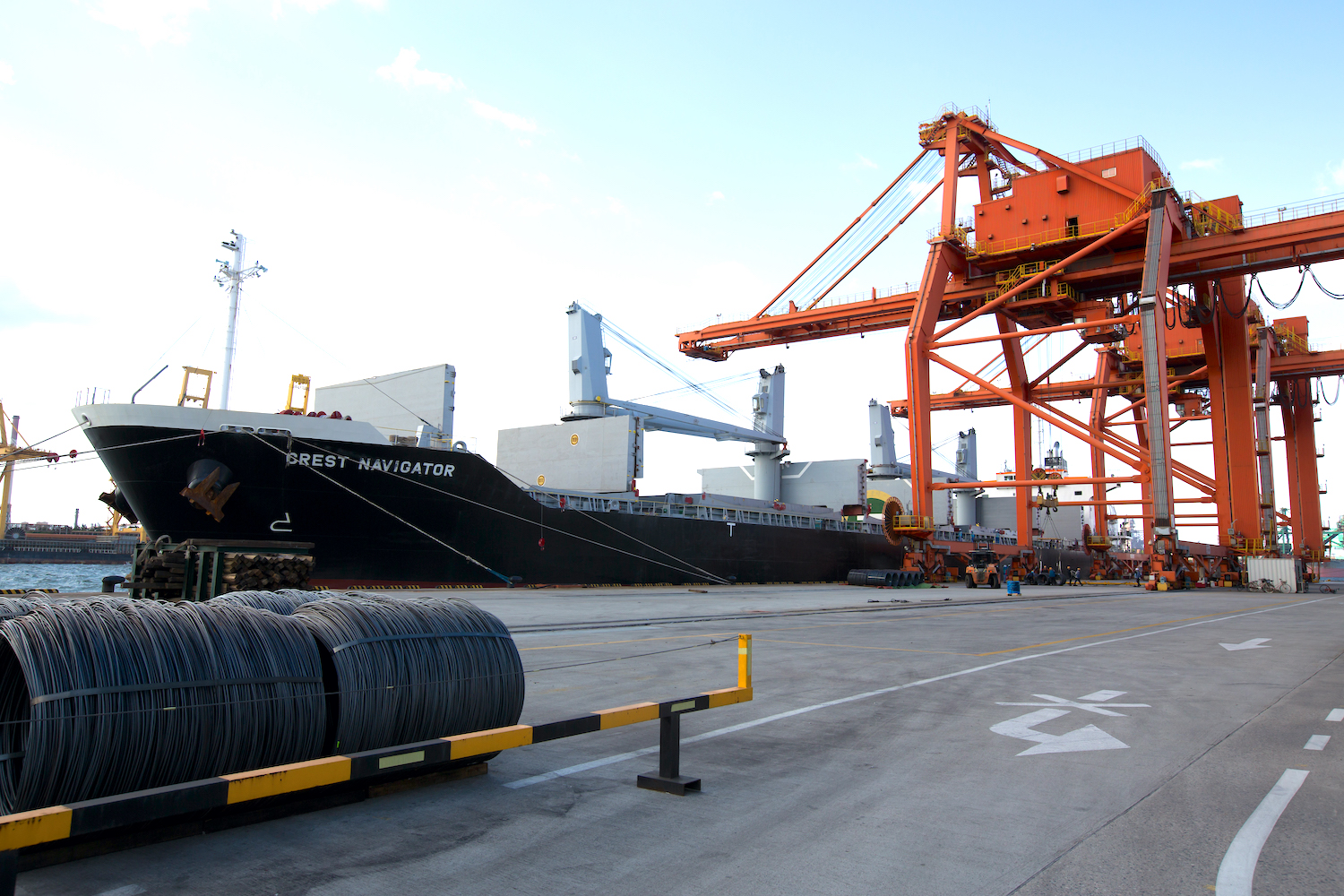
Turkey reached critical EU tariff-rate quota (TRQ) usage for category 1 hot-rolled (HR) sheet and strip by 17 September, while South Korea, Serbia, and Australia accelerated their supply to the EU, Kallanish notes from the EU TARIC portal.
Turkey, holding the largest HRC TRQ at 475,174 tonnes, rapidly utilised its quota, regaining lost ground in the EU market, as anticipated. Turkey benefits from its geographic proximity to Europe, while Asian rivals face logistics constraints in the Red Sea.
The EU’s 15% cap on hot rolled coil imports from “other countries” implemented in July resulted in Turkey’s rivals like Egypt, Vietnam, Japan, and Taiwan quickly exhausting their 141,850t TRQ each for the third quarter.
Turkey’s position was further bolstered by the EU’s anti-dumping investigation launched in August on flat-rolled steel from Egypt, India, Japan, and Vietnam. Notably, Turkey’s HR flat steel faces a 4.7-7.3% AD duty in the EU, which market participants consider “manageable”.
By 17 September, Turkey had utilised 93% of its EU TRQ for HR flat steel, leaving only 7%, or 31,828t, for the remainder of Q3.
India, with the second-largest quota of 301,704t, had used 80% by mid-September, having already utilised 74% in the early part of Q3. The country’s supply may slow due to the ongoing AD probe, a factor that could also impact supply from Egypt, Japan and Vietnam.
South Korea, the third-largest TRQ holder at 188,405t, had utilized 61%, while Serbia, with a 167,257t allocation, had used 56%.
Notably, Australia, a less typical supplier, used 55% of its EU TRQ.
Other countries such as the UK, Switzerland, and the US have used 16%, 4%, and only 2% respectively. Libya and Canada have not utilised their TRQs at all, leaving 100% of their allocations available.
| Origin | Quota 1.7-30.9.2024 | Imported | Balance | Awaiting allocation | Remaining | Available TRQ, % |
| Russia | not applicable | |||||
| Türkiye | 475,174 | 441,619 | 33,554 | 1,726 | 31,828 | 7 |
| India | 301,704 | 241,421 | 60,282 | – | 60,283 | 20 |
| South Korea | 188,405 | 114,230 | 74,175 | 19 | 74,156 | 39 |
| United Kingdom | 157,608 | 25,596 | 132,012 | 123 | 131,889 | 84 |
| Serbia | 167,257 | 92,737 | 74,519 | 1,576 | 72,944 | 44 |
| Other countries, inc | ||||||
| Egypt | 141,850 | 141,789 | 61 | – | 61 | – |
| Vietnam | 141,850 | 141,850 | 0 | – | 0 | – |
| Japan | 141,850 | 141,850 | 0 | – | 0 | – |
| Taiwan | 141,850 | 141,850 | 0 | – | 0 | – |
| Australia | 141,850 | 77,592 | 64,258 | – | 64,258 | 45 |
| Switzerland | 141,850 | 5,579 | 136,270 | 3 | 136,268 | 96 |
| United States | 141,850 | 3,060 | 138,790 | – | 138,790 | 98 |
| Libya | 141,850 | 0 | 141,850 | – | 141,850 | 100 |
| Canada | 141,850 | 0 | 141,850 | – | 141,850 | 100 |
| Total other countries | 945,665 | 653,570 | 623,078 | 3 | 292,093 | 66 |
|---|---|---|---|---|---|---|
| Total | 2,235,812 | 1,569,174 | 997,621 | 3,447 | 663,191 | 44 |
Source: EU TARIC, as of September 17. Calculated by Kallanish
Elina Virchenko UAE


Customers drive emissions reduction, technology shift: British Steel
Customers are driving the emissions reduction efforts and technology shift by steelmakers, according to Chris Vaughan, technical director at British Steel.
“It’s important to reflect the reasons why we are shifting is a primary drive to drive down CO2 emissions, and the way that we are governed on that. It’s policy that’s driving it, it’s public perception, but the pace of change that’s really driving the removal of emissions and taking those to another level is the customer base,” he said at last week’s UK Metals Expo attended by Kallanish.
“Customers are driving the manufacturers to decarbonise as quickly, if not more quickly than the policy timescales with 2035 and net zero by 2050,” he added.
British Steel has a £1.25-billion ($1.65 billion) decarbonisation plan to shift away from blast furnaces to electric arc furnace, with planning permission for this secured in Scunthorpe and Teeside earlier this year.
Vaughan noted some of the challenges the firm is facing came from the customer base potentially switching to materials other than steel which lower emissions.
“They would consider other materials for construction, etc, if we are unable to decarbonise quickly enough to meet the aspirations of their timelines,” he said.
“The transition for us is about reduction in emissions. From a British Steel perspective and an integrated manufacturer currently, the vast majority of our emissions sit within scope 1, so when we talk to clients and customers and they’re looking at us to decarbonise their own downstream, it sits in their scope 3, but their scope 3 is our scope 1,” he added.
The move to EAF-based steelmaking makes sense for the UK, but other global locations may better suit other technologies. “There’s a set of circumstances that fit electrification for the UK and the drive towards EAF, but EAF is not the only technology and it will not be the only technology on a global scale for decarbonisation,” Vaughan observed.
“Globally, it’s got to be considered from geography, where you are in your economic cycle, what is the raw material access … where’s the infrastructure as well to allow that decarbonisation,” he continued.
Amid the UK-wide move away from blast furnaces, much of the conversation has focused on whether EAF technology will be sufficient for grades that have traditionally been produced via primary steelmaking.
“It’s been around a long time. We have domestic producers using EAF technology and have done for decades. It’s proven technology which we can capitalise on to help that shift,” he added. “All grades can be made from that [EAF] route; it’s what you feed the furnace, and the raw material input that drives that, in around working with the supply chain to achieve it as well.”
He also noted that EAF steelmaking would allow more flexibility. “Our current method within British steel on integrated production requires stability, it’s not easy to take capacity up and down … whereas the EAF allows you to respond more dynamically and flexibility to market requirements which gives the benefit to be able to tune your operation to what you’re facing from the market perspective,” Vaughan concluded.
Carrie Bone UK
Established relationships restrain sections imports into EU
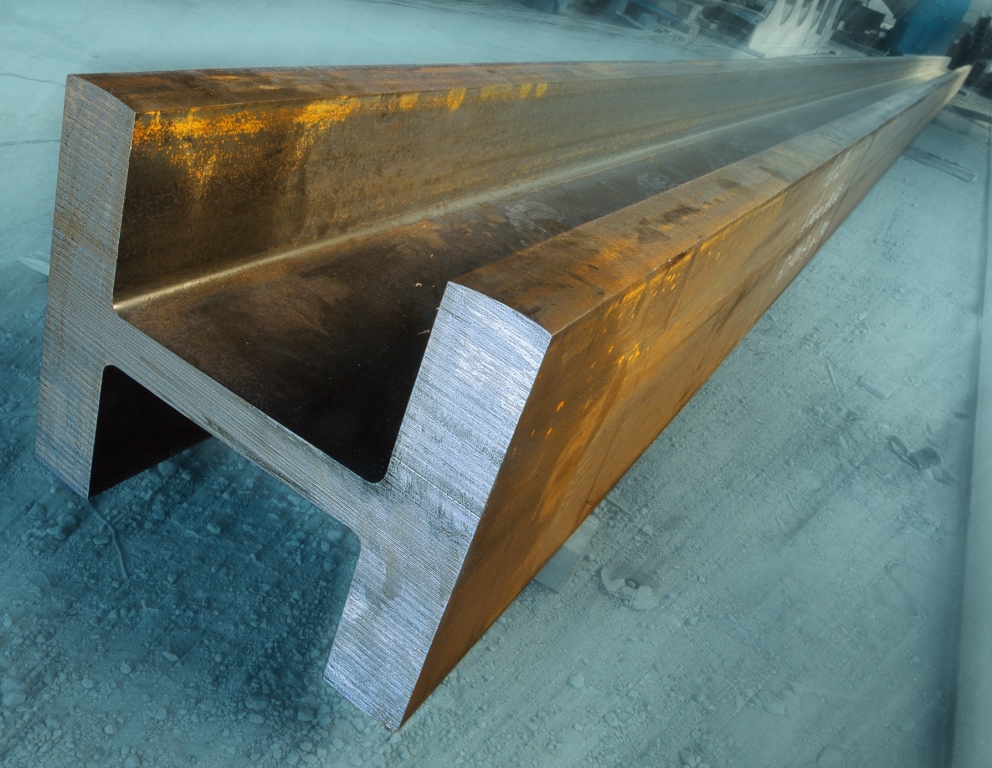
Occasional offers of sections from overseas to the EU have a hard time prevailing against established relationships between mills and domestic buyers, according to an experienced market observer.
A “loyalty bonus” affirms the relationship between buyers and their domestic supplier mills. At the end of a calendar year, distributors are rewarded with a retroactive refund or credit of normally €5 ($5.50)/tonne of the volume ordered throughout the year, he explains to Kallanish.
However, if a buyer decides to call up less tonnage than envisaged at the beginning of the year, that bonus expires altogether. “So, if you decide to go for a good offer from elsewhere at the end of the year, and take less from your original supplier, you will lose the bonus for the full year,” he explains. For example, if one buyer calls up only 25,000 tonnes, rather than the 30,000t agreed earlier, he will lose a total bonus of €125,000.
This keeps many buyers away from considering imports, the observer notes, and he does so in view of current offers from China at €700/t ($780) delivered Germany. “This is a good 10% cheaper than from EU mills,” whose current prices are at €760-790/t, depending on category.
Still, German buyers will rarely go for those offers, even if they appear attractive at first sight. “But what they do, they will use them [import offers] in negotiation with their traditional mills in Saxony-Anhalt and Thuringia,” he notes.
Christian Koehl Germany