


The new quota period in the EU has started
The new quota period in the EU has started as of October 1.
Although the volumes awaiting at the ports are not cleared through customs yet, given the high volumes of imports waiting at the ports, for some products, the quota volumes have already been exhausted. In the table below, you can see the products for which quotas have already been exhausted and also those for which more than 50 percent of quotas have been used up.



European steel HRC producers test market with higher offers
Several trading sources told Fastmarkets that a leading European steelmaker has increased its offer price for November-delivery HRC to €590 ($655) per tonne, ex-works or delivered, depending on the region. This was up by €40 per tonne from previous offers.
But these new prices had yet to be sealed in deals, market sources said, with buyers still digesting them.
Other European suppliers have been considering similar price rises of €30-40 per tonne, the sources added.
“The lowest [HRC] prices are no longer available. But higher offers have not traded yet,” a buyer said.
Buyers’ estimates of tradeable values were heard at €530-550 per tonne ex-works on October 2. But market sources suggested that the lower end of that range may no longer be available from some suppliers.
“The market is at a turning point. The increase [in HRC prices] is necessary for producers, because of costs. Plus, China has become optimistic after [publication of its recent] stimulus package and has started to increase offers, bolstering global markets,” a second buyer said. “However, consumption remains low – that is a stumbling block.”
Trading remained quiet on Wednesday, with market sources expecting more clarity next week.
“Thursday and Friday [October 3-4] are public holidays in Germany, so the market will be quiet. The ‘Golden Week’ in China [for its National Day holiday] is still on. So when everyone comes back to the market [in the week starting October 7] we will have a better understanding about prices,” a mill source said.
Fastmarkets calculated its daily steel hot-rolled coil index, domestic, exw Northern Europe, at €544.38 per tonne on Wednesday, up by €7.39 per tonne from €536.99 on October 1.
The index was, however, down by €5.50 per tonne week on week and by €45.62 per tonne month on month.
In Southern Europe, Fastmarkets’ corresponding daily steel hot-rolled coil index, domestic, exw Italy, was €535.00 per tonne on Wednesday, up by €2.00 per tonne from €533.00 per tonne the previous day.
The Italian index was down by €9.38 per tonne week on week and by €55.00 per tonne month on month.
Offers from a domestic supplier were heard at €550 per tonne delivered. This would be equivalent to €535-540 per tonne ex-works, according to trade sources.
Buyer sources estimated tradeable values at €520-530 per tonne ex-works.
At the same time, market sources said that they were expecting local mills to try to increase their offer prices soon. No official announcement has been made yet, however.
As for imports, the markets have remained quiet due to public holidays in Asia. But market sources suggested that imports would remain uncompetitive in Europe because of trade restrictions, long lead times and relatively high prices.
For example, the latest European Commission customs data showed that HRC tonnages from Vietnam awaiting allocation came to 242,292 tonnes on October 1, but the quarterly allowance for the country for October-December was only 141,850 tonnes.
A similar situation was seen for Japan. On the same date, the tonnage awaiting allocation was 251,333, exceeding its similar 141,850 tonnes quarterly allowance for October-December.
For Egypt, tonnages awaiting allocation totaled 144,517 tonnes on October 1, and for Taiwan the figure was 155,950 tonnes. The quarterly allowance for each country was also 141,850 tonnes.
This meant that imports from these origins would be subject to safeguarding duty. In addition, material from these four origins, which account for nearly half of the EU’s total HRC imports, were also subject to an anti-dumping investigation.
“One thing is clear – importing HRC is not workable in Europe at the moment,” a buyer in Italy said.
New offers from Asian suppliers were expected in the next week.


Turkish HRC, hollow sections rapidly utilise EU quotas
On the first day of the fourth quarter, Turkish steel products saw varied utilisation rates of the EU’s Q4 tariff-rate quotas, Kallanish notes.
In terms of tonnage, HR sheet and strip, along with hollow sections, led the supply, with 78,991 tonnes and 49,492 tonnes allocated respectively on the opening day of Q4.
The highest TRQ usage was for hollow sections, with nearly 50% of the quota utilised on the first day of the quota opening. This was followed by large welded tubes at 28.09%, organic coated sheets at 23.06%, HR sheet and strip at 17% and wire rod at 15.95%.
Other products, including gas pipes, rebar, other welded pipe, railway materials, and stainless cold-rolled sheets and strips, displayed lower usage rates on the first day, ranging from 1.15% to 8.95%.
| Category number | Product | Quota 01.10-31.12.2024 | Available balance | Awaiting allocation | Remaining | Available TRQ % |
| 1 | HR sheets, strips | 475,174 | 475,174 | 78,991 | 396,183 | 83 |
| 5 | Organic coated sheets | 15,889 | 15,889 | 3,663 | 12,226 | 77 |
| 9 | Stainless CR sheets, strips | 21,057 | 21,057 | 242 | 20,815 | 99 |
| 12 | Merchant bars, light sections | 107,140 | 107,140 | 212 | 106,928 | 100 |
| 13 | Rebar | 95,436 | 95,436 | 3,995 | 91,442 | 96 |
| 16 | Wire rod | 119,011 | 119,011 | 18,999 | 100,012 | 84 |
| 19 | Railway material | 1,574 | 1,574 | 37 | 1,537 | 98 |
| 20 | Gas pipes | 49,976 | 49,976 | 4,473 | 45,503 | 91 |
| 21 | Hollow sections | 99,462 | 99,462 | 49,492 | 49,970 | 50 |
| 25.B | Large welded tubes | 15,096 | 15,096 | 4,243 | 10,853 | 72 |
| 26 | Other welded pipes | 38,497 | 38,497 | 908 | 37,590 | 98 |
| 28 | Wire | 51,946 | 51,946 | 371 | 51,575 | 99 |
Source: EU TARIC, as of 2 October. Calculated by Kallanish
Elina Virchenko UAE


Northwest European buyers doubt coil price hike move
Managers at large coil purchasing companies in Germany and Austria were taken by surprise on Wednesday by ArcelorMittal’s hot rolled coil price hike in Europe to €590/tonne ($652) ex-works.
“Only today, I received an effective-price offer from ArcelorMittal, but when I re-calculate it, it is certainly lower than that [€590],” one Austrian source told Kallanish on Wednesday. He could not give a comparable base price, as the offer concerned a special specification, but notes it would not be in line with the new price hike.
“The latest move, from last week to this, was down a bit further,” says one unawares German service centre manager, assessing the latest offer at slightly below €550/t ex-works.
Another manager doubts that mills’ production capacities for the fourth quarter are already filled enough to justify such a move. “There must be some other background to it,” he says, suggesting that mills might try to flex their muscles in advance of the upcoming Euroblech fair.
“And anyway, who would pay that [€590]?” the Austrian source wonders, in view of continued sluggish demand in Europe. His latest order from a western European mill last week was at €580/t delivered, which would translate to €530/t ex-works, close to the low point of the latest cycle heard by other sources.
One well-connected observer does however confirm he heard of the new offer, and that ArcelorMittal would not book any additional volumes at previous, lower prices. “It’s not official, really, because they have failed to exert it often enough in the past,” he says, but he notes that mills do have a point, as competition from Asia is waning somewhat.
Sources reported on Wednesday that ArcelorMittal is raising coil offers in Europe, with immediate effect (see separate story).
Christian Koehl Germany
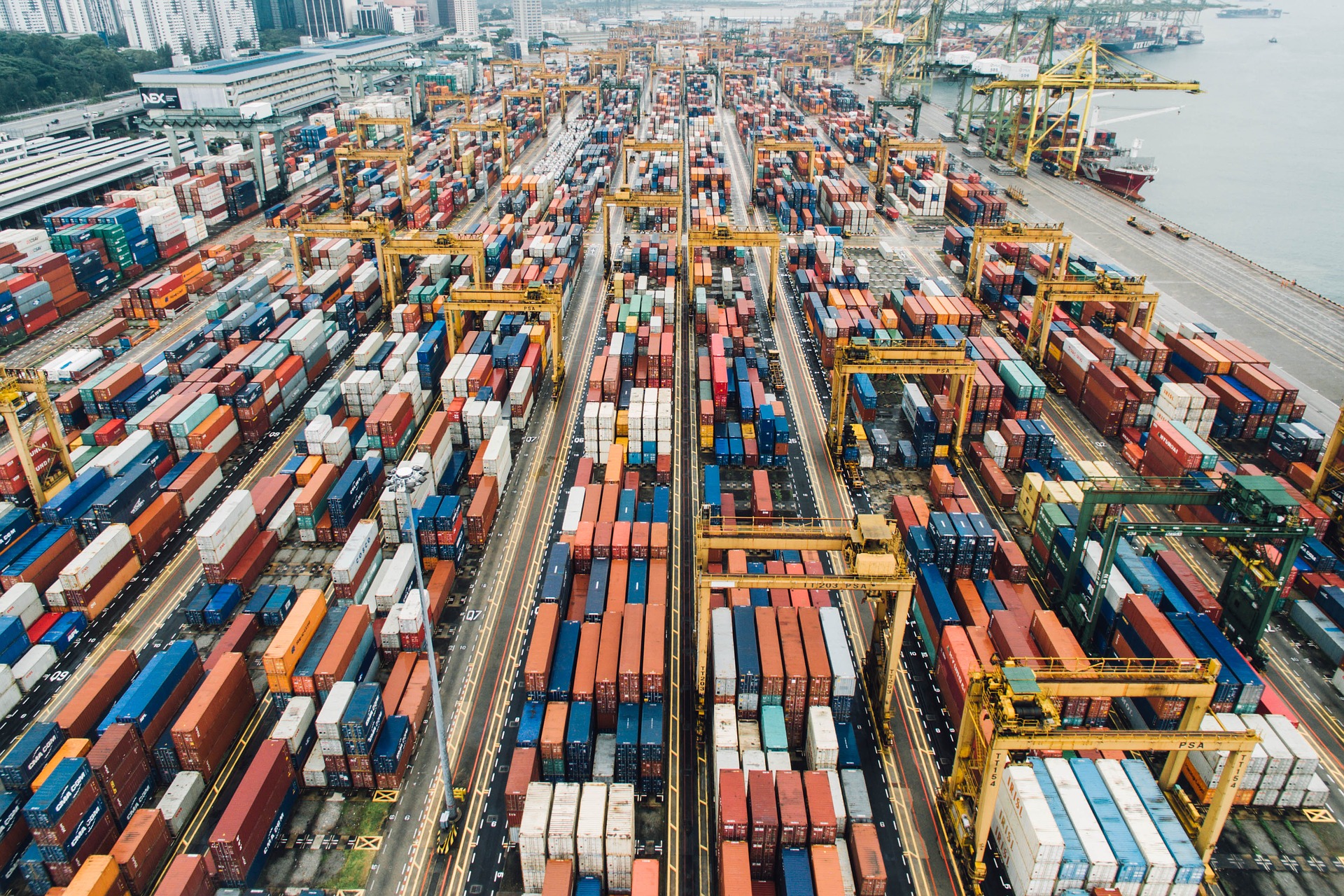
Japan, Vietnam, Taiwan, Egypt exceed EU HRC quota
The EU’s tariff-rate quotas for hot rolled coil from Egypt, Vietnam, Japan, and Taiwan were exceeded on the first day of the fourth quarter, Kallanish notes from the EU customs portal.
Each of these origin’s quotas is capped at 15% of the overall 945,665-tonne volume available in the “other countries” quota.
Japan registered an allocation of 251,333t, exceeding its quota of 141,850t by 77%. Vietnam submitted 242,292t, surpassing its quota by 71%. Taiwan filled 155,950t, exceeding its quota by 10%. Egypt submitted 144,518t, which is 2% above its quota.
Turkey, which holds the largest individual quota of 475,174t, submitted 78,991t, leaving 83% of its quota still available. In the third quarter, Turkey supplied 456,910t, with only 4% of its third-quarter quota remaining by the end of the period.
| Origin | Quota 01.10-31.12.2024 | Imported | Balance | Awaiting allocation | Remaining | Available TRQ % |
| Russia | not applicable | |||||
| Türkiye | 475,174 | 0 | 475,174 | 78,991 | 396,183 | 83 |
| India | 301,704 | 0 | 301,704 | – | 301,704 | 100 |
| Korea | 188,405 | 0 | 188,405 | 718 | 187,687 | 100 |
| United Kingdom | 157,608 | 0 | 157,608 | 25 | 157,583 | 100 |
| Serbia | 167,257 | 0 | 167,257 | 1,512 | 165,745 | 99 |
| Other countries, inc: | ||||||
| Egypt | 141,850 | 0 | 141,850 | 144,518 | -2,668 | -2 |
| Vietnam | 141,850 | 0 | 141,850 | 242,292 | -100,442 | -71 |
| Japan | 141,850 | 0 | 141,850 | 251,333 | -109,483 | -77 |
| Taiwan | 141,850 | 0 | 141,850 | 155,950 | -14,100 | -10 |
| Australia | 141,850 | 0 | 141,850 | – | 141,850 | 100 |
| Switzerland | 141,850 | 0 | 141,850 | – | 141,850 | 100 |
| United States | 141,850 | 0 | 141,850 | – | 141,850 | 100 |
| Libya | 141,850 | 0 | 141,850 | – | 141,850 | 100 |
| Canada | 141,850 | 0 | 141,850 | – | 141,850 | 100 |
| Total other countries | 945,665 | 0 | 1,276,648 | 794,094 | 151,571 | 51 |
| Total | 2,235,812 | 0 | 2,566,795 | 875,339 | 1,360,473 | 76 |
Source: EU TARIC, as of 2 October. Calculated by Kallanish
Elina Virchenko UAE

European hot-rolled coil (HRC) prices firmed today as mills hiked offers
Argus’ daily northwest EU HRC index rose to €532.50/t ex-works, up by €10.50/t on the day. The Argus daily Italian HRC index rose by €3.50/t to €534.50/t ex-works.
ArcelorMittal increased its HRC offer by €40/t compared with its last achieved prices, while NLMK La Louviere increased its prices by €20-30/t. Italian steelmaker Arvedi has raised its prices by €40/t. Other mills were reportedly following suit, on a rise in China, which has pushed up import offers and mill costs.
Mills often try to increase prices around this time of year, ahead of an industry fair in Germany and the start of automotive contract talks. Demand remained low, with automakers continually postponing contractual tonnages — some said carmakers hope to sign 2025 deals at lower levels, so are postponing offtake until then. Mill sources suggest that there could be a technical rebound in automotive offtake come the first quarter, partly as a result of this.
The weak demand environment remains an issue for service centres (SSC), many of which are trying to destock ahead of the financial year-end to increase disposable capital. Sources suggest that this should lessen in December.
Mill executives said buyers have been trying to add tonnage to existing deals, which they have refused. ArcelorMittal is firm on €590/t and has withdrawn all offers below that in north Europe, sources said. One service centre was offered a small amount of HRC at €605/t base delivered by a large mill, while another buyer reported offers at €580/t base and above.
Buyers in Italy welcomed offer increases, hoping that this would stimulate end-users to start purchasing. But a large portion of the market remains sceptical over whether there is enough demand to support the increase. One source said large buyers today were still seeking €520/t base delivered Italy. Market participants expect trading to occur at around €550/t base delivered Italy.
Turkish producers have followed EU mills, and are offering at $610-620/t fob, which places them close to some EU offers in the Italian market of €580/t base delivered. South Korean material was reported sold at €550/t cif Italy. Indian material was last heard sold below these levels, but not confirmed.
“The mood is changing. Also import is more prudent and they are closing very fast every negotiation in order to move the price,” an SSC source said.
The amount of material clearing customs remained a concern, especially with demand as subdued as it has been. Vietnam and Japan look set to face safeguard duties of a minimum of 17.7-19.3pc depending on final clearance volumes.
Blast furnace outages in the EU

Lora Stoyanova
