

Acerinox set to suspend steel production in Spain: media reports
Spain’s largest stainless steel producer, Acerinox, is set to halt production from its 1 million metric ton per year smelter in Los Barrios, Cadiz, Spain starting Oct. 12, following a temporary lay-off agreement with workers, Spanish media reported on Oct. 9 citing company sources.
Acerinox did not respond the request for comment on Oct. 9.
According to a report published in Diario de Cadiz citing a message from the company to workers, the halt is due to low demand and loss of clients.
The plant’s hot-rolling mill is due to halt on Oct. 12, the report said, while the cold-rolling mill could halt later, the report said.
The temporary lay-off, known as ERTE in Spain, was agreed upon by unions and management who, in July agreed a new deal through 2027.
This decision followed industrial action at the plant, which resulted in a complete halt of production for approximately four months this year.
As a consequence, the company reported a 17% decline in its worldwide crude steel production in the second quarter, totaling 405,000 t.
Acerinox operates stainless plants in Spain, US, and South Africa as well as production facilities for high performance alloys in Germany, with a combined melting shop capacity of 3.5 MMt/y.
In Asia, the company confirmed it halted production in May from its Malaysian subsidiary Bahru Stainless.
Platts, part of S&P Global Commodity Insights, assessed the Global Daily Dealer Molybdenum Oxide at $22.15/lb on Oct. 8, up from the previous assessment of $22.075/lb.


EU HRC prices hold as demand stabilizes
Domestic European hot-rolled coil prices were largely stable Oct. 9 as demand stabilized at lower levels, even as mills maintained higher offers.
Market sentiment remains uncertain on the long-term success of price increases by large European mills. A Germany-based trader said that despite “aggressive HRC prices by mills over the past two weeks,” some service centers are reselling large volumes of stock at low prices. As a result, service centers are undercutting mills while selling at a low margin for themselves.
A Germany-based distributor source said that “demand remains stable on a low level” contributing to “a trade reduction compared to last year, but at most a one-figure decline.” The source said that there is “no risk at the moment that prices will go down in the next couple of weeks.”
Platts assessed Northwest European HRC at Eur550/mt ex-works Ruhr Oct. 9, stable with Oct. 8.
Offers were reported at Eur550-600/mt EXW Ruhr.
Tradable values were reported at Eur540-560/mt EXW Ruhr.
Meanwhile, Platts assessed domestic HRC in Southern Europe at Eur545/mt EXW Italy, up Eur5 on the day. Offers were reported at Eur590/mt EXW Italy, and tradable values were reported at Eur550-575/mt EXW Italy.
A service center source based in Italy said it was “not convenient, and not a good idea, to buy imports right now.” The source explained that “when there’s a small difference between import and domestic prices it means people choose domestic prices.”
Platts assessed imported HRC in Northwest Europe at Eur535/mt CIF Antwerp, up Eur10 from Oct. 8.
Meanwhile, Platts assessed imported HRC in Southern Europe at Eur535/mt CIF Italy, also up Eur10 from Oct. 8.

Ratan Tata passes away at 86
Ratan Tata, chairman emeritus of one of India’s largest conglomerates, Tata Sons, has passed away at the age of 86.
In a late-night statement on Wednesday, N Chandrasekaran, Chairman of Tata Sons, announced Mr. Tata’s death, praising the industrialist’s steadfast dedication to excellence, integrity, and innovation.
“It is with a profound sense of loss that we bid farewell to Mr. Ratan Naval Tata, a truly uncommon leader whose immeasurable contributions have shaped not only the Tata Group but also the very fabric of our nation,” said Mr. Chandrasekaran.
“For the Tata Group, Mr. Tata was more than a chairperson. To me, he was a mentor, guide, and friend. He inspired by example. With an unwavering commitment to excellence, integrity, and innovation, the Tata Group under his stewardship expanded its global footprint while always remaining true to its moral compass,” he added.
Mr. Fernando Espada, President of EUROMETAL, also paid tribute to Mr. Tata, highlighting his remarkable influence beyond business.
“Ratan Tata has left an extraordinary legacy, marked by both business growth and philanthropy. His unwavering commitment to progress not only drove his companies to excellence but also earned him the deep respect of the communities he served. Through his vision and leadership, he transformed thousands of lives, improving their health, well-being, and fostering greater prosperity for all. May he rest in peace,” Mr. Espada shared in a comment on LinkedIn.
Both remarks underline Mr. Tata’s lasting impact not only on the business world but also on society at large.

US determines no below-fair-market-value German plate sales
The US Department of Commerce has determined certain carbon and alloy steel cut-to-length plate from Germany was not sold under market value in the US, Kallanish learns from the Federal Register.
During the period of review (POR) ranging from May 2022 through April 2023, Commerce finds that German producer and exporter AG der Dillinger Hüttenwerke did not sell steel in the US below fair market value. Therefore, the department assigns a 0.00% weighted average dumping margin.
The Harmonized Tariff Schedule of the United States (HTSUS) item numbers for the merchandise of the order include 7208.40.3030, 7208.40.3060, 7208.51.0030, 7208.51.0045, 7208.51.0060, 7208.52.0000, 7211.13.0000, 7211.14.0030, 7211.14.0045, 7225.40.1110, 7225.40.1180, 7225.40.3005, 7225.40.3050, 7226.20.0000 and 7226.91.5000.
Kristen DiLandro USA

Theo Steil acquires fellow German scrap merchant
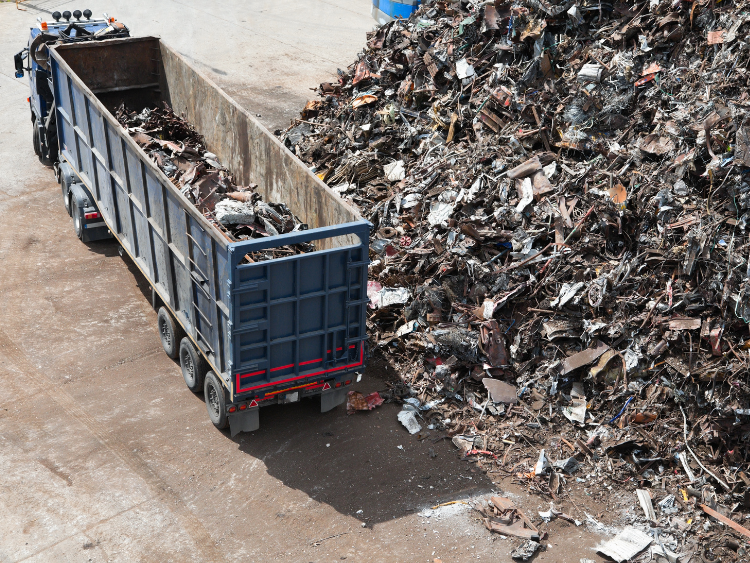
Germany-based Theo Steil has acquired fellow scrap supplier Rhein Main Rohstoffe (RMR). The acquirer says this will strengthen its market position and provide high-quality scrap for the domestic steel industry, Kallanish notes.
“We at the Theo Steil are very pleased to announce a significant strategic partnership, because together with RMR we are now forming a strong recycling alliance,” Theo Steil says. “With six locations in Frankfurt (Westhafen & Riederwald), Siegen, Stockstadt, Haiger and Bischofsheim, the alliance with RMR brings not only fresh energy but also valuable expertise to the group. This partnership is a decisive step to strengthen our joint position in the Rhine-Main area and the Haiger-Siegen region and to intensify our joint focus on green steel and sustainable raw material solutions for our customers.”
By merging the two companies, each side brings its own strengths, which combined will lead to a significant boost and “catapult the Steil Group into a leading position in the European market”, it adds.
Theo Steil is primarily active in recycling and trading in western and eastern Germany. The company also has a deep-sea terminal in Dordrecht, the Netherlands, which provides access to all international markets. It has the capacity to handle vessels of up to 50,000 tonnes.
Rhein Main Rohstoffe operates in and around Frankfurt am Main. The company collects and processes around 400,000 t/year of ferrous and non-ferrous material.
The German federal competition authority (Bundeskartellamt) cleared the acquisition in July.
The acquisition is “not expected to significantly restrict competition,” said Bundeskartellamt president Andreas Mundt. “This merger of two medium-sized companies will enhance the industry’s structural diversity in the long run. For the steel industry, using recycled scrap is an essential step towards low-emission steel production. Competition at the level of secondary raw material recycling thus significantly contributes to supplying the steel industry with high-quality input material.”
In contrast to when TSR Recycling, which belongs to the Rethmann Group, announced its intention to acquire RMR in 2021, the present case does not give rise to concerns about the group gaining uncontrolled scope over the purchase and recycling of scrap for processing with shears, according to the Bundeskartellamt.
“The investigations have shown that due to the parties’ market position and competitors’ activities in different markets, it is to be expected that all market participants will continue to experience sufficient competitive pressure in the future,” it noted.
Svetoslav Abrossimov Bulgaria

Jindal Group to acquire Vitkovice Steel
Jindal Steel Group will acquire a 100% stake in Vitkovice Steel, says the Czech plate maker.
“This is a strategic step and we are convinced that it will strengthen the company and the Czech steel industry. The new industrial owner will bring the company stability and above all development in the form of massive investments in modernisation and expansion of production technologies, sharing of foreign know-how and moving towards environmentally produced low-emission steel,” Vitkovice Steel chief executive Radek Strouhal says in a note seen by Kallanish.
Earlier this year, Vitkovice Steel signed a memorandum of understanding with prospective Omani low-emission steelmaker Vulcan Green Steel, part of Jindal Steel Group, for the future supply of 1 million tonnes/year of slab (see Kallanish passim). The Czech rolling mill has been cooperating with Jindal for more than a year in the field of operational financing, it says.
“We see great synergies between Jindal Group and Vítkovice Steel. We want to be a strategic investor and develop and expand production in Ostrava,” says Harssha Shetty, chief executive at Oman-based Jindal Shadeed Iron & Steel and Vulcan Green Steel executive director marketing.
Jindal plans to invest up to €150 million ($164m) in the development of the Ostrava-based mill in the coming years, mainly in the expansion of plate production capacity and output of higher-added-value products.
A prerequisite for the acquisition was the completion of the Czech Financial Analytical Office’s investigation into Vitkovice Steel’s alleged links with Russia. The probe was closed and preliminary restrictions on the handling of the company’s shares and funds were revoked (see Kallanish passim).
The acquisition is subject to review by the Czech competition office.
It would represent a significant foreign investment into European steelmaking at a time when European economic growth and steel demand is suffering miserably. However, plate demand is touted to have a brighter future than most other steel products due to investments in renewable energy and defence. The leasing/sale of plate mill Liberty Czestochowa in neighbouring Poland has garnered interest from multiple potential investors.
Adam Smith Poland

European HRC prices largely flat amid mixed expectations on direction of prices
Fastmarkets calculated its daily steel hot-rolled coil index, domestic, exw Northern Europe, at €546.00 ($599.47) per tonne on Wednesday, up by just €0.62 per tonne from €545.38 per tonne on Tuesday.
The index was up by €1.62 per tonne week on week, but down by €34.00 per tonne month on month.
November/December delivery HRC was on offer in Northern Europe at €560-570 per tonne ex-works, Fastmarkets understands.
And German producers have undertaken more flexible approach, according to sources.
“If you want to book material now, you can get €540-550 per tonne ex-works. But offers for [the first quarter] of 2025 are at €560-570 per tonne ex-works,” a European buyer source told Fastmarkets.
And buyer estimates of the workable level came in at €530-550 per tonne ex-works.
But expectations about the future direction of prices were mixed and the buyer source said there was a good chance of a price rebound in the near term.
“The price decline has stopped. Consumers want to do some restoking, but they want to buy at the price levels from two weeks ago – at around €520 per tonne ex-works. But those prices are no longer available,” the buyer said, adding that prices would stabilize and could even increase in the coming weeks – ahead of the international sheet metal exhibition in Hanover, Germany on October 22-25.
The buyer said the uptrend in prices could continue after, but it would be difficult to predict how things would develop in the mid term.
A second buyer source told Fastmarkets that the current import offers of HRC from Asia were completely unworkable for the European market.
Asian HRC was heard offered at €550-560 per tonne CFR Antwerp, the second buyer said, but the comparatively high price level, combined with the trade risks and the long lead times made that level of offer uncompetitive.
The source added that any need for HRC in Europe, would therefore be covered by domestic production and that would also support a price rebound.
But a third buyer source was skeptical about the sustainability of any potential price rebound during the Hanover event – especially considering the persistent low demand from the main steel-consuming sectors in Europe – and implied that prices were likely to fall after that.
“[Steelmakers] just want to receive higher prices during the [sheet metal] exhibition in Hanover,” the buyer said. “But if I were to buy, I would wait… for the exhibition to be over.”
In Southern Europe, meanwhile, Fastmarkets’ daily steel hot-rolled coil index, domestic, exw Italy, was calculated at €540.33 per tonne on Wednesday, up by just €0.33 per tonne from €540.00 per tonne on Tuesday.
The Italian index was up by €5.33 per tonne week on week, but down by €38.00 per tonne month on month.
HRC in Italy was on offer at €550-560 per tonne delivered, which nets back at €540-550 per tonne ex-works, sources said, with some deals reported at €530-535 per tonne ex-works.
Buyer estimates of the workable level in Italy came in at €530-550 per tonne ex-works.
Import offers of Turkish HRC to Italy were heard at €580-590 per tonne CFR, including the EU anti-dumping duty, while offers of HRC from India to Italy were heard at €585 per tonne CFR and material from other Asian suppliers was on offer at €550-560 per tonne CFR.
Buyers said the workable level for Asia-origin coil was closer to €520 per tonne CFR, but no such offers were available.
Published by: Darina Kahramanova
