


European CRC, HDG prices largely flat; some producers test market with higher offers
Demand remained weak. Some European producers announced higher offer prices, but no deals were concluded at these levels, industry sources told Fastmarkets.
Thus, trading in both the cold-rolled coil (CRC) and hot-dipped galvanized (HDG) steel markets across Europe remained quiet during the assessment week, with buyers waiting to see how the situation would develop.
Some mills in Germany were heard to be targeting price increases of €30-40 ($33-44) per tonne for CRC for the first quarter of 2025.
“If you want to book some volumes now, you can get €630-640 per tonne ex-works, but for Q1 2025 the offer prices [have increased] to around €660-670 per tonne ex-works,” a buyer source based in Germany told Fastmarkets.
But the buyer source was skeptical that the mills would be able to achieve such an increase, adding that the market could eventually accept a smaller increase of €10-20 per tonne.
Fastmarkets’ assessment for steel cold-rolled coil domestic, exw Northern Europe was €640-670 per tonne on Wednesday, unchanged from October 2.
Import offers of CRC from India to Northern Europe were heard at $680-690 per tonne CFR.
The prices for domestic CRC in the Italian market also remained largely unchanged during the assessment week, sources told Fastmarkets.
Suppliers in Italy were heard targeting higher offers at €675-680 per tonne delivered, which nets back to €665-670 per tonne ex-works.
But buyers’ estimations for the workable market level were at €640-650 per tonne ex-works.
Fastmarkets’ weekly price assessment for steel cold-rolled coil domestic, ex-works Southern Europe was €640-650 per tonne on Wednesday, narrowing downward by €10 per tonne from €640-660 per tonne on October 2.
Asia-origin CRC was on offer at €655 per tonne CFR Italy, Fastmarkets understands. But this level was “completely unworkable”, according to industry sources.
Lower offers of CRC from India and South Korea to Italy were also available in the market at €605-615 per tonne CFR, sources told Fastmarkets.
Domestic prices for HDG across Europe were also largely unchanged during the assessment week.
Trading in the HDG market remained slow.
In Northern Europe, official offers for HDG were rare, and mills conducted business on a “case-by-case” basis.
Fastmarkets’ sources estimated the workable market level at €660-690 per tonne ex-works.
Fastmarkets’ weekly price assessment for steel hot-dipped galvanized coil domestic, exw Northern Europe was €660-690 per tonne on Wednesday, unchanged from October 2.
Domestic offers of HDG in Italy were heard at €670-680 per tonne ex-works, with buyers estimating the tradeable market price at €650-660 per tonne ex-works.
Fastmarkets’ price assessment for steel hot-dipped galvanized coil domestic, ex-works Southern Europe was €650-670 per tonne on Wednesday, unchanged from October 2.
Asian import offers of HDG were reported at €690-700 per tonne CFR Italy.
Offers of HDG with 0.57 mm thickness and z140 coating from Vietnam to Spain were heard at €750 CFR.
Published by: Darina Kahramanova


European HRC prices stabilize after steel mills push for increases
Fastmarkets calculated its daily steel HRC index, domestic, exw Northern Europe at €547.17 ($599.43) per tonne on Thursday, up by €1.17 per tonne from €546.00 per tonne the previous day.
The index was up by €4.67 per tonne week on week, but down by €32.66 per tonne month on month.
Offer prices for November-December delivery HRC from mills in the region varied between €560 per tonne and €590 per tonne ex-works, sources said.
“The offers [for HRC] we have seen [since October 7] are all up, but it’s too early to comment [on] whether the move will be successful or not. The downtrend has definitely stopped, though,” one buyer in the region told Fastmarkets.
“This week, China returned from the [National Day] holidays and we’ll have to wait for the reaction [there, and] the impact of the stimulus [measures proposed at] the beginning of October,” the buyer added.
Achievable values were estimated by most buyers at €540-550 per tonne ex-works.
For HRC with delivery in the fourth quarter of 2024, mills can be a bit more flexible and provide discounts for bigger lots, sources said.
But for HRC with lead times in the first quarter of 2025, suppliers were insisting on “a minimum of €560 per tonne ex-works,” Fastmarkets understands.
“What we need to get a sustainable [steel] price increase is better demand,” a second buyer said. “But haven’t seen any positive signals from that side.”
In Southern Europe, Fastmarkets’ daily steel HRC index, domestic, exw Italy was calculated at €540.00 per tonne on Thursday, down by just €0.33 per tonne from €540.33 per tonne on the previous day,
The Italian index was up by €5.00 per tonne week on week, but down by €37.50 per tonne month on month.
November-delivery HRC from Italian suppliers was on offer in the domestic market at €550-560 per tonne delivered, which nets back to €540-550 per tonne ex-works.
But buyers estimated the tradable value at no more than €530-540 per tonne ex-works.
In the secondary market, HR sheet was still trading at around €620-630 per tonne CPT, but steel service centers said they needed to increase their offers to €670 per tonne CPT as a minimum to recover margins.
“The market is still slow and it is not clear whether the higher offers [for HRC] will be fully accepted by the buyers,” a trading source said.
Prices for imported HRC also increase in the week to Thursday.
Notably, Turkish HRC was on offer to Italy at €580-590 per tonne CFR, including the EU anti-dumping duty, sources said.
And offers of HRC with November shipment from India were heard to Italy at €585 per tonne CFR, while material from Asian suppliers was on offer at €550-560 per tonne CFR.
None of these offers were considered workable by European buyers.
Green steel
Fastmarkets’ weekly assessment of the green steel domestic, flat-rolled, differential to HRC index, exw Northern Europe was €100-200 per tonne on Thursday, unchanged week on week.
Major European suppliers continued to offer steel with Scope 1, Scope 2 and upstream Scope 3 emissions below 0.8 tonnes of carbon dioxide (CO2) per tonne of steel at a premium of €200-350 per tonne.
Estimates of tradeable values for the same material in the spot market were reported at a premium of €50-150 per tonne during the assessment week.
And for long-term contracts, the premiums for steel with CO2 emissions below 800 kg of CO2 per tonne of steel ranged from €200 to €300 per tonne, according to sources.
A supplier source pointed out that for steel with CO2 emissions content below 500 kg per tonne of steel, “premiums below €200 per tonne would not be commercially viable.”
No new transactions for green steel were reported in the assessment week.
Published by: Julia Bolotova
Liberty Magona attracts several suitors
The Cgil e Fiom unions, which represent 500 workers at Liberty’s Italian re-rolling facility Magona, in Piombino, are requesting that the government ensure the procurement of hot rolled coil in order to recommence production.
The facility is producing very low volumes as a result of temporary layoffs and the absence of HRC feedstock. According to sources with knowledge of the situation, 16 organisations, including foreign funds and steel companies, have expressed interest in acquiring the Magona plant.
Unions are asking the Ministry of Enterprises and Made in Italy (MIMT) to negotiate a supply agreement with Magona’s conventional suppliers, including Acciaierie d’Italia (ADI). Although Magona has ordered 110,000 tonnes of HRC from ADI, only 53,000t has been delivered, a union note obtained by Kallanish says.
Magona’s union representatives met with the MIMT in Rome earlier this week as the sale of the troubled re-roller is currently being supervised by the Italian government. The process, however, is still in a preliminary phase, with the submission of binding offers expected to start in November.
Liberty Steel intends to sell Magona, its Belgian facility in Liege, and Dudelange in Luxembourg. In May, it initiated a strategic assessment of its downstream steel plants in western Europe in response to expressions of interest from multiple parties. The objective was either to establish partnerships through long-term HRC feedstock supply contracts or to divest the units.
The businesses have a combined rolling capacity of more than 2.5 million tonnes/year. Liège and Dudelange produce galvanised HRC, while also offering tinplate for packaging and black plate as a substrate for tinplate. Dudelange is also the sole European producer of Aluzinc. Magona has a long heritage and well respected pre-painted PPGI brand, with its own port access at the plant.
Natalia Capra France


Liberty submits lease offer for Czestochowa
Liberty Steel has submitted an offer for the lease of the Czestochowa plate mill through fully-owned subsidiary Poviglio sp. z.o.o. The offer incudes providing the immediate funds needed to pay outstanding bills and employees’ September salaries.
Bankruptcy proceedings against Czestochowa were resumed in September after a brief pause. Besides bidding to lease the plant, Liberty is appealing the proceedings. The group said last month Czestochowa’s creditors had approved the firm’s restructuring plan (see Kallanish passim). It is awaiting the court’s decision on whether to approve the plan or continue with the selection of a new lessee.
“This [leasing] commitment would protect the value of the company’s assets, avoid the mortgaging of the business’s assets and any potential degrading the creditor position,” a Liberty Steel spokesperson says. Liberty claims it is “the only potential lessee of the steelworks which fully understands the complexities of protecting and maintaining this plant and its machinery before the full onset of winter”.
The lease would be delivered by a new management team, headed by Tomasz Sęk, which is composed of seasoned Polish professionals with extensive experience in leading restructuring processes, Liberty notes.
“Once a responsible staged restart is complete, the plant’s new management team sees significant future opportunities for sales growth given that Czestochowa is the only producer of lower carbon, emissions EAF-based heavy plates in the EU,” says Liberty Steel Europe chief executive Thomas Gangl. “We hope that the Trustee confirms our offer as soon as possible so that we can get into the plant and start restoring its machinery to operational effectiveness before the start of winter.”
Czestochowa’s administrator has been searching for a lessee to take over the plant since it initially entered bankruptcy in July. Multiple firms are in the running, including Metinvest and Weglokoks. Czestochowa idled production last year under Liberty’s management.
Adam Smith Poland
Germany’s automotive sales rebound amid new incentives
Germany’s efforts to support its automotive industry, through new corporate incentives for electric vehicles, may have started to pay off, Kallanish reports.
Following a 69% collapse in all-electric (BEV) car sales in August, the government announced in early September it is strengthening e-mobility with tax improvements. Companies may benefit from a special depreciation allowance for BEVs and other emission-free vehicles, such as fuel cell electric vehicles (FCEVs). Purchases will be exempt from tax, starting at a rate of 40%, and be valid until December 2028.
Additionally, employees who use an electric company car for private purposes will be taxed at a reduced rate, with the cap on the vehicle price now expanded to €95,000 ($103,876), from €70,000 previously.
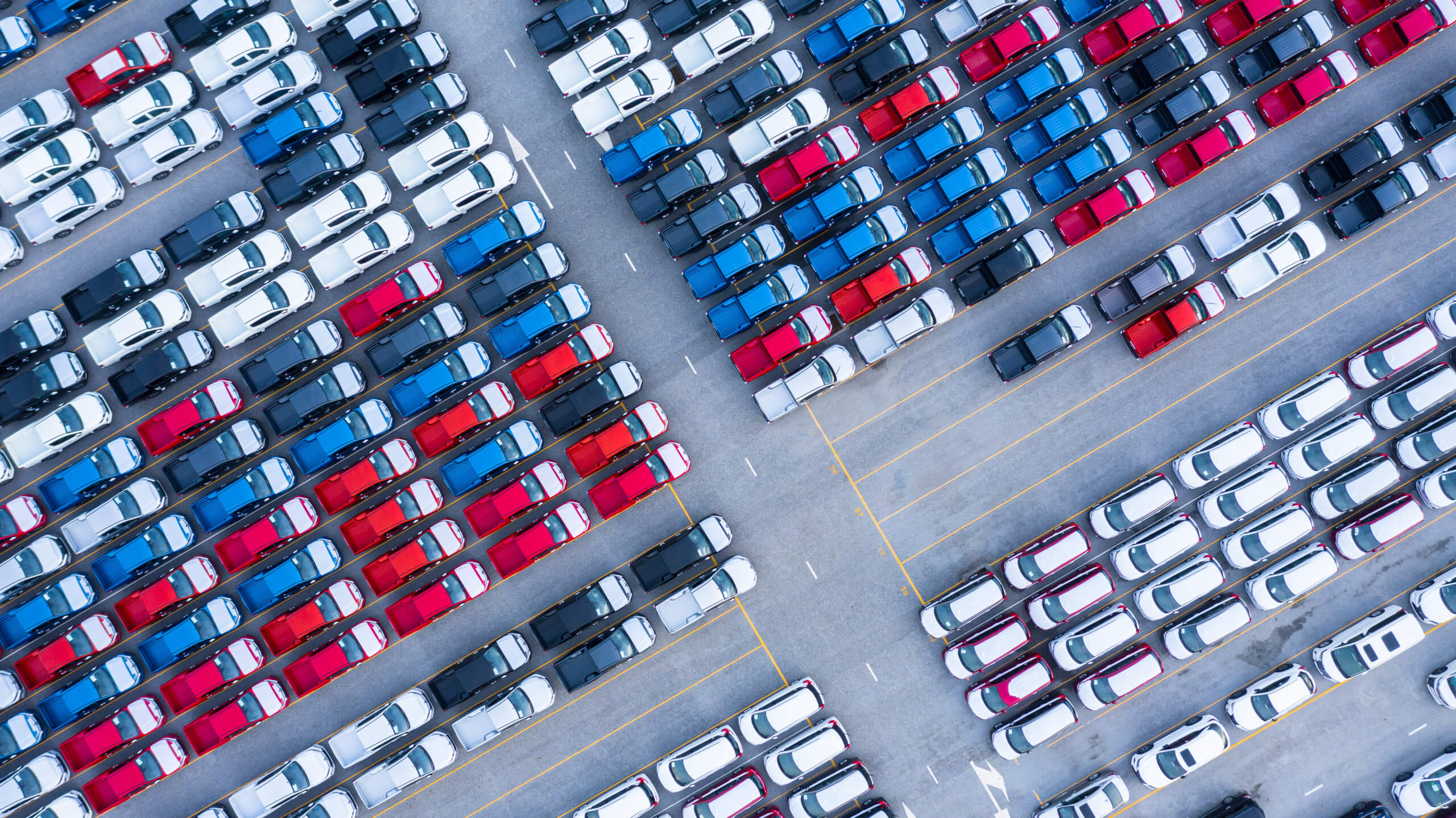
Data released by the Federal Motor Transport Authority (KBA) this week show BEV sales rebounded in September, rising by 8.7% year-on-year to 34,479 units. Registrations account for 16.5% of the new German car market. FCEV sales rose exponentially in the month, to 39 registrations.
“With the growth initiative, the federal government has set out to support the automotive industry and its employees in the e-mobility modernisation project,” the government says in a statement.
The move comes amid an ailing automotive industry, with rising concerns about weak demand, plant closures and other regulatory and macroeconomic headwinds. By helping the auto sector, Germany will also support growth in associated supply chains such as the steel industry.
In September, overall new car sales rose 6% y-o-y in Germany to 530,805 units. Plug-in hybrid (PHEV) registrations slipped 2.9%, while hybrid electric (HEV) sales increased 4.7%.
Car manufacturing also improved last month, with a total of 390,000 units coming off production lines, according to auto association VDA. The volume represents growth of 8.33% on-year and 25.8% on-month.
Tata Nederland sells Zeremis steel to Lindab
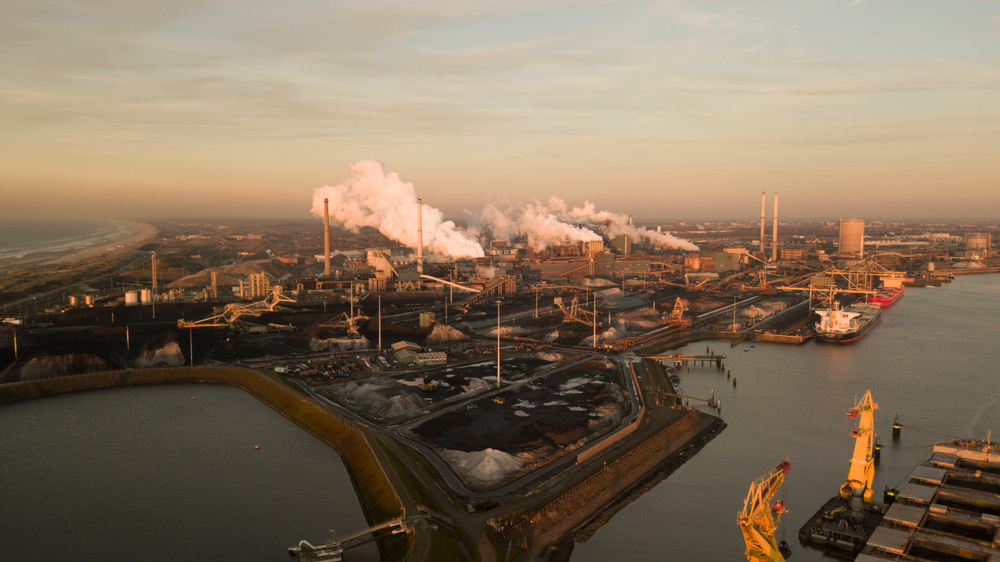
Tata Steel Nederland has entered a memorandum of understanding with another steel-using customer, Lindab, to supply its proprietary Zeremis green steel once the IJmuiden steelworks transitions to hydrogen-based steel production, Kallanish notes.
Lindab is a supplier of ventilation systems, with approximately 80-95% of its products’ environmental impact and around 50% of its total emissions coming from steel, according to Tata. Steel is however a material with many advantages for ventilation systems, such as a long lifespan, or resistance to fire. Lindab therefore wants to be part of the sustainable transition within the steel industry, Tata points out.
“We have a decades-long lasting relationship with Lindab, and they have always been at the forefront of developments in the market,” says Stefan Landesz, director commercial business unit Colors at Tata Steel Nederland.
Earlier this year, Lindab extended an existing agreement for the supply of emission-reduced steels with H2 Green Steel, which has since been renamed to Stegra (see Kallanish 24 May).
Christian Koehl Germany

ArcelorMittal announces higher offer prices for long steel in Europe: sources
The company has made the move to offset increasing production costs, Fastmarkets understands.
Sources said the new prices were effective immediately and follow last week’s announcement of a similar hike in ArcelorMittal’s European flat steel prices.
But the long steel market in Europe has been struggling in recent months with low demand from the construction sector – the key consumer of these products – putting significant downward pressure on domestic prices, Fastmarkets understands.
In Poland, for example, domestic rebar was recently on offer at 2,530 zloty ($645) per tonne CPT, sources told Fastmarket, with deals even completed at lower levels.
ArcelorMittal is one of the key long steel suppliers in the Polish market.
Polish domestic rebar prices have been gradually falling since the middle of July. Usually, the long steel market slows down in the summer period, and a price rebound is seen in September when construction activity picks up again. But weak demand from the construction sector in September means that prices have continued to fall.
In Fastmarkets’ latest weekly price assessment for steel reinforcing bar (rebar), domestic, cpt Poland, on October 4, prices dropped to 2,500-2,530 zloty ($637-645) per tonne, down by 70-75 zloty per tonne from 2,570-2,605 zloty per tonne on September 27.
The average price for the third quarter of 2024 was 2,672 zloty per tonne CPT, compared with 2,800 zloty per tonne CPT in the first quarter.
A lower prices were also seen in the Polish market for low-carbon drawing quality wire rod. Before the ArcelorMittal announcement, the material was on offer at 2,700-2,750 zloty per tonne CPT.
And Fastmarkets’ price assessment for steel wire rod (drawing quality), domestic, delivered Poland, was 2,650-2,750 zloty per tonne on October 4, decreasing by 50 zloty per tonne from 2,700-2,800 zloty per tonne on September 27.
The average price for Polish low-carbon drawing quality wire rod for the third quarter was 2,808 zloty per tonne CPT, compared with 2,913 zloty per tonne in the first quarter.
Market participants shared mixed expectations on whether European buyers would accept the new higher prices.
“After China returned to the steel market following the Golden Week holiday, the Asian import offers of long steel products have been uncompetitive in the European market. This could potentially support a price rebound because buyers will mainly rely on domestic material,” a buyer source in Northern Europe told Fastmarkets.
But other sources said that a sustainable uptrend in European long steel prices remained unlikely.
“Demand remains very weak. Thus, the Polish prices would probably stabilize around their current levels and will stop [falling]”, a distributor source in Poland told Fastmarkets.
Published by: Julia Bolotova, Darina Kahramanova