


ArcelorMittal collab wins AI award for slab-yard optimisation
ArcelorMittal Global Research and Development, along with the AM/NS Calvert team won accolades for a project using artificial intelligence to optimise slab yard operations, Kallanish discovers from a company press release.
The Yard Optimisation Brain project collected operational data and utilised an AI machine-learning model to manage slab yard operations. By using the model with existing tracking systems, it was able to offer insights into business processes that contributed to millions in savings and record levels of production.
“ArcelorMittal R&D is entering its third decade of investing time and resources in the study and application of AI to improve operational processes and business decisions,” states Marta Garcia Barzana, R&D AI business portfolio director. “The Slab Yard Optimisation project serves as an excellent example of how close collaboration and the integration of our internal AI expertise with the Calvert team’s operational expertise is ushering us into a new AI-enabled era of increased efficiency and productivity.”
One of the project benefits is that it enables AM/NS Calvert to dynamically manage an inventory of more than 17,000 slabs distributed across five bays, whilst directing the operation of ten cranes.
The International Data Corp (IDC) Future Enterprise North America Awards recognise organisations that effectively operate and invest in digital business initiatives. ArcelorMittal was selected as the overall winner within the operations category.
The company will be able to apply the practices across global facilities in pursuit of operational excellence in steel manufacturing.
ArcelorMittal Global Research & Development is a team of approximately 1,500 researchers, engineers and technicians at 11 centres in Europe and North and South America.
Arcelor’s AM/NS Calvert is a 50/50 joint venture between ArcelorMittal and Nippon Steel Corp. It is an advanced finishing facility that complements the company’s portfolio of assets.
John Isaacson USA

Steelmakers should rethink shift to hydrogen, DRI: EuRIC
European steelmakers should revise their commitments to shift to hydrogen and direct reduced iron-based steelmaking following the increase in energy prices and lack of infrastructure development, says a new position paper by EU recycling industries’ confederation EuRIC.
In the paper seen by Kallanish, it notes that since 2020 most European flat steel producers have announced their move from coal-powered blast furnaces to DRI to decarbonise. However, it says these commitments should be revised following the increased energy prices since the Russian invasion of Ukraine, and delayed green hydrogen development in Europe. The latter is also correlated to high costs and poor market development.
It says that even the largest steelmakers admit that despite massive public subsides, it is not possible to produce steel with green hydrogen within the EU and remain globally competitive due to high energy prices.
It continues that considering current energy prices, the DRI route has become cost prohibitive to scale up in Europe. But it could represent a competitive advantage to emerging steelmaking countries in the Middle East and North Africa region which can benefit from low natural gas prices.
Decarbonising via the EAF route is a more immediate, scalable and economically reasonable solution for Europe; therefore, EuRIC is urging policymakers to develop a framework to incentive increasing scrap-based manufacturing capacity in Europe.
This would also further improve the recovery rates of steel and the quality of recycled steel, as well as ensuring stable demand and drive investment.
Over the past decade, the EU’s recycled steel output has remained stable, but steel production has decreased. The increase in recycled steel scrap exports has compensated for the reduced consumption, due to the downturn in EU production, driven by decreased construction activity and lower demand for vehicles.
To reduce reliance on third-country imports of iron ore and fossil energies for strategic raw materials, it is urgent for the EU to maximise its use of local resources, the paper says.
In recent days, MEPs and industry participants have said that high energy costs continue to threaten the existence of the EU steel industry as well as its efforts to decarbonise.
Carrie Bone UK

Ford job cuts plan causes uproar in Germany
Ford Europe’s plans to cut jobs have been met with a public outcry, particularly in Germany, where Ford operates its biggest European production, with the headquarters in Cologne.
“The co-determination we have lived for decades has been trampled all over by today’s announcement,” union IG Metall writes in a statement sent to Kallanish.
The union is outraged that the company has gone public with its announcement before informing the workforce. “Ford is aligning itself with a number of companies that make their employees pay for mismanagement and strategic helplessness,” says Knut Giesler, head of IG Metall’s North Rhine Westphalia chapter.
Under the irony-free headline “Ford strengthens competitiveness in Europe,” the carmaker announced on Wednesday that it plans to axe around 4,000 jobs in Europe until the end of 2027. This will affect mainly sites in Germany and the UK, Ford writes. According to press reports, 2,900 jobs will be lost in Germany, 800 in the UK and 300 in other countries. Its main plant in Cologne employs 11,500 people, and will lose approximately one quarter of staff.
Ford explains that its passenger car segment has been making losses for years. It also points to the weakness of its e-cars portfolio and cites weak demand for its new Explorer and Capri models.
Ford’s works in Cologne previously introduced short working hours, which it will expand in the first quarter of 2025. Commentators have criticised Ford for being a latecomer to e-cars, offering models that are too expensive for the market.
According to Focus magazine, the company invested €2 billion ($2.2 billion) to enable the Cologne plant to produce e-cars.
Christian Koehl Germany

Spanish rebar, scrap prices stable; market predicts drop
The Spanish rebar and scrap markets saw stable prices this week, as they continue to lag in reacting to price declines observed in other major European markets, Kallanish notes.
Rebar prices remain unchanged, with most local mills still assessing production levels and demand amid a downturn in the market.
“The slowdown is worrying market participants,” one source comments. “Large steel-consuming sectors, such as construction, are unlikely to recover before the year ends.”
Domestic market analysts note that long steel distributors remain sceptical about sales returning to normal levels by year-end. This is despite a partial recovery in public works activity observed at the beginning of the fourth quarter.
“A situation change could come very soon, as the Spanish government implements urgent measures to support post-recovery efforts following the October floods in many affected regions,” the source observes. “The recovery plan for damaged infrastructure is expected to boost steel demand, which could help stabilise rebar prices and prevent a decline in the coming weeks.”
The monthly index for Spanish domestic rebar prices in November increased slightly compared to that in the previous month, show data published by the Spanish Chamber of Commerce. The index stood at 178.46, or 0.52% more than in October. It was also 7.25% higher year-on-year. The index is based on a value of 100 in 2014.
16mm rebar is currently offered in Spain at €333-338/tonne base ($350.8-356.1/t). An additional €262/t for size extras and loading expenses sees transaction values at €595-600/t ex-works. Some mills, however, are selling material at above €605/t.
In scrap’s case, levels are seen moving down by €10-20/t in the next few days for the new E8 quality.
“We have been waiting for weeks for price reductions, but everything remains unchanged,” a local merchant says. “While Megasa has lowered prices by €10, Celsa and Arcelor are still holding firm. However, we believe price cuts are imminent given the latest downturn in the Turkish market.”
The week started with new E8 grade scrap offered in Spain at €360/t ($379.3/t) delivered. Type E40 and demolition grade E3 are currently at €350/t and €335-340/t respectively. Meanwhile, E1 quality is sold at €310-315/t delivered.
Todor Kirkov Bulgaria
European steel beams prices rise amid limited offers, deals heard
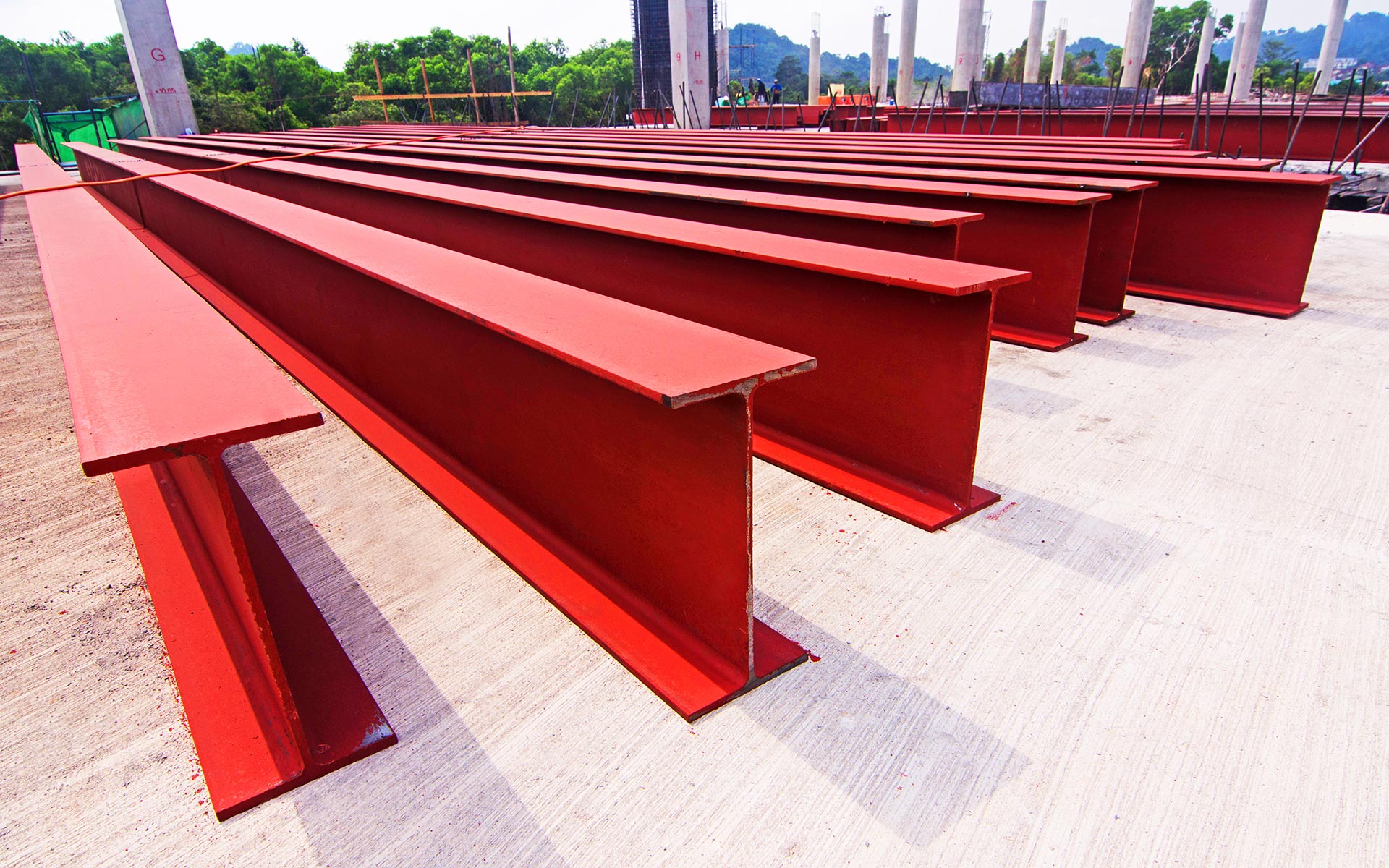
Fastmarkets’ monthly price assessment for steel beams, domestic, delivered Northern Europe was €780-790 ($824- 834) per tonne on Wednesday, up by €20-30 per tonne from €750-770 per tonne a month earlier.
Similarly, Fastmarkets’ monthly price assessment for steel beams, domestic, delivered Southern Europe was €780-790 per tonne on Wednesday, up by €20-30 per tonne month on month from €750-770 per tonne.
Sources told Fastmarkets that they had heard transactions booked at higher levels amid reduced offers, with some producers said to be fully booked for December and “out of the market”.
Fastmarkets also heard that producers often target higher prices in November to “pull in the last available tonnage for this year and start January with a high price”.
Market participants said that there was “little difference” in pricing between domestically delivered material in northern Europe versus southern Europe.
despite the market moving up in the month, sentiment was depressed in Europe’s beams market with a gloomy and uncertain outlook for 2025.
Scrap feedstock costs in Turkey’s bellwether market fell in the month due to poor long steel sales in the country’s domestic and export markets, as well as softening steel prices.
Fastmarkets’ calculation of its daily index for steel scrap HMS 1&2 (80:20 mix) North Europe origin, cfr Turkey was $347.20 per tonne on Wednesday, down $19.83 per tonne month on month from $367.03 per tonne on October 21.
Published by: Holly Chant


European steel hollow sections prices widen downward amid poor demand outlook
Sources said market sentiment was depressed and demand poor, with “no light at the end of the tunnel for 2025”.
Fastmarkets’ monthly price assessment for steel sections (medium) domestic, delivered Northern Europe was €740-790 ($781- 834) per tonne on Wednesday, widening downward by €10 per tonne from €750-790 per tonne a month earlier.
Similarly, Fastmarkets’ monthly price assessment for steel sections (medium) domestic, delivered Southern Europe was €740-790 per tonne on Wednesday, widening downward by €10 per tonne from €750-790 per tonne a month earlier.
“The market has been too quiet recently. Customers buy only what they need and nothing more,” a distributor source based in Germany told Fastmarkets.
Meanwhile, hot-rolled coil feedstock costs moved up in the month amid limited trading, with mills in northern Europe having already sold out their December-delivery material and Italian mills targeting higher market levels.
Fastmarkets’ daily calculation of its steel hot-rolled coil index domestic, exw Northern Europe was €561.67 per tonne on Wednesday, rising by €8.54 per tonne from €553.13 per tonne a month earlier.
Published by: Holly Chant

Acciaierie Venete buys distributor Euro Sider Scalo
Italian long steel producer Acciaierie Venete is buying local distributor Euro Sider Scalo, Kallanish learns from market sources.
Initially, the steelmaker will buy 60% of shares in the distributor through the creation of a new company. In time, Acciaierie Venete will increase its share to 100% through a call/put option, Italian competition body Autorità Garante Della Concorrenza E Del Mercato (AGCM) explains in a note.
Euro Sider Scalo is a distributor of high-quality special steel bars with different diameters and qualities. It supplies the mechanical, earth-moving machinery, industrial vehicles, automotive, oil & gas and hot-forging industries.
Natalia Capra France

ArcelorMittal may close two French service centres
ArcelorMittal’s French service centre division is undergoing a restructuring process, which may result in the closure of two service centres in the country, Kallanish notes.
The Reims and Denain service centres, in northern France, are currently facing economic difficulties attributed to a downturn in the domestic steel sector.
ArcelorMittal Centres de Services management met with its service centre units on Tuesday to announce a project to reorganise the company and adapt its production capacities. This includes the shutdown of Reims and Denain.
“In a difficult economic context, ArcelorMittal Centres de Services is facing a sharp drop in activity among its industry and automotive customers which has accelerated in recent months,” an ArcelorMittal spokesperson tells Kallanish.
“During this meeting, the management explained the constraints which led it to present this project, and invited the social partners to a future meeting at the end of November as part of the information/consultation process,” the spokesperson adds. “Negotiations with trade unions will take place on social measures in order to limit the impact on employment.”
“The threat of a decline in production capacity presents a significant concern for European steelmakers, placing the French steel industry at risk,” the CGT unions say. “The impact on employment levels will be substantial. For several months, the CGT ArcelorMittal Service Centres [unions] has been notifying management regarding the prevailing economic and industrial conditions.”
The automotive sector accounts for 60% of total orders, and CGT proposed alternatives to address the demands of the electric vehicle market. “The management displayed a cautious approach, opting not to take immediate action and refraining from investing,” the unions add.
ArcelorMittal’s service centres segment includes eight facilities in France. Denain and Reims offer various services including de-coiling and slitting for the automotive and industrial sectors.
This comes after the news that ArcelorMittal’s long and flat products distribution branch in Bologna, Italy, is also set to permanently close on 31 December. Customers have been notified of the decision and reassured about the status of pending deliveries. The steelmaker’s other distribution hub in Flero, Brescia, continues to operate.
Rumours have been circulating for weeks that ArcelorMittal is mulling the closure of several service centres in Europe.
Natalia Capra France