


EUROFER: CBAM simplification and effectiveness must go hand in hand
Improvements are urgently needed to enable steel decarbonisation investments in Europe.
Following the conference “A Carbon Border Adjustment Mechanism for Climate – Addressing carbon leakage to strengthen global climate action”, organised in Paris by the European Commission and the French Ministries of Finance, Economics and Climate Transition, EUROFER emphasises that simplification must go hand in hand with ensuring the instrument’s effectiveness. This means addressing key issues such as resource shuffling, exports, and the inclusions of products further down the value chain.
Alarmingly, during the conference, the Commission announced that legislative proposals on crucial aspects of the Carbon Border Adjustment Mechanism (CBAM), including exports provisions and coverage of downstream sectors, will only be presented at the beginning of next year. Furthermore, a top priority for securing steel decarbonisation investments in Europe – which is tackling resource shuffling – is currently not event listed in the Commission’s planning of upcoming legislative proposals.
This situation contradicts the clear political guidance and sense of urgency expressed by both French Ministries during the conference, and supported by other member states.
EUROFER is concerned about the differing timelines allocated to the simplification and effectiveness of CBAM. While the Commission is fast-tracking simplification through the Omnibus Package, the European steel industry remains deeply worried about the lack of urgency in ensuring CBAM’s effectiveness.
This year’s review of CBAM is critical to achieving both objectives. To ensure its effectiveness, a watertight design is needed. This urgently requires major improvements, including:
- Introducing a structural legislative solution to the very high risk of resource shuffling;
- Introducing a structural solution to preserve European exports, thus avoiding carbon leakage on global markets;
- Extending the CBAM’s scope to steel-intensive downstream products.
Additionally, other design elements – such as stringent default values and the free allocation adjustment – must uphold the mechanism’s environmental integrity.
If these adjustments are not implemented this year, the combination of CBAM and the scheduled phase-out of free allocation will fail to provide adequate protection against carbon leakage. This could further incentivise the relocation of production to third countries, negatively impacting both steel and downstream sectors.
While pursuing the effectiveness and environmental integrity of the mechanism, the administrative burden on operators should be minimised through simpler and streamlined procedures. The Commission has already planned certain simplifications as part of the Omnibus revision. In particular, a revision of the current de minimis threshold of €150 could be an appropriate adjustment to avoid unnecessary reporting for small consignments. Furthermore, CBAM reporting obligations should not apply to European products exported outside the EU, processed abroad, and subsequently reimported into the EU as CBAM goods. Effective monitoring should prevent such provisions from favouring circumvention practices.
In line with these recommendations, a more effective yet simpler CBAM is both possible and urgently needed. Launching it without the necessary improvements would further erode the competitiveness of the European steel industry. This is indispensable given that the EU carbon price has reached approximately 80€/t, while over 25 million tonnes of steel – equivalent to around 20% of EU production – are imported annually from third countries without any carbon cost.


US steel-consuming manufacturers expect ‘harm’ from Trump tariffs
Downstream US manufacturers and other steel consumers are mostly decrying President Donald Trump’s imposition of widespread tariffs, Kallanish detects.
The Coalition of American Metal Manufacturers and Users (Cammu) bluntly states that the broader application of Section 232 tariffs, with no obvious exceptions, increases costs at US factories, pinches supply of basic materials and harms US competitiveness.
“Re-imposing 25% tariffs on steel and aluminum imports from our allies and without a workable exclusion process puts US manufacturers directly in harm’s way,” Cammu writes in a statement.
“For the past six years, Section 232 tariffs have driven up steel and aluminum prices, even for manufacturers sourcing domestically,” the coalition explains. “Lead times for these critical materials have also increased. As a result, US manufacturers are paying significantly more for steel and aluminum than their global competitors, undermining their ability to compete.”
Even American conservative allies of the Republican party agree on the net negative of relying on tariffs to achieve broad policy goals.
“We have far more steel- and aluminum-consuming businesses (think construction, machinery and equipment manufacturing, auto manufacturing) than we do steel and aluminum producers, so the advantage created for the producers comes at a much greater cost to downstream users,” comments Erica York, a vice president at the Tax Foundation.
Analysts at the Economic Policy Institute argue that “tariffs cannot and should not be the centerpiece of a national economic strategy.” The inevitable trade war and currency exchange aberrations are particularly harmful to US manufacturers selling into overseas markets. Metals and minerals are among the upstream items exposing domestic manufacturers to a deterioration in efficient supply chains and an escalation of costs.
“Many US exports use imports as intermediate inputs to final goods produced in the United States,” the policy institute explains. “Making these inputs more expensive with tariffs will boost the price of these US exports and make them less competitive in global markets. Second, trading partners are highly likely to retaliate to US tariffs with tariffs of their own, making exports more expensive in international markets, which we’ve seen on ‘Made in America’ goods from Boeing airplanes to Kentucky bourbon.”
US automakers are already complaining that the tariff threats are causing chaos, higher cost projections and an inability to have confidence in business plans (see separate story).
With reciprocal tariffs likely to make US exports less competitive, overseas customers already “are shifting their supply chains away from US producers,” Cammu argues. The lost business often does not come back.
“Small and medium-sized businesses are particularly vulnerable, losing contracts to overseas rivals with unrestricted access to these essential inputs,” Cammu adds. “Downstream suppliers often cannot choose where they receive their steel and aluminum inputs.”
Not all US-based steel consumers agree with the premise. Some have specific situations in which Trump’s tariff policies are expected to be beneficial. One is Lowell Iron & Steel in Massachusetts, a 146-year-old fabricator of steel structures.
“The tariffs, thank God they’re coming,” Lowell president Dennis Scanell proclaims in a pro-tariff document released by the White House this week. “Maybe this evens the playing field for us. … There’s no way we can compete with Canada.”
Singlehandedly, the tariff strategy has the potential to cancel out multiple other policies from the new president that had been viewed as positive.
“This trade war threatens manufacturing jobs that have benefited from other pro-manufacturing policies enacted by the Trump administration,” Cammu argues. “Expansion plans will stall, and companies will face tough decisions regarding technology investments, workforce retention and long-term growth.”
Dom Yanchunas USA

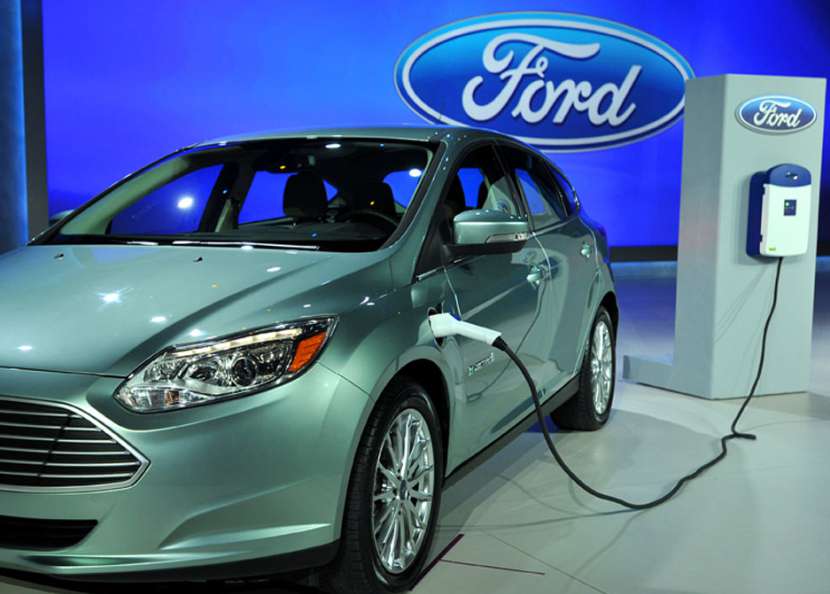
Trump tariff ‘chaos’ inflicts pain on US automakers
US President Donald Trump’s executive order calling for 25% tariffs on steel and aluminium imports has his domestic auto industry scrambling to reassess operations, Kallanish reports.
At an auto conference on Tuesday, Ford Motor chief executive Jim Farley explained that the introduction of the tariffs is causing the automaker cost-prohibitive operational disruptions.
“There may even be a speculative part of the market where prices come up because the tariffs are even rumoured,” Farley said. “So we’ll have to deal with it. That’s what I’m talking about with cost and chaos. It’s a little here, a little there, a couple weeks or a couple of months of vehicles crossing the border, components crossing the border, that’s going to be a tariff. This is what we’re dealing with right now.”
Sherry House, Ford’s chief financial officer, addressed the challenges facing business planning.
Ford executives are working “to protect our flow and to protect our customers. But generally speaking, we’re not making a lot of large decisions at this point. We’re waiting to see the impact of what’s going to happen. Right now, we’re paused on a lot of the Mexico and Canada tariffs,” House said.
At the same conference, General Motors ceo Mary Barra said the automaker is in the midst of preparing for various risks.
“We started doing scenario planning and looking at what are the different things we can change, we can move. We are prepared when we know exactly what’s going to happen. We know the steps we can take and we think we can mitigate 30% to 50% of tariffs without deploying capital. If tariffs are longer, there’s additional things that we’ve studied that we know we can do from a capital-efficient way,” Barra said.
A former US auto executive tells Kallanish that the race against China for global electric vehicle (EV) market share is now endangered by the challenges the 25% tariff poses to the industry as well as changes the Trump administration may pursue with the Inflation Reduction Act (IRA).
“This couldn’t come at a worse time. China is a threat to all manufacturers. Their global dominance in the EV market is enormous, and it will take years for ‘The Big Three’ to catch up. Taking Trump’s intentions to eliminate the IRA EV incentives into account, China will gain further advantages and jeopardise the transition plans for Ford and GM. The confusion caused by any tariff war will magnify the challenge and disrupt all short-term and long-term plans,” states the former auto executive.
According to that same source, all automobile prices will likely rise in the US.
“Tariffs of 25% on steel and aluminium would be costly since a typical vehicle contains about 1,000 lbs of steel and aluminium. It’s difficult to estimate the effects on consumer prices. By some estimates, it could be as much as $1,500. At some point, manufacturers would have to increase prices. When and if tariffs are eased, prices will probably not come down, or if they do, it will be in the form of short-term incentives and gradual price adjustments. Remember, prices tend to rise much faster than they decline,” says the executive.
The Michigan-based automotive advocacy group MichAuto issued a statement regarding the tariffs lodged against Canada and Mexico, suggesting that maybe it would be better to adjust the framework of the existing Uniited States-Mexico-Canada Agreement (USMCA).
“While the administration works to stem the flow of illicit drugs and illegal immigration, this should exclude the use of punitive tariffs, which are counterproductive to commerce. MichAuto urges that the proven tools at hand such as the reopening of the USMCA and the direct input and involvement of our vital industry be utilised in a manner that does not stymie commerce and negatively impact companies and the consumer, but rather works toward solutions that preserve our strong trade partnerships and protect American jobs,” states Glenn Stevens, executive director of MichAuto.
Kristen DiLandro USA

ArcelorMittal considers transferring certain European activities to India
ArcelorMittal is evaluating the potential relocation of specific European support functions to India as part of a strategic initiative to consolidate certain operations in that region.
The group has provided assurances that there will be no relocation of European production activities to India.
“As discussed on 11 February 2025, at a meeting with the European Works Council, ArcelorMittal Europe is exploring opportunities to optimise its business processes, to provide centralised and cost-effective services for the Europe segment…The steel industry in Europe is facing several major challenges which are threatening the future of steelmaking on the continent. ArcelorMittal Europe is therefore working hard to respond to these challenges, including a focus on further reducing operating costs not directly related to steel production,” it says in a note obtained by Kallanish.
“A number of initiatives have already been implemented across our businesses in response to the challenges facing the steel industry. The initiative discussed today is to study the possibility of further centralising certain business support activities, by extending our business services hub to carry out some of these activities in India. The initiative is one element of the company’s response to the crisis and would bring the company in line with the approach being adopted by companies in a broad range of industries,” it added.
Elsewhere, the company says it plans to monitor various developments in 2025 before reaching a conclusive decision on the feasibility of its decarbonisation investments in Europe.
These developments include the planned review of the Carbon Border Adjustment Mechanism (CBAM), a forthcoming assessment of EU steel safeguards, and the release of the Steel and Metals Action Plan.
Upon completion, these initiatives will establish the parameters ArcelorMittal will use to formulate the business case for decarbonisation investments in Europe.
The steelmaker said last year it is suspending decarbonisation investments at its Dunkirk facility in northern France due to the downturn in the global steel industry.
The company has not disclosed any details regarding the progress of its sustainability investments at Gent or Dunkirk. However, it has shared an update on its decarbonisation investment in Spain, where engineering works are ongoing for the construction of a 1.1 million tonne EAF at its long products facility in Gijón (see Kallanish passim).
Natalia Capra France

Weak demand depresses tube output in EU
According to the Economic and Steel Market Outlook 2025-2026/Q1 2025 Report from the Economic Committee of the European Steel Association (EUROFER), in the third quarter of this year the output of the EU steel tube industry declined by 3.3 percent year on year, after a 3.4 percent decrease in the previous quarter.
According to the EUROFER report, in the longer term, demand for large welded tubes from the oil and gas sector is not expected to improve substantially as the EU has accelerated its transition towards LNG shipping for its energy needs, thereby reducing its reliance on gas transported via pipelines. Oil demand is expected to keep declining throughout the rest of 2024 in the EU, aligning with low economic growth expectations.
EUROFER stated that production in the EU steel tube sector is expected to decrease by three percent in 2024. As for 2025, tube output is forecast to grow by 0.3 percent year on year.


European HRC prices increase slightly on continuing bullish sentiment
The positive mood among producers was mainly fueled by limited import availability related to the current steel safeguard measures review of the European Commission, which sparked uncertainty in the market for imported HRC.
Any possible changes were expected to take effect in April, which limited the interest of the European buyers in imported HRC, Fastmarkets understands.
In addition, the European Commission started an anti-dumping investigation against HRC imports from Egypt, India, Japan and Vietnam in August 2024. The probe is expected to continue for about a year, but provisional measures could be imposed.
The current bullish sentiment in the HRC market was also supported by some improvement in buying, especially in the region of Northern Europe, industry sources told Fastmarkets.
Last week, ArcelorMittal announced higher offers for April/May delivery HRC in the European market, reaching €660 ($682) per tonne ex-works or delivered, depending on the destination.
But these levels seemed to be the upper end of the offer price range, with many producers in Northern Europe still offering the material at €610-620 per tonne ex-works, Fastmarkets understands.
Buyers’ estimations for the tradable market level were at €595-600 per tonne ex-works.
However, no major deals with HRC were heard in the Northern European market on Wednesday.
Fastmarkets calculated its daily steel hot-rolled coil index domestic, exw Northern Europe at €602.50 per tonne on Wednesday, up by €1.10 per tonne from €601.40 per tonne on Tuesday.
The Northern European index was up by €3.54 per tonne week on week and by €37.08 per tonne month on month.
Meanwhile, in Southern Europe, Fastmarkets’ corresponding daily steel hot-rolled coil index, domestic, exw Italy was calculated at €593.33 per tonne on Wednesday, down by just €0.42 per tonne from €593.75 per tonne on Tuesday.
The index was up by €4.58 per tonne week on week and by €30.83 per tonne month on month.
Local suppliers were heard offering April-delivery HRC at €600-630 per tonne delivered, which would net back to €590-620 per tonne ex-works.
One European supplier was offering HRC with second-quarter lead times to the nation at €660 per tonne delivered, which would be equivalent to €650 per tonne ex-works, Fastmarkets understands. According to industry sources, discounts of €10-20 per tonne were possible.
Buyers estimated the workable market level at €585-600 per tonne ex-works, but no major deals were heard for domestic HRC in Italy.
“The stocks of the Italian customers are medium-high, no one is in a rush to buy material,” a trader source based in Italy told Fastmarkets. The source added that the positive trend observed with the recently rising HRC prices was only driven by limited imports.
Indonesia was heard offering HRC to the Italian market at €540-560 per tonne CFR, Fastmarkets understands. Despite the trade risks, some transactions were reported at €540 per tonne CFR, but the details were unclear by the publication time.
Material from South Korea and Japan was on offer to Italy at €580 per tonne CFR, industry sources told Fastmarkets. However, local buyers deemed these levels unworkable.
Turkey was heard offering HRC to Italy at €590-600 per tonne CFR, including the anti-dumping duty, but these levels were also considered too close to the domestic prices to be tradable.


Heavy plate prices increase in Italy, but still below target offers
Italy
During the week starting February 3, Italian re-rollers increased their offer prices for heavy plate, citing mounting costs, Fastmarkets reported.
Notably, new offer prices for March-delivery material stood around €660-670 ($682-692) per tonne ex-works, against the previous offers of €650 per tonne ex-works.
Tradeable prices were reported at higher levels during the assessment week, at €630-650 per tonne ex-works, compared with €615-630 per tonne ex-works in late January.
Most sources estimated achievable prices at €640-650 per tonne ex-works during the assessment week.
As a result, Fastmarkets’ weekly price assessment for steel domestic plate 8-40mm, exw Southern Europe remained at €640-650 per tonne on Wednesday, narrowing upward by €10 per tonne from €630-650 per tonne seven days earlier.
Sources said that mills still have short order books, but buying has started to pick up recently from very low levels observed in January.
“The plate market looks better than one month ago. Activity is still not booming, but there are more inquiries… besides, imports are no longer a safe option [due to safeguards],” a buyer source said.
The major driver behind the price increases was a spike in input costs — notably high imported slab and electricity prices in Italy, sources told Fastmarkets.
Fastmarkets’ weekly price assessment for steel slab, import, cif Italy widened upward by $5 per tonne to $480-520 per tonne on February 7, from $480-515 per tonne on January 31.
Sources argued that for plate-quality slab “it was impossible to get slab below $500 per tonne CIF,” Fastmarkets heard.
“Selling [heavy plate] at €620-630 [per tonne ex-works] is loss making for everyone,” an Italian re-roller said.
Meanwhile, new import offers were scarce and largely not considered workable by EU buyers, considering long lead times and uncertainty around new safeguards.
From Asia, plate offers for April-May arrival were heard at €580-600 per tonne CFR.
“Demand for imported plate in Italy vanished. Local suppliers can offer competitive prices and short delivery times compared with the long import deliveries of three to four months,” a buyer source said.
Northern Europe
In Northern Europe, trading in the spot market remained largely quiet, sources said. Buyers were mainly booking some small volumes of commodity-grade plate to cover their urgent needs.
The situation looked more optimistic in “the project business with higher grades,” where mills had received orders for different renewable energy projects, a buyer source based in Germany told Fastmarkets.
One German mill, traditionally focused on project business, was offering heavy plate with lead times of around six weeks at €750-790 per tonne ex-works.
Another German supplier was offering plate at €690-730 per tonne from one location and €680-700 from another.
Estimates of tradeable values form buyers were reported at €670-700 per tonne ex-works, with most indications coming in at €680-700 per tonne ex-works.
As a result, Fastmarkets’ weekly price assessment for steel domestic plate 8-40mm, exw Northern Europe was €680-700 per tonne on Wednesday, widening upward by €10 per tonne from €680-690 per tonne on February 5.
A re-roller in the Czech Republic was offering S275-grade plate at €670 per tonne ex-works, but mainly to locations in Central Europe. Achievable prices for such material were reported at €650-660 per tonne ex-works. The mill was well-booked and offering delivery in the second half of April and early May already.
A newly restarted Polish integrated mill was aiming for €650-660 per tonne ex-works for February rolling.
A Bulgarian producer was aiming for €670-680 per tonne ex-works.

Italy and France to back overhaul of CBAM to boost EU competitiveness
Italy and France underscored the need for the European Commission to reassess the EU’s Carbon Border Adjustment Mechanism (CBAM) to bolster the competitiveness of European industries amid the ongoing challenges of decarbonization.
Italy’s Minister of Enterprises and Made in Italy, Adolfo Urso, met with France’s Minister of Industry and Energy, Marc Ferracci, on Feb. 11, where they both called for the inclusion of CBAM as a key agenda item at the forthcoming EU Competitiveness Council meeting on March 6.
“We cannot allow strategic European sectors, such as steel and chemicals, which are essential for our industrial autonomy and for the economic stability of the continent, to be penalized by a system that does not take into account the real conditions of global competitiveness,” said Urso in a statement.
This comes as there has been a growing call among policymakers, politicians, and industry leaders to simplify the EU’s carbon border tax as the Commission tries to balance industrial growth with environmental goals.
“The geopolitical context requires Europe not to depend on external actors for essential materials and technologies. It is therefore crucial to correct the CBAM so that it is a truly effective tool, capable of protecting European industrial production and at the same time encouraging a sustainable transition in practice, not just in principle,” added Urso.
Streamlining CBAM
On Feb. 6, EU Commissioner for Climate, Net-Zero, and Clean Growth, Wopke Hoekstra, admitted that his team is considering excluding around 80% of EU companies from the Carbon Border Adjustment Mechanism to reduce their administrative and bureaucratic workload.
Hoekstra stated that almost 97% of all emissions covered by CBAM are produced by only 20% of companies, highlighting the need for some flexibility in implementing this carbon border levy.
CBAM is a carbon tax on emission-intensive commodities exported to the EU, currently covering the cement, iron and steel, aluminum, fertilizer, electricity, and hydrogen sectors. The levy is designed to reflect the difference between EU carbon prices and carbon costs in exporting countries.
With the definitive phase of the EU’s CBAM set to kick in on Jan. 1, 2026, importers of carbon-intensive goods will face levies based on the emissions associated with their imports.
Under the transitional phase of CBAM, which started on Oct. 31, 2023, traders must only report on emissions embedded in their imports without paying any financial adjustment. However, this mechanism will be phased in from 2026 to 2034, in line with the phasing out of free allowances in the EU ETS.
The decline in industrial and manufacturing output contributed to a reduction in the European carbon price last year. However, prices have rebounded significantly in early 2025. The suspension of Russian gas transit through Ukraine has led to higher coal power generation, pushing up demand for carbon permits.
EU Allowances averaged Eur66/mtCO2e ($68.13/mtCO2e) in 2024, down more than 20% year over year, S&P Global Commodity Insights data showed.
Platts, part of Commodity Insights, assessed EUAs for December 2025 delivery at Eur82.41/mtCO2e on Feb. 11.
