


Stainless steel sector ‘cautious’ amid tariffs, capacity overhang: BIR
Stainless steel markets worldwide started 2025 “cautiously” with a “huge capacity overhang” in Asia, the Brussels-based Bureau of International Recycling said in a quarterly bulletin Feb. 14.
The US plans to levy a 25% tariff on steel and aluminum starting March 12, opening “a fresh chapter in the global trend towards protectionism,” said Joost van Kleef, commercial director of the Netherlands’ Oryx Stainless, and chairman of BIR’s stainless steel & special alloys committee.
“This will hit stainless producers with a globalized value chain and which need to import semi-finished products for further treatment in their US-based facilities,” van Kleef said.
In Europe, leading stainless producers’ profitability is constrained, van Kleef continued, citing weak EU demand and Asia’s capacity overhang as impeding any sales price increase on finished goods.
“Still, order intakes have increased slightly during the early weeks of the year. The coming elections in Germany should give some support in overcoming the uncertainty created by an absence of direction in government policy,” van Kleef said.
Continuing imports of nickel pig iron are undermining the industry’s efforts towards a circular economy, the BIR chairman said. Nonetheless, the Philippines’ recent announcement of restrictions or a ban on nickel ore exports might increase the NPI price, encouraging stainless scrap demand, he added.
Underlying China concerns
Vegas Yang of Taiwan’s HSKU Raw Material Ltd and Mahiar R. Patel of Singapore’s Cronimet, both processors and traders of stainless scrap, wrote in an article in the bulletin that neither of China’s two recent rounds of stimulus packages has revived its economy.
“China is continuing to overproduce and to flood the Asian market with stainless steel end products,” Yang and Patel said.
“For 2025, the agenda to be followed by the new Trump administration could mean we see the USA pick up first before any possibility of a return to healthy demand for Asia,” they said. “China’s stainless steel manufacturers are looking around for markets other than the USA.”
Despite China’s continuing weak markets “amid a housing collapse, there have been no major cuts in stainless output as most mills try to produce and sell more in the hope that volume will make up for small profit margins,” according to the traders. “This is intensifying problems not only for China but also for other countries as material floods the markets and impacts overseas producers.”
Stainless steel coil pricing in China remains rangebound, with 304 grade futures in Shanghai at around $13,000/mt, they said.
They noted that in Q4 2024, Taiwanese mills’ demand for stainless steel scrap began to weaken due to competition from NPI. In January, these imports, albeit competitively priced, were lower than in the previous quarter.
“South Korea’s stainless steel scrap demand was stable in Q4 but will be very weak in Q1 owing to furnace maintenance,” Yang and Patel said. “Japan’s domestic demand for stainless scrap was steady late last year and exports have declined rapidly as its mills consume more domestic scrap; the same trend seems to be continuing in the early weeks of 2025.”
Yang and Patel wrote that “huge” volumes of nickel pig iron, ferronickel, and semis such as slabs, blooms, and billets are being imported into India on a monthly basis, reducing the requirement for stainless scrap imports, a trend that has been growing year on year.
“Zurik imports into India have remained steady; once sorted, the stainless scrap is offered to mills at a discount, much of it on credit terms so that it is more attractive than stainless steel scrap imports,” they added.
Since mid-January, several currencies including the Indian rupee have taken a hit, making it more expensive for India’s importers to pay for scrap booked several months ago and now arriving at Indian ports.
LME nickel has dropped significantly in the past month, thus negatively impacting the buying of stainless steel scrap. Container freight rates have also come down for most locations and this should help scrap movements, according to the traders.
Despite global trade uncertainties, markets are nonetheless expected to pick up in late February and March this year amid reports that nickel has bottomed out and can be expected to recover soon, Yang and Patel concluded.
“Overall, we feel that markets will move upwards and demand should return by the end of Q1,” the traders wrote.


Limited imports, restocking support European HRC prices recovery
However, the lack of new imports due to trade measures was still named the major driver for a price rebound, Fastmarkets heard.
European buyers were cautious about booking HRC from imports due to pending safeguard measures and the potential trade risks these might create, sources said.
German mills were aiming for €630-660 ($660-692) per tonne ex-works for April-delivery HRC, “with a minimal room for discounts,” sources said.
A major mill in the Benelux area was offering HRC at €630-640 per tonne ex-works.
Buyers in Northern Europe estimated tradable values at €600-620 per tonne ex-works on Tuesday.
One buyer in Germany said that it was “nearly impossible to get HRC below €620 per tonne ex-works from German mills.”
As a result, Fastmarkets calculated its daily steel hot-rolled coil index domestic, exw Northern Europe at €606 per tonne on Tuesday, up by €1 per tonne from €605 per tonne on Monday.
The Northern European index was up by €4.60 per tonne week on week and by €32.25 per tonne month on month.
Meanwhile, in Southern Europe, Fastmarkets’ daily steel hot-rolled coil index domestic, exw Italy was calculated at €597.50 per tonne on Tuesday, up by €2.50 per tonne from €595.00 per tonne on Monday.
The index was up by €3.75 per tonne week on week and up by €27.50 per tonne month on month.
In Italy, local producers were also aiming for higher prices, sources said.
Notably, one mill in the nation was aiming for €640 per tonne delivered (€630 per tonne ex-works) for April-delivery coil, while another targeted €620 per tonne delivered (€610 per tonne ex-works). This was an increase from €610-620 per tonne delivered and €590-600 per tonne delivered for March lead times respectively.
A European supplier was offering HRC with second quarter lead times at €660 per tonne delivered to Italy.
However, none of the mentioned offers was considered workable by Italian buyers.
“The level of stock [at buyers’ disposal] allows them [buyers] to wait. New offers are too high, the downstream market is still rather weak, so purchasing [HRC] at prices above €600 [per tonne ex-works] is not viable for us,” a steel service center in Italy said.
Buyers’ estimations of tradable values were still reported at €590-600 per tonne ex-works, but since mills were standing firm on new offers, no transactions were reported on Tuesday.
“There are very few transactions these days if any,” a buyer source said.
Meanwhile, the market for overseas coil was also quiet. Safeguards review as well as anti-dumping probe into certain origins were limiting buying appetite for imports, sources said.
Turkey was heard offering April-shipment HRC to Italy at €590-600 per tonne CFR, including the anti-dumping duty, to European ports.
Indian coil was offered at €560 per tonne CFR to Southern Europe.


Trump adds downstream goods to steel tariff order
The Trump administration is singling out a list of 167 “derivative” steel items destined for addition to Section 232 tariffs in the US, Kallanish learns from a White House proclamation on Tuesday.
A few examples of the downstream articles are welded angles, shapes and sections of iron or steel; bridges and bridge sections of iron or steel; grill, netting and fencing of iron or steel wire, plated or coated with zinc; parts for agricultural, horticultural or forestry machinery; modular building units of steel, and prefabricated buildings.
Increasing imports of certain derivative steel articles have depressed demand for goods produced by domestic steel producers, Trump argues. He says it is necessary to adjust the tariff to apply to the additional downstream goods. The presidential proclamation says the derivative steel articles may be subject to an additional 25% ad valorem rate of duty. The Secretary of Commerce now has 90 days to establish a process for including additional derivative steel articles within the scope of the duties.
“Section 232 … authorises the president to take action to adjust the imports of an article and its derivatives if the president concurs with the Secretary of Commerce’s finding that the article is being imported into the United States in such quantities or under such circumstances as to threaten to impair the national security,” the document states.
Tuesday’s proclamation includes an annex that lists the 167 goods by their numbers in the Harmonized Tariff Schedule of the United States.
“Except as otherwise provided in this proclamation, all imports of derivative steel articles specified in Annex I to this proclamation or in any subsequent annex to this proclamation, shall be subject to an additional 25% ad valorem rate of duty, with respect to goods entered for consumption, or withdrawn from warehouse for consumption,” adds the presidential order.
The document states that the initial 25% tariff imposed in March 2018 has been an effective means of reducing imports, encouraging investment and expansion of production by domestic steel producers, and minimised the threat to US national security. Following the initial imposition of 25% tariffs, the US steel capacity utilisation rate increased to above 80%. Recently, the utilisation rate has been 74-75% (see separate story).
Some producers in other countries allegedly have evaded the measures, processing covered steel articles into additional downstream steel derivative products that were not included in the additional tariffs proclaimed in January 2020.
John Isaacson USA

Italian longs prices flatten
The Italian long steel market is still in a stable state, with no change in prices since January, Kallanish notes.
Over the last two weeks, some niche sectors have placed orders, but sales of longs and flats are generally still limited to a few truckloads. Buyers are exhibiting caution and are resisting any upward price adjustments.
One merchant bar producer has halted sales and is anticipated to raise prices by approximately €20/tonne ($20.9). The decision is being driven by the unsustainable nature of current pricing, particularly in light of higher energy costs and scrap values. The current price range for domestic merchant bar is around €690-700/t delivered, which includes size extras.
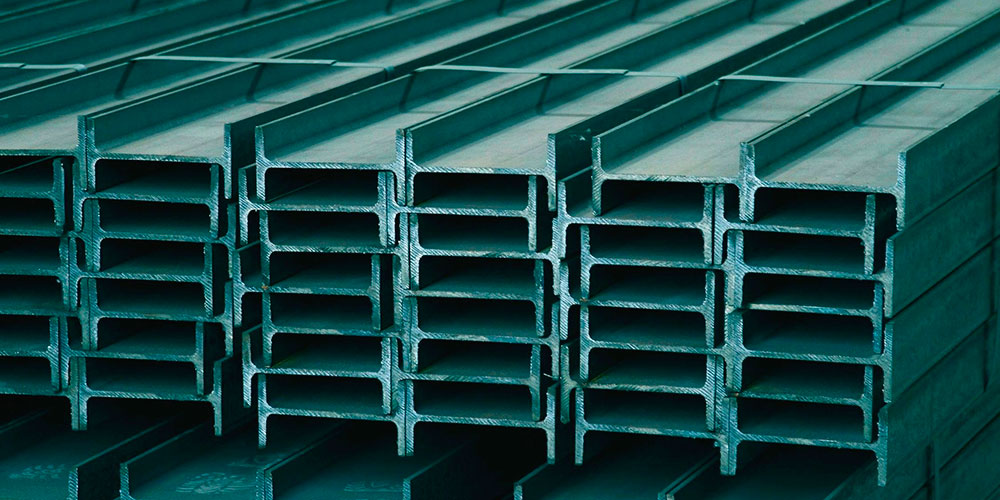
Demand for sections remains quiet. In comparison to last month, there is an increase in contract prices of €10/t. Sources indicate the first category of beams is priced at around €800/t delivered for smaller orders. Further price increases are expected in Europe.
Natalia Capra France