


European green steel market remains muted
Flat steel
Buying interest for decarbonized steel remained muted across Europe.
“The interest [for green steel] from the distribution chain is not really there. End users should push customers to put green steel on their agenda,” a steelmaker source in Europe told Fastmarkets.
Fastmarkets’ methodology defines European green steel as “steel produced with Scope 1, 2 & 3 emissions at a maximum of 0.8 tonne of CO2 per tonne of steel.”
During the assessment week, leading European suppliers maintained the premiums for such steel at €200-300 ($227-340) per tonne.
Buyer sources estimated achievable premiums for green steel with such levels of emissions to be at €120-180 per tonne, claiming that, for bigger tonnages, mills were keen to provide discounts to spur buying interest.
As a result, Fastmarkets’ weekly assessment of the green steel, domestic, flat-rolled, differential to HRC index, exw Northern Europe was flat at €150-200 per tonne on May 8.
Despite limited activity in the spot market, industry sources were still largely optimistic regarding green steel uptake in the years ahead, despite the challenges.
“Today, I prefer buying green steel for tomorrow,” a buyer source told Fastmarkets.
Notably, industry sources expected a greater uptake of green steel across supply chains once environmental regulations, such as the Carbon Border Adjustment Mechanism (CBAM), were implemented. This was why more buyers were seeking to secure long-term supplies of steel with reduced carbon emissions in long-term contracts.
“Currently, only four flat steel suppliers in Europe can produce green steel with emissions below 1 tonne of CO2 per tonne of steel,” a mill source said. “And new projects are expected to start production only in 2026-28. So, potentially, there will be a bottleneck in green steel supply.”
Long steel
Buying interest for the green long steel was even slower compared with the flat steel market.
“Buyers are not willing to pay a single euro more in this market, no matter green or gray,” a mill source said.
Premium offers were reported within the range of €20-50 per tonne, unchanged week on week, but only low-end figures are accepted, sources said.
In the German market, transactions for green rebar were reported at €20-40 per tonne ex-works, but sources said that volumes were small.
Thus, the price assessment for green steel, differential to steel reinforcing bar (rebar), domestic, delivered Northern Europe was €20-40 per tonne on Wednesday May 7, widening upward from €20-30 per tonne seven days earlier.


European steel plate market largely stable despite Northern Europe mills targeting higher prices
Italy
The domestic commodity-grade steel heavy plate market in Italy remained flat during the assessment week, with no movement in prices observed for three consecutive weeks.
Fastmarkets’ weekly price assessment for steel domestic plate, 8-40mm, exw Southern Europe on Wednesday was €630-650 ($712.08-734.68) per tonne, unchanged from €630-650 per tonne seven days ago.
Market participants were bearish amid weak demand.
“In Southern Europe quart and rerollers are still facing a very difficult time as there is simply not enough demand, and stockholders and end-users are only purchasing missing dimensions or grades,” one source told Fastmarkets.
The source added that new import orders into the region have been minimal due to sufficient stocks at low prices and short delivery times for in-stock material.
Northern Europe
Northern Europe domestic plate prices widened downward during the pricing week, with sources noting an uptick in inquiries but limited orders.
Fastmarkets’ weekly price assessment for steel domestic plate, 8-40mm, exw Northern Europe was €670-700 per tonne on Wednesday, widening downward €10 from €680-700 per tonne a week earlier.
Fastmarkets heard that plate mills have been trying to lift prices, but such moves were mostly unsuccessful, with customers only purchasing what they “urgently need”.
Sources said that rerollers had been targeting higher market levels, trying to follow the upward trend in Europe’s flat hot-rolled coil market in recent months, but plate prices remained largely flat.
US tariffs continued to be of concern, with the first source saying such measures could impact import trade flows from third countries, as well as potentially limiting steel export levels.

US, UK reach trade deal, removing Section 232 tariffs on British metal
Automotive tariffs for UK vehicle imports have been cut to 10% for the first 100,000 vehicles imported into the US — the current standard reciprocal tariff rate — with any subsequent imports still subject to a 25% duty.
It is understood that the 10% reciprocal tariff levied on material imports outside of Section 232 will still apply, meaning that scrap imports into the US from the UK still incur that duty.
The material implications of the agreement from a metals perspective were described as minimal by market participants across the aluminium, steel and scrap markets, given that the UK is not a significant exporter of those units to the US.
A failure to announce a trade deal with China or to secure trade partners among other Asian nations has made it critical for the US to make headway in another direction, sources told Fastmarkets.
Nonetheless, the deal with the UK has been instrumental in establishing the parameters of what elements of the original tariff package are open for renegotiation, namely automotive tariffs and Section 232, those same sources reiterated.
Tariffs on exports of UK steel and aluminium to the US were imposed on March 12. The US has since recognized the economic security measures taken by the UK to combat global steel excess capacity and will negotiate an alternative arrangement for steel and aluminium, the White House said, forging a deal that “will create a new trading union for the metals.”
The UK exported around 180,000 tonnes of semi-finished and finished steel to the US, worth £370 million ($492 million), in 2024, according to UK Steel. This accounted for 7% of the UK’s total steel exports by volume and 9% by value.
The outcome was “hugely significant for the British steel sector,” UK Steel said in a statement. The British trade association said the US is the UK’s second most important export market for steel, after the EU.
US exports to the UK consist mostly of specialist steel for defense, oil and gas, construction equipment and packaging applications.
The trade association said the removal of tariffs offers some respite amid challenging market conditions, citing global overcapacity and oversupply, high energy costs and weak demand.
The US’s largest sources of aluminium are Canada, the United Arab Emirates and China. In 2024, the UK was the 26th supplier of unwrought aluminium, not alloyed, and aluminium alloys, unwrought — representing 0.004% of US imports — according to data from the US International Trade Commission’s DataWeb.
“The Aluminum Association is encouraged by today’s announcement. While the aluminium trade between the US and the UK is negligible (~0.1% of all aluminium imports into the US come from the UK), the White House promised an ‘alternative arrangement to the Section 232 tariffs on steel and aluminium’ creating ‘a new trading union for steel and aluminium,’” Aluminum Association chair and chief executive officer Charles Johnson said in a statement to Fastmarkets.
“This may provide a framework for tailored trading arrangements that allow the US to combat unfairly traded Chinese aluminium in global markets while providing the flexibility needed to secure abundant, affordable metal to support more than $10 billion in industry investment made in recent years. We look forward to working closely with the White House on these plans as negotiations continue and appreciate President Trump’s continued support for a strong US aluminium industry,” Johnson continued.
A European trader told Fastmarkets they do not see much impact on the European aluminium market as the UK is not a large exporter of aluminium.
“It could send a positive message to the world to some extent that certain countries could get a good outcome from their negotiations with the US,” a second trader source said.
The second trader said Trump is “very unpredictable and he could change his mind any minute.”
“The US-UK deal demonstrates that the Trump administration is willing to work out ‘alternative arrangements’ with countries that are willing to address transshipment of China-manufactured steel,” Dan Ujczo, senior counsel, international trade and transportation at Thompson Hine, told Fastmarkets.
“This will be a reset of any quotas and the imposition of monitoring and reporting systems. It bodes well that the steel and aluminium tariffs are tactical to achieve specific results against China as opposed to permanent tariffs for most countries. Nevertheless, managed trade is the order of the day in the steel and aluminium sectors,” Ujczo continued.
Vogel Group managing principal Samir Kapadia told Fastmarkets the US-UK deal was a surprise.
“Steel and aluminium have been a no-fly zone for the White House as it related to reducing and/or eliminating tariffs. I don’t think the industry will be happy about this at all, despite the low volumes,” Kapadia said.
“It sets an odd precedent and counters much of the work done at the outset of the administration on eliminating tariff rate quotas and other exemptions. But it might show that the White House believes that the UK isn’t the problem in the global steel market. I highly doubt Canada, Mexico, Brazil and China will get similar relief,” Kapadia continued.
Unite, one of the largest trade unions in the UK and Ireland, welcomed the agreement in a statement. The union also advocated for more political action in the UK, such as reducing industrial energy costs and designating steel as critical national infrastructure area to promote British industry. Alcoa chief executive officer William Oplinger, who asked Trump for a tariff exemption in March, said high energy costs have kept the US aluminium industry from being globally competitive.
https://dashboard.fastmarkets.com/a/5229554
Rather than being buoyed by the new trade agreement, the US recycling industry remains preoccupied by the potential for the European Commission to retaliate against the Trump administration’s reciprocal tariffs.
“ReMA has significant concerns with the proposed retaliation that the European Commission has released that would not only target US exports of certain recycled materials but also seeks to impose export restrictions on EU recycled steel and aluminium products,” the Recycled Material Association’s vice president of International Trade and Global Affairs Adam Shaffer told Fastmarkets.
“The US is a net exporter of these two recyclable commodities to the EU, but the US also imported over $150 million in recycled steel and aluminium last year, so the combination of both import tariffs and export restrictions would be particularly disruptive for recyclers and manufacturers,” Shaffer continued.
“We look forward to engaging with the Trump administration to ensure that trade in recycled materials is not significantly impacted by the potential EU retaliation,” Shaffer said.

Kloeckner confirms track towards processing services
Kloeckner & Co is expecting growth in revenue in the second quarter, due to increasing steel prices, especially in the USA.
In Q1, the company sold 1.17 million tonnes of steel, up 2.7% on the corresponding quarter of 2024. The increase was driven by Kloeckner Metals America, while tonnages in Europe still declined slightly year-on-year, chief executive Guido Kerkhoff said on a conference call on Wednesday monitored by Kallanish.
Despite the overall increase in shipments, lower steel prices saw revenue fall by 4.1% to €1.67 billion ($1.9 billion), while Ebitda stayed flat at €42 million.
Kerkhoff noted that the North American unit replenished its inventories towards the end of last year at low prices, meaning it will be able to benefit from the considerable recent price increases in the region.
He underlined the company’s strategic course of becoming a processor, rather than a mere stockholder. In comparison with the total figures, revenue in the processing operations, including service centres, went up 8%. “There is demand for partners that can take over part of the value-added chain,” he said, adding that the company is seeking more such partnerships with customers as well as suppliers.
Kerkhoff highlighted that the company’s North American business, which now accounts for 60% of group revenue, is particularly strong on value-added services.
Christian Koehl Germany


EU alters ‘overly ideological’ decarbonisation course
The EU has recognised its initial decarbonisation policy was “overly ideological” and must change course to ensure its industrial base endures. However, it should not succumb to excessive protectionism. This was the conclusion of a dialogue between Antonio Marcegaglia and Franco Bernabè at Made in Steel in Milan on Wednesday.
Bernabè, who is president of the University of Trento and former chairman of Acciaierie d’Italia, said making predictions is becoming difficult in an increasingly unstable world. Donald Trump’s tariffs mean uncertain and often harmful consequences for the global economy.
“Yet, this instability could also serve as an opportunity for Europe, which possesses untapped resources and expertise, including an industrial heritage that can be revitalised with a renewed strategic vision,” Bernabè noted at the event organised by Siderweb.
“Europe has recognised the need to change course. Its initial approach to ecological transition was overly ideological and failed to grasp the complexity of the transformation required. Nevertheless, a major obstacle remains: bureaucracy. An ever-expanding web of laws and regulations continues to stifle entrepreneurial activity,” he added during the event monitored by Kallanish.
Marcegaglia meanwhile said European steel sector challenges stem from “a bureaucratic, overly ideological approach to decarbonisation – an essential but complex goal. Without a strategic course correction, Europe faces the very real risk of a significant decline in its production capacity.”
He called for “greater regulatory clarity and more efficient governance capable of delivering effective industrial policy. Europe must embrace a strategic vision without succumbing to the temptation of excessive protectionism – otherwise, we will seriously undermine the competitiveness of our industry.”
Adam Smith Poland

Assofermet urges EU to support steel consumption and entire value chain
Assofermet, the association representing Italian distributors of scrap, raw materials, and steel products has welcomed the European Union’s Action Plan on Steel and Metals, viewing it as an important signal in support of strategic industries. However, in a statement released this week, the association criticized the document for its lack of concreteness and detail, deeming it insufficient to resolve the deep crisis affecting the European steel industry, the primary cause of which is identified as the drastic decline in domestic steel demand.
According to Assofermet, the current plan focuses excessively on production, while entirely neglecting the downstream supply chain – comprising trade, distribution, processing, and end-use of steel – which constitutes the most extensive and strategic part of the industry. The entire European manufacturing sector, which heavily relies on steel, is now severely weakened by offshoring to third countries and by foreign competition, both in terms of price and quality, Assofermet said.
The transition of the sector toward decarbonization is recognized as necessary, but it must be accompanied by effective and immediate measures, the association argues. Assofermet highlights that companies in the supply chain, often SMEs (small and medium-sized enterprises), played a crucial role in ensuring steel supply during the post-Covid crisis, compensating for domestic shortages through imports from non-EU countries.
Assofermet therefore proposes a series of economic and fiscal measures to stimulate domestic steel demand and strengthen the entire industrial value chain, with the goal of preventing further declines in production and employment. These include:
- Tax credits for replacing obsolete machinery and equipment with new ones that have a high steel content.
- Non-repayable grants and low-interest loans for investments in plants and equipment by SMEs.
- Capital, operating, plant and interest subsidies to support the activities of businesses involved in steel usage.
Additionally, Assofermet calls for:
- The introduction of targeted tax incentives and a reduced VAT rate for products with a high content of steel produced in the EU.
- The inclusion of clauses in public procurement tenders that favor the use of EU-origin steel.
- The extension of the Carbon Border Adjustment Mechanism (CBAM) to certain finished products with high steel content.
- Protective trade measures against imports of steel-intensive goods from third countries.
Assofermet also considers it essential to implement a three-year emergency economic plan to revive European manufacturing and structurally stimulate steel consumption, in line with the EU budget resource use guidelines proposed by Mario Draghi.
The association identifies several priority sectors to be relaunched in order to boost demand: automotive, transport, construction, infrastructure, energy, mechanical engineering, home appliances, chemicals, and the food industry.
Finally, Assofermet warns that the current weakness in domestic demand, combined with shrinking distribution margins and excess production capacity, risks triggering a serious slowdown in EU manufacturing, transforming companies into mere importers and sparking a new wave of industrial offshoring.
Hence, the association makes an urgent appeal for coordinated industrial policies capable of reactivating internal demand, strengthening competitiveness, and opening a new phase of economic expansion for the entire European steel supply chain.


Giuseppe Pasini: Italian steel holds up, but Europe must shift gears
During the 2025 edition of Made in Steel in Milan, Giuseppe Pasini, chairman of Feralpi Group and president of Confindustria Lombardia, delivered a sharp and passionate analysis of the steel industry.
Speaking during a panel titled, “Market and beyond: trends and prospects for steel and carbon”, Mr. Pasini addressed the current economic climate, European industrial policy, and the green transition, while voicing pointed criticism toward the EU regulatory framework and speculative dynamics threatening the competitiveness of the continental steel sector.
A market searching for stability
“Talking about the market right now is not easy, because we’re facing a period of great uncertainty,” Pasini opened, referring in particular to construction steels. “Thanks to the National Recovery and Resilience Plan, consumption in Italy is holding up. It held up in 2024 and is continuing to do so in the early months of 2025. But we’re seeing a clear downturn in the residential sector, triggered by the aftermath of the 110 percent bonus and persistently high interest rates.”
Macroeconomic uncertainty is compounded by administrative inefficiencies and structural issues in Germany, Mr. Pasini said, adding “It’s a country in need of massive infrastructure investment after years of stagnation. There’s talk of €1 trillion in funding, half for defense and the rest for infrastructure and digitalization. If well-managed, this could represent a major boost for our sector as well.”
Despite these challenges, EUROFER is forecasting a slight stabilization in steel demand for the second half of 2025, while attention outside the EU focuses on mounting pressure from China. “China is already entering our markets in force. It’s a real threat, especially in a context of increasing regionalization of trade flows,” Pasini noted.
Green steel and scrap: the key issues in the EU plan
A significant portion of Pasini’s speech was devoted to the European Steel Action Plan, which he openly criticized, stating, “The measures are extremely timid. There’s no point in identifying the problems without offering solutions. We, as entrepreneurs, deal with that every day, while Europe continues to drag its feet.” One of the core issues remains the handling of ferrous scrap, he pointed out, adding, “If we really want to produce green steel, scrap must remain in Europe. It makes no sense that 18 million tonnes are exported every year, 60 percent of which goes to Turkey. And the ships transporting this material don’t pollute? That’s a glaring contradiction.”
Pasini also highlighted Italy’s leadership in decarbonization, stating “Ours is the most sustainable steelmaking industry in Europe. 90 percent of our production comes from electric arc furnaces. It’s unacceptable that shipping and financial lobbies outweigh industrial producers in influence.”
FERGreen: Feralpi’s tangible response
Against this backdrop, Pasini presented FERGreen, the new strategic initiative launched by Feralpi Group at Made in Steel. The platform brings together all the group’s sustainability-related projects, aiming to reduce the carbon footprint of production processes and enhance the circular economy model. The plan includes investments in plants, technologies, digitalization, by-product recovery, and alternative energy sources – a concrete example, he said, of how industry can lead the transition without waiting for top-down intervention.
Defending European manufacturing
Pasini emphasized that the battle for green steel is also a cultural one. “Europe seems to have forgotten its industrial roots. We are heading toward an increasingly financialized model, when what we need is a revolution in industrial thinking. We can no longer accept that our green electric plants pay the highest energy prices in the EU,” he commented.
His message was clear: a level playing field is essential. “This is not about protectionism,” he explained, “but about fairness. Today, we are no longer competitive outside Europe: raw materials, scrap, and energy costs are penalizing us too heavily. Europe remains our reference market, but it must be shielded from growing external aggression.”
The strength of Italian steel
Looking ahead, Pasini expressed confidence in the sector’s resilience, stating, “Italian entrepreneurs have shown they can respond, innovate, and endure. Our workforce is skilled and adaptable – a crucial asset in a volatile market.”
He concluded with a shared call to responsibility: “We must continue to believe in industry. Made in Steel is the ideal forum to reaffirm that steel is not just a raw material – it is culture, competence, and future. And the ‘beauty of steel,’ this year’s theme, lies above all in its resilience.”
UK $6 billion trade deal with Trump includes removal of steel, aluminum tariffs, reduced auto tariffs
As part of today’s estimated $6 billion trade deal with the United Kingdom, the US has agreed to drop existing 25 percent tariffs on steel and aluminum imports that went into effect March 12 as part of a worldwide tariff scheme devised by US President Trump aiming to strengthen the US domestic steel industry and protect US steel companies from ongoing steel global overcapacity and steel dumping issues.
“One of the key reasons that this deal worked with the UK is that the (US) blew up the whole international trade system,” Trump said, referring to universal reciprocal tariffs. “(Previous administrations) have been trying to get this deal done for 25 years with the UK, and it took us 45 days to get it done,” he said. “The UK was very closed to products from the US, and now it’s open.”
“That is a deal that will protect British businesses and save thousands of jobs in Britain,” UK Prime Minister Keir Starmer said in a press conference separate from today’s Trump event.
The new deal with the UK also includes actions that would nationalize British Steel, a move that could potentially lead to significant public investment, experts say. The nationalization of British Steel could help secure the company’s future, particularly the Scunthorp Steelworks, which is the last remaining UK steel plant capable of producing virgin steel.
As part of the nationalization effort for British Steel, the UK government would take over the company’s assets, liabilities and overall operations. It would also likely involve a substantial injection of public funds to stabilize the company and ensure its continued operation.
The new trade deal also includes a $10 billion Boeing procurement deal with the UK for airplane parts, while 25% tariffs on UK auto imports will drop to 10 percent for up to 100,000 vehicles. In addition to reduced steel and aluminum tariffs, steel quotas will also be reduced, though no details were immediately available.
This weekend, US officials including Treasury Secretary Scott Bessent will meet with their Chinese counterparts to de-escalate tensions over current 145 percent tariffs. Speaking of the tariffs, Trump said “They can’t get any higher… I think we’re going to have a very good weekend.”
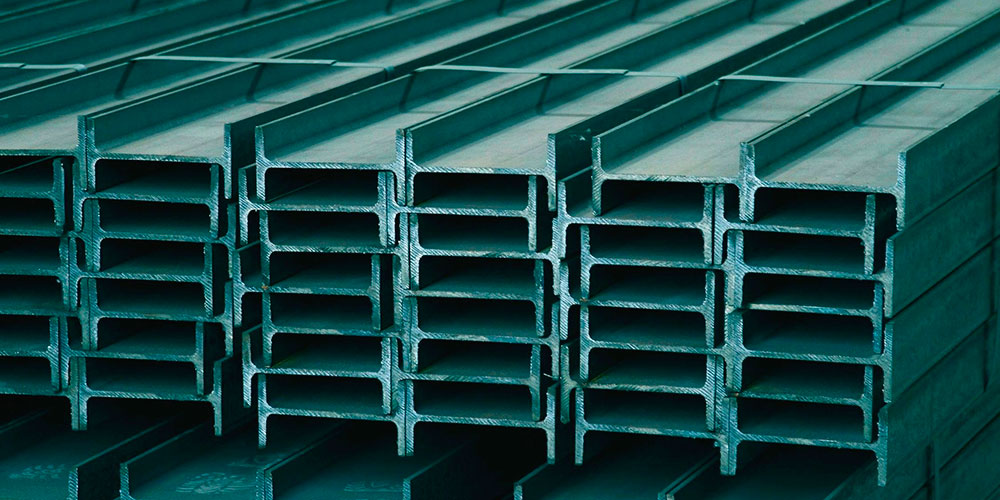
Romanian longs prices unchanged amid market uncertainty caused by currency swings
Following the Romanian presidential election which caused currency fluctuations and market uncertainty, the majority of long steel traders and the sole domestic rebar producer have decided to hold offers unchanged compared to last week and to just monitor the market.
However, given the changes in currency rates, many participants believe that some upward adjustments in long steel prices may occur. Meanwhile, some suppliers believe that, owing to the ongoing weaker demand, price adjustments may not be supported by buyers.
“Romania’s unstable political situation has resulted in extremely low sales this week. Following the first round results, the euro and US dollar exchange rates will be updated for pricing in lei, and long steel prices will be adjusted in the coming days to reflect the new exchange rate. Considering the low sales volumes and the unstable political climate, I personally believe that neither price rises nor even customer acceptance of such levels are likely,” a trader said SteelOrbis
As a result, the sole local producer’s rebar pricing is unchanged week on week at €590-605/mt ex-works. Similarly, the retail prices of rebar in Romania are stable at €610-620/mt ex-warehouse since last week.
In the wire rod segment, a similar scenario has occurred due to the current uncertainty. The majority of traders offered wire rod prices at unchanged levels of €580-595/mt ex-warehouse.
Meanwhile, as regards imports, Bulgarian suppliers have reduced rebar offers by €10/mt to €610-630/mt CPT, while ex-Egypt rebar and wire rod prices remain stable from the previous week at €530-535/mt CPT and €535-540/mt CPT, respectively. In contrast, ex-Turkey offers have increased as mills’ export offers have been quoted at $540-550/mt FOB, and, with the current currency rate of €1 = $1.13, prices for delivery to Romania are now at €505-515/mt CFR, up from €495-515/mt CFR last week.